

Most people think magic tricks are just about sleight of hand and hidden compartments. But if you’ve ever tried to learn a simple card flourish or made a coin disappear into thin air, you know it’s more than that. Magic tricks are a quiet kind of creativity-one that asks you to think differently, move differently, and see the world with fresh eyes. It’s not about fooling people. It’s about reshaping how you think.
Why Magic Feels Like Play, But Works Like Training
When you’re learning a magic trick, you’re not just memorizing steps. You’re solving a puzzle in real time. Take the classic magic tricks like the Three-Card Monte. At first, it looks like a simple shuffle. But when you try it, you realize your own eyes lie to you. Your brain expects the card to follow a path it’s seen a thousand times. The trick doesn’t work because you’re fast-it works because you’re predictable.
That’s the hidden lesson. Magic trains your attention. You learn to spot the smallest movement, the hesitation, the glance that gives something away. Studies from the University of London show that people who regularly practice close-up magic improve their observational skills by up to 30% in just three months. It’s not magic-it’s neuroplasticity. Your brain rewires itself to notice what it used to ignore.
It’s Not About the Trick, It’s About the Story
Any magician will tell you: the trick is only 20% of the performance. The rest is the story. Why does the coin vanish? Is it stolen by a mischievous spirit? Did it slip through time? The best magic doesn’t just surprise-it makes you feel something. That’s why a child will laugh at a trick that an adult finds obvious. The child believes in the story. The adult is too busy looking for the mechanism.
Learning to build a story around a trick forces you to think like a writer, a director, even a psychologist. You have to anticipate how someone will react. You learn pacing. You learn silence. You learn how to hold someone’s attention without saying a word. These aren’t party tricks-they’re communication skills disguised as illusions.
How Magic Builds Confidence Without Saying a Word
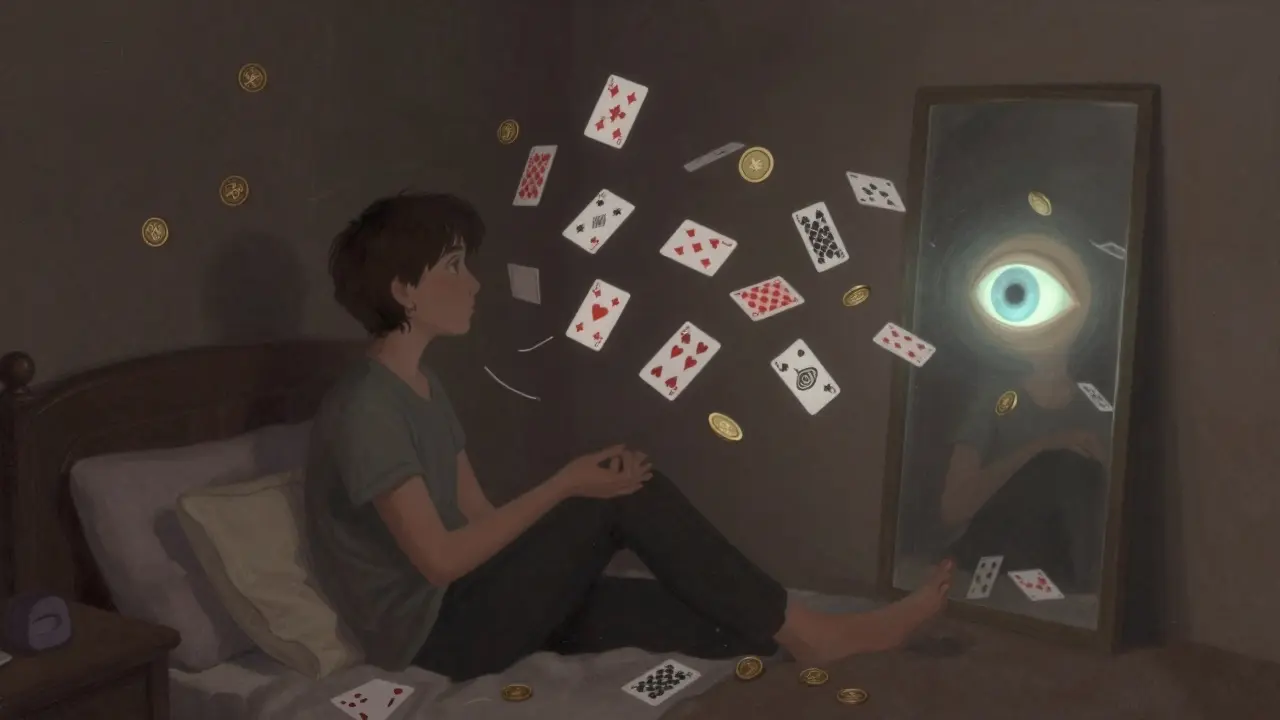
Think about the last time you tried something new and failed. Maybe it was public speaking. Maybe it was singing in front of friends. Magic is different. You can practice alone. You can fail in your bedroom and never tell anyone. No one sees your mistakes. No one judges your shaky hands. And when you finally get it right-when the card appears exactly where you planned-it’s yours. No applause needed.
That quiet win builds something deeper than confidence. It builds self-trust. You learn that you can make something impossible happen-by your own effort. That belief doesn’t stay in your magic pouch. It shows up when you speak up in a meeting. When you ask for help. When you try something outside your comfort zone.
The Tools Don’t Matter-The Mind Does
You don’t need expensive props. A deck of cards, a few coins, and a handkerchief are all you need to start. The real tool is your attention. Most beginners buy flashy kits with gimmicks that break after two uses. They think the trick is in the object. But the real magic is in how you use your hands, your voice, your timing.
Look at Dai Vernon, the man many call the greatest magician of the 20th century. He performed for decades with a single deck of cards. He didn’t need lasers or levitation. He needed patience. He needed to understand how people think. That’s the secret all great magicians share: the best illusion is the one that feels natural.
What Magic Teaches About Control and Letting Go
Here’s something no one tells you: magic is about control-and surrender. You spend hours perfecting a move. You rehearse the same motion a hundred times. But when you perform it live, something changes. The audience laughs at the wrong moment. Someone sneezes. The lighting shifts. You can’t control it all.
That’s when the real skill shows up. The best magicians don’t panic. They adapt. They turn a mistake into part of the story. A dropped card becomes a "magic slip". A wrong choice becomes "the trick that chose you". This isn’t just stagecraft. It’s emotional resilience. You learn that even when things go off-script, you can still create meaning.

Why Curiosity Is the Real Magic
Every great magician started with a question: "How did they do that?" That curiosity is the spark. It’s the same drive that leads kids to take apart radios or scientists to ask why the sky is blue. Magic doesn’t answer questions-it keeps them alive.
When you learn magic, you stop accepting things at face value. You start noticing patterns. You wonder why people look where they’re told to look. You realize how easily attention can be guided. That’s not just useful for tricks. It’s useful for life. It makes you less likely to believe the first thing you hear. Less likely to follow the crowd. More likely to ask, "What’s really going on?"
Where to Start-No Experience Needed
You don’t need a mentor. You don’t need a stage. Start with one trick. Not a big one. Just one. Try the "Vanishing Coin". Place a coin on the table. Cover it with your hand. Use your other hand to pretend to pick it up. Let your fingers brush the table. Slide the coin away with your thumb. Lift your hand. It’s gone.
Practice it until you can do it without thinking. Then do it in front of a mirror. Then try it on a friend. Don’t say "Watch this." Just do it. See their face. Watch their eyes. That moment-the pause before they laugh-is the real reward.
There are free tutorials on YouTube from magicians like Juan Tamariz and Ricky Jay. But don’t watch too many. Watch one. Learn it. Then put the screen away and practice. Magic lives in your hands, not your feed.
It’s Not a Hobby. It’s a Way of Seeing.
People who do magic don’t just perform. They notice things others miss. They see the way someone’s hand twitches before they lie. They hear the rhythm in a conversation. They know when someone is pretending to listen. Magic doesn’t turn you into a wizard. It turns you into someone who sees more.
And that’s the quietest kind of power.
Vishal Gaur
January 14, 2026 AT 04:35so i tried the coin trick yesterday and my little cousin just stared at me like i was a ghost then asked if i stole it from the gods or something lmao i didnt even say a word and she was already writing a fanfic about me being a time-traveling wizard. magic is wild.
Rakesh Dorwal
January 15, 2026 AT 12:40you people are being manipulated. this isn't about magic-it's about control. the government uses these 'tricks' to train people to ignore real surveillance. look at the university study-they didn't mention it was funded by DARPA. your 'neuroplasticity' is just brainwashing in slow motion. they want you to focus on cards so you don't notice the cameras.
Nikhil Gavhane
January 16, 2026 AT 12:36I love how you framed this. I started learning a few simple tricks last year after a rough breakup-just to feel like I could make something happen, even if it was small. The first time I made a card appear out of nowhere in front of my sister, she screamed and hugged me. I didn't even realize how much I needed that moment until it happened. Magic isn't about the illusion. It's about the connection.
Rajat Patil
January 16, 2026 AT 22:19I appreciate the thoughtful reflection in this post. It is true that the practice of magic requires patience, discipline, and an awareness of human behavior. Many people overlook the psychological depth involved. I believe this form of art can serve as a gentle introduction to mindfulness and emotional intelligence for those who may not seek it in traditional ways.
deepak srinivasa
January 17, 2026 AT 22:34Wait-so if magic trains your attention, does that mean people who are bad at noticing things just haven't tried learning a trick? Like, is it possible to be 'untrained' in perception? I’ve always thought I was bad at reading people, but maybe I just need to practice palming a coin for a month.
pk Pk
January 19, 2026 AT 18:53Hey, if you're thinking of starting out, don't overthink it. Grab any deck. Try the classic force. Do it in front of your bathroom mirror until your hand doesn't shake. Then do it while talking to your dog. Then do it on your mom when she's scrolling on her phone. The first time she says 'Wait, how did you do that?'-that's your win. No stage needed. Just courage.
NIKHIL TRIPATHI
January 20, 2026 AT 16:19My dad was a magician back in the 70s. Used to do tricks at birthday parties with a deck of cards and a handkerchief. He said the best trick wasn’t the one that fooled people-it was the one that made them forget they were being fooled. He never charged for it. Said magic should be like laughter-you give it away and it comes back. Still think about that every time I see someone smile at something simple.
Jitendra Singh
January 21, 2026 AT 20:28I used to think magic was just for kids or show-offs. Then I watched a street magician in Delhi make a rupee coin disappear from a child’s palm, and the kid started crying because he thought he’d lost his lunch money. The magician turned it into a game-'Let’s find it together.' And then, slowly, he made it reappear. The kid laughed so hard he fell off the bench. That moment… I’ve never forgotten it. Magic isn’t about deception. It’s about trust.
Madhuri Pujari
January 23, 2026 AT 15:36Oh my god, another 'magic is mindfulness' article. Can we please stop romanticizing sleight of hand as if it's some spiritual awakening? You're just practicing dexterity while pretending it's profound. Also, the 'University of London study'? Cite it. Or is this just another AI-generated myth wrapped in poetic language? I’ve seen 300 of these. They all say the same thing. It’s not magic. It’s clickbait with a deck of cards.
Sandeepan Gupta
January 24, 2026 AT 09:15Madhuri, I get where you're coming from-but the study is real. It's from the Centre for Cognitive Neuroscience at UCL, published in 2020. The paper's titled 'Magicians' Attentional Control and Its Transfer to Everyday Perception'. You can find it on PubMed. That said, the real value isn't in the data-it's in the doing. If you try one trick and notice yourself looking at people differently for a week after, you'll know it's true. No citation needed.
Agni Saucedo Medel
January 25, 2026 AT 03:39My 8-year-old niece taught me the coin trick last weekend. She said, 'It's not magic if you know how it works.' And then she winked and made it reappear behind my ear. I cried. Not because it was impressive-but because she believed in the story. And for a second, so did I. 🌟