
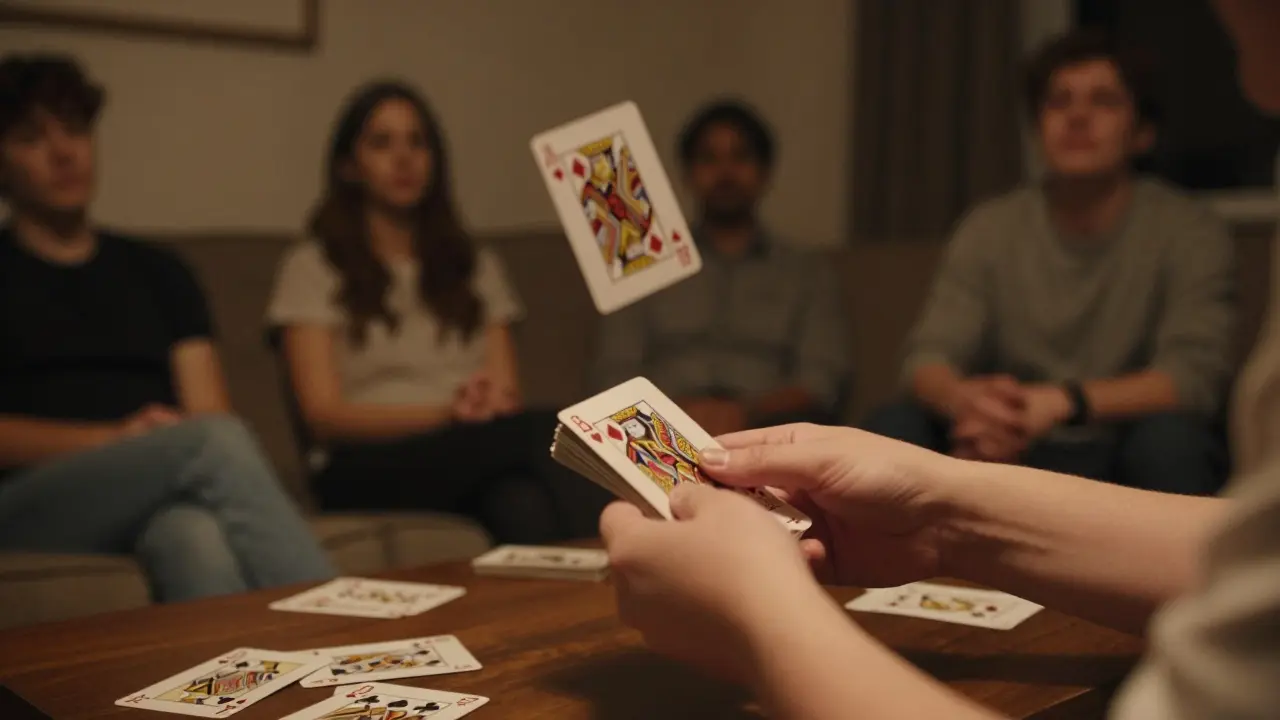
You don’t need a stage, a tuxedo, or a million-dollar budget to make people gasp. Sometimes, all it takes is a deck of cards, a coin, and a little misdirection. The best magic tricks aren’t about fancy gadgets-they’re about timing, psychology, and the quiet moment when someone realizes they just saw something impossible. Here are 10 magic tricks that will leave your audience staring at their hands, wondering how you did it.
The Rising Card
This one looks like magic straight out of a movie. You take a single playing card, slip it into the middle of a shuffled deck, and then-without touching the deck-you make it slowly rise up on its own. People swear you’re using magnets or wires. You’re not. The secret? A simple cut-and-palm move combined with a slight tilt of the deck. When you hold the deck at a 45-degree angle and gently squeeze the bottom corner, the card naturally peeks up. The key is to keep your eyes locked on the audience while you do it. Don’t look at the card. Look at them. Let them believe it’s happening on its own. This trick works best with a worn-in deck. New cards stick too much. Try it with a deck that’s been handled a few dozen times.
The Vanishing Coin
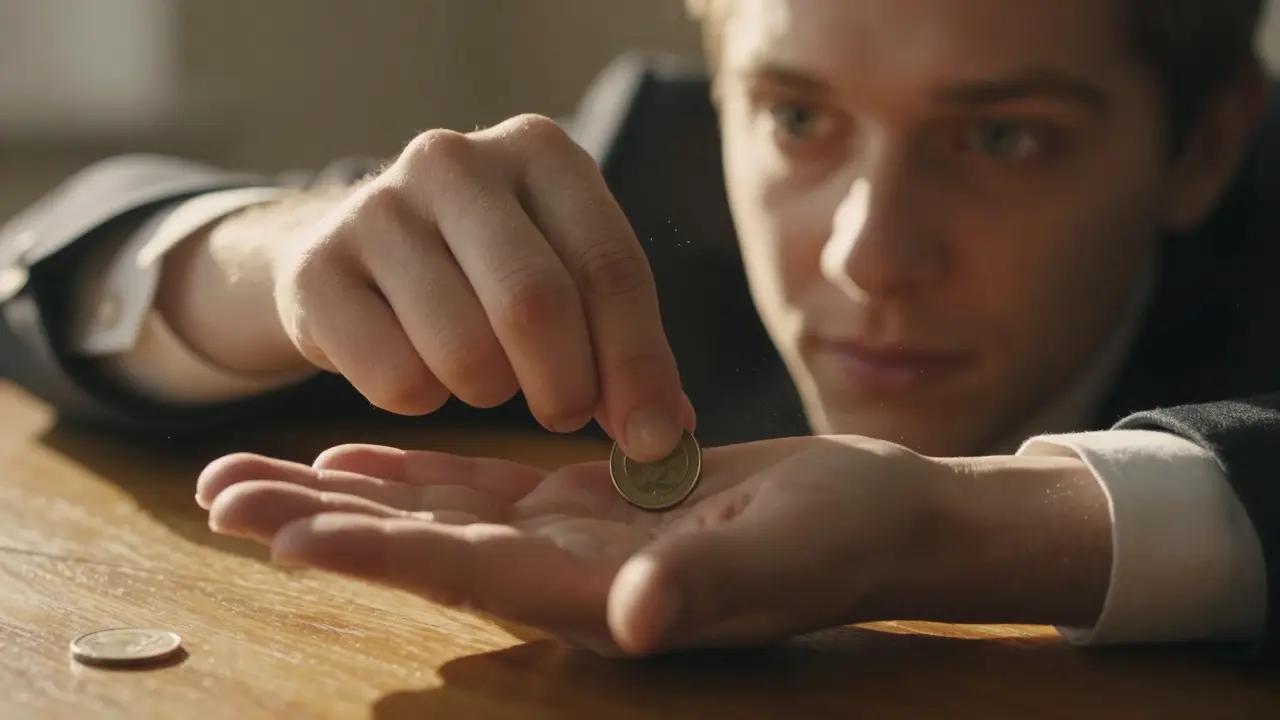
Place a coin on the table. Cover it with your hand. Lift your hand. The coin is gone. No sleight of hand. No pocket. No gimmick. Just pure misdirection. The trick relies on the fact that people don’t look at your fingers-they look at your eyes. As you cover the coin, subtly slide it into your palm using your thumb. Then, as you lift your hand, let your index finger brush the table. That tiny sound? It’s a distraction. Your brain hears it and assumes the coin is still there. When you open your hand, the audience doesn’t see the coin because they’re still processing the sound. Practice this in front of a mirror. Watch how your hand moves. The smaller the motion, the more convincing it is.
The Impossible Card Choice
Ask someone to pick a card. Any card. They do. You shuffle the deck. Then you flip through the cards and stop on their card-face down. You say, “This one?” They say yes. Then you turn it over. It’s not their card. It’s a different one. You hand them the deck. “Find your card.” They flip through. There it is. Right where you said it would be. How? You never let them see the card you picked. You force the card. How? Use the double lift. When you show them the top card, you actually lift two cards as one. The real card is the second one. They think they saw the top card. You memorize the bottom card of the double. Later, when you flip through, you know exactly where their card is. You fake the reveal, then let them find it themselves. It feels like mind reading. It’s just smart setup.
The Floating Ring
Take a metal ring. Slide it onto a silk handkerchief. Hold the corners. Let go. The ring floats. It doesn’t drop. It just hangs there, mid-air. People think you’re using invisible thread. You’re not. The secret? A tiny loop of elastic thread, sewn into the hem of the handkerchief. You attach the ring to it before you start. When you hold the corners, you pinch the fabric just right so the thread stretches tight. Let go slowly. The ring rises an inch, then hangs. It looks like it’s defying gravity. The key is to keep your hands steady. Don’t move them too fast. Let the audience stare. Whisper, “It’s not magic… it’s physics.” They’ll believe you.
The Predicted Number
Write a number on a slip of paper. Put it in an envelope. Hand it to someone. Ask them to pick any number between 1 and 50. Then ask them to add 7, subtract 3, double it, and divide by 2. You never tell them what to do. You let them do the math. When they’re done, they tell you their final number. You open the envelope. It matches. Every time. How? The math always leads to the same result. If they pick any number, add 7, subtract 3, double it, divide by 2? They end up with their original number plus 4. So you write down “42” in the envelope. Why 42? Because it’s a number people pick often. If they pick 38, they’ll end up with 42. If they pick 40? Still 42. You don’t need to know their number. You just need to know the math. It’s foolproof.
The Bendable Spoon
Hold a metal spoon. Rub it between your hands. Then, slowly, you bend it. It doesn’t break. It bends like plastic. You hand it to someone. They try to bend it back. They can’t. How? The spoon isn’t metal. It’s made of a special alloy-usually zinc or a low-melting-point metal. You warm it in your hands. The friction heats it just enough to soften. Then you bend it. The audience thinks you’re using psychic power. You’re using science. Buy one online. Look for “magic bending spoon.” They cost less than $10. Practice the motion. Don’t rush. Let it happen slowly. Say, “It’s not breaking… it’s remembering its shape.” That’s all it takes.
The Mind-Reading Name
You hand someone a pen and a small notepad. “Write down the name of someone you love.” They do. You turn away. You don’t look. Then you say, “I don’t know who it is. But I know their first name.” You guess it. Right. How? You don’t guess. You control the outcome. Before the trick, you slip a sticky note into the notepad. It says “Mom.” Or “Dad.” Or “Best Friend.” When they write, they’re using the top sheet. The sticky note is underneath. They think they’re writing on blank paper. You never see what they wrote. But you know what’s on the note. When you say, “It’s Mom,” they assume you read their mind. You just used a little trick of perception.

The Endless Ribbon
You pull a ribbon from your pocket. It’s six inches long. You pull again. It’s a foot. Again. It’s three feet. You keep pulling. It goes on forever. The audience laughs. Then they stop. They’re confused. How? The ribbon is folded into a spiral, hidden inside a hollow tube. You start pulling from the center. Each fold reveals another layer. The tube is hidden in your sleeve. You only need to hold it in place with your thumb. The key? Don’t pull too fast. Let the ribbon emerge slowly. Let them count. “One… two… three…” When they realize it’s not ending, their faces change. That’s the moment you want. That’s the magic.
The Disappearing Water
You fill a glass with water. You cover it with a card. You flip it upside down. The water doesn’t spill. You remove the card. The glass is empty. Where did the water go? You didn’t pour it out. You didn’t drink it. The secret? A thin sponge glued to the inside bottom of the glass. It’s invisible. It holds the water. When you flip the glass, the sponge soaks it up. When you remove the card, the water stays trapped. You say, “I’ll show you how to make water disappear.” Then you press your finger on the bottom. The sponge releases the water into your palm. You show them your empty hand. They think the water vanished. You just made it disappear into your skin.
The Card Through the Table
You place a playing card on the table. You cover it with your hand. You tap the table three times. Then you lift your hand. The card is gone. You reach under the table. Pull out the card. It’s now on the other side. How? You never moved the card. You switched it. Before you start, you have a duplicate card under the table, taped to the edge. When you cover the card, you slide it into your lap. You keep your hand over the spot where the card was. You tap. Then you reach under the table and pull out the duplicate. The audience doesn’t notice the switch because you never let them see your lap. It’s all about control. Control the gaze. Control the timing. Control the expectation.
Why These Tricks Work
None of these tricks require years of practice. You don’t need to be a professional. You just need to understand one thing: people see what they expect to see. Magic isn’t about hiding secrets. It’s about guiding attention. The best magicians don’t fool their audience-they help them fool themselves. That’s why these tricks work. They play on habits. On assumptions. On the way our brains fill in gaps. You don’t need to be perfect. You just need to be calm. You don’t need to be fast. You just need to be quiet. Practice each trick once. Then do it in front of someone. Watch their face. That’s the real magic.
Kasey Drymalla
February 10, 2026 AT 21:49Dave Sumner Smith
February 12, 2026 AT 01:55Cait Sporleder
February 13, 2026 AT 21:51Paul Timms
February 13, 2026 AT 23:50Nathaniel Petrovick
February 14, 2026 AT 00:24Sally McElroy
February 15, 2026 AT 15:56Jason Townsend
February 16, 2026 AT 03:47Antwan Holder
February 16, 2026 AT 09:36Angelina Jefary
February 18, 2026 AT 02:18Jennifer Kaiser
February 18, 2026 AT 22:03TIARA SUKMA UTAMA
February 20, 2026 AT 01:54Jasmine Oey
February 20, 2026 AT 09:23Marissa Martin
February 21, 2026 AT 22:43James Winter
February 23, 2026 AT 04:28Kasey Drymalla
February 24, 2026 AT 05:30