
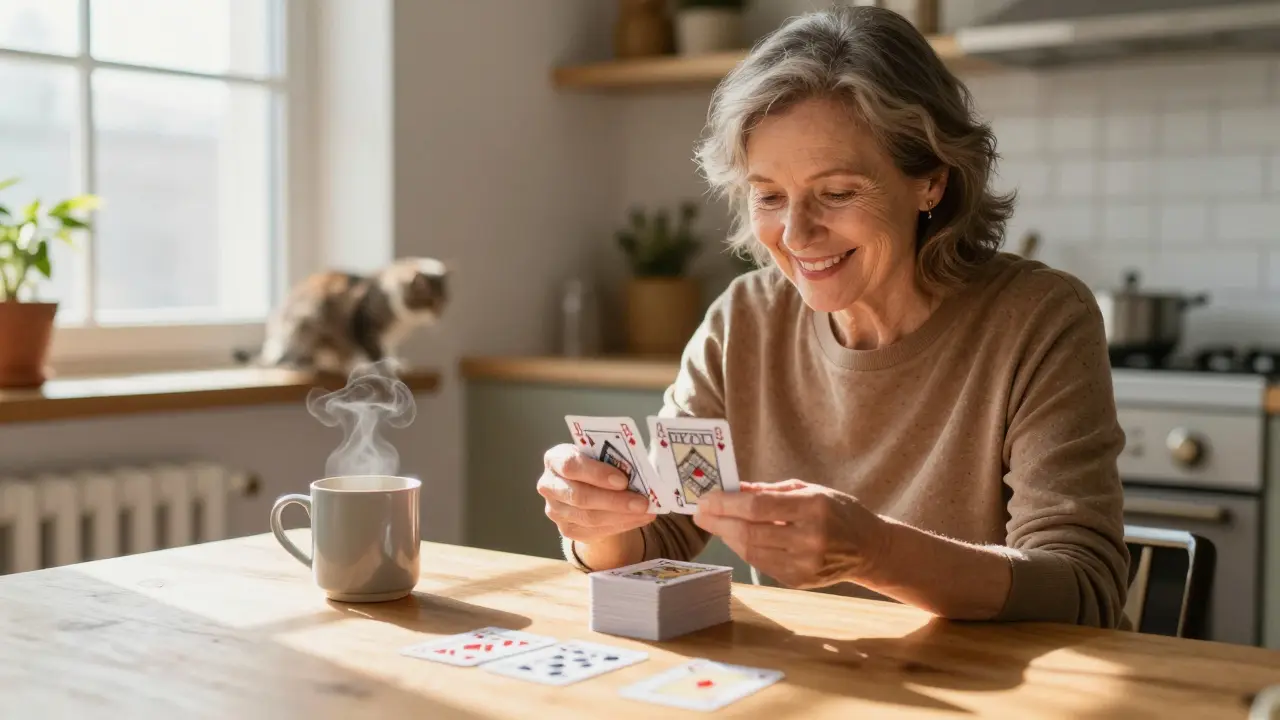
You’re 42, 58, or 67. You’ve never held a deck of cards except to shuffle them at poker night. You see kids on YouTube doing card tricks and wonder - am I too old to learn magic? The answer isn’t what you think. Age doesn’t block magic. It just changes how you learn it.
Magic isn’t about flexibility - it’s about focus
Most people assume magic is about dexterity. Finger flips, palm shifts, sleight of hand - all those things sound like they need the reflexes of a 20-year-old. But real magic doesn’t live in your fingers. It lives in your mind.
Think about it: the best magicians aren’t the ones who can make a coin vanish fastest. They’re the ones who know exactly when to look away, when to pause, when to smile. That’s not about speed. That’s about timing. And timing? That gets better with experience.
Adults have something kids don’t: life context. You’ve read stories, watched movies, understood human behavior. You know how people react when they’re surprised, confused, or suspicious. That’s not a weakness - it’s your secret weapon.
What magic trick kits actually teach you
Not all magic kits are created equal. Some are designed for kids - flashy, loud, with gimmicks that fall apart after three uses. Others? They’re built for adults who want to learn real technique, not just flashy effects.
A good magic trick kit for adults includes:
- Real playing cards (not plastic toys)
- Clear instructions with video tutorials
- Basic sleights like the double lift, pass, or force
- Props that feel natural in your hands - no neon colors or plastic wands
Brands like Ellusionist is a well-known brand that produces high-quality magic kits designed for adult learners or Vanishing Inc. is a trusted name offering step-by-step video lessons alongside physical props don’t talk down to you. They assume you can handle complexity. And you can.
Why your brain is an advantage
Children learn magic by copying. Adults learn by understanding. That’s not a flaw - it’s a superpower.
When you’re older, you don’t just memorize a trick. You ask: Why does this work? What’s the psychology behind the misdirection? How do people’s eyes move when they’re distracted?
That’s where magic and psychology overlap. Studies from the University of Toronto in 2023 showed that adults who learned magic tricks improved their attention control by 22% over six weeks. Not because they got faster - but because they learned to anticipate how others think.
Think of it like chess. You don’t need to be young to read the board. You need experience. Magic is the same.
Real stories from real people
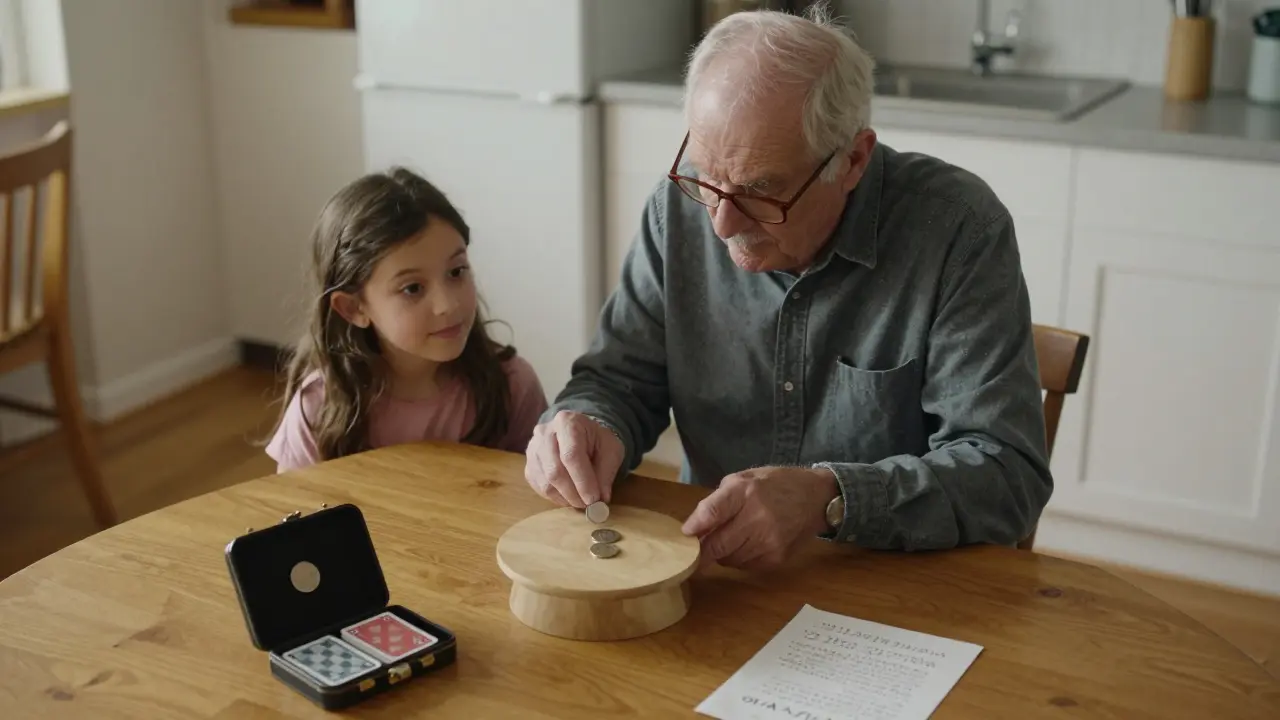
At a local magic club in Asheville, there’s a retired schoolteacher named Margaret. She started learning magic at 61 after her husband passed away. Her first trick? The classic three-card monte. She practiced it every morning with her coffee. Two years later, she performs at retirement homes - not for money, but to make people laugh.
Then there’s Robert, 74, who learned the coin through table trick using a kit he bought online. He didn’t care about impressing strangers. He wanted to surprise his grandkids. Now, every Sunday, he has a 10-minute magic hour before lunch. His granddaughter says it’s her favorite part of the week.
These aren’t outliers. They’re examples of what happens when you stop asking if you’re too old - and start asking how you can begin.
Start here: Your first 30 days
You don’t need a $200 kit. You don’t need to join a magic society. You just need three things:
- A deck of standard playing cards (Bicycle brand - they’re cheap and durable)
- A free 10-minute tutorial on YouTube (search: "beginner magic trick for adults")
- 15 minutes a day - no more, no less
Day 1: Learn the classic palm - how to hold a card in your hand without anyone seeing it. Practice in front of a mirror. Don’t worry about speed. Just get the grip right.
Day 5: Try the force - a way to make someone pick a card you want them to pick. It’s not magic. It’s psychology. And it works every time if you’re calm.
Day 14: Perform it once. On a friend. On your partner. On your cat. Doesn’t matter. Just do it. You’ll feel weird. You’ll mess up. That’s okay. Magic isn’t about perfection. It’s about connection.
By day 30, you’ll have a trick. Not a flashy one. But one that makes someone say, "Wait - how did you do that?" That’s the moment magic becomes real.
What most people get wrong
The biggest mistake? Waiting for "the right time."
You think: "I’ll start when I retire." Or "When I have more free time." Or "When I’m not so stiff." But magic doesn’t wait. And neither should you.
There’s no magic age. There’s only the moment you pick up the cards.
Some people think magic is about hiding things. But really, it’s about revealing something unexpected - a smile, a laugh, a moment of wonder. And those things don’t care how old you are.
It’s never too late
You don’t need to be a prodigy. You don’t need to perform on stage. You just need to try.
There’s a reason magic has survived for centuries. It’s not because it’s easy. It’s because it matters. A simple trick can change how someone feels about themselves - or about you.
So if you’re wondering whether you’re too old - the answer is no. You’re not too old. You’re just one deck of cards away from starting something new.
Can I learn magic if I have stiff hands or arthritis?
Absolutely. Many magic tricks don’t require fast finger movements. Tricks that rely on misdirection, timing, and psychology - like the "invisible deck" or "thought of card" - work perfectly with minimal dexterity. There are even specialized props designed for people with limited hand mobility. Focus on the presentation, not the movement.
What’s the easiest magic trick for someone over 50 to learn?
The "Ambitious Card" is a great starting point. It’s simple: a selected card keeps rising to the top of the deck. The secret is a basic double lift (turning two cards as one) and a natural-looking shuffle. With a good tutorial, you can master it in under a week. It’s visual, surprising, and requires almost no physical strain.
Do I need to buy an expensive magic kit?
No. A $15 basic magic kit from a reputable brand like Ellusionist or Vanishing Inc. includes everything you need: real cards, a gimmick or two, and access to video lessons. Avoid toy store kits with plastic props - they’re designed for kids and won’t teach you real technique. Quality matters more than price.
Will people think I’m weird if I practice magic as an adult?
Most people won’t notice. And those who do? They’ll be intrigued. Magic is one of the few hobbies that makes people curious instead of judgmental. In fact, adults who learn magic are often seen as more creative and approachable. It’s not weird - it’s charming.
How long does it take to get good at magic?
You can perform one solid trick in two weeks with 15 minutes a day. Getting "good" - meaning you can adapt, improvise, and read your audience - takes months. But that’s true of any skill. The point isn’t perfection. It’s the joy of surprising someone. That happens on day one.
There’s no expiration date on wonder. Magic doesn’t belong to the young. It belongs to anyone willing to look at the world - and themselves - with a little more curiosity.
Amy P
February 11, 2026 AT 15:50My granddaughter says I’m the reason she believes in miracles. I say I’m just holding a card wrong. But hey - it works.
Ashley Kuehnel
February 11, 2026 AT 19:29adam smith
February 13, 2026 AT 02:40Mark Nitka
February 13, 2026 AT 21:55k arnold
February 15, 2026 AT 16:11Tiffany Ho
February 17, 2026 AT 05:14michael Melanson
February 18, 2026 AT 08:43lucia burton
February 18, 2026 AT 20:09