
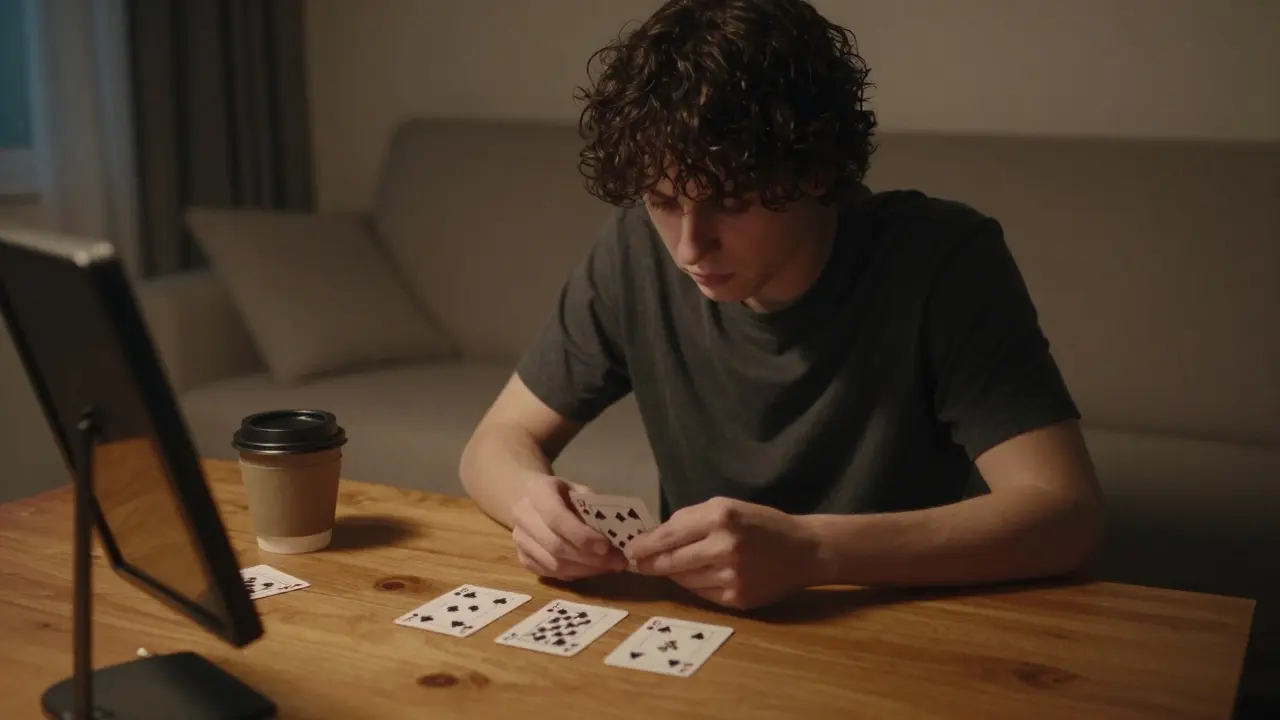
Ever watched a card vanish in midair and thought, "I could never do that"? You’re not alone. Most people assume magic is about secret hand movements, fancy props, or years of training. But here’s the truth: magic isn’t about being born with talent. It’s about practice, patience, and knowing where to start. The difference between a novice and a magician isn’t luck-it’s the steps they took, one at a time.
Start with One Trick, Not a Kit
Most beginners buy a magic kit. It looks exciting-ten tricks in a box, colorful cards, rubber balls, and a wand. But here’s the problem: kits teach you how to perform, not how to think like a magician. You’ll shuffle through ten tricks in a week, forget half of them, and quit by month two. Instead, pick one trick and master it. The classic three-card monte is perfect. It needs no props beyond three playing cards. The secret? It’s not in the shuffle. It’s in the misdirection. People don’t get fooled by sleight of hand alone-they get fooled because you control where they look. Practice this trick daily for 15 minutes. Don’t move on until you can do it flawlessly in front of a mirror, then a friend, then a stranger. That’s how real magicians build confidence: one flawless repeat at a time.Learn the Psychology Behind the Trick
Magic isn’t just about your hands. It’s about the audience’s brain. A 2019 study from the University of London found that people miss obvious changes not because they’re distracted, but because their brains predict what should happen next. Magicians exploit that. When you flip a card, your audience expects the next card to be similar. You give them something different-and they don’t notice. That’s why timing matters more than technique. Pause before the reveal. Make eye contact. Let the silence grow. People fill silence with their own assumptions. That’s when the trick works. You’re not hiding the card-you’re letting them hide it themselves.Practice in Real Life, Not Just in Private
Don’t wait until you’re "perfect." Perform for real people. Start small: a coffee shop, a family dinner, a bus ride. Ask someone to pick a card. Do the trick. No script. No pressure. Just do it. Most beginners fear failure. But here’s what no one tells you: the audience doesn’t care if you mess up. They care if you recover. If you drop a card? Smile. Say, "That’s part of the magic." They’ll laugh. And you’ll learn faster than in any tutorial. I’ve watched hundreds of beginners. The ones who stuck around? They performed in front of strangers within 30 days. Not because they were good. Because they stopped waiting to be ready.Build a Personal Style
There’s no single "right" way to do magic. Some magicians use grand gestures. Others whisper. Some wear tuxedos. Others wear hoodies. Your style isn’t about what looks cool-it’s about what feels true to you. Try this: record yourself doing the same trick three times. Once with serious face. Once with humor. Once with storytelling. Watch the videos. Which one made you feel more alive? That’s your style. Magic isn’t about copying David Blaine or Penn & Teller. It’s about becoming the version of you that makes people lean in.
Use Everyday Objects
You don’t need a deck of cards. You don’t need a coin. You don’t need a silk scarf. You have a pen. A coffee cup. A phone. A napkin. Real magicians turn ordinary things into magic because they know the audience doesn’t expect it. Try this: take a pen and make it "disappear" by palming it behind your back while pretending to hand it to someone. Then, "find" it in your pocket. No gimmicks. Just movement and timing. It’s simple. It’s surprising. And it works every time if you do it with calm confidence.Track Your Progress
Magic isn’t a mystery. It’s a skill. And skills improve with tracking. Keep a journal. Write down:- What trick you practiced
- Who you performed it for
- What went well
- What went wrong
- One thing to improve next time
Don’t Chase the Big Reveal
Most beginners want to make a car vanish. Or levitate. Or read minds. Those are showstoppers. But they’re also the least effective. Why? Because they require props, lighting, assistants, and years of practice. The most powerful magic is small. A coin that changes color. A card that appears in your pocket. A name you guess without asking. These tricks work because they’re intimate. They happen in a moment. They feel personal. That’s what people remember-not the big spectacle, but the quiet wonder.
Join a Community
Magic is lonely if you do it alone. Find a local magic club. Check online forums. Attend a monthly magic night. You don’t need to perform. Just watch. Listen. Ask questions. You’ll meet people who’ve been stuck for years-and broke through because someone showed them a tiny tweak they never thought of. In Bend, there’s a group that meets every second Thursday at The Ale Apothecary. No dues. No pressure. Just people who love the moment when someone says, "How did you do that?" That’s the magic.You’re Already a Magician
You don’t need a hat. You don’t need a cape. You don’t need to be perfect. You just need to start. One trick. One audience. One day at a time. The difference between a novice and a magician? The magician tried. And kept trying.Do I need special cards or props to learn magic tricks?
No. You can start with any deck of playing cards, a coin, or even a pen. Most professional magicians use ordinary objects because they’re more surprising. Specialized props can help later, but they’re not the key to learning. Focus on movement, timing, and misdirection first.
How long does it take to get good at magic tricks?
It depends on how much you practice. Most people can learn one solid trick in 2-4 weeks with 15 minutes a day. But becoming confident enough to perform in front of others usually takes 3-6 months. The real milestone isn’t perfection-it’s when you can do the trick without thinking about the steps.
Can I learn magic tricks if I’m not good with my hands?
Absolutely. Many great magicians weren’t naturally dexterous. Magic is about rhythm, not finger speed. You don’t need to be a pianist. You need to be consistent. Practice slowly. Repeat. Muscle memory builds over time. Start with tricks that use simple motions-like the classic "coin vanish"-and build from there.
What’s the most common mistake beginners make?
Trying to do too many tricks too fast. Most beginners buy a kit, learn five tricks in a week, and then forget them all. The real secret is mastering one trick until it feels natural. That one trick, done well, will impress more than ten half-learned ones.
Should I perform for friends first or strangers?
Strangers. It sounds counterintuitive, but friends will give you polite applause or say "That’s cool" without really watching. Strangers don’t know you. They’re more honest. They’ll laugh, gasp, or say "Wait, how?" That feedback is gold. Start with a barista, a neighbor, or someone at a park. Their reaction tells you more than any family member ever could.
Is magic just about deception?
No. Magic is about creating wonder. Deception is the tool, not the goal. The best magic leaves people feeling amazed, not tricked. It’s about the pause, the eye contact, the quiet moment before the reveal. That’s what stays with people-not how you did it, but how it made them feel.
Can I make money doing magic tricks?
Yes, but not right away. Most magicians start by performing at small events-birthday parties, local cafes, corporate team-building. Charging $50-$100 per 20-minute set is common. But the real value isn’t in the cash. It’s in the confidence you build. That confidence opens doors you didn’t expect-public speaking, teaching, even acting.