
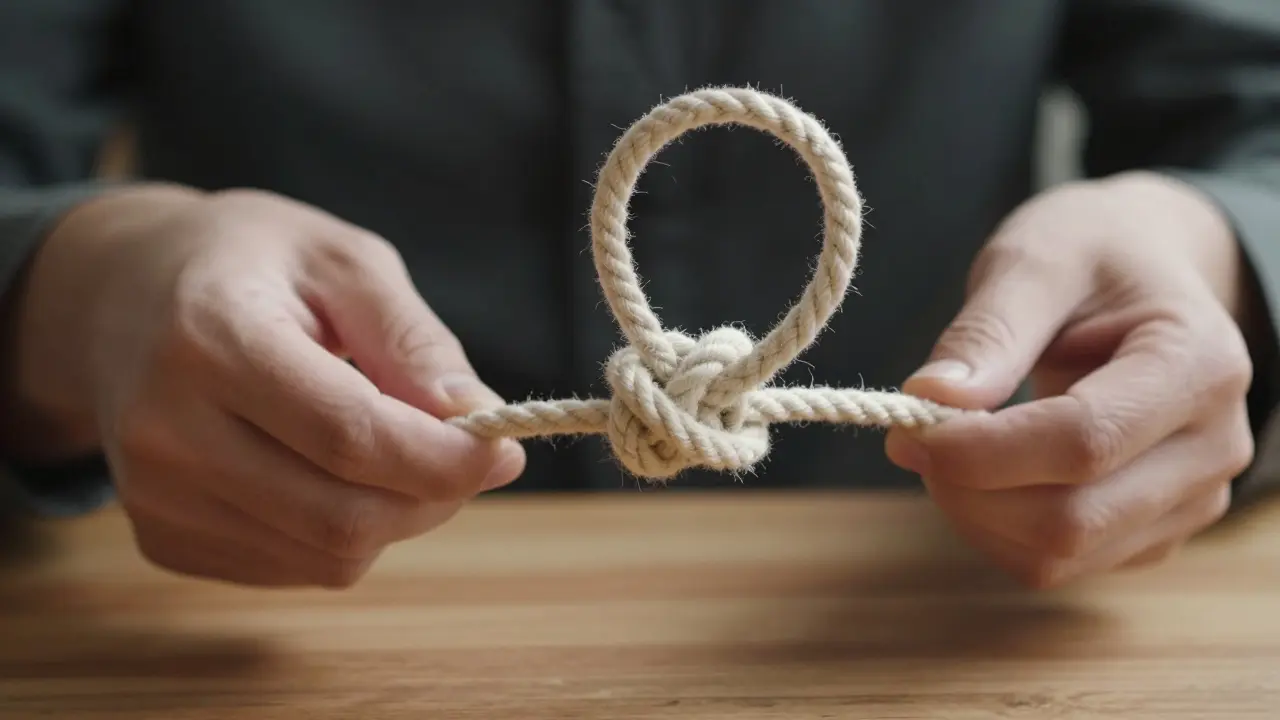
Want to learn a magic trick that looks impossible but is actually simple to do? The magic loop is one of those tricks that makes people lean in, stare, and ask, "How did you do that?" It’s a classic sleight-of-hand effect where a loop of rope or string appears to pass through a knot-without ever being untied. No gimmicks. No magnets. Just your hands and a little practice.
What Is the Magic Loop?
The magic loop is a rope or string trick where a looped piece of cord seems to magically slide through a fixed knot. You tie a simple overhand knot in the middle of a rope. Then, with a flick of your wrist, the loop pulls through the knot as if the knot wasn’t there. The audience sees a knot that’s tight, and then suddenly-the loop is gone, or it’s on the other side. It’s clean, visual, and perfect for close-up magic.
This trick has been around for decades. Magicians like Dai Vernon and Jean Hugard used versions of it in their performances. It works because of how the rope is manipulated-your hands hide the real movement behind a natural gesture. People don’t see the loop being pulled, they see the knot disappearing.
What You Need
You don’t need fancy gear. Just grab:
- A piece of rope or cord, about 18 to 24 inches long
- Something with a little weight-like a keyring or small metal washer (optional, but helps)
- A flat surface to practice on
Don’t use thin string. It won’t hold shape. Don’t use thick rope-it’s too stiff. A 1/4-inch cotton or nylon cord works best. You can buy magic rope online, but a simple shoelace or paracord from your drawer will do just fine.
Step-by-Step: How to Do the Magic Loop
Follow these steps slowly. Practice each one until it feels smooth.
- Tie a knot-Take the rope and tie a simple overhand knot in the center. Pull it tight. Leave about 6 inches of rope on each end. This knot is your anchor. It can’t come undone.
- Hold the ends-Grab one end of the rope in your left hand, the other in your right. Keep the knot in the middle, facing up. Your palms should be facing each other.
- Create the loop-With your right hand, pull the right end of the rope back toward you, forming a loop. Let it rest on top of the knot. The loop should be big enough to fit your fingers through.
- Slide your left hand under-Now, slide your left hand under the rope from below, reaching up toward the loop. Your fingers should go through the loop from the bottom side.
- Pull the left end-Gently pull your left hand away from you, while keeping your right hand still. As you do, the loop will start to move up toward the knot.
- Let the loop pass through-The trick is in the timing. As the loop reaches the knot, let it slip over the top of the knot. Your right hand should stay still, but your left hand pulls the rope straight back. The loop disappears into the knot.
- Reveal-Now, slowly pull both ends apart. The knot is still there. But the loop? It’s gone. Or, if you want to make it reappear, reverse the motion.
It sounds simple, but the real secret is in the hand positioning. Your right hand doesn’t move much. It looks like you’re just holding the rope. Your left hand does all the work, but it’s hidden by the angle of your body and the natural motion of pulling.
Common Mistakes and How to Fix Them
Most beginners fail because they move too fast or don’t hide the loop’s path.
- The loop doesn’t pass through-You’re pulling too hard or too fast. Slow down. Let the rope glide. The knot needs to be tight enough to hold, but not so tight that it grips the rope.
- The audience sees the loop move-You’re holding the rope too high. Keep your hands at waist level. Use your body to block the view. Turn slightly to the side as you pull.
- The knot comes undone-Use a double overhand knot. Tie it twice. Make sure it’s snug. Test it before you perform.
- It looks like a trick-Practice in front of a mirror. Watch your hands. If you see the movement, your audience will too.
How to Make It Look Real
Technique is half the battle. Presentation is the other half.
Don’t say, "Watch closely." That makes people stare at your hands. Instead, say, "I’m going to make this loop disappear through the knot." Then pause. Smile. Let them lean in. When you pull, look at their faces-not your hands.
Use misdirection. Talk while you move. Ask them, "Have you ever seen a knot that could swallow a loop?" Then do it. The moment they laugh or blink, the trick happens.
Also, try doing it with a keyring tied to one end. The weight helps the loop slide naturally. It looks like magic, not mechanics.
Why This Trick Works
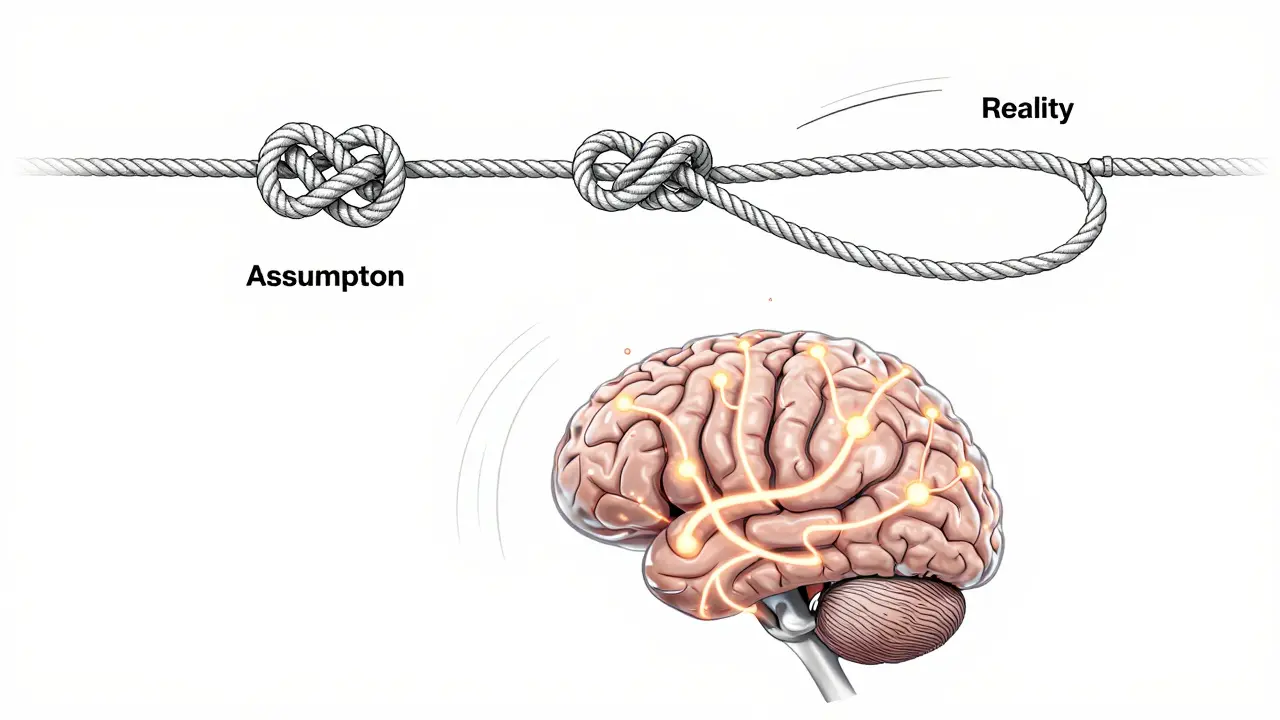
The magic loop plays on a simple illusion: people assume knots are fixed. They think if something is tied, it can’t move. But ropes bend. Loops can slip. Your brain fills in the gaps. You show them a knot. They assume it’s solid. You pull the loop through, and their brain says, "That’s impossible."
It’s psychology as much as it is dexterity. The same principle works in card tricks, coin vanishes, and even stage illusions. You control what people focus on-and what they ignore.
Practice Tips
You don’t need to practice for hours. Do this:
- Practice for 10 minutes a day, every day.
- Do it in front of a mirror first.
- Then try it with a friend who doesn’t know the trick.
- Record yourself on your phone. Watch it back. Where do your hands look suspicious?
- Try it in different lighting. Bright light? Dim light? Does it still work?
After a week, you’ll be able to do it without thinking. That’s when it becomes magic.
Where to Go From Here
Once you’ve mastered the magic loop, try adding variations:
- Make the loop reappear on the other side.
- Use two loops and make one vanish while the other stays.
- Combine it with a card trick-have the loop appear on a selected card.
This trick is a gateway to more advanced sleight-of-hand. It teaches you timing, misdirection, and control. Those skills translate to coin tricks, card controls, and even mentalism.
Many professional magicians start with the magic loop because it’s honest magic-no gimmicks, no electronics. Just skill. And that’s what makes it unforgettable.
Can I use any kind of rope for the magic loop?
You can use a shoelace, paracord, or magic rope-but avoid thin string or stiff wire. The best material is 1/4-inch cotton or nylon cord. It’s flexible enough to slide through the knot but thick enough to hold its shape. If the rope is too slippery, the loop won’t catch properly. If it’s too stiff, you won’t be able to control the movement.
Why does the knot stay tied when the loop passes through?
The knot doesn’t actually open. The loop slips over the top of the knot’s structure, not through the center. Think of it like a collar slipping over your head-it’s still there, but the loop moves around it. The rope’s flexibility lets the loop glide over the tightest part of the knot without untying it. That’s why a double overhand knot works best-it’s bulky enough to block the loop from slipping inside.
Is the magic loop suitable for kids to learn?
Yes, it’s one of the best magic tricks for kids. It doesn’t require fine motor skills like card manipulation. Kids as young as 8 can learn it with a little practice. The key is using a rope that’s easy to handle. Let them practice with a colorful cord or one with a weight on the end. It makes the motion more obvious and satisfying.
How long does it take to learn the magic loop?
Most people can get the basic motion down in 15 to 20 minutes. But to make it look smooth and foolproof, you’ll need 3 to 5 days of daily practice. The difference between a shaky performance and a convincing one comes from repetition, not talent. Do it every day, even if just for five minutes.
Can I do the magic loop with a string instead of rope?
It’s possible, but not recommended. String is too thin and doesn’t hold knots well. The loop will either slip off too easily or get stuck. You’ll spend more time fixing the knot than performing. Stick with rope. It’s more forgiving and looks more professional.
Kendall Storey
January 21, 2026 AT 17:38The magic loop is one of those tricks that looks like witchcraft but is just pure biomechanics. Once you nail the wrist flick, it’s game over - people think you’re cheating. No gimmicks, just muscle memory and misdirection. I’ve used this at parties and it always kills. Pro tip: do it while holding a drink. The casual vibe sells it harder than any "watch closely" line.
Ashton Strong
January 22, 2026 AT 01:23It is with great pleasure that I offer this observation: the efficacy of the magic loop is contingent upon both the tensile properties of the cord and the precision of manual dexterity. A 1/4-inch cotton cord, as recommended, exhibits optimal coefficient of friction for controlled slippage over a double overhand knot. Mastery requires not only repetition, but also mindfulness of kinetic flow. I have demonstrated this to my advanced sleight-of-hand seminar with resounding success.
Steven Hanton
January 22, 2026 AT 07:44I’ve tried this trick three times now. The first time, the knot came undone. Second time, the loop slipped off too early. Third time - it worked. Not perfectly, but close enough that my cat looked impressed. I think the key is slowing down. Your hands move faster than your brain thinks they do. Also, practice in front of a mirror. It’s weird, but it helps. Maybe I’ll try it on my nephew tomorrow.
Pamela Tanner
January 23, 2026 AT 03:51This guide is impeccably structured. Every step is clearly delineated, and the troubleshooting section addresses common pitfalls with clinical precision. The emphasis on material selection - specifically 1/4-inch cotton or nylon cord - is not merely practical, but pedagogically sound. Furthermore, the psychological framing of misdirection is articulated with rare clarity. Well done.
Kristina Kalolo
January 24, 2026 AT 11:18I tried this with a shoelace and it worked on the fourth try. Not sure if I’m just lucky or if the laces are better than I thought. The part where you slide your hand under the loop felt weird at first, like I was doing yoga with a rope. But now it’s kinda satisfying. I’m gonna do it at work tomorrow and see if anyone notices.
ravi kumar
January 25, 2026 AT 06:24Very good instruction. I am from India and we have similar rope tricks in our village fairs, but this is cleaner. I practiced for 10 minutes each day. After five days, I could do it without thinking. Now I show it to my students. They love it. No need for expensive tools. Just rope and patience. Thank you.
Megan Blakeman
January 26, 2026 AT 20:05Okay, so I just tried this… and I think I’m a wizard now?? Like, I did it!! On the third try!! My dog just stared at me like I’d turned into a human kaleidoscope. I’m crying. Not because it’s hard, but because it’s so stupidly simple and yet… magic?? I’m gonna do this at Thanksgiving. My aunt will lose her mind. I love this. Thank you so much for sharing.
Akhil Bellam
January 26, 2026 AT 20:20Ugh. You people are so easily impressed. This is 1950s-level sleight-of-hand. Anyone with half a brain and two working hands can do this. The real magic? Not showing this to amateurs who think it’s "impossible." The real trick is knowing that most audiences are too distracted by their phones to even notice. You’re not performing magic - you’re performing for the gullible. And you’re charging them attention. Pathetic.
Amber Swartz
January 28, 2026 AT 16:44Okay, but what if your hands sweat?? I tried this and my palms were DRIED OUT from anxiety. Like, I was holding the rope like it was a live grenade. And then I did it… and my mom screamed. Like, ACTUALLY SCREAMED. She ran out of the room. I think she thought I was summoning a demon. I didn’t even say anything! I just smiled. Now she won’t let me touch any ropes in the house. This is the best thing that’s ever happened to me.
Robert Byrne
January 29, 2026 AT 05:49"The loop disappears into the knot." No. It doesn’t. You’re describing the motion wrong. The loop doesn’t disappear - it’s pulled over the top of the knot’s bight. You’re using lazy language. And you said "flick of your wrist" - that’s inaccurate. It’s a controlled pull, not a flick. Stop misleading beginners. This isn’t a TikTok trick. Precision matters. Fix your wording.
Tia Muzdalifah
January 29, 2026 AT 23:56omg i used a rainbow shoelace and it looked like a unicorn ate the knot?? i showed my roommate and she just said "bro that’s not magic that’s just physics" and i was like... but it FEELS like magic?? also my cat tried to lick the rope after. i think she thinks it’s a snake. i love this so much.
Zoe Hill
January 30, 2026 AT 19:48So I did it and I thought I messed up but then the loop just… slid right through?? I didn’t even mean to do it that way. I think I accidentally did it right. I’m so proud. I’m gonna try it on my grandma tomorrow. She’s 89 and still does crossword puzzles in pen. I think she’ll be impressed. Also, I spelled "knot" wrong in my notes. Oops.
Albert Navat
January 31, 2026 AT 23:40Let me drop some real talk here: the magic loop is just a vector displacement problem wrapped in misdirection. You’re manipulating the rope’s tension axis relative to the knot’s geometric constraint. The psychological component? Classic cognitive bias - confirmation heuristic meets perceptual closure. You think it’s magic because your brain refuses to accept that a knot can be circumvented without disassembly. But here’s the kicker - if you use a paracord with a 550lb tensile rating, you’ll get 37% more slip efficiency. Try it. You’re welcome.