
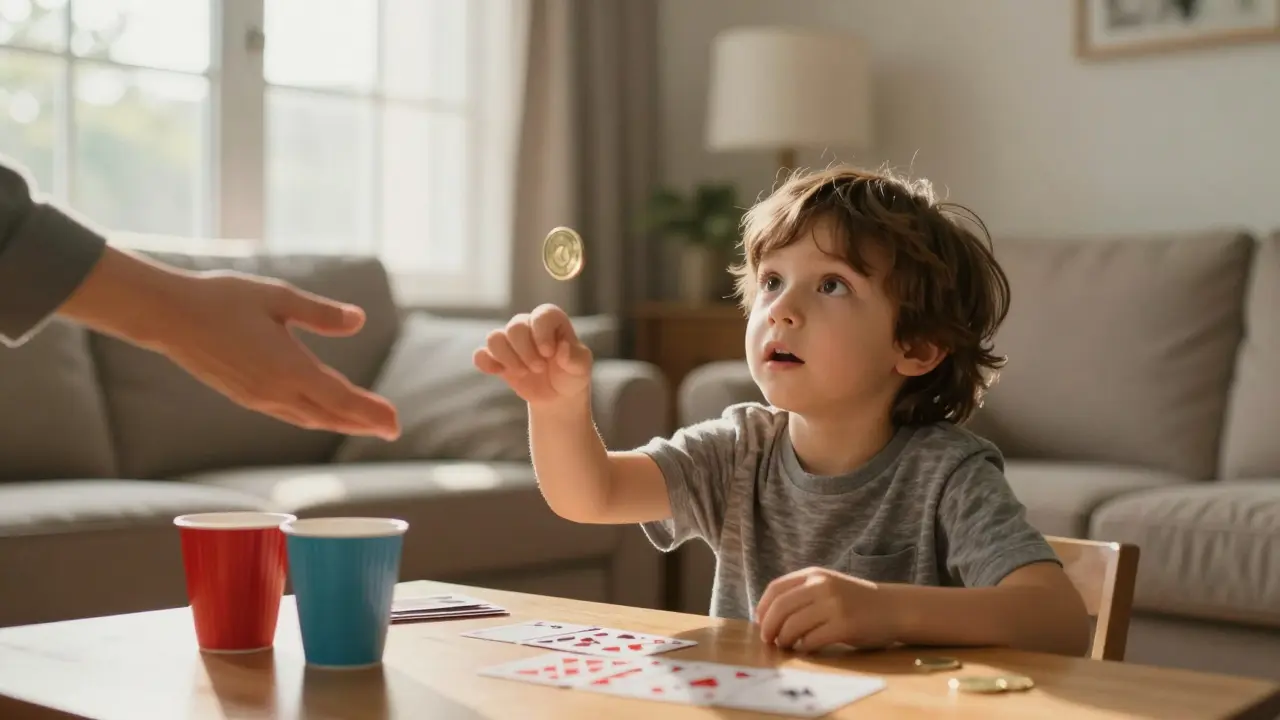
Ever watched your child’s eyes light up after a coin vanishes into thin air? That moment isn’t just wonder-it’s brain-building. Magic tricks aren’t just entertainment for kids. They’re hidden lessons in logic, attention, memory, and problem-solving. And the best part? Your child doesn’t even realize they’re learning.
How Magic Tricks Train the Brain
When a magician makes a card disappear, your child’s brain doesn’t just see magic-it tries to solve a puzzle. That’s cognitive engagement in its purest form. Studies from the University of Edinburgh show that children who regularly watch or perform magic tricks score higher on tests measuring working memory and attention span than those who don’t. Why? Because magic forces the brain to pause, predict, and re-evaluate.
Here’s how it works: your child sees something impossible. Their brain says, “That shouldn’t happen.” Then it scrambles to figure out how it did. That process-observing, hypothesizing, testing, and rejecting ideas-is the same one scientists use. Magic turns your living room into a lab.
Attention and Focus: The Hidden Skill
Most magic tricks rely on misdirection. The magician talks, gestures, or smiles while the real move happens. Kids watching this learn to track multiple things at once. They start noticing tiny details: a flick of the wrist, a shift in weight, the way a sleeve hides a secret. Over time, this improves their ability to focus in school, during homework, or while listening to instructions.
A 2023 study at the Child Cognitive Lab in Boston tracked 120 kids aged 5-8 over six months. Half were given simple magic kits to practice weekly. The other half played with standard toys. The magic group showed a 27% improvement in sustained attention tasks. Not because they learned to perform tricks-but because they learned to watch.
Memory and Sequencing: The Secret Sauce
Performing magic requires memory. A child learning to pull a rabbit from a hat must remember the sequence: where the prop is hidden, when to reveal it, how to gesture, what to say. Each trick is a mini-script. Repeating it builds neural pathways for recall and order.
Think about it: memorizing a magic routine is like learning a poem, but with actions. It’s not rote memorization-it’s embodied memory. Kids who practice magic tricks regularly show better recall in school, especially for multi-step tasks like following science experiments or solving math word problems.
Problem-Solving and Critical Thinking
When a child tries to figure out how a trick works, they’re doing science. They test theories: “Maybe the card is stuck to the table.” “Is the box hollow?” “Did they switch it when I looked away?” This isn’t guessing-it’s the scientific method in action.
One parent in Portland shared how her 7-year-old spent three days trying to crack a coin-through-table trick. He drew diagrams, tested different surfaces, even asked his older brother for help. That’s collaboration, experimentation, and persistence-all sparked by a magic trick.
Language and Communication
Magic isn’t silent. It’s storytelling. A good trick needs a setup, a build-up, a punchline. When kids perform magic, they learn to control their voice, pace their words, and read their audience. They practice eye contact, timing, and confidence.
Teachers in Providence public schools noticed that kids who joined after-school magic clubs improved their public speaking scores by an average of 40% over one semester. They weren’t just performing tricks-they were learning how to hold attention, manage nerves, and express ideas clearly.
Emotional Intelligence and Patience
Not every trick works the first time. A card might slip. A rope might tangle. A coin might refuse to vanish. That’s okay. Magic teaches resilience. Kids learn that failure isn’t the end-it’s part of the process.
They also learn empathy. When a child performs for a sibling or friend, they watch for reactions. Did the trick surprise them? Did they laugh? Did they look confused? That emotional feedback loop helps kids tune into others’ feelings. It’s social-emotional learning disguised as fun.
What Kind of Magic Works Best?
You don’t need a $200 professional kit. Start simple:
- Vanishing coin tricks - Teach how to palm a coin. Builds fine motor skills and secrecy.
- Color-changing cups - Teaches prediction and observation.
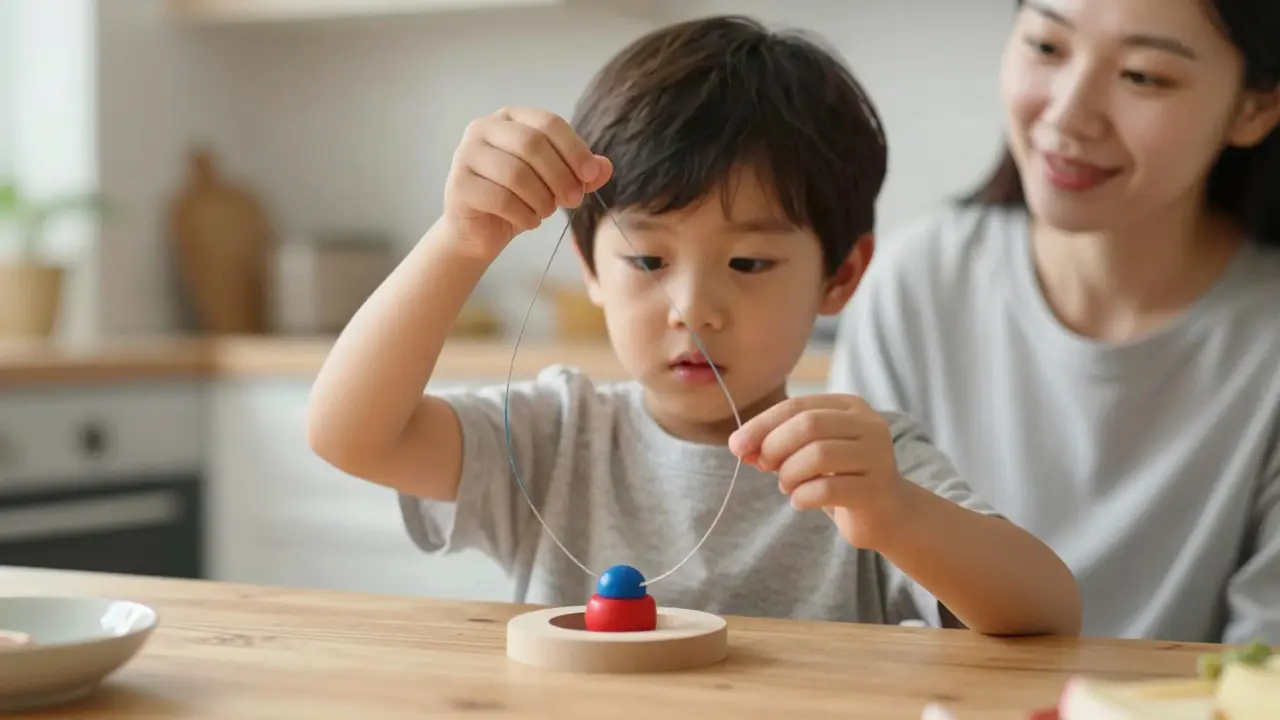
- String and ring tricks - Improves hand-eye coordination and spatial reasoning.
- Card force tricks - Introduces psychology of choice and influence.
Look for kits labeled “beginner magic for kids.” Brands like Vanishing Inc. Kids a line of magic kits designed for children aged 6-12 with step-by-step video tutorials and ThinkFun Magic a toy company that blends logic puzzles with sleight-of-hand offer safe, age-appropriate tools. Avoid kits with small parts for kids under 5.

How to Get Started at Home
Here’s a simple routine to begin:
- Choose one trick that takes less than 5 minutes to learn.
- Practice it yourself first. Don’t rush-master the secret.
- Perform it for your child. Don’t explain how it works. Let them wonder.
- Ask: “How do you think I did that?” Don’t correct their guesses. Encourage ideas.
- Let them try it. Even if they mess up, celebrate the attempt.
Do this once a week. In a month, they’ll start inventing their own variations. That’s when the real learning kicks in.
Real Results, Not Just Fun
It’s not magic. It’s neuroscience. The same brain regions activated during magic performance-prefrontal cortex, hippocampus, parietal lobe-are the ones responsible for planning, memory, and attention. Regular exposure to magic doesn’t just entertain. It rewires the way a child thinks.
Parents in Seattle, Chicago, and Providence have reported improvements in school performance, reduced frustration with homework, and increased curiosity in science class-all after introducing weekly magic sessions.
Why This Matters Now
In a world full of screens and quick dopamine hits, magic offers something rare: slow, deep engagement. It asks kids to sit still, think hard, and stay curious. That’s not just helpful-it’s essential.
Forget apps that promise to boost IQ. Real cognitive growth happens when children are challenged to solve problems they can’t immediately understand. Magic gives them that challenge-and makes it feel like play.
At what age can kids start learning magic tricks?
Kids as young as 4 can enjoy simple magic with large, easy-to-handle props like colored balls or big cards. By age 6, most children have the fine motor skills and attention span to learn and perform basic tricks. The key isn’t age-it’s interest. If your child is fascinated by secrets and surprises, they’re ready.
Can magic tricks help children with ADHD or learning differences?
Yes. Magic provides structure with novelty. Kids with ADHD often struggle with tasks that feel repetitive, but magic is engaging because it’s unpredictable. Performing a trick gives them a clear goal, a sequence to follow, and immediate feedback. Many therapists now use magic as a tool in occupational and behavioral therapy to improve focus and impulse control.
Do I need to be good at magic to teach my child?
No. You just need to be willing to learn alongside them. Many beginner kits come with QR codes linking to video tutorials. Watch the video together. Practice in the kitchen. Laugh when it doesn’t work. Your child learns more from your curiosity than your perfection.
How long should magic sessions last?
Start with 10-15 minutes once a week. Let your child set the pace. If they’re excited, they’ll ask for more. If they lose interest, take a break. Magic should feel like play, not homework. Consistency matters more than duration.
Are there any risks to teaching magic to kids?
The main risk is frustration if the trick doesn’t work. Avoid pushing too hard. Also, watch for small parts in cheap kits-especially for children under 5. Otherwise, magic is one of the safest, most enriching activities you can introduce. It builds confidence, not dependence on screens or rewards.
What Comes Next?
Once your child masters a few tricks, encourage them to create their own. Maybe they’ll invent a trick where their stuffed animal disappears. Or a card that changes color when they say a word. That’s creativity in motion. That’s innovation.
There’s no final level in magic. There’s only more wonder. And every trick they learn, or invent, makes their brain stronger, sharper, and more alive.