

People think magic is about wands, capes, and secret handshakes. But real magic? It’s about misdirection, timing, and human psychology. You don’t need a spellbook. You need a deck of cards, a coin, and the willingness to mess up-over and over again.
Start with the basics, not the flashy stuff
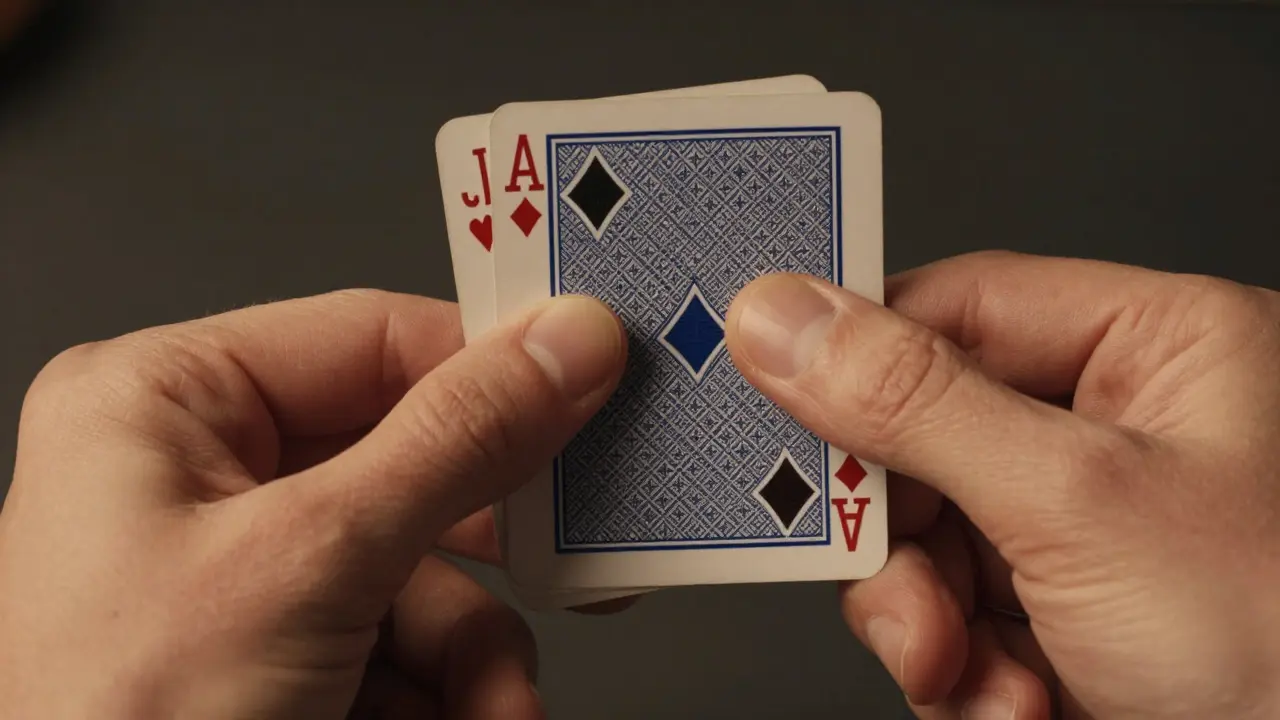
Don’t jump into sawing someone in half. That’s not magic. That’s a stage show. Real magic starts with simple moves you can do in your living room. The pass-a way to secretly move a card from one hand to another-is the foundation of nearly every card trick. The double lift, where you lift two cards as if they’re one, is another essential. These aren’t hard to learn. They’re just hard to do well.
Watch videos from real magicians, not TikTok influencers. Look up Dai Vernon, Jean Hugard, or Ricky Jay. These people didn’t rely on editing. They made magic look natural because they practiced for hours, every day. Start with one move. Master it. Then add another. Don’t learn ten tricks. Learn one trick inside and out.
Practice like a musician, not a student
Most people try a trick once, say ‘cool,’ and move on. That’s not practice. That’s play. Real practice means doing the same move 50 times in a row, slowly, with a mirror. Watch your fingers. Watch your eyes. Watch your face. If you blink when you do the move, you’re giving it away. If your thumb twitches when you palm a coin, you’re not ready.
Set a timer. Ten minutes a day. No more. No less. Do it at the same time, every day. Morning coffee. Before bed. Consistency beats intensity every time. After 30 days, you’ll notice your hands move differently. That’s when magic starts to feel real.
Learn the psychology behind the trick
Magic isn’t about sleight of hand. It’s about controlling attention. Your audience doesn’t need to be fooled-they need to be distracted. That’s where psychology comes in. The classic force-making someone pick a card you want them to pick-works because people believe they made a free choice. That’s not magic. That’s how the brain works.
Read about cognitive biases. The illusion of choice, the misdirection effect, the anchoring bias. These aren’t just terms. They’re tools. When you know how people think, you don’t need fancy moves. You just need to say the right thing at the right time.
Perform for real people, not your mirror
Practicing in front of a mirror is good. Performing for your cat? Not so much. You need feedback. Start small. Do a trick for a friend while waiting in line. Ask them: ‘Did you see how I did it?’ If they say yes, you didn’t fool them. That’s not failure. That’s data.
Try it on family. Your little cousin? Your aunt who always says ‘I know how you do that’? They’re your best critics. Watch their eyes. Do they look at your hands? Or do they look at your face? If they’re laughing, you’re doing it right. If they’re squinting, you’ve got work to do.
Use the right tools-no gimmicks
There are thousands of magic kits online promising ‘instant magic.’ Most are garbage. They rely on gimmicks-magnetic cards, gimmicked coins, hidden threads. These don’t teach you anything. They teach you how to use a toy.
Stick to standard decks. Bicycle cards. A single coin. A rubber band. These are the tools real magicians use. They’re cheap. They’re everywhere. And they’re honest. If you can make magic with these, you’ve learned something real.
Build a repertoire, not a collection
Don’t collect tricks. Build a set of three you can do flawlessly. One card trick. One coin trick. One mentalism effect-like guessing a number someone thought of. That’s your whole show. You don’t need ten. You need three that feel like part of you.
Practice them in order. Start with the easiest. End with the strongest. Leave them wanting more. That’s the secret. Magic isn’t about what you show. It’s about what you hold back.
Record yourself. Then watch it like a stranger
Use your phone. Film yourself doing a trick. Then watch it without thinking. Watch it like you’re watching someone else. Do you look nervous? Do you talk too fast? Do you smile when you shouldn’t? These are the things you won’t notice while doing the trick.
Most people think magic is about speed. It’s not. It’s about control. Slow movements with confidence look more magical than fast ones with panic.

Join a community-without the ego
There are local magic clubs in most cities. Asheville has one. So does Charlotte, Atlanta, and Nashville. Go. Watch. Listen. Don’t try to impress. Just learn. The best magicians aren’t the ones who show off. They’re the ones who keep showing up.
Online forums like Reddit’s r/Magic or the Magic Cafe are full of people who’ve been doing this for 20 years. Ask questions. Post your videos. Don’t be afraid of criticism. The best feedback comes from people who’ve been where you are.
Accept that you’ll never be perfect
Even David Blaine messes up. Even Houdini had bad shows. Magic isn’t about being flawless. It’s about being believable. If you fumble a card, keep talking. Laugh it off. Turn it into part of the act. People remember how you made them feel, not whether you dropped the coin.
The goal isn’t to fool everyone. The goal is to make someone say, ‘How did you do that?’ and mean it. That’s real magic.
Keep going-even when it feels pointless
There will be weeks where nothing clicks. You’ll feel like you’re back at square one. That’s normal. Magic doesn’t follow a straight line. It spirals. You’ll do a trick you’ve done a hundred times, and suddenly, it works perfectly. You won’t know why. That’s the magic.
Keep your notebook. Write down what worked. What didn’t. What made someone laugh. What made them lean in. Over time, you’ll build your own style. Not someone else’s. Yours.
You don’t need a stage. You don’t need a costume. You just need to show up. Every day. One move. One trick. One moment where someone’s eyes widen-and you know, for the first time, you didn’t just perform magic. You made it real.
Can you really learn magic without buying special equipment?
Yes. The most powerful magic uses everyday objects: a deck of cards, a coin, a rubber band, or even a napkin. Professional magicians often perform with borrowed items because the trick isn’t in the prop-it’s in the technique. Start with standard Bicycle playing cards and a single coin. Master moves like the pass, the double lift, and the palm before buying gimmicks.
How long does it take to get good at magic?
It depends on how much you practice. Most people see real improvement after 30 days of 10-minute daily sessions. To perform confidently in front of others, plan for 6 to 12 months of consistent practice. Magic is a skill, not a talent. Progress is slow at first, then sudden. You’ll hit plateaus, but if you keep going, you’ll break through.
Is magic just about hand movements?
No. Hand movements are only part of it. The real magic happens in the mind-yours and the audience’s. Misdirection, timing, and storytelling matter more than sleight of hand. A well-placed pause, a casual comment, or a smile can make a simple trick feel impossible. Focus on controlling attention, not just controlling objects.
What’s the best way to practice magic alone?
Use a mirror. Film yourself. Practice slowly. Repeat the same move until it looks natural. Don’t rush. Focus on smoothness, not speed. Record your voice too-listen for nervous speech or filler words like ‘um’ and ‘like.’ Magic thrives on calm confidence. If you sound unsure, the trick will feel fake.
Should I learn from YouTube tutorials?
Yes-but selectively. Avoid flashy, edited videos that promise ‘instant magic.’ Look for tutorials from established magicians like Juan Tamariz, Darwin Ortiz, or Simon Lovell. Watch for explanations of why a move works, not just how to do it. Good tutorials teach psychology, not just motion.
Can kids learn real magic too?
Absolutely. Many professional magicians started before age 10. Magic helps kids develop focus, patience, and communication skills. Start with simple coin vanish tricks or card color changes. The key is keeping it fun and low-pressure. Let them perform for family, not compete for perfection.
What’s the biggest mistake beginners make?
Trying to do too much too soon. Learning ten tricks poorly is worse than mastering one. Beginners often skip practice, ignore psychology, and rely on gimmicks. Real magic grows from repetition, observation, and small, honest improvements-not from buying expensive kits or watching viral videos.
If you’ve made it this far, you’re already on the path. You’re not looking for shortcuts. You’re looking for truth. That’s what separates the people who just watch magic from the ones who make it.
Sanjay Mittal
December 21, 2025 AT 00:29Started with the pass last week. Did it 50 times before coffee every morning. My fingers are sore, but my sister just asked me to do it again-she didn’t see it. That’s the first time anyone’s been fooled. Still messy, but real.
Don’t overthink it. Just do the move. Again. And again.
Mike Zhong
December 22, 2025 AT 22:24This is the most delusional self-help garbage I’ve read since ‘manifesting’ your way out of debt. Magic isn’t a skill-it’s a performance art built on deception. You’re not learning ‘real magic,’ you’re learning how to lie with your hands. And calling it ‘psychology’ doesn’t make it profound. It makes it manipulative.
Stop romanticizing trickery. Real wisdom doesn’t need a double lift.
Jamie Roman
December 23, 2025 AT 08:24Man, I love this post. I’ve been doing the pass for 47 days now. I started with a deck of Walmart cards, no mirror, just pure repetition. There was this one night-3 a.m., kitchen light on, my dog asleep on the floor-I did it perfectly. Not because I was trying. Because I stopped trying.
That’s the secret. It’s not about control. It’s about surrender. The trick doesn’t work because your fingers are fast. It works because your mind is quiet. I’ve started filming myself now. Watching my face is the hardest part. I smile when I’m nervous. Everyone does. But if you catch it, you can fix it. Keep going. One move. One day. That’s all it takes.
And yeah, your cat doesn’t care. But your cousin who says ‘I know how you did that’? That’s your real audience. Listen to them. They’re not wrong. They’re just not fooled yet.
Salomi Cummingham
December 25, 2025 AT 02:08Oh my god, I cried reading this. Not because it’s deep-though it is-but because I remember the first time I made my little brother gasp. He was seven. I used a quarter and a napkin. I didn’t even know what a ‘pass’ was. I just wanted him to look at me like I was magic.
And now, five years later, I still do that trick. Same napkin. Same quarter. He’s 12 now. He still asks me to do it before bed. He doesn’t care about psychology. He just believes.
That’s the real magic. Not the moves. The belief. Keep making people believe. Even if it’s just for a second. That’s enough.
Johnathan Rhyne
December 26, 2025 AT 00:20Okay, but ‘pass’? That’s not even the right term. It’s the ‘double pass’ or ‘Hindu pass’-you’re misnaming it like a beginner who googled ‘card tricks’ and took the first result. And ‘double lift’? You mean ‘double turnover’? No. You mean ‘double lift.’ Get your terminology right, or you’re just spreading misinformation.
Also, ‘gimmicked coins’ aren’t garbage-they’re tools. If you’re too lazy to master the palm, don’t shame people who use a billet. Real magicians use whatever works. Houdini used wires. You’re just mad because you can’t palm a coin.
Also, ‘Bicycle cards’? Please. I use Tally-Ho. They’re smoother. And don’t get me started on ‘rubber bands.’ That’s not magic. That’s a party trick for toddlers.
Jawaharlal Thota
December 26, 2025 AT 12:36I started learning magic after my father passed. He used to do card tricks for me when I was little. I didn’t know it then, but he was teaching me patience. I didn’t cry when I messed up. I just did it again.
I live in a village in Uttar Pradesh. No magic shops here. No YouTube tutorials with subtitles. I learned from an old man who sold tea near the station. He used playing cards from the local shop. No fancy names. Just ‘move the card here, look there.’
Three months later, I did a trick for a group of kids under a banyan tree. One of them said, ‘Did you swallow it?’ I laughed. He didn’t know I didn’t swallow anything. He just believed it was magic.
That’s all you need. A quiet mind. A steady hand. And someone who still believes in wonder.
Keep going. Even if no one watches. Even if you’re alone. The magic is still there.
Lauren Saunders
December 28, 2025 AT 03:58How quaint. You’ve turned sleight-of-hand into a spiritual journey. ‘Real magic’? Please. This is just performance theory dressed up as enlightenment. You’re not ‘controlling attention’-you’re exploiting cognitive biases like a low-budget behavioral psychologist.
And let’s be honest: if you need to ‘practice 10 minutes a day’ to fool someone into thinking you’re magical, you’re not a magician. You’re a therapist with bad dexterity.
Real magic is the kind that can’t be explained. The kind that leaves you breathless. Not the kind you YouTube-tutorial your way into after 30 days of mirror practice.
Also, ‘Bicycle cards’? How pedestrian.
sonny dirgantara
December 28, 2025 AT 11:45bro i tried the double lift today and my thumb just kinda… did its own thing. i think i broke it. or maybe i just suck. either way i’m gonna keep trying. maybe tomorrow.
also my dog watched me for like 3 minutes then walked away. i think she’s judging me.
Andrew Nashaat
December 28, 2025 AT 18:31Let’s address the elephant in the room: you say ‘don’t use gimmicks,’ yet you recommend ‘a single coin’-which, by the way, is technically a gimmick if it’s not a standard-issue U.S. quarter. Also, ‘rubber band’? That’s a prop. You’re contradicting yourself.
Furthermore, you claim ‘magic isn’t about speed,’ yet you praise ‘smooth movements’-which implies tempo. You’re using contradictory language to sound profound. Also, ‘leave them wanting more’? That’s not magic-that’s basic storytelling 101.
And you say ‘even David Blaine messes up’-but you didn’t cite a source. That’s an unsubstantiated claim. Where’s your APA citation?
Also, ‘Bicycle cards’? They’re mass-produced. Real magicians use Strata or Tally-Ho. You’re not a magician. You’re a blogger with a deck of cards and an ego.
Gina Grub
December 29, 2025 AT 01:49It’s not about the hand. It’s about the silence between the moves. The breath you hold. The glance you don’t give. The way you pause just before the reveal-like you’re about to tell a secret.
I once did a trick for a funeral. Just a coin. Just a hand. No words. The widow didn’t cry. She smiled. And whispered, ‘He used to do that.’
That’s not magic. That’s memory. That’s grief made beautiful.
They don’t remember the move. They remember the moment. That’s all that matters.
Nathan Jimerson
December 30, 2025 AT 07:14I’ve been practicing for 11 days. I still drop the card. My roommate laughs every time. But yesterday, she asked me to do it again. Not because she wanted to see how it worked. Because she wanted to feel the magic again.
You’re not failing. You’re becoming. Keep going.
Dylan Rodriquez
December 31, 2025 AT 18:23This post reminded me of my grandmother. She never called it magic. She called it ‘making the ordinary feel sacred.’ She’d fold a napkin into a swan before dinner and say, ‘Watch closely-this one’s for you.’
She didn’t care if I figured it out. She cared if I noticed the care.
That’s what this is. Not technique. Not psychology. Not even skill.
It’s love disguised as a trick.
Keep showing up. Not to fool. To connect. That’s the only magic that lasts.
Jamie Roman
January 1, 2026 AT 08:08Just read your comment about the funeral. I’m crying at my desk. That’s the truth right there. We’re not teaching people how to see a coin disappear. We’re teaching them to notice the silence when it does.
I’m going to try that next time. Not the move. The pause. The breath. The look.
Thank you.