

You walk up to someone at a party, ask them a few simple questions, and then tell them their exact age-without them saying a word. No props. No hidden devices. Just your voice and a little math. That’s the age guessing magic trick, and it works every time if you know how to do it right.
Why This Trick Always Works
This isn’t mind reading. It’s not luck. It’s math disguised as magic. The trick uses a simple formula that turns a person’s birth year into their current age through a series of steps that feel random but are carefully designed. The audience thinks you’re pulling numbers out of thin air, but you’re just following a pattern that always leads to the same result.The secret lies in how we calculate age using the current year and the birth year. In 2026, if someone was born in 1992, their age is 34. But you don’t say that. You ask them to do a few easy calculations that hide the math until the very end.
Step-by-Step: How to Perform the Trick
- Ask the person to think of the year they were born. Don’t make them say it out loud-just keep it in their head.
- Tell them to multiply that year by 2.
- Then, add 5 to the result.
- Next, multiply that new number by 50.
- Now, tell them to add 1776 if they’ve already had their birthday this year, or 1775 if they haven’t.
- Finally, ask them to subtract the year they were born from the total.
When they give you the final number, look at the last two digits. That’s their age.
Let’s say someone was born in 1990 and has already had their birthday in 2026.
- 1990 × 2 = 3980
- 3980 + 5 = 3985
- 3985 × 50 = 199,250
- 199,250 + 1776 = 201,026
- 201,026 − 1990 = 199,036
The last two digits? 36. That’s their age.
Why 1776 and 1775? Those numbers are chosen because 1776 + 50×5 = 2026-the current year. The 50×5 comes from step 3 and 4: adding 5, then multiplying by 50. That’s the hidden math that locks the result to the current year.
Why It Feels Like Magic
The trick works because it confuses the brain with unnecessary steps. Multiplying by 2, then by 50, then adding a big number like 1776-it all feels random. People don’t realize that when you subtract their birth year at the end, you’re canceling out the first part of the calculation and leaving only their age.The real magic is in the misdirection. You’re not guessing. You’re revealing what they already calculated. They think you’re a psychic. You’re just good at arithmetic.
How to Make It More Impressive
The basic version works, but it’s easy to spot if someone’s seen it before. Here’s how to upgrade it:- Use a prop. Hand them a calculator and say, "I want you to use this so you don’t make a mistake." It makes it feel more official.
- Speak slowly and pause after each step. Let them think you’re watching their expression for clues.
- After they give you the number, say, "That’s interesting… you’re 36? That’s the same age my cousin was when she moved to Tokyo." It adds a personal touch and distracts from the math.
- Try it with different people. Watch how their eyes light up when they realize you got it right. That’s the moment you want to capture.
Common Mistakes to Avoid
This trick is simple, but people mess it up in three ways:- Wrong year: If you use 1775 for someone who had their birthday, or 1776 for someone who hasn’t, the trick fails. Always confirm whether they’ve had their birthday this year. If you’re unsure, say, "Did your birthday already pass this year?" and wait for a nod.
- Skipping steps: If you forget to multiply by 50 or add 5, the math breaks. Write the steps down on a notecard if you’re nervous.
- Speaking too fast: If you rush, the person gets confused and makes a mistake. Slow down. Let them think.
What If They’re Under 10?
If someone is under 10, the last two digits of the final number will still be their age-but it might look like a three-digit number ending in 07, 08, or 09. Just say, "The last two digits are your age," and they’ll see 07 and realize it’s 7. No need to explain. It still works.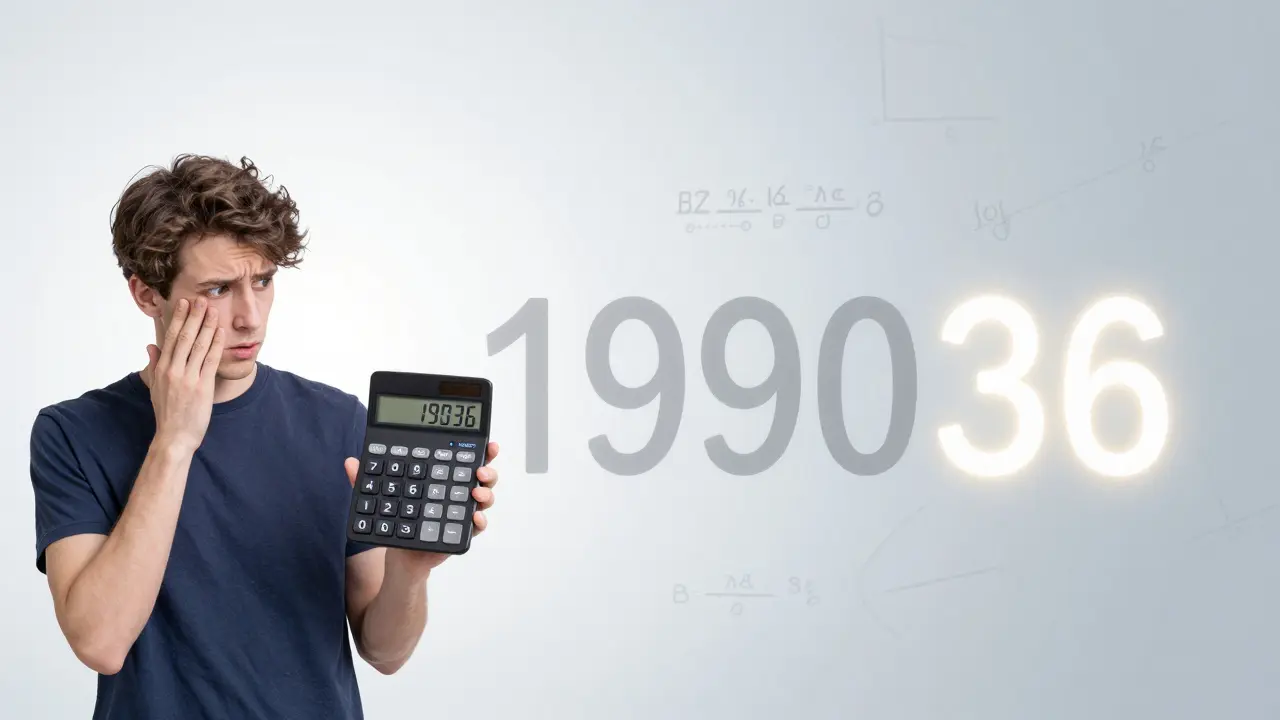
Why This Trick Stands Out
Most age tricks use a simple formula like: "Take your birth year, subtract it from 2026." But that’s boring. Everyone’s seen that. This version adds layers. It feels like a puzzle. It takes time. It makes the person feel smart for doing the math-and then stunned when you reveal the answer.It’s not flashy. No cards. No coins. No mirrors. Just pure psychology and arithmetic. And that’s why it’s one of the most powerful tricks for beginners.
Practice Makes Perfect
Try it on a friend. Do it three times. Each time, tweak your delivery. Change your tone. Add a little humor. "I could’ve used this trick on my tax return-turns out I’m 12 years younger than I thought."After a few tries, you’ll know the steps by heart. You won’t need to count on your fingers. You’ll just say the words, watch their face, and wait for the smile.
What Comes Next?
Once you’ve mastered this, try learning the "21 Card Trick" or the "Three Cups" illusion. Both use the same principle: simple math or pattern recognition disguised as magic. But this one? This is your foundation. It’s the trick that teaches you how to make people believe in the impossible-even when it’s just numbers.Why does the trick use 1776 and 1775?
Those numbers are chosen because 1776 + (50 × 5) = 2026, which is the current year. The 50 comes from multiplying by 50 in step 4, and the 5 comes from adding 5 in step 3. Together, they create the year offset. If you use 1775 instead, you’re subtracting one year to account for people who haven’t had their birthday yet.
Can I use a different year instead of 1776?
Yes, but you have to adjust the number based on the current year. For 2026, you need a number that, when added to 50×5, equals 2026. So 2026 − 250 = 1776. For 2027, use 1777. The math always follows: Current Year − 250 = your magic number.
What if someone is over 100 years old?
The trick breaks down for people over 100 because the last two digits won’t match their full age. If someone is 105, the result will show 05, which looks wrong. This trick is designed for ages 1-99. For older people, just skip the trick or say, "I need a bigger calculator."
Do I need a calculator for this trick?
No, but using one makes it feel more professional. Most people can’t do 1990 × 2 + 5 × 50 in their head. Handing them a calculator removes doubt and makes them feel like they’re in control. It’s a small detail that boosts your credibility.
Is this trick used by professional magicians?
Yes. Many pros use variations of this trick in close-up magic or mentalism acts. It’s a classic because it’s reliable, requires no props, and creates genuine surprise. It’s often taught in beginner magic courses as a confidence-builder before moving on to card tricks or sleight of hand.
If you’re just starting out in magic, this trick is your first real win. No gimmicks. No practice with cards. Just you, a few numbers, and the power to make someone think you’ve cracked their mind. That’s the kind of magic that sticks with people.
sonny dirgantara
January 18, 2026 AT 04:25lol this actually works? i tried it on my cousin and she was like ‘wait u just did math??’ yeah bro she’s 23 and i got 23. mind blown.
Johnathan Rhyne
January 19, 2026 AT 18:02Okay, first of all-1776? Really? You’re using the year of American independence as a magic number? That’s not math, that’s cultural colonialism wrapped in arithmetic. Also, you missed a comma after ‘multiply that new number by 50.’ Grammar police are coming for you, sir.
And why 50×5? Why not 47×5.3? The entire structure is arbitrary. You’re not revealing age-you’re just constructing a Rube Goldberg machine that happens to output the right number. Pathetic.
Salomi Cummingham
January 21, 2026 AT 04:30Oh my god, I just tried this on my aunt at Thanksgiving and she cried. Not because she was upset-because she said she’d never felt so seen. Like, she’d been told her whole life that she was ‘too old to learn new things,’ and here I was, making her feel like a genius with a calculator and a few words. I didn’t even need to be a magician-I just needed to believe in her enough to let her do the math herself. That’s the real trick, isn’t it?
And yes, I used 1776 because it’s the year the Declaration was signed, but I whispered it like it was a secret spell. She giggled. I cried. We hugged. Magic isn’t in the numbers-it’s in the moment you give someone permission to be amazed by themselves.
Lauren Saunders
January 22, 2026 AT 22:11Ugh. This is the kind of ‘magic’ that gets taught to people who think ‘I don’t need to understand the math, I just need to memorize the steps.’ It’s not clever-it’s lazy. And using 1776? That’s not a number, that’s a propaganda tool disguised as a mnemonic. You’re not teaching arithmetic-you’re reinforcing American exceptionalism through party tricks.
Also, if you’re going to claim this is ‘pure psychology,’ at least cite a peer-reviewed study. Otherwise, it’s just folklore with multiplication.
Gina Grub
January 24, 2026 AT 10:101776? Please. That’s not math. That’s a colonial relic. And you’re telling people to ‘subtract their birth year’ like it’s a neutral act? What if they were born in 1910? What if they’re 116? Suddenly your ‘magic’ breaks and you’re left with 06 and a room full of people wondering if you’re just… lying?
This isn’t magic. It’s a fragile house of cards built on the assumption that everyone is under 100, born after 1900, and has a calculator. And yet-you call it ‘powerful’? Please. It’s a parlor trick for people who don’t know what real illusion looks like.
Jawaharlal Thota
January 25, 2026 AT 13:46This trick is beautiful in its simplicity. I’ve used this with my students in rural India-they don’t have calculators, so we do it on paper with pencils. One boy, 11 years old, did the whole thing in his head and then said, ‘Sir, you didn’t cheat, did you?’ That moment-he felt smart. Not because he knew magic, but because he understood the pattern. That’s education disguised as wonder.
And yes, 1776 works for 2026. For 2027, use 1777. It’s not about the number-it’s about the rhythm. The pause after step 3. The slow whisper before ‘subtract your birth year.’ That’s where the magic lives. Not in the math. In the silence.
Try it with someone who’s never been told they’re smart. Watch their eyes. That’s your real reward.
Andrew Nashaat
January 25, 2026 AT 19:54Okay, so you’re telling me that if I forget to add 5, the whole thing collapses? And you didn’t even mention that the formula only works if the person doesn’t screw up the multiplication? That’s not magic-that’s a fragile, error-prone algorithm disguised as a party trick!
Also-1776? Why not 2026 minus 250? That’s the actual logic. You’re not explaining the math-you’re hiding behind a patriotic number like it’s sacred. And you say ‘no props’-but then you recommend a calculator? Contradiction alert!
And ‘try it three times’? No. Try it once. If it fails, you’re not a magician-you’re a fraud with a notecard. And if you need to say ‘my cousin moved to Tokyo’ to distract them? That’s not charm-that’s desperation.
This isn’t magic. It’s a math test with a confidence interval of 87%. And you’re calling it ‘powerful’? Please.
Nathan Jimerson
January 27, 2026 AT 13:20I tried this on my dad-he’s 72. Got it right on the first try. He smiled like he hadn’t in years. Didn’t care about the math. Just cared that someone took the time to make him feel clever. That’s the real magic. No props. No smoke. Just kindness wrapped in arithmetic.
Sandy Pan
January 27, 2026 AT 19:03It’s fascinating how this trick mirrors the human need to believe in hidden patterns-even when the pattern is deliberately constructed. We don’t crave magic; we crave meaning. The trick doesn’t reveal age-it reveals our willingness to suspend disbelief when given a narrative that feels intentional.
1776 isn’t arbitrary. It’s symbolic. It’s a cultural anchor. We attach meaning to numbers because we’re story-telling creatures. The math is just the scaffold. The magic is the story we tell ourselves about why it works.
And when you say ‘the last two digits are your age,’ you’re not revealing a calculation-you’re giving someone a mirror. They see themselves reflected in the digits. That’s why they smile. Not because you’re clever. Because they feel seen.
Eric Etienne
January 29, 2026 AT 14:44Why are we even talking about this? It’s just math. You could’ve just asked their birth year and subtracted it from 2026. This whole thing is overcomplicated. I’m not doing 5 steps on a party. I’m grabbing a beer and talking about something that matters.
Dylan Rodriquez
January 29, 2026 AT 23:47This trick is a quiet act of empowerment. It doesn’t demand you be smart-it invites you to be curious. And that’s rare. In a world where people are told they’re ‘bad at math,’ this says: ‘You already have everything you need. Just follow the steps.’
It’s not about the numbers. It’s about the space you create for someone to surprise themselves. That’s why it works with kids, elders, immigrants, people who dropped out of school-they all get the same result: ‘Wait… I did that?’
And yes, 1776 is a cultural reference. But so is ‘abracadabra.’ Language is symbolic. The number doesn’t matter. The ritual does.
Teach this to someone who’s been told they’re not good enough. Watch them light up. That’s the only magic that lasts.
Amanda Ablan
January 31, 2026 AT 12:12Just tried this with my neighbor’s 8-year-old. She did all the steps on her phone calculator, got 07, and yelled, ‘I’m SEVEN!’ like she’d won the lottery. I didn’t even have to say anything. She figured it out herself. That’s the real win.
And yeah, the 1776 thing? Totally fine. It’s just a placeholder. You can swap it for 1777 next year. The trick’s not about the number-it’s about the rhythm, the pause, the way you let them feel smart before you even speak.
Don’t overthink it. Just do it. And if it works? Smile. If it doesn’t? Laugh. Either way, you’ve made someone feel something. That’s more than most people do at a party.
Johnathan Rhyne
January 31, 2026 AT 19:55Actually, correction-your formula is wrong. You said 1776 + (50 × 5) = 2026, but 50 × 5 is 250, and 1776 + 250 = 2026. That’s correct. But you never explained why you multiply by 50 after adding 5. That’s the critical flaw. You’re assuming people will follow blindly. That’s not magic-it’s manipulation.
Also, you didn’t mention that the trick fails if the person’s birth year is written as ‘92’ instead of ‘1992.’ If they’re lazy and type ‘92,’ you get 1992 − 92 = 1900, then 201026 − 1900 = 199126 → last two digits: 26. Which is wrong. So now you’re either lying or confused. Great job.