
Everyone has seen it-the magician making a person vanish, sawing someone in half, or reading a thought they never spoke. These aren’t just tricks. They’re carefully engineered illusions built on psychology, misdirection, and decades of refined technique. If you’ve ever wondered how these impossible feats actually work, you’re not alone. Let’s break down five of the world’s most famous magic tricks and reveal the science behind the magic.
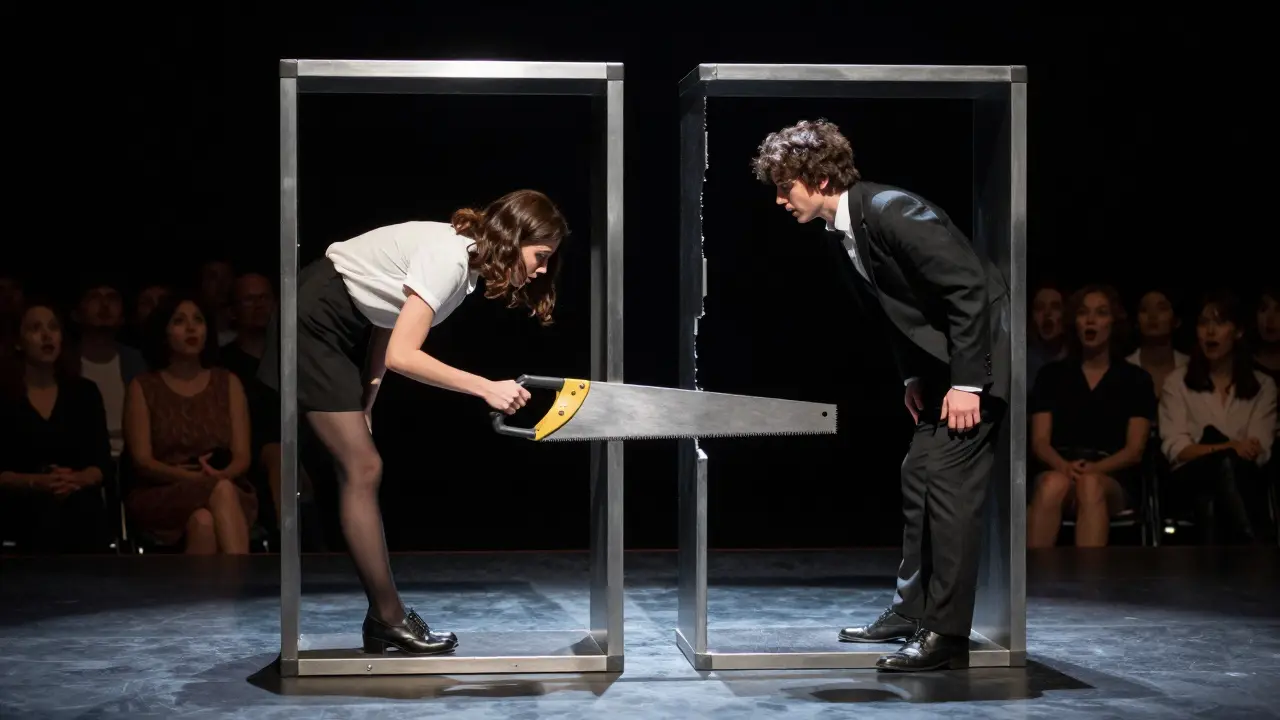
The Sawing a Woman in Half
This is one of the oldest and most shocking illusions in magic history. It was first performed by P.T. Selbit in 1921, and later made famous by David Copperfield and others. At first glance, it looks like a metal box is split into two parts with a woman inside, and a saw cuts cleanly through her waist. She walks out unharmed. How?
The secret lies in clever compartment design. The box isn’t one solid unit-it has hidden sections. The assistant isn’t actually lying in a straight line. Her body is bent, with her shoulders and head in one section, and her legs in another. The middle section is padded and shaped to look like a torso, but it’s empty. The saw doesn’t cut through her-it cuts through the empty space between the two sections. The illusion works because your eyes follow the saw’s motion and assume continuity. The assistant’s legs are angled to hide the break, and her clothing hides the gap. Even the assistant’s facial expressions are timed to sell the illusion-she gasps just as the saw passes.
The Floating Woman
Imagine a woman levitating several feet in the air, with no wires, no platforms, no visible support. This trick has been done by David Blaine, Dynamo, and even Harry Houdini. It looks supernatural, but it’s pure physics and geometry.
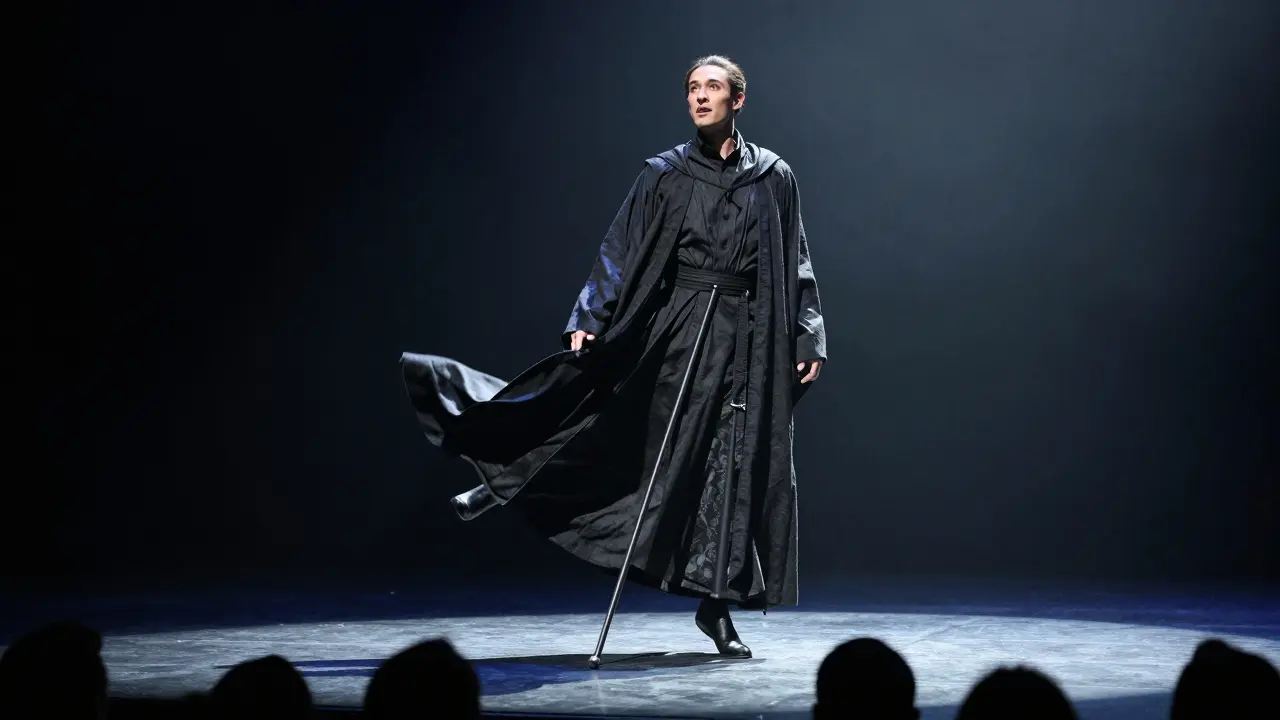
The most common method is called the Balducci Levitation, though modern versions use a rigid, hidden support system. The magician stands at an angle where the audience can’t see their feet clearly. A rigid metal rod is attached to their shoe and hidden under their robe. The assistant (or the magician themselves) stands on a platform that’s painted to match the floor. The rod lifts them slightly, and their robe hides the connection. The real trick? The angle. If you stand directly in front, the illusion breaks. That’s why magicians always position themselves at a 45-degree angle. The audience’s perspective is controlled. Some versions use a transparent acrylic rod or a harness system worn under clothing, especially in large-scale performances. The key isn’t strength-it’s misdirection and positioning.
David Copperfield’s Flying
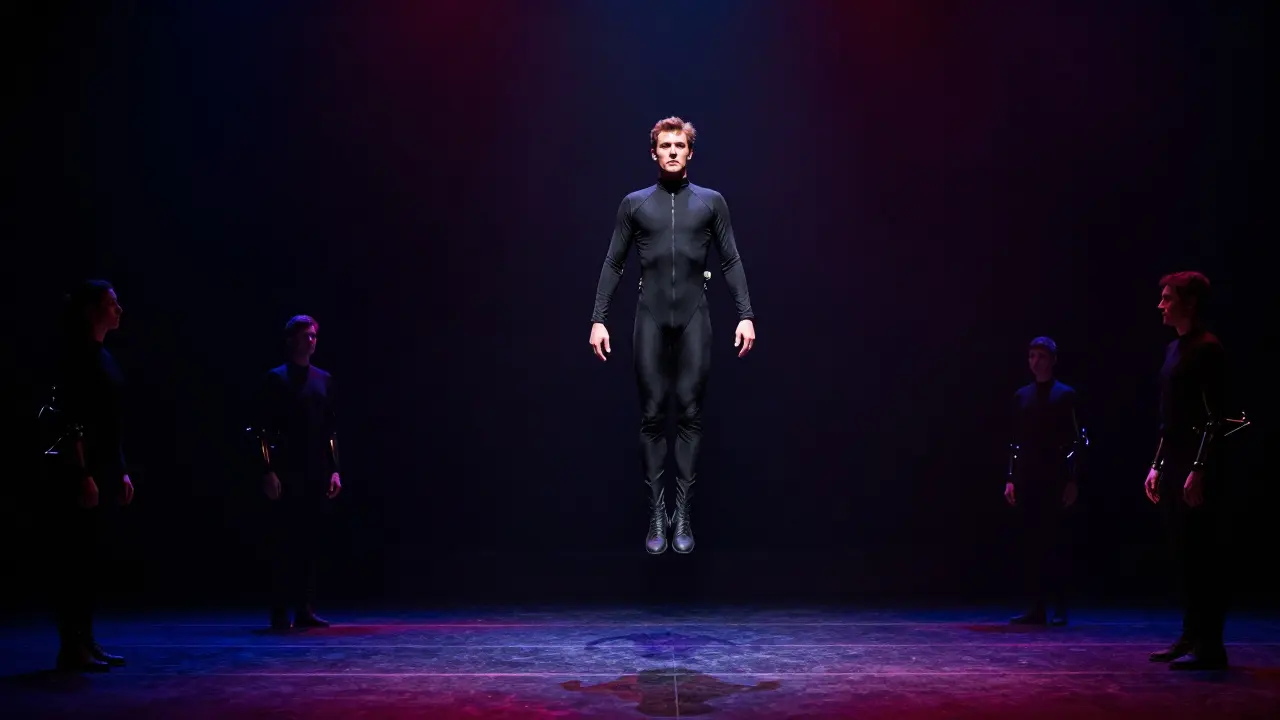
In 1992, David Copperfield made himself-and dozens of audience members-fly over the stage. He even flew over the audience, landing on the other side. It was broadcast live and stunned millions. How?
The secret? A rigid, black, motorized armature hidden in the stage floor. Copperfield wore a tight, black bodysuit and moved slowly, so the armature’s motion blended with his own. The suit was designed to hide the connection points. The armature extended from below the stage, attached to his back, and lifted him like a robotic crane. The lighting was dark, the movement slow, and the audience’s focus was on his face and the sensation of flight-not the mechanics. What most people miss is that he didn’t fly alone. The assistants who joined him were connected to the same system, hidden under identical suits. The trick wasn’t about magic-it was about engineering on a massive scale, with perfect timing and lighting control.
Houdini’s Water Torture Cell
Harry Houdini’s most dangerous trick wasn’t about escape-it was about suspense. He’d be locked in a glass tank filled with water, bound by ropes and a padlock, then lowered upside down. The audience watched as the water rose. He had to hold his breath and escape before drowning. It looked impossible. How did he do it?
The key was in the lock. Houdini didn’t rely on picking it. The lock was a specially designed mechanism that looked like a standard padlock but had a hidden release. He could open it with a key hidden in his clothing or by manipulating the lock with his fingers. The water tank was shallow-only about two feet deep. The illusion of depth came from the glass walls and the angle of the audience’s view. He could stand on the bottom, and the water covered him just enough to hide his movements. The ropes were tied loosely enough to slip out of with practice. His real skill was breath control and timing. He’d hold his breath for over a minute, sometimes two. The trapdoor under the tank allowed him to escape if he failed. It wasn’t magic-it was endurance, preparation, and a cleverly disguised mechanical release.
Mind Reading: The Thought Projection
Magicians often claim to read minds. One of the most famous versions is the “chosen card” trick. A spectator picks a card, thinks about it, and the magician names it instantly. It feels like telepathy. But there’s no psychic power involved.
This trick uses forcing-a technique where the magician controls the choice without the audience realizing it. One common method is the “Hamman Force.” The magician spreads the deck face down, asks you to pick a card, and then subtly guides your hand to the card they want you to choose. They might tap the deck, pause at a certain card, or use body language to nudge you. Once you pick, they use a “double lift”-a sleight where they lift two cards as one-so they see the bottom card, not yours. Then they use a “key card” system: they memorize the card below yours. When they shuffle, they keep that card in a known position. Later, they reveal the card you chose by finding the key. Another method is the “billet” system: you write your thought on a slip of paper, but the magician swaps it with a pre-written one before you hand it over. Modern versions use digital devices hidden in sleeves or microphones that pick up subtle vocal cues. The truth? Your brain gives away more than you think. The magician doesn’t read your mind-they read your behavior.
Why These Tricks Still Work
Even in the age of smartphones and YouTube tutorials, these illusions still amaze. Why? Because magic isn’t about hiding secrets-it’s about controlling attention. Your brain fills in gaps. If you see a box with a woman inside and a saw moving, your mind assumes the saw cuts through her. It doesn’t stop to ask, “What if the box is designed differently?”
Modern magicians combine old techniques with new technology. Lasers, LED lighting, and motion sensors now help create illusions that were impossible 50 years ago. But the core principles haven’t changed: misdirection, psychology, and repetition. The best magicians know your brain’s weaknesses. They exploit how you focus, how you remember, and how you expect things to work.
These tricks aren’t supernatural. They’re human. They’re built by people who studied perception, practiced for thousands of hours, and understood how easy it is to fool a mind that wants to believe.
Can these magic tricks be learned by anyone?
Yes, many of these tricks can be learned with practice, but not all. Basic versions of the floating woman, card forces, and simple vanishes are taught in beginner magic kits. More advanced illusions-like Copperfield’s flight or Houdini’s water cell-require engineering knowledge, specialized equipment, and years of training. Most professional magicians spend over 10,000 hours mastering their craft. You can learn the principles, but replicating a world-famous trick exactly as performed usually requires access to custom-built props and team support.
Why don’t magicians reveal how tricks work?
Most magicians follow an unspoken code: never reveal secrets to the general public. It’s not about keeping magic mysterious for the sake of it-it’s about protecting the craft. If everyone knew how every trick worked, the art of magic would lose its wonder. Magicians make their living by creating moments of awe. Revealing secrets ruins the experience for audiences. That said, many magicians teach techniques in books, classes, and workshops to aspiring performers, but only to those who promise to respect the art.
Are any of these tricks truly impossible?
No trick is truly impossible. Every illusion has a physical explanation. What seems impossible is just something your brain hasn’t been trained to see. Even the most complex levitations or disappearances rely on mirrors, mechanics, or misdirection. There’s no supernatural force involved. The real magic is in how well the trick fools your perception. That’s why some illusions have lasted over a century-they’re designed to exploit universal human cognitive biases.
Do magicians use technology in modern tricks?
Absolutely. Modern magic blends old-school sleight of hand with cutting-edge tech. Lasers, LED screens, wireless microphones, motion sensors, and even augmented reality apps are now common. David Copperfield used motorized rigs for his flight illusion. Dynamo uses hidden cameras and earpieces to guide his performances. Some mind-reading tricks now use biometric sensors to detect heart rate changes or micro-expressions. Technology doesn’t replace skill-it enhances it. The best magicians today are part engineer, part performer.
What’s the most important skill for a magician?
It’s not dexterity. It’s storytelling. A magician with perfect hands can still fail if they don’t know how to build tension, control timing, or connect emotionally. The best magicians make you feel something-wonder, fear, curiosity. They use pauses, eye contact, and pacing to guide your attention. A card trick can feel like a revelation if the magician tells a story about lost love and destiny. The technique is the tool. The story is what makes it unforgettable.
These tricks aren’t just about deception. They’re about connection. When a magician makes you gasp, you’re not just seeing a trick-you’re sharing a moment of pure human curiosity. That’s why, even after we know how they work, we still love them.