
If you’ve ever watched a magician make a card vanish or a coin appear out of thin air, you’ve probably thought, ‘I want to do that.’ But where do you start? Not every trick works for beginners. Some require years of practice, expensive gear, or perfect stage lighting. The best magic trick to learn isn’t the flashiest-it’s the one that gives you instant results with almost no setup.
The Classic Three-Card Monte (Simplified)
The three-card monte is often seen in street performances, but the version most people think of is rigged and illegal. The version you should learn is the clean, fair, and foolproof variation used by pros like David Blaine and Penn & Teller. It’s called the three-card monte with a force.
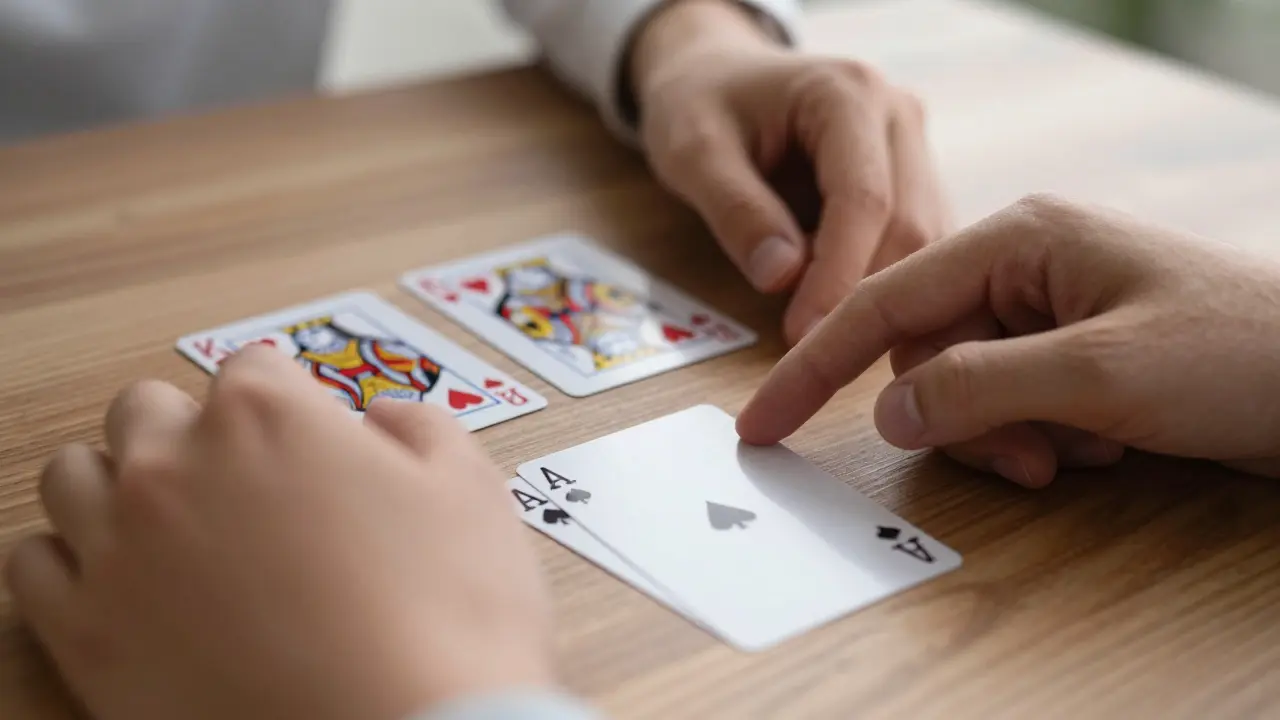
You need three playing cards-say, the Ace of Spades, the King of Hearts, and the Queen of Diamonds. You lay them face down in a row. You ask a spectator to pick one. Then you flip them over one by one, revealing that the one they picked is the Ace. But here’s the trick: you never let them actually choose. You use a simple palm and a subtle push to guide their hand to the Ace every time. It looks like free choice. It feels like free choice. But it’s not.
This trick works because it plays on psychology, not sleight of hand. You don’t need to shuffle fast or hide cards behind your back. You just need to control the situation. Most beginners spend weeks trying to master the double lift or the pass. This trick? You can learn it in 20 minutes. And the first time you do it, someone will swear they saw you cheat-even though you didn’t.
Why This Trick Beats Others
There are plenty of ‘easy’ magic tricks out there. The coin vanish? Too easy to spot. The rubber band trick? Too gimmicky. The disappearing water? Requires props you can’t carry around. The three-card monte with a force works because it uses ordinary items you already own, fits in your pocket, and can be done anywhere-at a dinner table, on a bus, or in line at the coffee shop.
It also builds confidence fast. When someone says, ‘How did you do that?’ and you just smile, you feel like a magician. That feeling is what keeps people practicing. Most beginners quit because their first tricks fail in front of real people. This one almost never fails. Even if you mess up the timing, the audience still thinks they picked the card themselves.
It’s also scalable. Once you master the force, you can layer it into bigger effects. Want to make a card appear in an envelope? Use the same force. Want to find a selected card in a shuffled deck? Use the same control. This isn’t just a trick-it’s the foundation of card magic.
What You Need to Get Started
You don’t need a magic kit. But if you want one, look for beginner sets that include a deck of Bicycle playing cards (the industry standard) and a simple instruction booklet. Avoid kits with plastic cards, gimmicked coins, or LED lights. Those are for kids’ parties, not real magic.
Here’s what a good beginner kit should have:
- One deck of Bicycle Rider Back cards (undyed, standard size)
- A small booklet with 5-7 beginner tricks, including the force
- A practice card (sometimes included) with dotted lines to help you learn grips
Brands like Ellusionist and Vanishing Inc. offer starter kits under $25 that include real teaching-not just gimmicks. Skip the ones sold on Amazon with 100 ‘tricks’ that all use the same gimmick. You want something that teaches you how to think like a magician, not just how to pull a lever.
Common Mistakes Beginners Make
Even with a simple trick, people mess it up. Here’s what goes wrong:
- Overdoing the showmanship. You don’t need to say ‘Abracadabra’ or wave your hands wildly. Silence and eye contact work better.
- Repeating the trick for the same person. If someone sees it once, they’ll figure it out if you do it again. Always move on.
- Trying to impress too many people. Start with one person. Two max. Crowds make you nervous, and nervousness kills the illusion.
- Practicing in front of a mirror. Mirrors show you how it looks to you-not how it looks to someone watching from the side. Practice with a friend, or record yourself on your phone.
The biggest mistake? Thinking magic is about speed. It’s not. It’s about timing. The pause after you say, ‘Pick one,’ is longer than you think. That’s when the force happens. If you rush, the trick dies.
How to Practice Without Looking Like a Weirdo
You don’t need to lock yourself in a room for hours. Magic is learned in five-minute bursts. Here’s how:
- Take your deck out while waiting for your coffee.
- Practice the force move five times-just the hand motion, no audience.
- Next time you’re in a quiet room, pretend someone’s sitting across from you. Say the lines out loud.
- Try it on your dog. Or your cat. Or your roommate when they’re not paying attention.
- When you feel ready, try it on someone who doesn’t know you’re practicing.
Most people don’t realize magic is a social skill. It’s not about dexterity-it’s about reading people. The best magicians don’t just move cards. They know when to smile, when to look away, when to let silence hang.
What to Do After You Master This Trick
Once you can do the three-card force without thinking, you’re ready for the next level. The next trick you should learn is the double lift-a way to pick up two cards as if they’re one. It’s the gateway to every card trick ever done on TV.
After that, move to the classic pass, which lets you secretly move a card from the top to the bottom of the deck. Then try the force with a riffle, where you control a card while pretending to shuffle.
Each of these builds on the last. The force teaches you control. The double lift teaches you deception. The pass teaches you misdirection. Together, they form the core of card magic.
Don’t jump ahead. Master one thing before adding another. That’s how the pros do it. And that’s why they still amaze people after 30 years.
Real People, Real Results
A 19-year-old college student in Portland learned the three-card force from a $15 kit. He did it at a party. His roommate, who had studied psychology, stared at him for a full minute and said, ‘I swear I picked it myself.’ He’s been doing magic at dorm parties ever since.
A retired teacher in Oregon taught the same trick to her book club. They started meeting once a month to learn a new trick. Now they perform for local senior centers. No stage. No lights. Just cards and conversation.
Magic isn’t about secrets. It’s about connection. When you make someone question what they saw, you’ve given them a moment of wonder. That’s worth more than any gadget.
What is the easiest magic trick to learn with everyday objects?
The easiest trick uses three playing cards and a simple force technique. You don’t need special props. Just a standard deck, a little timing, and the ability to guide someone’s hand without them noticing. It works every time if you practice the pause after asking them to pick a card.
Do I need to buy a magic trick kit to start?
No, but a good beginner kit helps. Look for one with Bicycle playing cards and clear instructions on the force and double lift. Avoid kits with gimmicks like magnetic coins or plastic cards. Real magic uses ordinary objects in clever ways.
Why does the three-card trick work so well on adults?
Because it taps into how people think they make choices. Adults believe they’re in control, so when they pick a card and it turns out to be the one you wanted, their brain refuses to believe they were guided. That’s the illusion. It’s psychology, not magic.
Can I do this trick in front of a crowd?
Start with one person. Crowds make you nervous, and nervousness breaks the trick. Once you’re confident doing it one-on-one, try it with two or three people. Never repeat it for the same group-they’ll catch on.
How long does it take to get good at this trick?
You can learn the basics in 20 minutes. To make it look natural, practice for five minutes a day for a week. That’s 35 minutes total. After that, you’ll be able to do it without thinking. The real skill is in the timing, not the moves.
Ray Htoo
December 30, 2025 AT 02:52That three-card force is such a beautiful little lie. I tried it on my niece last week-she was six, didn’t know a thing about cards, and just stared at me like I’d summoned a ghost. The pause after ‘pick one’? That’s where the magic lives. Not in the hand, in the silence.
Veera Mavalwala
December 30, 2025 AT 16:14Oh honey, you think this is magic? This is just applied cognitive dissonance wrapped in a deck of Bicycle cards. People don’t believe their own perception because their ego refuses to admit they were manipulated. It’s not trickery-it’s a psychological autopsy performed with a royal flush. I’ve seen grown men cry after this trick. Not from awe-from shame. They thought they were choosing. They weren’t. They were puppets in a velvet glove. And you? You’re just the puppeteer who forgot to wear a mask.
Kieran Danagher
December 31, 2025 AT 08:25‘The best trick is the one with no props’-said every magician who doesn’t own a rabbit. This force thing? Solid. But don’t act like it’s the holy grail. I’ve seen toddlers do it better after watching a YouTube tutorial. The real skill is not doing it at family dinners where Aunt Linda’s already three glasses into Merlot.
Shivam Mogha
January 1, 2026 AT 03:45Do it once. Smile. Walk away.
sampa Karjee
January 2, 2026 AT 11:49You call this magic? In India, we have real illusions-men levitating on ropes, women walking through walls. This? This is a parlor trick for people who think ‘sleight of hand’ is a yoga pose. You need to learn from the masters, not from American blog posts with fancy typography.
OONAGH Ffrench
January 3, 2026 AT 04:35Truth is the greatest illusion. The card never moved. The mind did. That’s the real trick. No hands. No deck. Just attention. And the quiet moment after you say pick one. That’s where the world bends.
Sheila Alston
January 4, 2026 AT 08:27How can you promote deception as entertainment? This isn’t harmless fun-it’s training people to distrust their own judgment. What’s next? Teaching kids to lie to their parents with a ‘force’? This is how cult leaders start. You’re not a magician. You’re a manipulator with a deck of cards.
Natasha Madison
January 4, 2026 AT 21:42They’re watching you. Always. The FBI has files on magicians who use the force. They say it’s a psychological weapon. You think your ‘Bicycle cards’ are innocent? They’re calibrated to trigger neural pathways used in interrogation. You’re not performing for fun. You’re practicing for the next phase. I’ve seen the documents. They’re redacted. But I know.
poonam upadhyay
January 5, 2026 AT 00:56OMG this is sooo true!!! I tried it on my coworker and she literally screamed and dropped her latte!! I mean, like, she was convinced she picked it herself but I swear I didn’t even touch the card!! I think she’s gonna quit her job because she can’t trust her own choices anymore?? Also, did you know that the Ace of Spades is symbolically linked to death in tarot? And the King of Hearts? He’s the ‘suicide king’ because he has a sword through his head!! And the Queen of Diamonds? She’s the one who betrayed the entire royal family in 1789!! This isn’t magic-it’s ancient occult programming!!
Patrick Sieber
January 6, 2026 AT 21:23Love this. The silence after ‘pick one’ is everything. I used to rush it. Then I started practicing with my dog. He doesn’t care what card I pick, but he’ll stare at me like I’m the most interesting thing in the room. That’s the real trick-making someone feel seen, even when you’re controlling them. The cards are just props. The connection? That’s the magic.
mani kandan
January 7, 2026 AT 11:37The beauty of this trick lies not in its mechanics, but in its humility. No gimmicks. No mirrors. No smoke. Just a quiet hand, a deliberate pause, and the unspoken agreement between performer and spectator that reality is malleable. I’ve performed this in train stations, on buses, in hospital waiting rooms. People don’t laugh. They pause. They breathe. For a moment, they forget their worries. That is not sleight of hand. That is grace.