
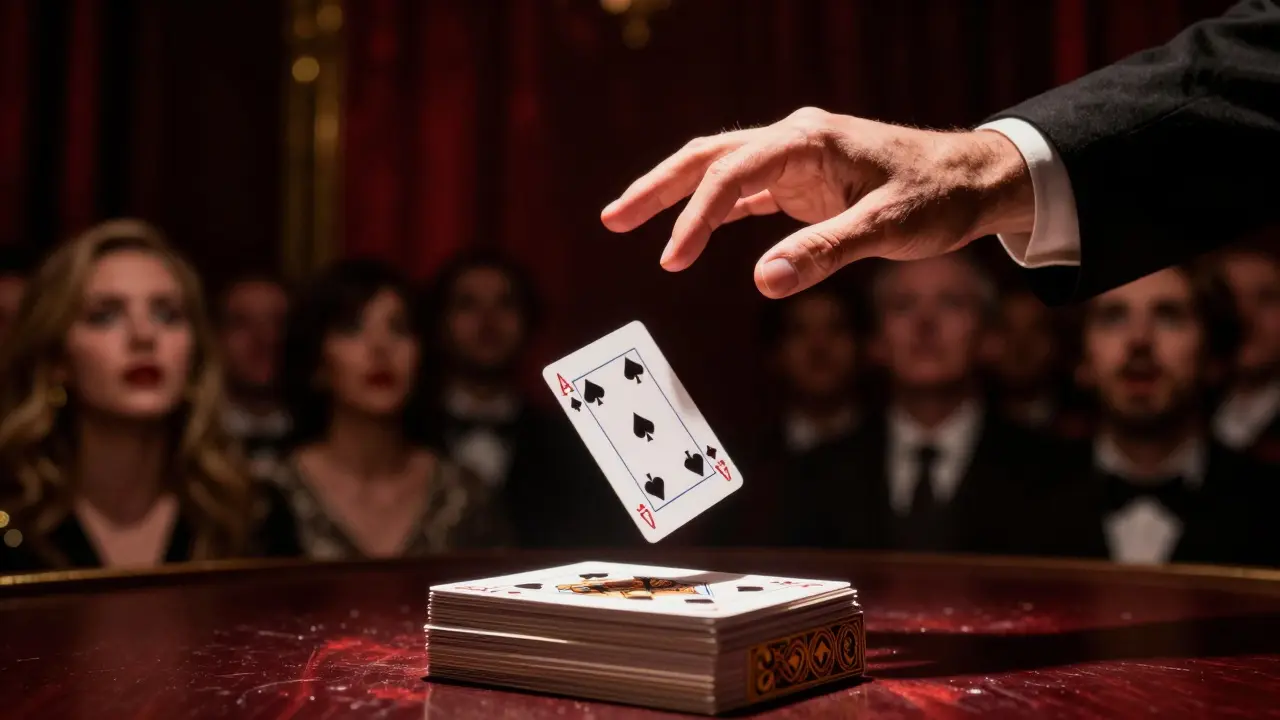
Ever watched a magician pull a rabbit out of a hat, make a car disappear, or read your mind-and then sat there wondering, what’s that final moment called? That split second when the audience gasps, when the impossible becomes real, when the trick doesn’t just end-it lands? That’s the reveal. And it’s not just the last step. It’s the whole point.
The Reveal Isn’t Just an Ending, It’s the Payoff
In magic, the reveal is the moment the secret is exposed-on purpose. Not because the magician made a mistake, but because they planned it that way. The audience doesn’t see how it happened. They only see the result. And that result? That’s the reveal. It’s the visual, emotional, and psychological climax of the entire performance.
Think of it like a punchline in a joke. You don’t laugh at the setup. You laugh when the twist hits. Same with magic. The misdirection, the sleight of hand, the distraction-all of it builds toward the reveal. Without it, you just have a bunch of movements. With it? You have wonder.
Some magicians call it the finale. Others say the climax. But in professional circles, it’s almost always called the reveal. It’s the term used in magic manuals, in training videos, and in backstage talks. It’s not a fancy word. It’s the simplest, most accurate one: what you reveal to the audience is what makes the trick work.
Why the Reveal Matters More Than the Method
Most people think magic is about hiding the secret. That’s half right. The real magic isn’t in the concealment-it’s in the delivery of the reveal. A poorly timed reveal can kill a trick. A perfectly timed one can make it unforgettable.
Take the classic card trick. The magician shuffles, fans the deck, asks you to pick one. You do. They put it back. They shuffle again. Then, with a snap of the fingers, they pull out your card-face up-right from the middle of the deck. The audience goes wild. Why? Not because the card was hidden well. But because it appeared where it couldn’t possibly be.
The method? Maybe it was a force, a double lift, or a stacked deck. But none of that matters to the person watching. They only remember the moment the card showed up. That’s the reveal. And it’s the only part they’ll tell their friends about.
Types of Reveals in Magic
Not all reveals are the same. The way a trick ends shapes how the audience feels. Here are the most common types:
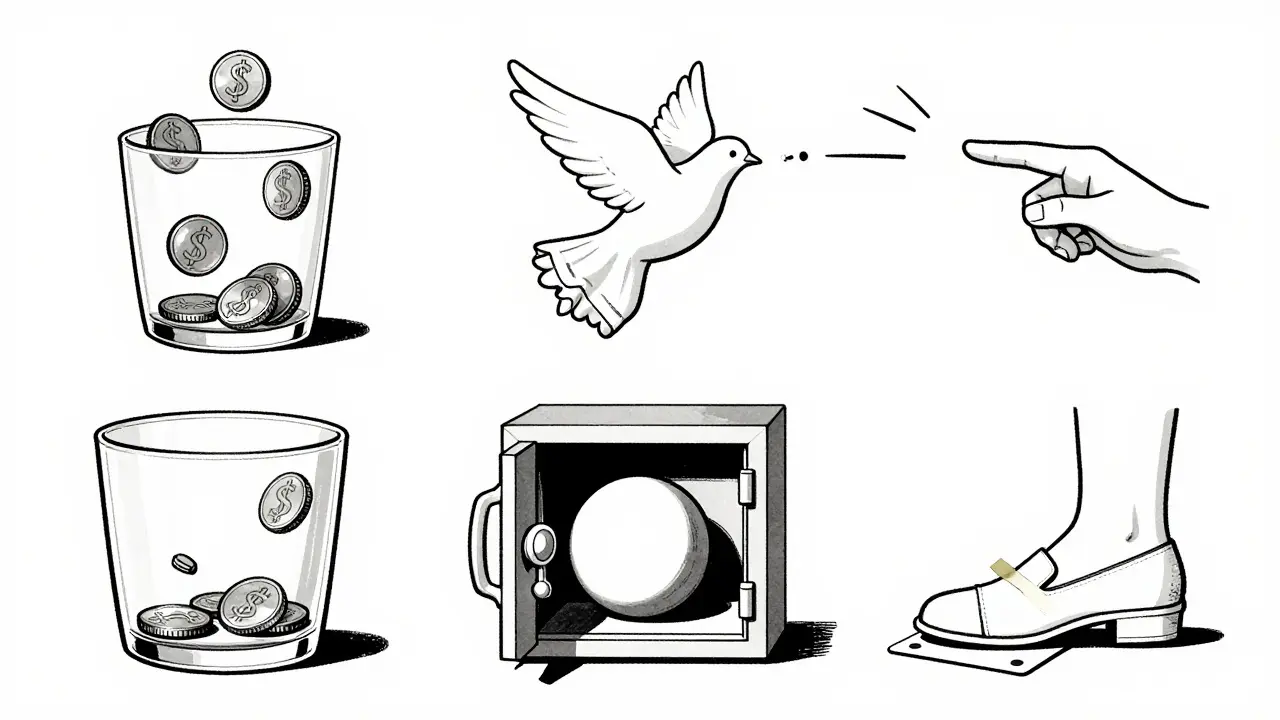
- The Classic Reveal - The object appears where it shouldn’t. Think: a coin in an empty glass, a signed card in a sealed envelope. This is the most common. It works because it defies logic.
- The Transformation Reveal - One thing becomes another. A silk handkerchief turns into a dove. A dollar bill becomes a $100. This type plays on perception. The audience sees change, not trickery.
- The Mind Reading Reveal - The magician names your thought. No props. No gimmicks. Just a direct, undeniable connection between your mind and theirs. This one feels personal. It’s terrifying. And unforgettable.
- The Impossible Location Reveal - The object is found somewhere physically impossible. A ball inside a locked safe. A phone inside a frozen block of ice. This one breaks the rules of space. It’s the most visually shocking.
- The Delayed Reveal - The trick doesn’t end when you think it does. The magician says, “That’s it,” and walks away. Then, five minutes later, you find the card taped to the bottom of your shoe. This plays on memory and expectation. It lingers.
Each of these reveals uses a different psychological trigger. The classic reveal plays on surprise. The transformation plays on change. The mind reading plays on intimacy. The impossible location plays on physics. The delayed reveal plays on memory.

How Top Magicians Craft the Perfect Reveal
David Copperfield doesn’t just make the Statue of Liberty disappear. He builds the reveal over 15 minutes. He makes you feel like you’re part of the trick. He lets you see the lights go out. He lets you hear the crowd gasp. He lets you feel the silence. Then-
-the lights come back on. And there it is. Still there.
That’s not magic. That’s theater.
The best magicians don’t just perform tricks. They design experiences. And every experience has a climax. The reveal is that climax. It’s not a trick ending. It’s an emotional release.
Here’s what they do:
- Control the timing - A reveal too fast feels cheap. Too slow feels boring. The sweet spot? Just after the audience starts to doubt.
- Use silence - The second after the reveal, no one speaks. That’s when the brain catches up. That’s when the wonder hits.
- Make eye contact - Look at one person. Not the whole crowd. Make them feel like the trick was meant for them.
- Don’t explain - Never say, “See how I did that?” If you do, you break the spell. The mystery is the magic.
- Let it breathe - Give the audience a full three seconds to react before moving on. That’s how long it takes for the brain to accept the impossible.
The Reveal in Magic Trick Kits
If you’ve ever bought a magic trick kit-those boxes with cards, ropes, and gimmicks-you’ve probably noticed something: the instructions always skip the reveal. They show you how to do the move. But they rarely say how to deliver it.
That’s why so many beginners fail. They learn the method. They can do the sleight. But when they perform it, the audience just says, “Okay.” Why? Because the reveal was weak.
A good magic trick kit should include:
- A script for the reveal
- Timing cues
- Body language notes
- Common mistakes to avoid
Most don’t. That’s why learning magic from a kit alone rarely works. You need to learn the performance, not just the mechanics.
Look for kits that come with video tutorials where the magician shows you the reveal-not just the move. Watch how they pause. How they look. How they breathe. That’s where the real magic lives.
What Happens When the Reveal Fails
A failed reveal doesn’t mean the trick didn’t work. It means the audience didn’t feel it.
You can do every step perfectly. But if you rush the reveal, if you smile too early, if you look away when the audience should be staring-no one will be amazed.
I’ve seen a professional magician drop a coin into a cup, then immediately say, “Ta-da!” The audience clapped politely. No gasps. No smiles. Just confusion.
Why? Because the reveal was buried under noise. The magician didn’t let the moment breathe. They didn’t give the audience time to believe what they saw.
That’s the danger. Magic isn’t about the object. It’s about the moment. And if you don’t honor that moment, the trick dies.
The Psychology Behind the Reveal
Neuroscientists have studied this. When people experience a magic reveal, their brain activity spikes in the same areas that light up during awe, religious experiences, and moments of profound insight.
It’s not just fun. It’s neurological. The reveal triggers a brief but powerful state of cognitive dissonance: “I know this can’t happen… but I just saw it.”
That’s why the best reveals are simple. Not complex. Not flashy. Just clear. A card appears. A person vanishes. A thought is named. No explanation. Just evidence.
The brain doesn’t need to understand. It just needs to feel it. And that’s why the reveal works.
How to Practice the Reveal
If you’re learning magic, stop practicing the move. Start practicing the reveal.
Here’s how:
- Choose one trick. Just one.
- Do it slowly. Focus only on the last three seconds.
- Record yourself. Watch it. Did you pause? Did you look at someone? Did you let the silence happen?
- Practice the reveal 10 times in a row. No matter how many times you’ve done the trick before.
- Perform it for someone who doesn’t know magic. Watch their face. That’s your feedback.
The reveal is the only part that matters. Everything else is just setup.
Is the reveal the same as the climax of a magic trick?
Yes. In magic, the reveal and the climax are the same thing. The climax is the emotional peak of the performance, and the reveal is how that peak is delivered. It’s the moment the trick becomes unforgettable. Some magicians use the word "climax" to describe the whole sequence leading up to it, but the final action-the object appearing, the card being named, the person vanishing-that’s the reveal.
Can a magic trick work without a strong reveal?
Technically, yes. The method might still be clever. But if the reveal is weak, the audience won’t remember it. Magic isn’t about how the trick works-it’s about how it feels. A trick with a dull reveal feels like a puzzle solved. A trick with a powerful reveal feels like a miracle. That’s the difference between a good trick and a legendary one.
Why do some magic tricks have multiple reveals?
Multiple reveals are used to build layers of wonder. A classic example is the "three-phase" card trick: first, the card changes color. Then, it jumps to the top of the deck. Finally, it appears in the magician’s pocket. Each reveal is stronger than the last. This keeps the audience engaged and makes the final moment unforgettable. It’s not about complexity-it’s about escalation.
Do all magic tricks need a reveal?
Every magic trick needs a moment where the impossible becomes visible. That’s the reveal. Even close-up magic, like a coin vanishing into a hand, has one. The hand opens. The coin is gone. That’s the reveal. If there’s no moment where the audience sees the result, it’s not magic-it’s just a skill. Magic requires transformation. And transformation needs a reveal.
Can you teach someone to deliver a good reveal?
Absolutely. While some performers have natural timing, the reveal is a skill you can learn. It’s about rhythm, pause, eye contact, and audience awareness. You can’t teach someone to be charismatic-but you can teach them to create space for wonder. That’s what the reveal does. It creates a pause in reality. And that pause? That’s where magic lives.
Tyler Springall
February 27, 2026 AT 16:12Amy P
March 1, 2026 AT 08:26Ashley Kuehnel
March 3, 2026 AT 03:45adam smith
March 3, 2026 AT 22:53Mongezi Mkhwanazi
March 5, 2026 AT 09:23Mark Nitka
March 5, 2026 AT 21:09Kelley Nelson
March 7, 2026 AT 21:04Aryan Gupta
March 8, 2026 AT 05:09Fredda Freyer
March 8, 2026 AT 16:29Gareth Hobbs
March 9, 2026 AT 13:16