
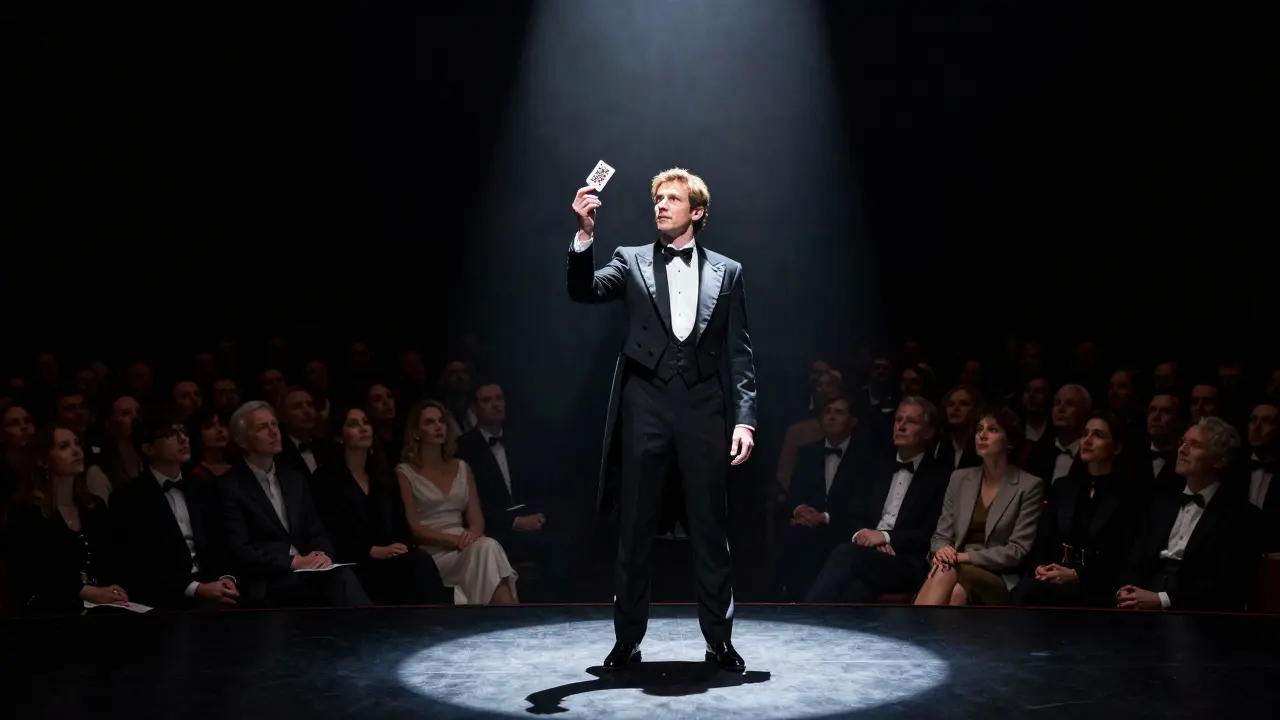
There’s a reason why people still line up for magic shows in 2026. It’s not because they’re fooled by digital effects or CGI. It’s because real magic-done live, in front of you, with nothing hidden behind a screen-still feels like a miracle. Stage magic isn’t about quick sleight of hand in a bar. It’s about presence, timing, and the raw power of human wonder. If you want to perform magic on stage, you need more than a deck of cards. You need control over space, sound, and silence.
Stage Magic Is Not Card Tricks
Most beginners think magic = cards. But card tricks are for close-up tables, not grand stages. On stage, you’re 30 feet from the front row. Your audience can’t see your fingers. So what works? Big, bold illusions that move people emotionally. Think sawing someone in half, making a car vanish, or levitating a person without wires. These aren’t just tricks-they’re stories told with objects and movement.
Take David Copperfield’s flight over the Grand Canyon. No green screen. No CGI. Just a man, a harness, and 20,000 people holding their breath. That’s stage magic: scale, drama, and timing. You don’t need millions of dollars to start, but you do need to think in terms of spectacle, not subtlety.
Three Core Principles of Stage Magic
Every great stage magician follows three rules. Break one, and the spell breaks.
- Control the frame. Where you stand, where the lights hit, where the audience looks-these aren’t accidents. You design every inch of the space. If you want them to see the coin disappear, you make sure they’re looking at your face. If you want them to gasp at the rising dove, you make sure the background is dark and still.
- Timing is everything. A well-timed pause can make a trick feel impossible. Too fast? It looks rushed. Too slow? People start checking their phones. The best magicians don’t rush. They let the silence grow. That moment right before the reveal? That’s where the magic lives.
- Emotion over technique. Nobody remembers how you did it. They remember how it made them feel. Shock. Joy. Fear. Awe. Your job isn’t to hide the method. It’s to create a moment they’ll tell their grandchildren about.
Essential Stage Illusions for Beginners
You don’t need a flying assistant to start. Here are three illusions that work on small stages and still blow people away:
- The Rising Card. A single card rises from a deck-slowly, mysteriously-while you hold it in one hand. It looks impossible because it’s silent, smooth, and happens in full view. Done right, it takes 45 seconds and leaves people asking, "How did you do that?"
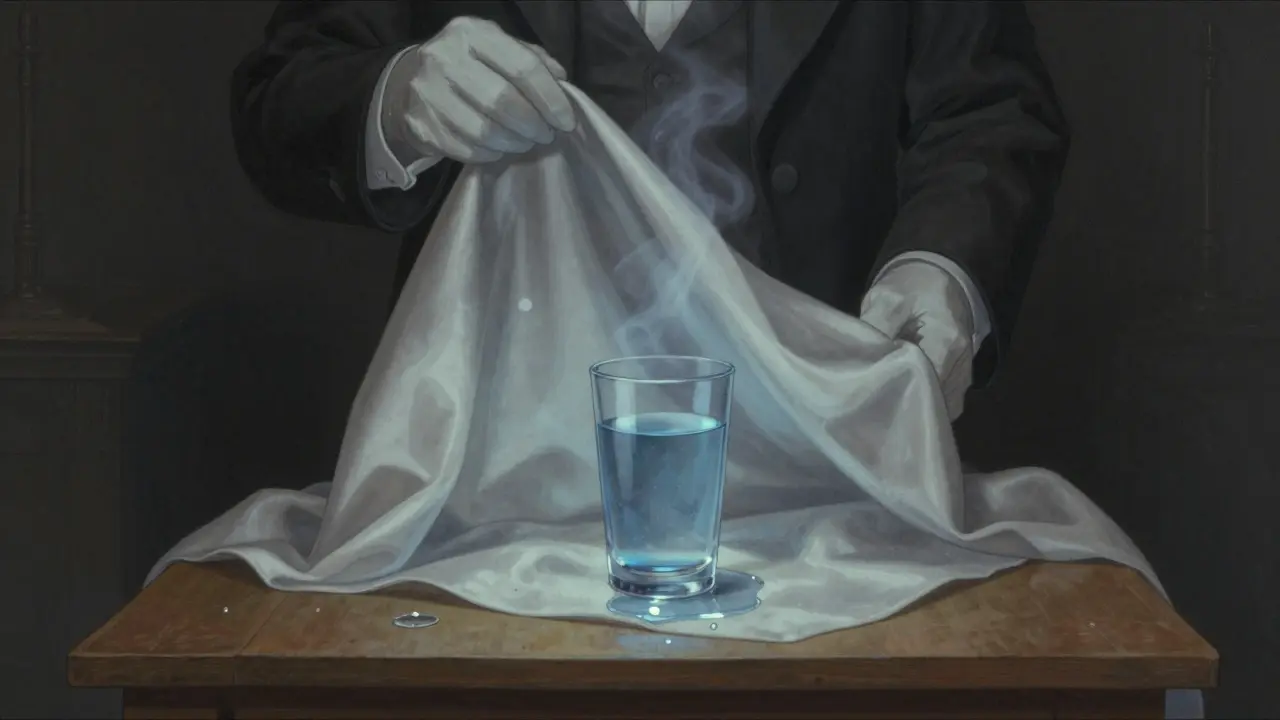
- The Vanishing Glass. A clear glass of water sits on the table. You cover it with a cloth. You lift it. The glass is gone. The water? Still on the table, in a puddle. Simple. Clean. Unexplainable. It’s been used since the 1800s and still works because it plays on expectation.
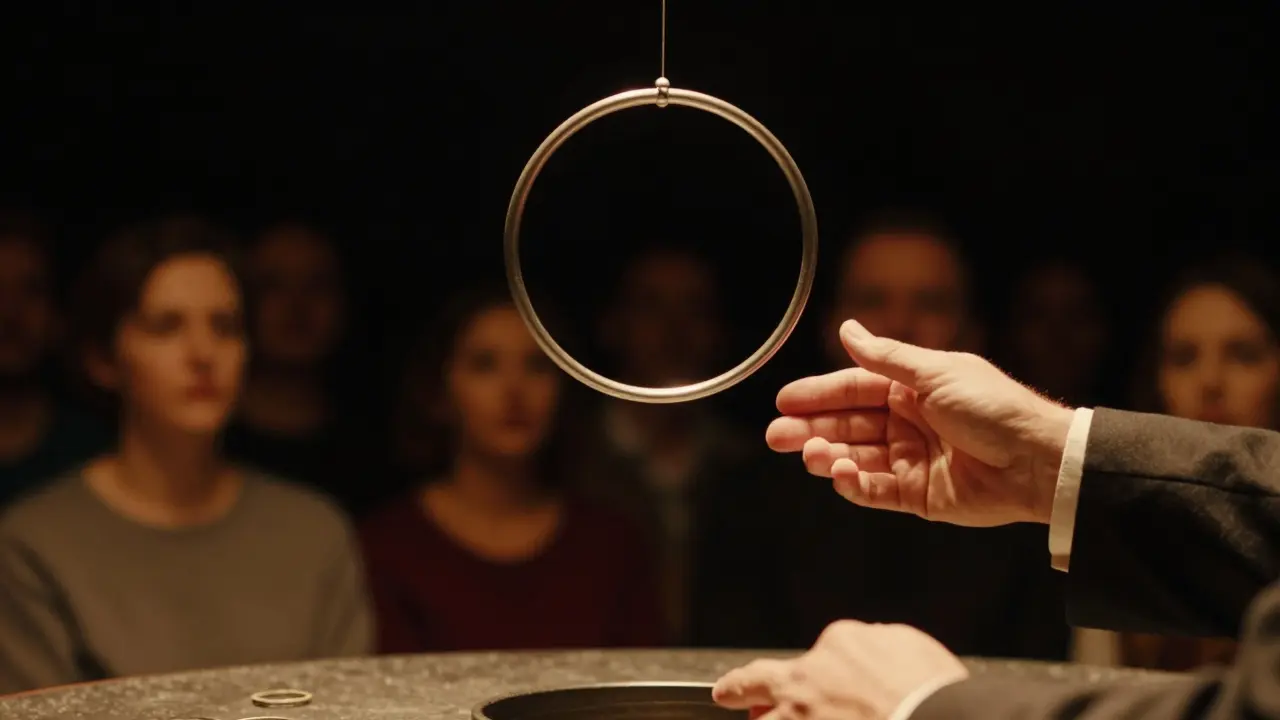
- The Floating Ring. A metal ring is placed on a string. You pull the string. The ring floats. No wires. No magnets. Just a cleverly cut ring and a hidden support. It’s perfect for intimate stages because it’s small, quiet, and feels supernatural.
Lighting and Sound Are Your Secret Tools
Most magicians ignore lighting. Big mistake.
On stage, light is your accomplice. A spotlight on your left hand? That’s where you want the audience looking. A dimmed stage with a single beam on the prop? That’s where the trick happens. Use color too. Red lights make a card look like it’s glowing. Blue makes a silk vanish look like it’s dissolving into mist.
Sound matters just as much. A soft chime before the reveal? That’s a cue for the brain to expect something extraordinary. A sudden drum hit as the box opens? That’s a shock to the system. Silence? That’s the most powerful sound of all. The moment you stop talking, the audience leans in.
One pro tip: Never use music during the trick. It distracts. Save music for the applause.
Costume and Presence
What you wear isn’t just fashion-it’s part of the illusion.
Black tuxedos? Classic. But why? Because they disappear under stage lights. Your body becomes a shadow. Your hands? The only thing visible. That’s why magicians wear dark suits. They’re not trying to look fancy. They’re trying to become invisible.
Accessories matter too. A long coat? It hides sleights. A hat? It draws attention upward. A cane? It points the audience’s gaze where you want it. Even your shoes matter. No squeaky soles. No clacking heels. Every step you take should feel deliberate.
And then there’s your presence. You don’t need to be funny. You don’t need to be dramatic. You need to be calm. Confident. Like you know exactly what’s going to happen. The audience will believe you if you believe yourself.
Practice Like a Musician
Most people practice magic once a week. That’s not enough.
Top performers practice daily. Not for hours. Just 20 minutes. But every day. They drill the same trick until their hands move without thinking. They record themselves. They watch it back. They fix the micro-movements-a twitch of the wrist, a blink too early, a breath before the reveal.
One magician I know practiced the rising card for 117 days before he performed it live. He didn’t change the method. He just made it perfect. That’s the difference between good and unforgettable.
When It All Goes Wrong
It will. You’ll drop the coin. The prop will jam. The audience will laugh at the wrong moment. That’s not failure. That’s part of the job.
The best magicians don’t panic. They improvise. A missing card? "Looks like the magic’s taking a coffee break." A stuck box? "The spirit isn’t ready to leave yet." You turn the mistake into part of the show. The audience doesn’t care if it went wrong. They care if you made them feel something.
One trick I’ve seen work every time: When something breaks, you pause. Look at the audience. Smile. Say, "That’s why magic isn’t real." Then you do it again. Perfectly. They’ll cheer louder than if it had gone right the first time.
Where to Start
You don’t need a big budget. Start with one trick. Master it. Perform it for five people. Then ten. Then fifty. Record each performance. Watch it. Fix it. Repeat.
Watch the old masters-Houdini, Blackstone, Marvyn, and modern icons like Derren Brown. Notice how they use silence. How they move. How they make you feel like you’re the only one in the room.
Stage magic isn’t about tricks. It’s about connection. It’s about making someone believe, for just a moment, that the impossible is real. And that? That’s worth every hour of practice.