
When you open a magic trick kit labeled "Card Magic for Beginners," you’ll often find instructions telling you to "use the face cards." But what exactly is a face card? It’s not just any card with a picture on it. In magic, the face card is the secret weapon behind dozens of classic tricks - from the Three Card Monte to the Ambitious Card routine. And if you’ve ever watched a magician make a card vanish or jump from the middle of the deck, they’re probably using face cards without you even noticing.
What Exactly Is a Face Card?
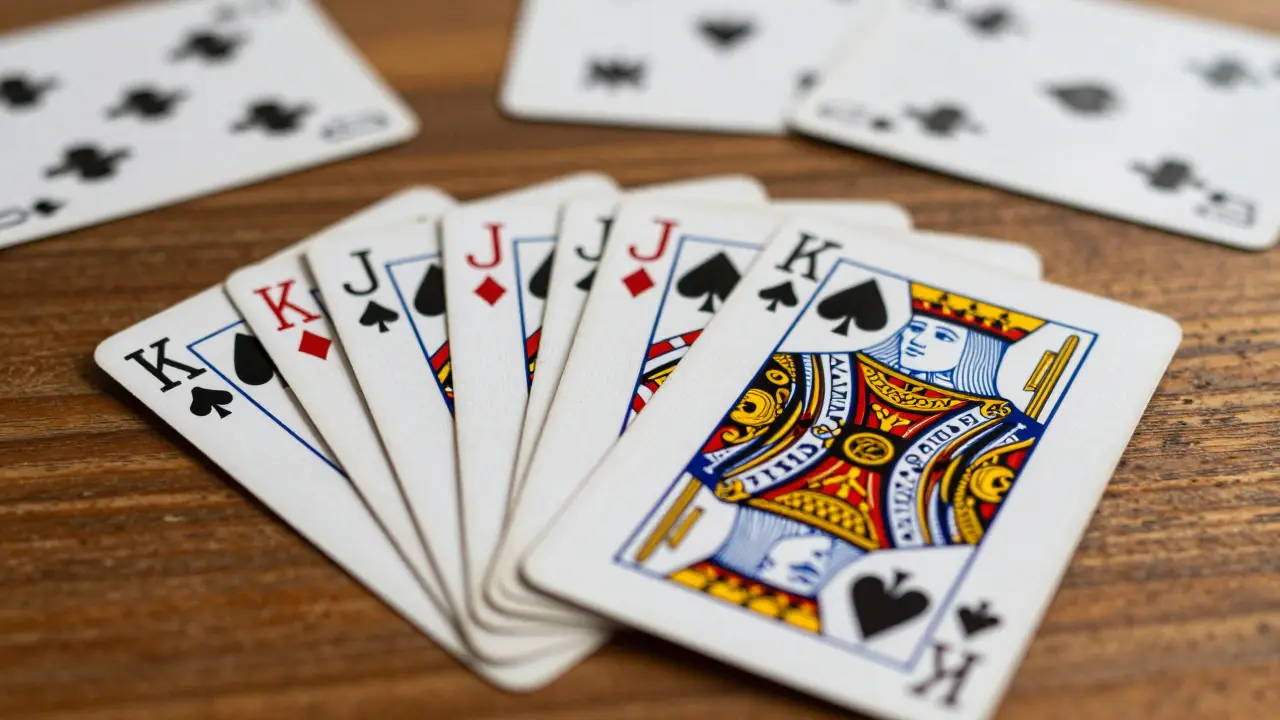
A face card is one of the twelve cards in a standard 52-card deck that show a person’s face. These are the King, Queen, and Jack of each suit: hearts, diamonds, clubs, and spades. That’s three per suit, times four suits = twelve face cards total. The Ace, numbered cards (2 through 10), and Jokers don’t count - even though Jokers have images, they’re not considered face cards in magic or card games.
Why do magicians care so much about these twelve cards? Because they’re visually distinct. A 7 of spades blends in with every other number card. But a King of hearts? You can spot it across the room. That makes face cards perfect for misdirection, control, and forcing - the core techniques in card magic.
Why Face Cards Are Essential in Magic Trick Kits
Most beginner magic trick kits include a standard deck of cards, and the instructions always assume you know how to handle face cards. Why? Because they’re easier to manipulate and easier for the audience to follow.
Take the classic "Find the Queen" trick. The magician shuffles the deck, asks a volunteer to pick a card, and then slowly reveals cards one by one. The volunteer’s card is always the Queen of hearts. How? Because the Queen is a face card - it stands out. When the magician controls it to the top or bottom of the deck, it’s easier to track. When they palm it or force it, the visual cue helps both the performer and the spectator remember which card matters.
Another common trick: the "Card to Pocket." The magician spreads the deck, the spectator picks a card, and it mysteriously appears in the magician’s pocket. That card is almost always a face card. Why? Because when the magician secretly switches it during the shuffle, the face card’s size and design make the switch less noticeable. A 5 of diamonds? Too small, too plain. A Jack of spades? Bold, memorable, easy to control.
How Face Cards Help With Misdirection
Magicians don’t just use face cards because they’re easy to see - they use them because they’re easy to ignore.
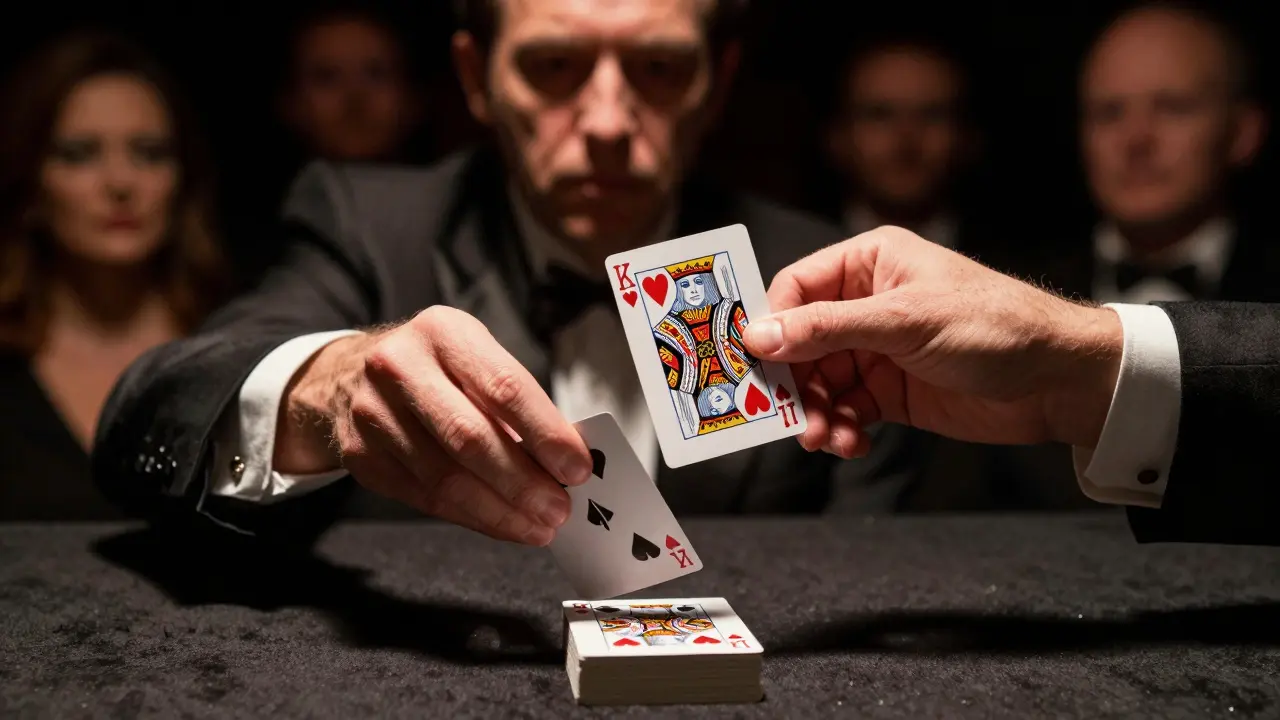
Here’s how it works: you’re watching a magician flip through a deck. They pause on the King of diamonds. They say, "This is your card," and show it to the audience. Then they put it back. But the King wasn’t the chosen card. The real card? It’s still in the middle. The King was a decoy. A distraction. A face card used to draw your eyes away from what’s really happening.
This is called the "force and switch" technique. The magician forces a face card on you - makes you think you picked it - while secretly controlling the real card. Face cards work better than number cards because they’re memorable. You remember the King. You don’t remember the 8. So when the magician reveals the King at the end, you think you chose it. You didn’t. But your brain believes it did.
Face Cards in Professional Magic vs. Beginner Kits
Professional magicians often use custom decks with slightly thicker faces or marked backs. But for beginners, the standard deck works fine. That’s why magic trick kits stick to regular playing cards - they’re cheap, familiar, and face cards in them are consistent across brands.
Some kits even include a "marked" deck where the face cards have subtle patterns on the back. These aren’t for cheating - they’re for learning. A beginner might not know how to do a double lift or a palm, but they can learn to spot the difference between a face card and a number card by sight. That’s the first step.
And here’s a pro tip: if you’re practicing a trick that uses face cards, always use the same deck. The slight wear on the corners of a King or Queen after 20 shuffles? That’s your fingerprint. Magicians use those tiny imperfections to track cards. A brand-new deck? Too uniform. A well-used one? Full of clues you can learn to read.
Common Mistakes Beginners Make With Face Cards
Even with a good magic trick kit, people mess up with face cards all the time. Here are the three most common errors:
- Using the wrong card - Some beginners think the Joker is a face card. It’s not. Using it in a trick that requires a King or Queen breaks the illusion. The audience expects a court figure, not a cartoon.
- Shuffling too much - If you shuffle a deck too hard after controlling a face card, you’ll lose it. Face cards are easy to control, but they’re also easy to lose if you’re not careful. Practice controlling one card - just one - before moving on to complex routines.
- Overusing them - Using a face card in every trick makes it predictable. If every card you reveal is a King or Queen, the audience catches on. The best magicians mix face cards with number cards to keep things unpredictable.
What to Do If Your Deck Doesn’t Have Face Cards
Believe it or not, some novelty decks - like those with animals, sports figures, or movie characters - don’t have traditional face cards. If you’re using one of these for magic, you need to adapt.
Look for the most visually unique cards. If your deck has a Joker, a King-sized character, or a card with bright colors and a detailed image, treat it like a face card. The goal isn’t to follow tradition - it’s to create a visual anchor for your trick.
Just make sure everyone knows what you’re using. If you’re performing for friends and say, "Pick the dragon card," they’ll remember it. If you say, "Pick the red card," they won’t. Clarity beats tradition every time.
Face Cards in Modern Magic: Beyond the Deck
Modern magicians still rely on face cards - but now they’re using them in digital magic too. Apps like "Card Trick Pro" and "Magic Deck Simulator" use face cards as default selections because they’re the most recognizable. Even in virtual reality magic shows, the AI-generated cards that vanish or multiply are almost always Kings, Queens, or Jacks.
Why? Because human brains are wired to notice faces. It’s called facial recognition bias. We pay more attention to faces than to shapes, numbers, or symbols. That’s why logos use faces. That’s why ads show people. And that’s why magic tricks use face cards.
It’s not magic. It’s psychology. And the face card is the perfect tool.
Final Thought: The Face Card Is the Heart of Card Magic
Face cards aren’t just part of the deck - they’re the soul of card magic. They’re the reason you can make a card disappear, reappear, or jump to the top of the deck. They’re the reason your friend still talks about that trick you did at the party last year.
So next time you open your magic trick kit, don’t just shuffle the cards. Look at the face cards. Study them. Learn their weight, their texture, how they turn in your fingers. That’s where the real magic begins - not in the secret move, but in the card you choose to use.
Are Jokers considered face cards in magic tricks?
No, Jokers are not face cards. Face cards are specifically the King, Queen, and Jack of each suit. While Jokers have images, they’re not part of the standard 12 face cards used in magic routines. Some tricks may use Jokers as wild cards or substitutes, but they’re not classified as face cards in professional or beginner magic.
Why do magic trick kits always include standard playing cards?
Standard playing cards are used because they’re universally recognized, affordable, and consistent. Every face card in a standard deck has the same size, shape, and design, which makes it easier for beginners to learn control, forces, and sleights. Custom decks can confuse new magicians - standard decks don’t.
Can you do card tricks with only number cards?
Yes, but it’s much harder. Number cards look nearly identical, making it difficult for the audience to track which one was chosen. Face cards provide visual anchors that help both the magician and the spectator remember key moments. While advanced magicians can use number cards effectively, beginners should start with face cards for better results.
Do all magic trick kits include face cards?
Yes, all standard magic trick kits include a full 52-card deck, which means all 12 face cards are present. Some novelty kits may use themed decks, but even then, the most visually distinct cards - often representing Kings, Queens, or Jacks - are used as face card substitutes.
How many face cards are in a standard deck?
There are 12 face cards in a standard 52-card deck: the King, Queen, and Jack of each of the four suits - hearts, diamonds, clubs, and spades.
Amanda Harkins
January 5, 2026 AT 18:01It's wild how something so simple-a face card-can trick your whole brain. We're wired to notice faces, so magicians just exploit that. It's not magic, it's neuroscience with a deck of cards.
Jeanie Watson
January 6, 2026 AT 12:53Okay but why do these kits never include a good deck? Mine fell apart after two weeks.
Tom Mikota
January 7, 2026 AT 18:34Face cards? Twelve? You mean, like, the King, Queen, and Jack? Yeah. And you spelled ‘Joker’ right. Good job. You’re welcome.
Mark Tipton
January 8, 2026 AT 14:18Let me break this down for you-because you clearly don’t understand the deeper implications. Face cards aren’t just tools-they’re psychological anchors designed by centuries of occult tradition. The Queen of Hearts? That’s not a playing card. That’s a relic of the Tarot’s Empress archetype. The Jack? The Fool’s shadow. And the King? The Magician’s ego projection. The fact that magic kits use standard decks isn’t about affordability-it’s about control. Corporations don’t want you realizing that the real power lies in the *design*, not the trick. They keep you buying cheap decks so you never notice the hidden sigils on the backs. Look closer. The pips aren’t random. They’re encoded. I’ve mapped them. And no, I won’t share the spreadsheet.
Adithya M
January 10, 2026 AT 06:04Bro, I tried doing the Ambitious Card with a 9 of diamonds and my dad called it ‘a sad card trick.’ Face cards matter. Trust me.
Jessica McGirt
January 11, 2026 AT 01:12I appreciate how clearly this explains the psychology behind magic. It’s not just about sleight of hand-it’s about attention, memory, and expectation. Beautifully written.
Jamie Roman
January 12, 2026 AT 01:27So I’ve been practicing the Three Card Monte with face cards for weeks now, and honestly? It’s the texture that gets me. You know how a well-worn King has that slight curve from being handled too much? That’s your secret. I used to think it was about speed-but no. It’s about feel. The way the corner catches the light. The way it slides just a little differently than a 7. I spent a month just shuffling one King over and over. Now I can find it blindfolded. And yeah, I know that’s weird. But it works. If you’re stuck on a trick, don’t overthink the move-get intimate with the card.
Salomi Cummingham
January 12, 2026 AT 16:38Oh my god, I just realized-this whole post is basically a love letter to the Queen of Spades. I’m crying. Not because I’m emotional, but because I’ve spent three years trying to make a Queen vanish and my cat keeps eating them. But now I get it. It’s not about the card. It’s about the *story* the card tells. The Queen doesn’t just sit there-she waits. She watches. She lets you think you’re in control. And then-bam-you’re the one being manipulated. I’m gonna go buy a new deck. And maybe a therapist.
Johnathan Rhyne
January 14, 2026 AT 11:13Face cards? Please. You’re ignoring the real villain here: the 10 of clubs. That thing’s got more visual weight than a King. And don’t get me started on how the Joker’s been quietly hijacking modern magic. You think people remember the Queen? Nah. They remember the guy with the glowing eyes and the tiny top hat. The Joker’s the OG distraction. Face cards are just the warm-up act. Also, ‘standard deck’? That’s a lie. There’s no such thing. Every deck has micro-variations. You’re being sold a myth. And I’m the only one who sees it.
Jawaharlal Thota
January 15, 2026 AT 19:10I’ve been teaching card magic to kids in rural India for 15 years. We use whatever cards we can find-even old playing cards with faded ink. But we always pick the most colorful one as the ‘face card.’ One boy used a card with a tiger on it-he called it the ‘King of the Jungle.’ The whole village believed he could make it fly. Magic isn’t about the deck. It’s about belief. And sometimes, a tiger beats a king any day.
Lauren Saunders
January 15, 2026 AT 19:28How quaint. You treat magic as if it’s some quaint folk tradition. In reality, card magic is a commodified performance art designed to exploit cognitive biases for mass entertainment. The ‘face card’ is merely a cultural artifact of 19th-century bourgeois leisure. And your ‘beginner kits’? They’re designed to keep the proletariat distracted with trivial illusions while the real power structures remain untouched. Also, your grammar is atrocious.
sonny dirgantara
January 16, 2026 AT 07:15face cards? i thought jokers were the ones with faces lmao
Andrew Nashaat
January 18, 2026 AT 04:21Wait-so you’re telling me that people actually believe this? That a 12-card subset of a 52-card deck is the ‘soul’ of magic? That’s not insight-that’s delusion wrapped in a velvet cloth. You’re glorifying a triviality. And you call this ‘psychology’? It’s basic attentional bias. Anyone with a high school psychology textbook could’ve written this. And yet, here we are. People are nodding along like it’s the second coming. I’m not even mad. I’m just… disappointed. Also, you missed a comma after ‘spades’ in paragraph three. Fix it.