

When a six-year-old stands in front of the class and makes a quarter vanish, something changes. Not just for the audience. For the kid too. That moment isn’t about the trick. It’s about the quiet realization: I can do this. Magic tricks aren’t just entertainment-they’re powerful tools for building confidence in children. And you don’t need a stage or a top hat to make it work.
Why Magic Works for Kids
Most kids don’t naturally feel confident. They’re constantly being judged-by teachers, peers, even parents. A simple mistake in math class, a wrong answer during show-and-tell, a dropped ball during recess-they start to believe they’re not good enough. Magic flips that script.
Unlike school subjects, magic has no right or wrong answer. There’s no grading. No one says, "That’s not how it’s supposed to be." Instead, there’s wonder. There’s applause. And for the child performing, there’s proof they can control a situation, even if just for a minute.
Studies in child psychology show that mastery experiences-small wins where kids feel they’ve accomplished something difficult-significantly raise self-esteem. Magic tricks are perfect for this. They’re challenging enough to require practice, but simple enough for a child to master in days, not months.
The Hidden Skills in a Simple Trick
Let’s say your child learns the classic "Elastic Band" trick: two rubber bands linked together, then separated with a flick. Sounds easy? It’s not. To make it look seamless, they need to:
- Practice the hand movements until they’re smooth
- Time their actions with their words
- Control their breathing to stay calm
- Maintain eye contact with their audience
- Handle mistakes without panicking
That’s not magic. That’s emotional regulation. That’s public speaking. That’s resilience.
When they mess up-and they will-they learn to laugh it off. "Oops, the band got stuck! Let me try again." That’s the kind of mindset that carries over to school presentations, sports tryouts, or even making new friends.
From Practice to Performance
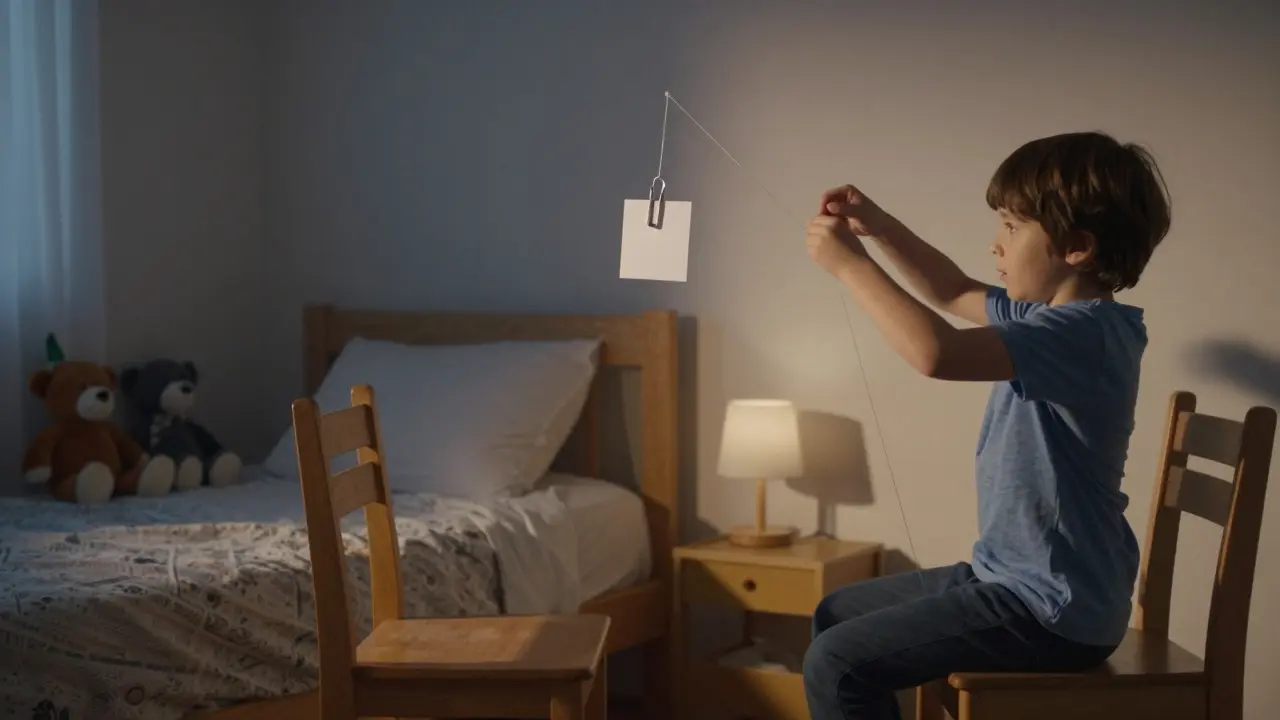
Practice is where the real growth happens. Not on stage. Not in front of an audience. But alone, in their room, doing the same move over and over.
Every time they pick up the cards or the coins, they’re building discipline. They’re learning that improvement comes from repetition, not talent. That’s a lesson schools rarely teach.
And when they finally perform? The reaction isn’t just praise. It’s validation. "You did that? How?" "Can you teach me?" "That was so cool!" These aren’t empty compliments. They’re signals that say: "You are capable. You are interesting. You matter."
What Kind of Tricks Work Best?
You don’t need expensive kits. In fact, simpler is better. Here are three tricks that work great for kids aged 5-12:
- The Disappearing Coin - A coin placed under a napkin vanishes. Uses basic misdirection and a small hidden pocket. Teaches focus and timing.
- The Floating Paper Clip - A paper clip moves on its own across a string. Uses invisible thread and a tiny bit of sleight. Builds patience and fine motor control.
- The Mind-Reading Card - You "predict" which card they pick. Uses a simple force technique. Teaches how to guide someone without forcing them.
All of these can be learned in under an hour with a free YouTube tutorial. No need to buy anything. A coin, a napkin, a string, and a deck of cards are enough.
How Parents Can Help (Without Overdoing It)
Parental support matters-but only if it’s the right kind.
Don’t say: "Wow, you’re a natural!" That puts pressure on innate talent. Instead, say: "I noticed you practiced for five days straight. That’s really cool."
Don’t rush them. Don’t correct their moves. Don’t try to "fix" their performance. Let them do it their way. Even if they say "abracadabra" instead of "presto." Even if they forget the next step. The magic is in the trying, not the perfection.
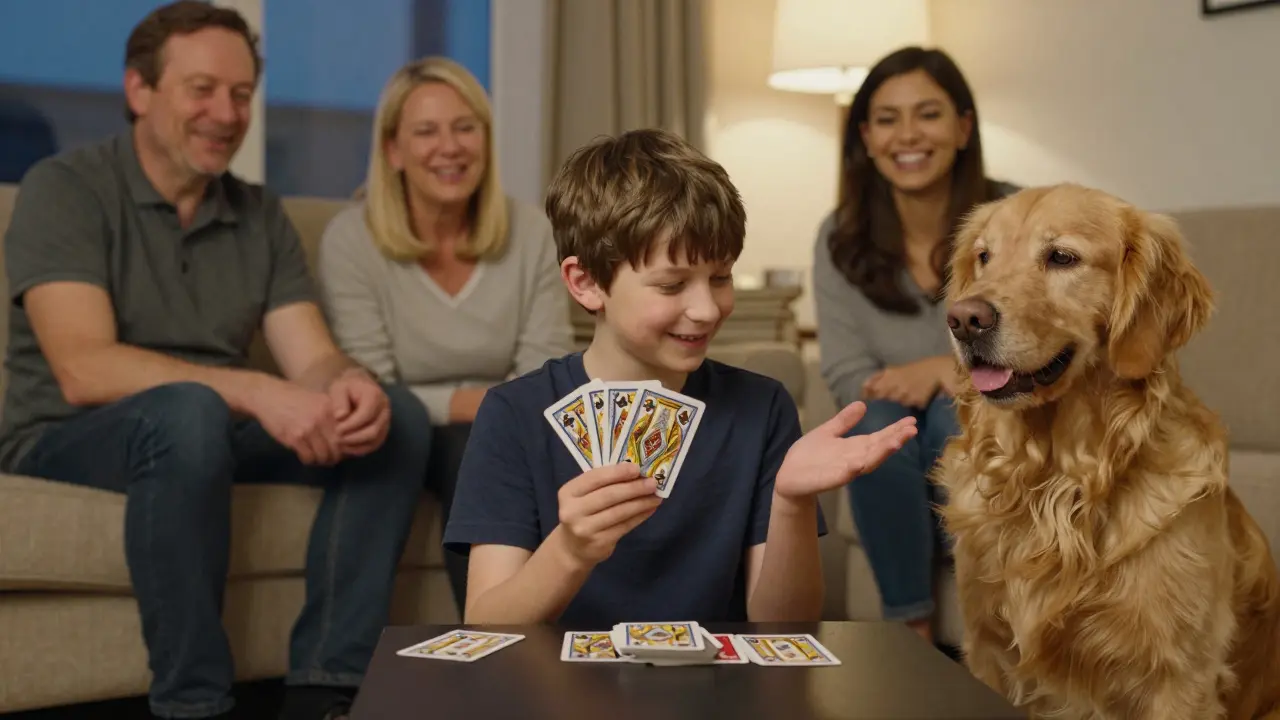
Encourage small shows. At dinner. Before bedtime. To the dog. To the stuffed animals. Every time they perform, even to an audience of one, their confidence grows.
Real-Life Impact
A mom in Providence told me her daughter, who used to hide behind her legs in social settings, started doing magic at school after learning the coin trick. Within two weeks, she was volunteering to present her science project. No one asked her to. She just felt ready.
Another dad shared that his son, who struggled with anxiety before tests, started using magic breathing techniques he learned while practicing card tricks. "I hold my breath like when I make the card disappear," he said. "Then I let it out slow. It helps me calm down."
These aren’t isolated cases. Magic is a low-stakes, high-reward activity that teaches kids they can influence outcomes. That they can create moments of joy. That they have something unique to offer.
It’s Not About the Trick
The coin doesn’t vanish because of a secret. It vanishes because the child believed they could make it happen. And that belief? That’s the real magic.
Confidence isn’t built through praise alone. It’s built through doing. Through failing. Through trying again. Through standing up and saying, "Watch this."
Give your child a trick. Let them practice. Let them mess up. Let them shine. And watch what happens when they realize: they’re not just learning magic.
They’re learning how to believe in themselves.
At what age can kids start learning magic tricks?
Kids as young as four can start with simple tricks like the disappearing coin or floating paper clip. The key isn’t age-it’s attention span. If they can focus for 10 minutes, they’re ready. By age six, most kids can master multi-step tricks with practice. The goal isn’t perfection. It’s engagement.
Do I need to buy a magic kit for my child?
No. Most beginner tricks use everyday household items: coins, paper clips, rubber bands, napkins, playing cards. You don’t need a kit. In fact, starting with simple objects helps kids understand how the trick works, not just how to perform it. Kits can be fun later, but they’re not necessary for building confidence.
What if my child gets nervous performing?
Start small. Practice in front of you first. Then try the dog. Then a stuffed animal. Then a cousin. Let them build comfort gradually. Never force a performance. If they’re nervous, say, "It’s okay if you don’t want to do it today. We’ll try again tomorrow." The goal is to make magic feel safe, not stressful.
Can magic help kids with social anxiety?
Yes. Magic gives kids a structured, repeatable way to interact with others. Instead of asking, "What do I say?" they have a script: "Watch this." The trick becomes a bridge. Many therapists and child psychologists now use magic as a tool in social skills training because it’s engaging, non-threatening, and gives immediate positive feedback.
How long does it take to see results?
Some kids show a shift in confidence after just one successful performance. Others take weeks. It depends on the child’s temperament and how often they practice. Consistency matters more than speed. Aim for 10-15 minutes a day, three times a week. Within a month, you’ll likely notice them speaking up more, making eye contact, or volunteering for activities they used to avoid.
Next time your child asks, "Can you teach me magic?" say yes. Not because you want them to impress people. But because you want them to know they can.