

The Mentalist made millions believe mind reading was real. Every episode, Patrick Jane reads a suspect’s secrets with a glance, a tone, or a pause. He solves crimes using nothing but observation and psychology. But how much of that is real? Could anyone actually do what he does? The show blends illusion, psychology, and showmanship so well that even experienced magicians pause when they watch it. The truth? It’s half magic, half science-and mostly entertainment.
What Mentalism Really Is
Mentalism isn’t magic with cards or levitation. It’s the art of making people believe you can read minds, predict choices, or control thoughts. Real mentalists don’t have psychic powers. They use cold reading, hot reading, misdirection, and deep knowledge of human behavior. Cold reading means making vague statements that sound personal-like “I sense someone in your life who passed suddenly”-and watching how the person reacts. Most people fill in the blanks themselves. Hot reading is when the mentalist gathers info beforehand-through social media, eavesdropping, or even an accomplice.
Real mentalists like Derren Brown, Banachek, and Uri Geller have spent decades perfecting these techniques. They don’t guess. They observe. They listen. They notice micro-expressions, posture shifts, hesitation patterns. A person who avoids eye contact when asked about their job? That’s not mind reading. That’s psychology. A suspect who suddenly touches their neck when questioned? That’s a stress cue. Patrick Jane does all of this-but he does it faster, louder, and with way more flair.
How The Mentalist Exaggerates Reality
The show takes real mentalism techniques and turns them into superpowers. In real life, reading someone’s thoughts takes time. It takes questions. It takes silence. It takes multiple attempts. In The Mentalist, Jane walks into a room and instantly knows a victim’s last words, the killer’s shoe size, and the exact time the murder happened-all without touching a single clue. That’s not mentalism. That’s plot armor.
One classic example: Jane walks up to a suspect and says, “You didn’t kill her because you loved her. You killed her because you were afraid she’d leave you.” The suspect breaks down crying. In real life, that kind of statement would be met with skepticism, denial, or a lawyer. Real mentalists rarely get instant confessions. They build trust. They let people talk. They don’t ambush them with dramatic reveals.
Also, Jane never fails. Not once. In reality, mentalists fail all the time. Derren Brown once did a live TV stunt where he tried to make someone believe they were invisible. Half the audience didn’t buy it. In The Mentalist, every trick works perfectly, every time. That’s not realism. That’s storytelling.
What The Mentalist Gets Right
Despite the exaggerations, the show nails some core truths. Jane’s ability to notice tiny details? That’s real. Real mentalists train their eyes to catch what others miss. The way Jane notices a mismatch between a person’s story and their body language? That’s straight out of forensic psychology. Studies from the University of California and the FBI’s Behavioral Analysis Unit confirm that micro-expressions-fleeting facial movements-can reveal hidden emotions. A raised eyebrow. A lip twitch. A shift in weight. These are real cues.
Also, Jane’s use of “priming” is accurate. He’ll mention something seemingly random-like “I love red cars”-to plant an idea. Later, the suspect talks about a red car. Jane acts like he knew it all along. That’s called the Baader-Meinhof phenomenon, or frequency illusion. People start noticing things after they’re mentioned. Real mentalists use this constantly. It’s not magic. It’s how the brain works.
And then there’s the voice. Jane’s tone changes. He pauses. He leans in. He speaks slower when he’s pushing a point. That’s not acting. That’s how real interrogators and hypnotists use pacing and rhythm to influence people. Police trainers use these exact techniques in real interviews. The show got that right.

The Psychology Behind the Performance
Why do we believe Patrick Jane? Because we want to. Humans are pattern-seeking creatures. We see meaning in randomness. We trust confidence over accuracy. When Jane says, “You’re lying,” and the suspect looks away, we assume he’s right. But in real life, people look away for all kinds of reasons-shyness, cultural norms, anxiety. Looking away doesn’t mean guilt.
Studies from the University of Toronto show that people overestimate their ability to detect lies by 30%. We think we’re good at reading people. We’re not. That’s why mentalism works so well on TV. We’re not watching a detective. We’re watching a mirror of our own wishful thinking.
Even more powerful is the confirmation bias. When Jane guesses something right, we remember it. When he’s wrong? We forget. The show never shows him failing. Real mentalists keep logs of their misses. Derren Brown once admitted he had a 60% failure rate in early performances. He kept going because he learned from the mistakes.
Can You Learn to Be Like Patrick Jane?
Yes. But not like the show. You won’t solve murders in 45 minutes. You won’t read minds. But you can learn to read people better. Start with these three steps:
- Observe baseline behavior. How does this person normally sit? Talk? Gesture? Deviations from the norm are clues.
- Ask open-ended questions. Don’t lead. Don’t suggest. Let them tell you what happened. Listen for inconsistencies in timing, emotion, or detail.
- Practice silence. Most people can’t stand silence. They fill it with truth. Let them talk. Don’t rush to respond.
There are books like What Every BODY Is Saying by Joe Navarro (former FBI agent) and The Psychology of Persuasion by Robert Cialdini that teach these skills. You don’t need a TV show. You need patience.
What The Mentalist Got Wrong About Crime Solving
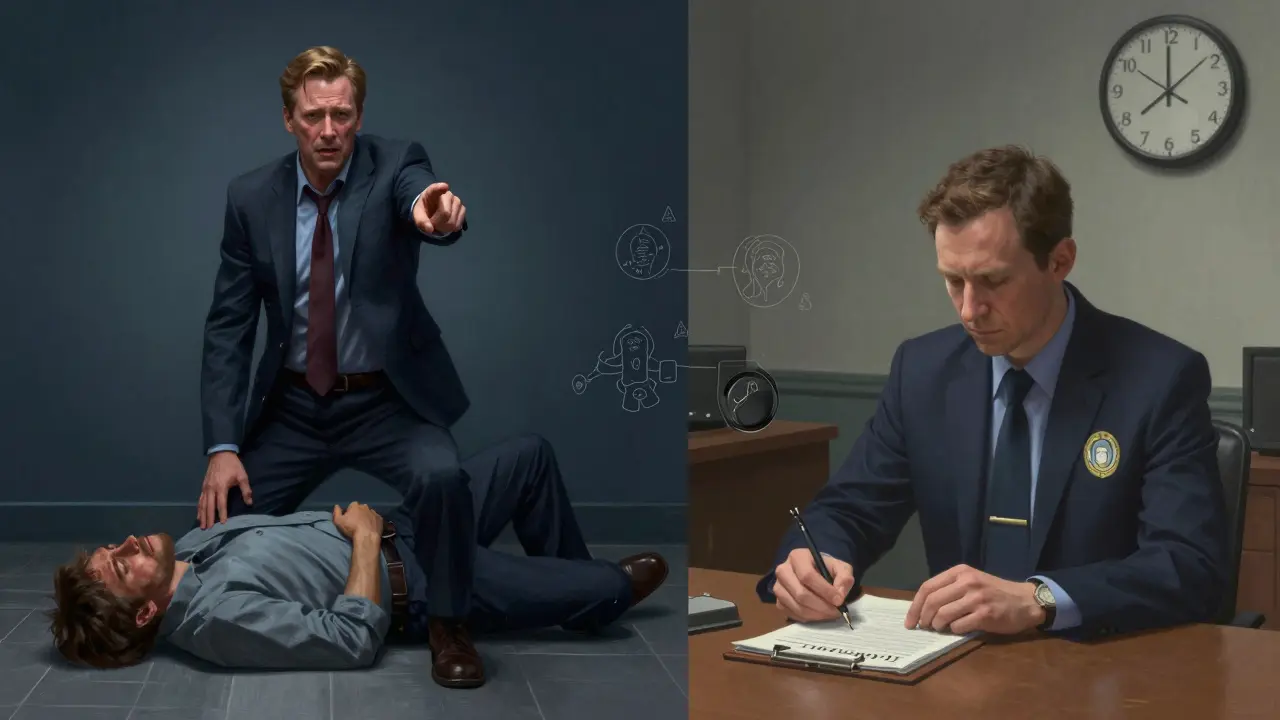
The show treats crime scenes like puzzles. Jane walks in, takes one look, and knows the killer’s name. Real investigations take months. Evidence is messy. Witnesses lie. DNA doesn’t always match. Forensic teams don’t have instant results. The FBI doesn’t have a “mentalist” on speed dial.
In real life, criminal profiling is a statistical tool, not a psychic gift. It narrows down suspects based on patterns-not gut feelings. The Behavioral Analysis Unit uses databases, offender histories, and geographic analysis. They don’t use “intuition.” They use data.
Also, Jane never follows procedure. He breaks into rooms. He touches evidence. He intimidates suspects. In reality, that would get him fired, sued, or arrested. Real detectives need warrants. They need chain of custody. They need paperwork. The Mentalist ignores all of it for drama.
Why The Mentalist Still Matters
Even with its flaws, the show did something important: it made people curious about psychology. It made people pay attention to body language. It made people ask, “Could I learn to do that?” That’s valuable. Real mentalism isn’t about supernatural powers. It’s about awareness. It’s about listening. It’s about understanding how people think.
Thousands of people now study psychology, communication, and deception because of The Mentalist. Some became police officers. Others became therapists. A few became professional mentalists. The show didn’t teach mind reading. It taught curiosity.
So is it accurate? No. Is it inspiring? Absolutely. The real magic isn’t in Jane’s tricks. It’s in the idea that we can learn to see the world more clearly. That’s something even the best TV show can’t fake.
Can Patrick Jane’s techniques actually work in real life?
Yes, but not like on TV. The core techniques-observing body language, listening for inconsistencies, using priming-are real and used by investigators, therapists, and professional mentalists. But real mentalism takes time, patience, and multiple attempts. You won’t get instant confessions or flawless predictions. The show exaggerates results for drama.
Is mentalism the same as magic?
No. Magic relies on physical illusions-sleight of hand, hidden devices, misdirection with props. Mentalism uses psychology, language, and observation. A magician pulls a rabbit from a hat. A mentalist makes you believe you chose a number they couldn’t possibly know. Both are illusions, but they work in completely different ways.
Do real detectives use mentalism in investigations?
Not as portrayed on TV. Detectives use structured interview techniques, behavioral analysis, and forensic evidence. Some use principles from mentalism-like recognizing micro-expressions or using silence to encourage confession-but they follow strict legal and procedural rules. They don’t walk into a room and guess the killer’s name.
Can anyone learn to read people like Patrick Jane?
Yes, but it takes practice. Start by studying nonverbal communication-books by Joe Navarro or Paul Ekman are great. Practice observing people in public places: how they react when asked a question, how they move when nervous, how their voice changes. Don’t try to “read minds.” Try to understand behavior. That’s the real skill.
Why do people believe The Mentalist is real?
Because it plays on how our brains work. We’re wired to find patterns, even where none exist. When someone speaks with confidence and notices small details, we assume they know more than they do. The show removes doubt and failure, making it feel like mind reading. In reality, mentalists fail often-but we only remember the wins.
Tia Muzdalifah
January 31, 2026 AT 20:19Zoe Hill
February 1, 2026 AT 15:35Albert Navat
February 1, 2026 AT 19:21King Medoo
February 2, 2026 AT 05:30Rae Blackburn
February 2, 2026 AT 16:17LeVar Trotter
February 3, 2026 AT 02:58Aafreen Khan
February 3, 2026 AT 08:26Pamela Watson
February 4, 2026 AT 02:11michael T
February 5, 2026 AT 20:26Christina Kooiman
February 6, 2026 AT 22:16Stephanie Serblowski
February 8, 2026 AT 05:30Renea Maxima
February 8, 2026 AT 22:35King Medoo
February 9, 2026 AT 01:18