
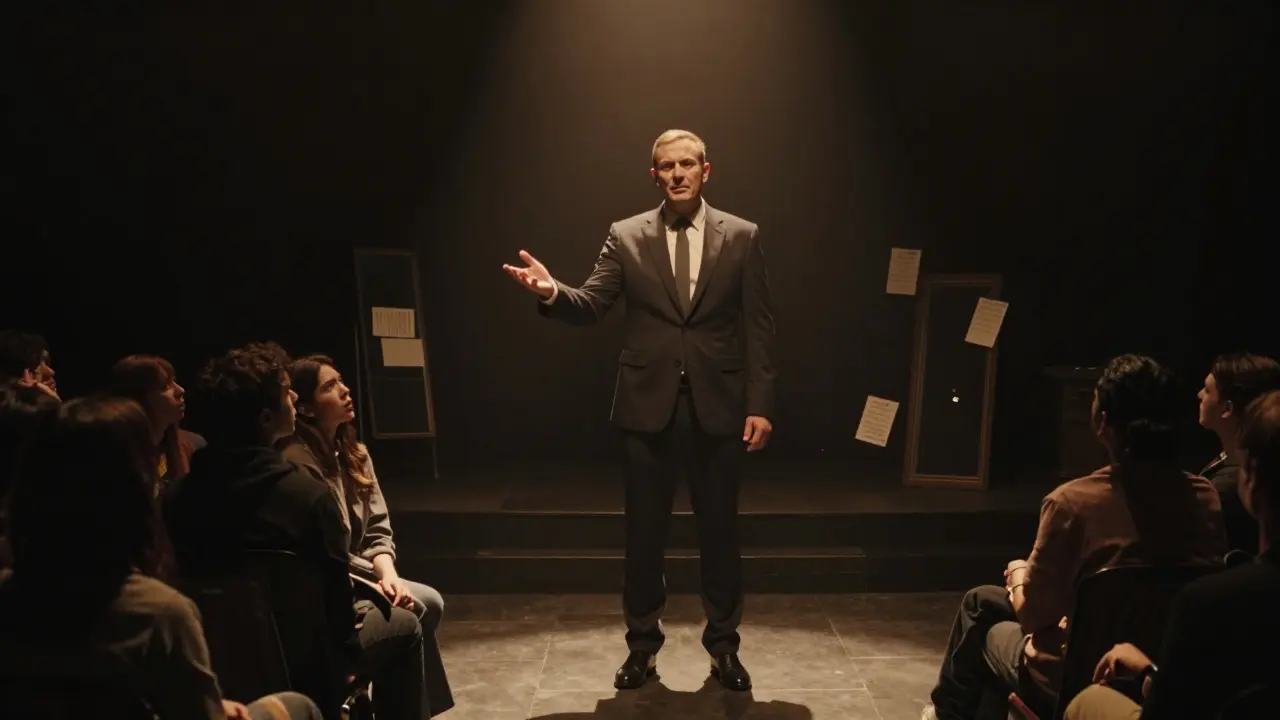
Ever watched a clairvoyant guess your dead uncle’s favorite song, or name the hidden card you picked without looking? It feels like magic. But here’s the truth: no one reads minds. Not really. What you’re seeing is a mix of psychology, showmanship, and clever tricks honed over decades. The real magic isn’t supernatural-it’s in how our brains work.
It’s Not About ESP, It’s About Patterns
Clairvoyants don’t have psychic powers. They use something called cold reading. This is a technique where the performer makes broad, vague statements that sound personal but could apply to almost anyone. For example: "I sense someone close to you who passed suddenly, maybe from illness." That’s not a vision-it’s statistics. About 80% of people have lost someone unexpectedly. The clairvoyant watches your face. If you nod, they zoom in. If you don’t, they move on. You fill in the blanks. Your brain does the rest.
Think of it like this: if I say, "You’ve been feeling stuck lately," you’ll likely think of that one time you missed a deadline. But what if I said, "You’ve been feeling stuck lately… or maybe you’ve been feeling energized?" Most people will pick the one that fits. That’s called the Barnum effect. It’s why horoscopes feel so accurate. The same trick works on stage.
The Power of Hot Reading
Not all readings are cold. Some are hot. That means the performer already knows something about you before they walk on stage. This isn’t magic-it’s research. A quick Google search, a peek at your social media, or even a chat with a ushers’ assistant can give them details. Maybe they learned you lost your mom in 2020. Maybe they know you’re a teacher. They don’t need to guess. They already know.
In 2018, a British mentalist named Derren Brown exposed this on live TV. He predicted a woman’s deceased father’s last words. The audience was stunned. But behind the scenes? His team had talked to her sister at the venue’s entrance. The sister didn’t realize she’d given away the answer. The mentalist didn’t hear voices-he just listened.
Body Language Tells All
People give away secrets without saying a word. A twitch in the eyebrow. A hesitation before answering. A hand that moves toward a pocket when asked about a ring. Trained mentalists notice these micro-expressions. They’re not mind readers-they’re observers. Think of it like poker. Good players don’t guess your hand. They watch how you hold your chips, how fast you breathe, how you react when someone raises the bet.
In one famous experiment, a mentalist asked 50 volunteers to think of a number between 1 and 10. He then correctly guessed 43 of them. How? He didn’t guess. He asked them to say the number out loud while looking at a screen. Most people looked up when they said 7. Others looked left for 3. He’d memorized the patterns. He didn’t read minds. He read eyes.

The Role of Suggestion
What you think is your choice? Often, it’s not. Mentalists use suggestion to guide your thinking. "Think of a color. Any color." Then they pause. They look at you. They say, "I’m getting… blue." If you thought green, you might second-guess yourself. If you thought blue, you feel amazed. But what if you didn’t think of blue at all? You probably did-because you were told to think of a color, and blue is one of the most common answers people pick.
There’s a reason why most people think of red when asked to name a stop sign. Or why 70% of people pick the number 7 when asked to choose a random number. Mentalists don’t need to know your secret. They just need to know what most people think.
How the Audience Plays Along
Here’s the uncomfortable truth: you help the clairvoyant. You want to believe. You’re sitting there hoping for a connection. You’re not looking for flaws-you’re looking for proof. That’s why even when a trick fails, you remember the one time it worked.
Psychologists call this confirmation bias. You forget the 12 times they guessed wrong. You remember the one time they said "I see a dog" and you had a golden retriever. That one moment feels like proof. But it’s not. It’s coincidence. And your brain loves a good story more than cold facts.
Tools of the Trade: Hidden Notes, Mirrors, and Misdirection
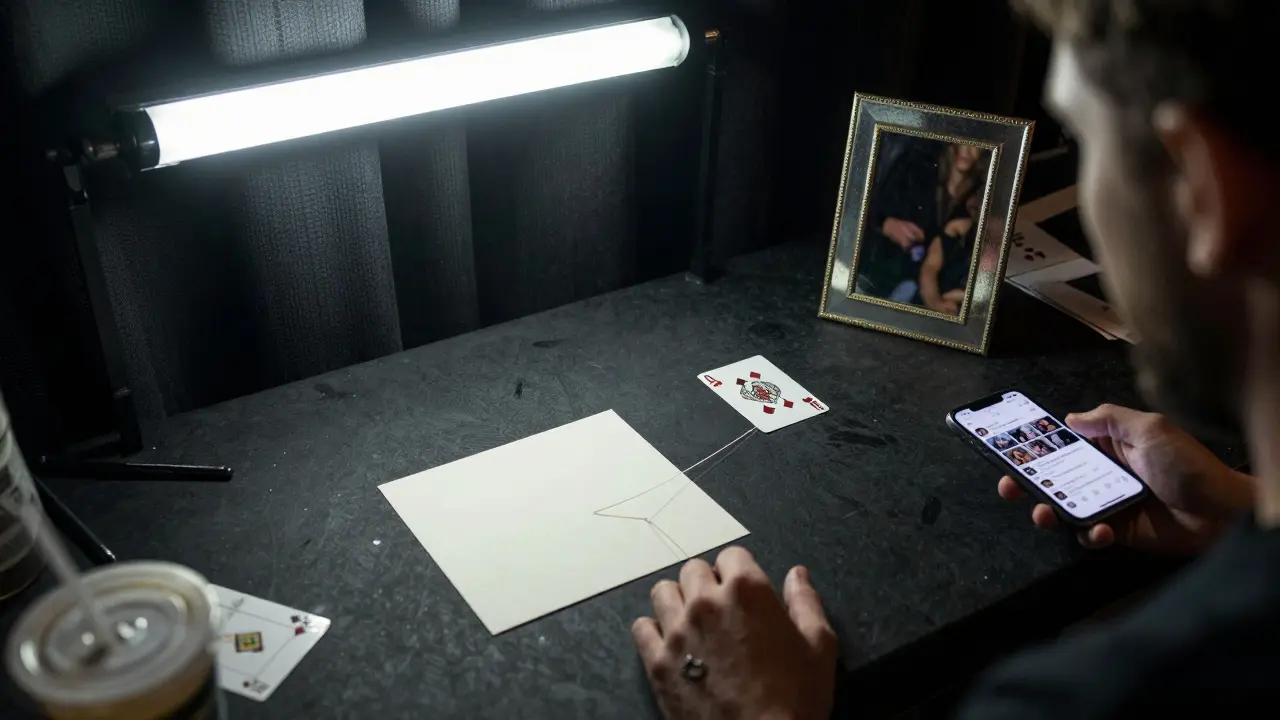
Some tricks are low-tech. A hidden slip of paper. A mirror in the frame of a picture. A microphone in the chair. A partner in the audience who whispers details. One mentalist in the 1990s used a thin, nearly invisible thread to pull a card from a spectator’s pocket. No electronics. Just patience and a steady hand.
Misdirection is the oldest trick in the book. While you’re staring at the clairvoyant’s eyes, they’re slipping a note into their sleeve. While you’re focused on the glowing crystal ball, your friend is handing over your birthdate. The illusion isn’t in the object-it’s in where you’re not looking.
Why We Love It
We don’t watch clairvoyants because we think they’re real. We watch because we want to believe. In a world full of uncertainty, the idea that someone can see what’s hidden-what’s lost, what’s buried, what’s unspoken-is comforting. It’s not about the trick. It’s about the hope.
That’s why the best mentalists don’t just perform. They create moments. A pause. A sigh. A quiet voice saying, "I think your grandmother is trying to tell you something." That’s not magic. It’s empathy. And that’s why it feels real.
How to Spot a Fake Clairvoyant
- They never say "I don’t know." Real people hesitate. Fakes push forward.
- They use vague terms. "Someone with a J name," "a feeling of water," "a number that keeps appearing." These mean nothing until you give them meaning.
- They ask leading questions. "Does this name feel familiar?" Not "What’s your mother’s name?"
- They avoid specifics. If they say "I see a car accident in 2017," ask: "Which car? What color? Where?" If they can’t answer, they’re guessing.
- They don’t let you record. Real psychics don’t mind proof. Fakes fear it.
What You Can Learn From This
You don’t need to be a magician to use these tricks. You can use cold reading to build trust. You can use misdirection to redirect a conversation. You can use suggestion to help someone see a new perspective. The same tools that make a clairvoyant seem supernatural can help you connect with people in real life.
Next time someone tells you they "just knew" something about you, ask yourself: Did they really see it? Or did they just know how people think?
Are clairvoyants real, or is it all fake?
No one has ever proven a clairvoyant can access information beyond normal senses under controlled conditions. Every claim has been debunked by scientists and magicians alike. What remains are clever tricks based on psychology, observation, and suggestion. The effect feels real-but the power isn’t supernatural.
Can you learn to do cold reading yourself?
Yes. Many mentalists started by practicing on friends. Start with broad statements: "You’ve been under stress lately," or "Someone important to you has a habit you don’t like." Watch reactions. If they nod, dig deeper. If they don’t, pivot. It’s not about guessing-it’s about listening and adapting. It’s a skill, not a gift.
Why do clairvoyants always mention dead relatives?
Because grief makes people vulnerable. Nearly everyone has lost someone. Saying "I sense a loved one" is a high-probability guess. If you react emotionally, they’ll ask for details-"Was it a man? A woman? A parent?"-and use your answers to build a story. It’s not a vision. It’s a conversation.
Do clairvoyants use technology?
Sometimes. Hidden earpieces, Bluetooth earpieces, RFID tags in cards, or even apps that sync with phones can be used. But many still rely on old-school methods: slips of paper, planted assistants, or mirrors. Technology helps, but the real skill is in reading people, not gadgets.
Is it unethical for clairvoyants to perform?
It depends. If they claim real psychic powers and charge money for healing or guidance, it’s exploitative. If they’re clear it’s entertainment-like a stage magician-it’s fine. Many performers today openly say, "I’m not psychic. I’m a mentalist." That honesty changes everything. The line isn’t in the trick-it’s in the intent.
Ben De Keersmaecker
February 24, 2026 AT 04:34I’ve always been fascinated by how much we project meaning onto vague statements. That Barnum effect is wild-like, I once read a horoscope that said ‘a new opportunity is coming your way’ and I immediately thought of my job interview. But honestly? I’d been applying to jobs for three months. My brain just latched on to the one thing that fit.
It’s not that clairvoyants are lying. It’s that we’re desperate to believe someone sees us. And that’s way more human than supernatural.
Amanda Harkins
February 26, 2026 AT 02:08So… it’s just psychology? Cool. Guess I’ve been paying $80 a session for my cousin to read me tea leaves and call it ‘emotional clarity.’
Jeanie Watson
February 27, 2026 AT 07:06lol i just watched one of these on youtube and my roommate screamed ‘that’s my grandma!!’ and i was like… bro she’s been dead for 12 years and you’ve never even told anyone that.
Tom Mikota
February 27, 2026 AT 09:58Wait-so you’re saying the ‘I sense someone close to you who passed suddenly’ line? That’s not psychic. That’s just… statistically inevitable. Like saying ‘you’ve probably had a bad day’ on a Monday. And yet-people pay for this. People. Pay. For. This. And we wonder why we’re in a crisis of meaning.
Mark Tipton
February 27, 2026 AT 23:57Actually, you’re missing the bigger picture. The real manipulation isn’t just cold reading-it’s systemic. The entire entertainment industry, from astrology apps to TikTok psychics, is designed to exploit cognitive biases for profit. And let’s not forget: the U.S. government spent over $20 million in the 1970s-90s on Project Stargate to weaponize remote viewing. They never got results-but they kept funding it because politicians wanted to believe. So yes, it’s psychology. But it’s also institutionalized delusion.
And don’t even get me started on how social media algorithms now mirror these techniques-vague, emotionally charged content gets engagement because it triggers the same Barnum effect. We’re not just being fooled by clairvoyants-we’re being groomed by our feeds.
Adithya M
March 1, 2026 AT 05:06This is why I love science. No magic. No ghosts. Just cold, hard human behavior. I showed this to my cousin in Mumbai-he’s a spiritual healer and he laughed so hard he cried. Said, ‘You’re right. I do the same thing. I just call it ‘divine intuition.’’
Jessica McGirt
March 1, 2026 AT 21:29Thank you for this. I’ve been trying to explain this to my aunt for years. She swears her ‘medium’ told her exactly what her late husband whispered on his deathbed. Turns out, the medium had been chatting with her daughter at the grocery store. My aunt still won’t believe it. But at least now I have something to point her to.
It’s heartbreaking-but also kind of beautiful? We all want to believe love outlasts death. Maybe the real magic is in that longing.
Donald Sullivan
March 3, 2026 AT 17:44They’re not fooling anyone. Everyone knows it’s fake. But they still go because it feels good. That’s the point. You don’t need real magic. You need comfort. And if a guy in a velvet robe can give you that for $75? Fine. Let him have it.
Tina van Schelt
March 4, 2026 AT 02:46It’s like watching a really good breakup scene in a movie-you know it’s scripted, but your heart still breaks. That’s what these performances do. They tap into grief, longing, the quiet ache of wondering ‘what if?’ And yeah, it’s manipulation. But sometimes, manipulation is the only thing that lets us breathe.
Ronak Khandelwal
March 5, 2026 AT 01:20So true 😊✨ We all want to believe in something bigger than ourselves. Even if it’s just a clever trick, it reminds us we’re not alone in our grief, our fears, our hopes. Maybe the real lesson isn’t ‘they’re faking it’… but ‘we’re so hungry for connection we’ll believe almost anything.’ 🌿❤️
Jamie Roman
March 6, 2026 AT 23:39I’ve been practicing cold reading on my coworkers for fun. Started with ‘You’ve been feeling overwhelmed lately.’ One guy went silent, then said, ‘Yeah… my kid’s in the hospital.’ I panicked. Didn’t know what to say. So I just said, ‘I’m so sorry.’ He cried. We talked for 20 minutes.
Turns out, I didn’t need to read his mind. I just needed to listen. And now I’m not sure if this is a trick… or just being human.
Maybe the real power isn’t in the technique. Maybe it’s in the willingness to pause, to be quiet, to let someone feel seen-even if you didn’t ‘know’ anything to begin with.
Salomi Cummingham
March 8, 2026 AT 08:18I used to work backstage at a mentalist show. I saw everything. The earpiece. The planted audience member. The slip of paper hidden in the chair cushion. And yet-every night, people left in tears. One woman hugged the performer and whispered, ‘I finally feel like he’s still here.’
I wanted to yell, ‘He’s not! It’s all fake!’ But I didn’t. Because I realized: she didn’t need the truth. She needed peace.
So I started handing out little cards after shows-‘If you felt something real tonight, it’s because you already knew it inside.’ No magic. Just a quiet reminder: you’re not broken. You’re just human.
And sometimes… that’s enough.
Johnathan Rhyne
March 8, 2026 AT 11:00Okay, but the article says ‘no one has ever proven a clairvoyant can access information beyond normal senses’-and then cites Derren Brown? Bro. Derren Brown is a magician. He’s not proving psychic powers don’t exist-he’s proving magicians can trick people. That’s like saying ‘no one’s proven ghosts exist’ because a guy in a lab coat made a table knock. That’s not evidence-it’s a party trick.
And also-why is ‘misdirection’ suddenly a psychological phenomenon? It’s been a magic staple since 1880. Don’t rebrand sleight of hand as neuroscience. It’s not a breakthrough. It’s a curtain.