
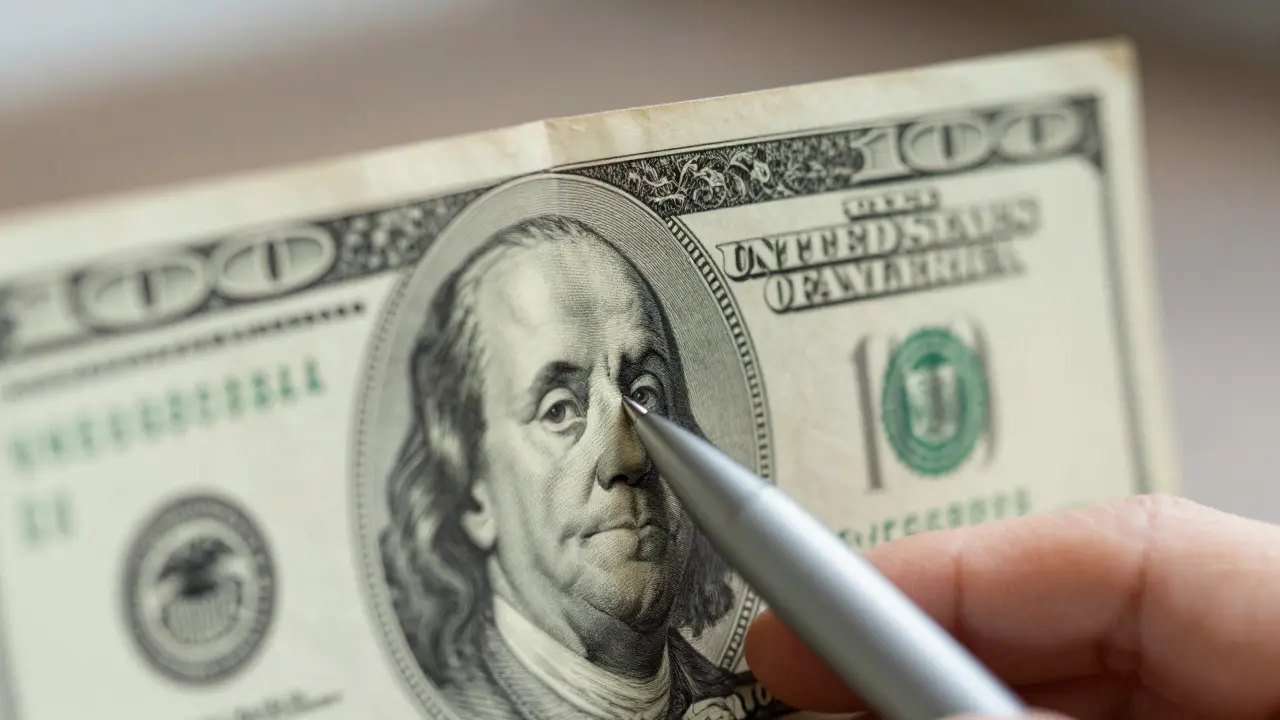
The pen through dollar trick looks impossible. You hold a regular pen and a dollar bill. You press the pen against the bill-right through the center-and it comes out the other side. No tears. No cuts. No sleight of hand you can spot. People gasp. They check the bill. They turn it over. It’s still whole. How? It’s not magic. It’s physics, psychology, and a tiny bit of misdirection.
What You Actually See
Most people think the pen is piercing the paper like a needle through cloth. That’s the illusion. But paper doesn’t work like that. A pen can’t punch through a flat dollar bill without tearing it. So what’s really happening?
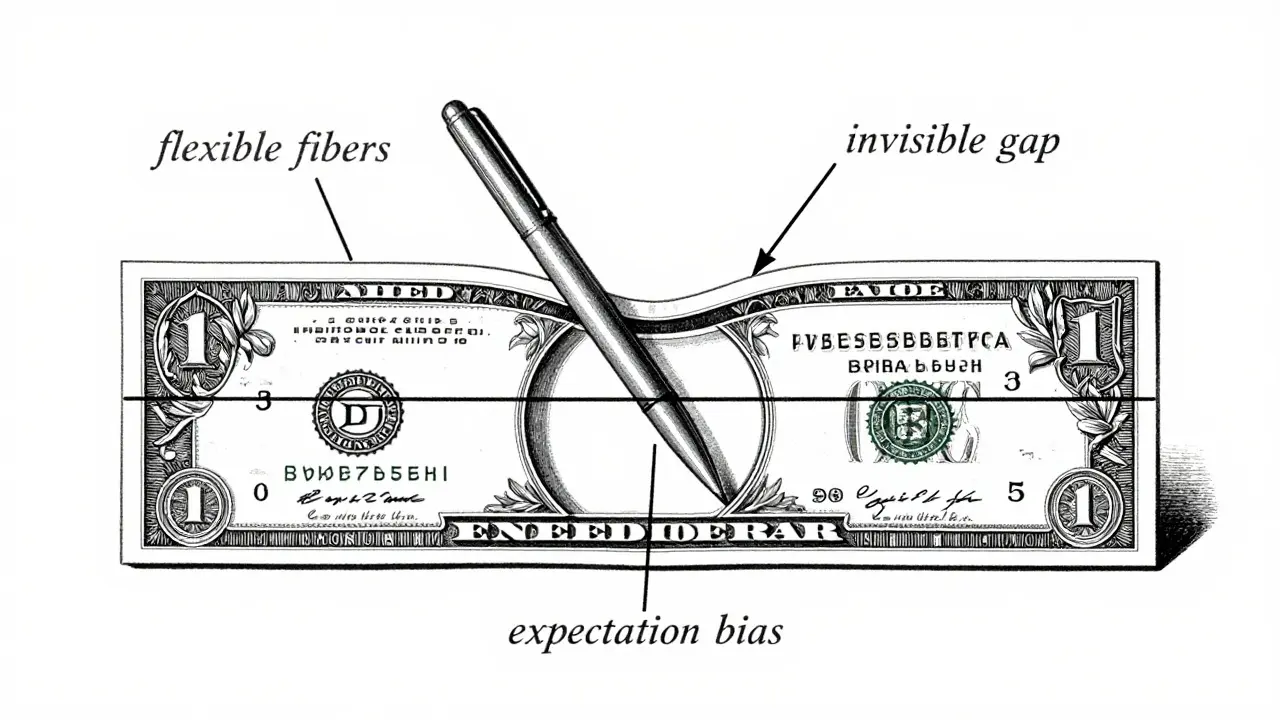
The trick uses the natural flexibility of the dollar bill. U.S. currency is made from cotton and linen fibers, not regular paper. It’s tough, slightly stretchy, and folds easily. When you hold the bill vertically between your fingers, you’re not holding it flat-you’re holding it slightly curved, like a shallow U-shape. The pen isn’t going through the center of the flat surface. It’s sliding into the gap created by that curve.
Here’s the exact setup: You hold the dollar bill between your thumb and index finger, with the top edge slightly bent back toward you. The pen is held at a 45-degree angle, pointing down. As you push the pen forward, it doesn’t hit the center of the bill. It hits the folded edge-the thin part where the bill curves inward. The pen slips between the two layers of the folded bill, not through the material itself.
The Misdirection
People don’t notice the fold because you’re not doing anything obvious. You don’t crease the bill beforehand. You don’t hide anything. You just hold it naturally, like you’re about to show someone a bill. The human brain assumes the bill is flat because that’s how we usually see it. That assumption is your biggest tool.
Studies in cognitive psychology show that people focus on what they expect to see, not what’s actually there. In one experiment, participants watching a magician make a coin vanish missed the subtle finger movement because they were focused on the hand closing. The same thing happens here. You say, “Watch the center,” or “See how it goes right through?”-and their eyes lock onto the middle of the bill. The real action happens at the edge, where they’re not looking.
Why It Works Every Time
This trick only fails if you hold the bill too tightly or too flat. If you press the bill flat against a table, the trick won’t work. If you fold it too sharply, people will see the crease. The key is a soft, natural curve-just enough to create a hidden gap.
Try this: Take a dollar bill. Hold it between your fingers like you’re about to hand it to someone. Now, gently bend the top third of the bill back toward you, just a little. Don’t make a sharp fold. Just let it curve. Now, take a pen and press it against the bill at the point where the curve begins. Push slowly. You’ll feel the pen slide into the space between the front and back layers. It doesn’t break the paper. It just slips through the air gap.
That’s it. No magnets. No hidden blades. No digital editing. Just a trick your brain doesn’t expect.

How to Do It Yourself
Here’s how to perform it cleanly:
- Use a crisp, new dollar bill. Older, wrinkled bills don’t hold the curve well.
- Hold the bill vertically, pinched between your thumb and index finger, about 2 inches from the top.
- Let the top 1 inch of the bill curve slightly backward toward your body. Don’t crease it-just let it bend naturally.
- Hold the pen at a 45-degree angle, tip pointing down.
- Push the pen forward slowly, aiming for the point where the curve starts-not the center.
- As the pen enters, keep your fingers relaxed. Don’t squeeze the bill.
- Let the pen come out the other side. Pull it back slowly.
Practice this a few times in front of a mirror. Watch your fingers. Watch the bill. You’ll see how the curve hides the trick.
Why It Feels Like Real Magic
This trick works because it plays on two things: expectation and perception. We’ve all seen paper get torn. We’ve all seen pens puncture things. So when we see a pen go through a dollar bill, our brain says: “That’s impossible.”
But it’s not impossible. It’s just unexpected. The brain fills in the gaps with assumptions. It assumes flatness. It assumes rigidity. It assumes the pen is going through the material, not the space around it.
That’s why this trick is a favorite among mentalists. It doesn’t need props. It doesn’t need practice for months. You can do it with any pen and any dollar bill you have in your pocket. And because it looks so real, people still check the bill after. They turn it over. They hold it up to the light. They ask, “How did you do that?”
Common Mistakes
Most people fail at this trick because they try too hard. They fold the bill too much. They push too fast. They hold the pen straight on. Here’s what not to do:
- Don’t pre-crease the bill. It’s obvious.
- Don’t use a ballpoint pen with a thick tip. Use a slim pen-like a Bic Cristal or a mechanical pencil.
- Don’t hold the bill flat. The curve is everything.
- Don’t look at the pen as you push. Look at the person’s face. Let them watch the center.
One pro tip: After you pull the pen out, casually flip the bill over. That’s when people think they’ve caught you. But the back side looks exactly the same-no hole, no tear. That’s because there never was one.
Why This Trick Matters
Beyond the wow factor, this trick teaches something deeper: how easily our senses can be fooled. Magicians don’t make things disappear. They make you stop looking where the action is. That’s not just entertainment-it’s a lesson in attention, perception, and how the mind works.
Psychologists use similar illusions to study how people process visual information. Neuroscientists use them to map where the brain fills in gaps. Even marketers use these principles to guide what customers notice-and what they ignore.
This trick isn’t about the pen. It’s about the person watching it.
What to Do After You Master It
Once you’ve got the pen-through-dollar trick down, try variations:
- Use a credit card instead of a dollar bill. The plastic bends differently, but the same principle applies.
- Do it with two pens at once-one going through the top curve, one through the bottom. It looks like a double penetration.
- Ask someone to hold the bill. Then take the pen and push it through. Their grip changes the curve-making it harder, but not impossible.
Each variation teaches you something new about control, timing, and how people interpret movement.
Can you use any type of pen for this trick?
Yes, but some work better than others. Slim pens like the Bic Cristal, Pilot G-2, or mechanical pencils work best because they have a narrow tip and smooth motion. Thick pens, like highlighters or markers, are harder to control and may catch on the bill’s fibers. Avoid pens with sharp tips-those can tear the bill.
Does the dollar bill have to be new?
New bills work best because they’re stiff and hold a curve well. Older, folded bills are more flexible but harder to control. If you only have a worn bill, smooth it out on a flat surface first, then gently curve the top edge. It’ll still work, but you’ll need more precision.
Is this trick considered cheating in magic?
No. This is a classic example of a self-working illusion. It doesn’t rely on hidden tools, gimmicks, or sleight of hand. It works because of physics and perception. Many professional mentalists, including Derren Brown and Banachek, use variations of this trick because it’s clean, reliable, and deeply convincing.
Can you do this trick with other paper?
You can try, but it won’t work as well. Regular printer paper is too thin and tears easily. Cardstock is too stiff. The cotton-linen blend of U.S. currency is uniquely durable and slightly elastic, which lets it bend without breaking. That’s why this trick is designed for dollar bills-it’s the perfect material.
Why does the bill look untouched after the trick?
Because it never got pierced. The pen slips between the two layers of the curved bill, not through the material. When you pull the pen out, the bill returns to its original shape. There’s no hole, no cut, no damage-just a temporary gap created by the curve. That’s why people are so baffled.
Final Thought
The pen through dollar trick isn’t magic. It’s a quiet reminder that what we see isn’t always what’s real. The best illusions don’t hide the truth-they hide the question. And sometimes, the most powerful trick isn’t in the hand. It’s in the mind watching it.
Rakesh Kumar
January 2, 2026 AT 15:07Okay but like... I just tried this with a crumpled bill and a pen and it didn't work at all. Then I smoothed it out, gave it that tiny curve, and boom - pen slipped through like it was nothing. My brain just exploded. This isn't magic, it's science with style.
Bill Castanier
January 3, 2026 AT 05:47The trick relies on the unique tensile properties of cotton-linen blend currency. No sleight of hand. Just physics and misdirection. Clean execution.
Ronnie Kaye
January 4, 2026 AT 18:54So let me get this straight - you’re telling me the whole internet lost their minds over a folded piece of paper and a Bic pen? I’ve seen better illusions in kindergarten. Still… kinda cool I guess. But please stop acting like this is groundbreaking science.
Priyank Panchal
January 5, 2026 AT 20:59You people make this sound like some deep philosophical revelation. It’s a cheap parlor trick. If you can’t figure this out after reading a 5-minute guide, you’re not curious - you’re lazy. Stop glorifying basic physics.
Ian Maggs
January 7, 2026 AT 02:02It’s fascinating… isn’t it?… how perception… constructs reality… and how the mind… refuses to see… what’s right in front of it… because it’s… too simple… to be true…
Michael Gradwell
January 9, 2026 AT 01:07People pay attention to this? You spent 1000 words explaining how a pen goes through a dollar. This is why America’s dumbing down. I’ve got better things to do than read this.
Flannery Smail
January 10, 2026 AT 05:23Wait so you’re saying the bill isn’t actually being pierced? Then why does it look like it is? Maybe it’s just bad lighting. Or maybe you’re all just gullible. I’m not convinced.
Nicholas Carpenter
January 11, 2026 AT 16:19I tried this with my 7-year-old niece. She saw the curve immediately. Said, 'Duh, it’s just bent.' Then she did it better than me. Maybe the real trick is unlearning what you think you know.
Chuck Doland
January 12, 2026 AT 15:37This phenomenon exemplifies a cogent interplay between material science and cognitive perception. The cotton-linen substrate of U.S. currency exhibits non-isotropic flexibility, permitting elastic deformation along a single axis without rupture. Concurrently, the observer’s perceptual schema, conditioned by prior visual experiences of rigid planar surfaces, erroneously infers puncture rather than displacement. A masterclass in epistemological misalignment.
Madeline VanHorn
January 13, 2026 AT 05:54I mean… it’s cute. But if you think this is impressive, you’ve never seen real magic. Like, actual magicians. With smoke and mirrors. This is just… paper folding. Basic.
Glenn Celaya
January 13, 2026 AT 19:21Wow another one of those 'look how smart i am' posts. I bet you also think the moon landing was real and that wifi is magic. This trick is so obvious I almost cried from boredom. Also your grammar sucks.
Wilda Mcgee
January 15, 2026 AT 00:09OMG I just did this with my coffee mug and a pen and my cat watched the whole thing like I’d summoned a demon. Seriously though - this trick is pure joy. It’s not about the pen, it’s about that moment when someone’s face lights up because their brain just got rewired for five seconds. Do it for your friends. Do it for the kids. Do it because the world needs more little wonders.
Chris Atkins
January 15, 2026 AT 03:27Been doing this since I was 12. Works every time. Just remember - don't rush it. Let the bill breathe. And never look at the pen. Look at their eyes. That's where the magic lives.