
Do magicians still exist? It’s a fair question. You see them on TV-flashing suits, flashy lasers, and a crowd screaming like they just saw a spaceship land. But then you scroll through TikTok and see a teenager pulling a coin out of your ear using nothing but a phone camera and a clever cut. So where’s the real magic now? And more importantly-does it still matter?
They’re not gone. They just changed the stage.
Magicians haven’t disappeared. They’ve moved. The grand stage of Las Vegas still has its legends-David Copperfield still performs sold-out shows. Penn & Teller sell out theaters with their blunt, sarcastic style. But the real growth? It’s happening in small clubs, college campuses, YouTube channels, and even backyard birthday parties.
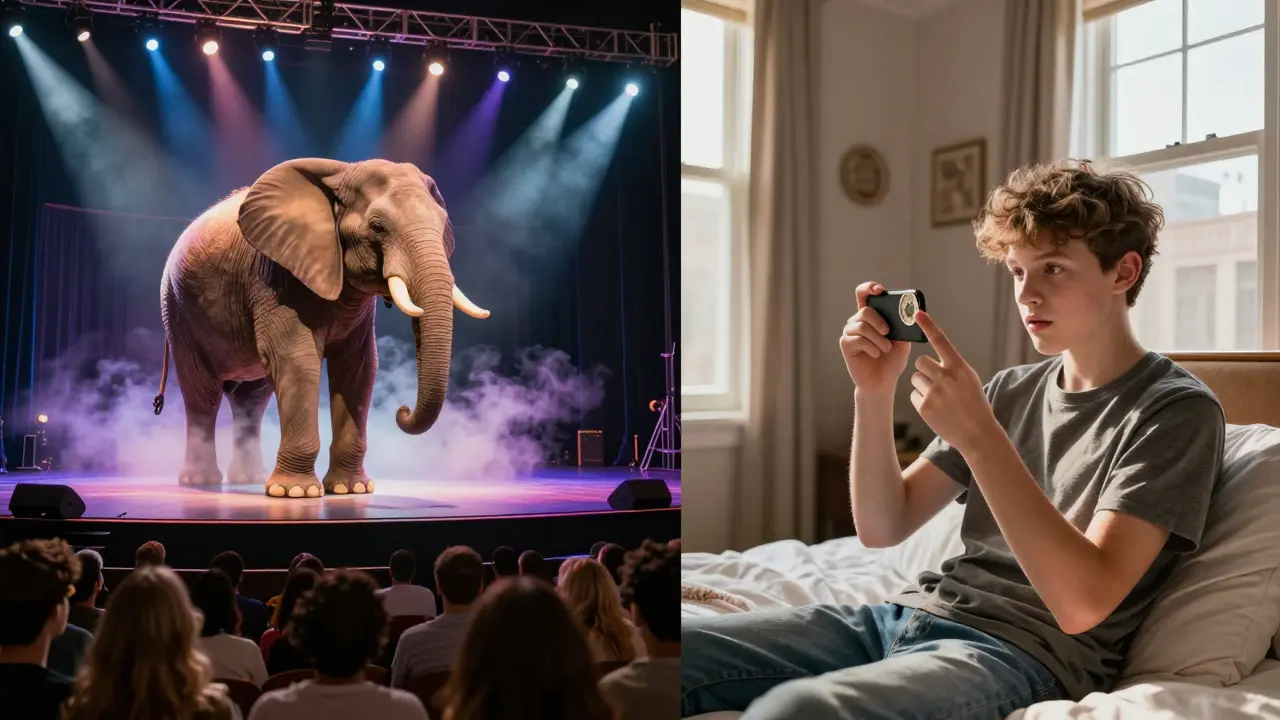
Back in the 1980s, magic was all about big illusions: sawing people in half, making elephants vanish. Those tricks still happen-but now they’re the exception, not the rule. Today’s top magicians focus on intimacy. They make your watch disappear while you’re holding it. They read your mind after you’ve written a secret on a napkin. They don’t need a 50-foot stage. They need you, your phone, and a quiet room.
Think about it: if you’re trying to amaze someone today, you don’t need a tiger. You need to make them question reality. That’s harder. And that’s why magic is stronger than ever.
Magic trick kits aren’t just for kids anymore
Remember those plastic magic kits from the 90s? The ones with the rubber chicken, the fake blood, and the instructions that said, "Now wave your hand and say ‘abracadabra’"? Yeah. Those are still sold. But they’re not the whole story anymore.
Companies like Ellusionist and a premium magic brand founded in 2007 that produces high-quality playing cards and close-up magic tools now sell kits designed for adults. These aren’t toys. They’re professional-grade tools: gimmicked decks, custom-made coins, silent switches, and detailed video tutorials that teach real technique-not just sleight of hand, but psychology.
One of the most popular kits on the market right now is the "The Classic Coin Routine" by a set designed for beginners to learn the fundamental moves used by pros like Dai Vernon and Juan Tamariz. It costs $45. It doesn’t come with a cape. But it comes with 3 hours of training videos and a 100-page digital booklet explaining why each move works on the human brain.
People are buying these not to impress their cousins at Thanksgiving. They’re buying them to feel in control. To build confidence. To learn how to hold attention in a world full of distractions. Magic, at its core, isn’t about deception. It’s about connection.
Why people still believe-even when they know it’s fake
Here’s the weird part: most people watching a magic show know it’s an illusion. They’ve seen behind-the-scenes videos. They’ve read how the trick works. And yet, they still gasp.
That’s because magic doesn’t work by hiding the method. It works by hiding the intent. When a magician makes your card vanish, they’re not just moving a piece of paper. They’re making you feel like you lost control. And then, when they reveal it’s in your pocket, they give it back. That’s not trickery. That’s emotional storytelling.
Neuroscientists at the University of London studied this in 2023. They found that when people watch a magic trick, their brain doesn’t just process what they see-it processes what they expect to see. Magicians exploit that gap. They set up expectations, then break them just enough to create wonder.
That’s why the best magicians today don’t rely on props. They rely on silence. Timing. Eye contact. A pause. A smile. Those are the tools that can’t be replicated by AI or CGI. And that’s why magic survives in a world full of deepfakes and VR.
Instagram magicians vs. Las Vegas legends
There are two kinds of magicians today. The ones who perform for crowds of 2,000. And the ones who perform for one person-with a camera pointed at them.
On one side, you’ve got legends like Dynamo and a British illusionist who popularized street magic through viral YouTube videos and televised specials in the 2010s. He walks down the street, makes a bus disappear, and people scream. His shows are massive. But they’re also carefully choreographed, with stunt teams and hidden wires.
On the other side, you’ve got creators like Lennart Green and a Swedish close-up magician known for his minimalist style and mastery of card manipulation. He sits at a kitchen table. No camera tricks. No edits. Just him, a deck of cards, and a viewer who can’t believe what they’re seeing. His videos have millions of views. No pyrotechnics. No elephants. Just pure skill.
Both are valid. Both are magic. But the rise of the “one-person magic” style is what’s changing the game. You don’t need a budget to be a magician anymore. You just need a deck of cards, a phone, and the patience to learn how to move your fingers slower than your brain can follow.
Real magic isn’t about the trick-it’s about the moment
Let’s say you’re at a party. Someone pulls out a magic trick kit. You roll your eyes. You’ve seen this before.
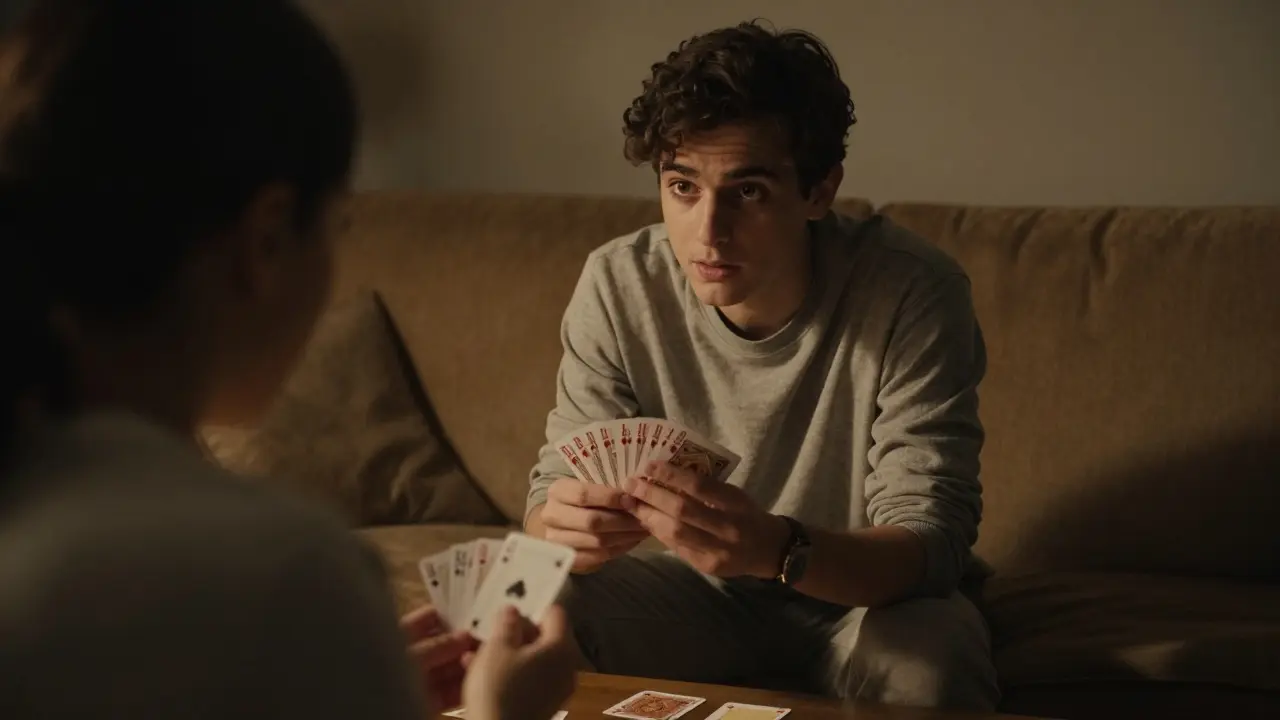
But then they ask you to pick a card. Not just any card. The one you think about. They don’t touch it. They don’t look at it. They just stare at you for five seconds. Then they say, "You were thinking of the seven of hearts, weren’t you?"
You check. You’re stunned. You didn’t even realize you were thinking about it.
That’s not a trick. That’s a moment. And moments like that? They’re rare. They’re powerful. And they’re what keeps magic alive.
Magicians today aren’t selling illusions. They’re selling presence. They’re selling the feeling that something impossible just happened-and you were there to witness it.
What’s next for magic?
AI can generate fake videos. Robots can shuffle cards perfectly. Drones can make objects float. But none of them can make you feel something real.
Magicians are starting to use technology-but only as a tool. Some now use augmented reality glasses to overlay invisible marks on cards. Others use apps that let them control a spectator’s phone remotely. But the core? Still human. Still silent. Still focused on the person in front of them.
The future of magic isn’t bigger illusions. It’s deeper connections. More intimate shows. More people learning the craft-not to become stars, but to become better listeners, better observers, better communicators.
And that’s why magicians still exist. Not because they make things disappear. But because they remind us that wonder still matters.
Are magicians real, or is it all just trickery?
Magicians are real people who train for years to master sleight of hand, misdirection, and psychology. The "tricks" are real techniques-just ones designed to fool your perception. There’s no supernatural power involved, but the skill is genuine. A good magician doesn’t lie-they guide your attention so you miss what’s happening right in front of you.
Can you learn magic as an adult?
Absolutely. Many professional magicians started in their 30s or 40s. The key isn’t age-it’s practice. Start with a simple magic trick kit focused on cards or coins. Spend 15 minutes a day practicing one move until it feels natural. Most beginners quit because they expect instant results. Magic is like playing an instrument: it takes repetition, patience, and a willingness to fail in front of yourself before you impress anyone else.
Do I need expensive gear to start?
No. You can learn the basics with a regular deck of cards and a coin from your pocket. Professional tools help, but they’re not necessary to begin. In fact, starting with cheap or borrowed props forces you to focus on technique instead of gimmicks. Many pros still use the same deck they bought for $2 at a gas station.
Why do people still enjoy magic in the age of CGI?
Because CGI is impersonal. Magic is human. You see the person’s hands. You hear their breath. You feel the tension in the room. When a magician makes your watch vanish, you know it’s not a computer effect-it’s them. That creates a bond. In a world full of digital noise, real human skill feels rare and precious.
Is magic dying because of TikTok?
No. TikTok didn’t kill magic-it democratized it. Before, you needed a TV deal or a Vegas contract to be seen. Now, anyone with a phone can share a trick. That’s led to more innovation, more diversity in styles, and a younger generation learning magic not to be famous, but to connect. The audience is bigger than ever.
Where to start if you want to try magic
- Buy a beginner’s close-up magic kit from Ellusionist or Penguin Magic (under $50).
- Watch one tutorial a week from YouTube channels like Card Tricks and a long-running channel with over 2 million subscribers teaching practical card magic.
- Practice in front of a mirror. Then practice on a friend who doesn’t know the trick.
- Don’t show off. Wait for the right moment. Magic works best when it feels accidental.
- Keep a notebook. Write down what worked, what didn’t, and how people reacted.
Magic isn’t about being perfect. It’s about being present. And if you’re reading this, you’re already on the path.
Ryan Toporowski
February 3, 2026 AT 14:13OMG YES THIS!! 🥹 I just learned a coin trick last week and my little cousin screamed like I summoned a demon. Magic isn't dead-it's just chilling in our pockets now. 🎩✨
Samuel Bennett
February 3, 2026 AT 21:42Yeah right. 'Magicians' are just low-budget illusionists with bad lighting. Everyone knows the 'mind reading' is cold reading. And those 'no edits' TikTok videos? 90% are cut to hide the setup. You think you're seeing real magic? Nah. You're seeing edited clips and gullible people. 🤨
Rob D
February 4, 2026 AT 19:43Let me tell you something, folks-magic ain't some hippie-dippie 'connection' crap. It's a goddamn art form that requires discipline, sweat, and zero tolerance for weak hands. You wanna learn? Stop watching TikTok and start practicing until your fingers bleed. Back in my day, we didn't have 'gimmicked decks'-we had calluses and grit. And we didn't need a 45-dollar video course to know a double lift from a palming. Real magic was built on sweat, not subscription boxes. 🇺🇸
Franklin Hooper
February 5, 2026 AT 10:20The notion that magic is 'about connection' is a romanticized oversimplification. The mechanics are what matter. Misdirection, timing, psychological priming. These are not 'emotional storytelling'-they are cognitive manipulation. The 'moment' you describe is just a failure of perception. Nothing more. Nothing mystical. Just science dressed in capes.
Jess Ciro
February 6, 2026 AT 07:28They’re all in on it. The whole magic scene is a front for mind control training. Ever notice how magicians always make you look away right before the trick? That’s not sleight of hand-that’s Pavlovian conditioning. They’re training you to obey visual cues. Next thing you know, you’re voting for politicians who say 'trust the process.' I’ve seen the documents. It’s all connected. 🕵️♂️
saravana kumar
February 6, 2026 AT 18:44This article is overly sentimental. Magic is just a performance art. No need to elevate it to some existential experience. People are bored and crave novelty. That's all. Also, most 'close-up' magicians on YouTube are amateurs who don't even know basic misdirection. The real pros are in Las Vegas, not kitchen tables.
Tamil selvan
February 6, 2026 AT 23:21I truly appreciate the depth of this reflection. Magic, in its purest form, is indeed a profound act of human presence-a quiet rebellion against the digital noise that saturates our lives. The discipline required to master even the simplest sleight is not merely technical; it is meditative. For those who seek to learn, I encourage patience, humility, and consistent daily practice. The journey is as transformative as the performance itself.
Mark Brantner
February 8, 2026 AT 19:58so like… you’re telling me i can learn to make my phone disappear by practicing for 15 mins a day? bro i tried that and my dog ate it. but honestly-this is the most real thing i’ve read all week. magic is the last thing that still feels alive in a world of ai-generated cat videos. keep going.
Kate Tran
February 10, 2026 AT 00:51my mum used to do card tricks at family dinners. never told us how. just smiled and said 'some things are better not known.' i never forgot that. still makes me smile. magic doesn't need to be viral to matter.
amber hopman
February 10, 2026 AT 13:19I love how this breaks down the psychology behind it. I’ve been learning close-up magic for six months now and I didn’t realize how much it’s improved my social anxiety. The silence, the eye contact-it’s like therapy with a deck of cards. Also, I just made my roommate’s coffee cup vanish. She screamed. Worth it.
Jim Sonntag
February 11, 2026 AT 19:10Look, I’m from the Midwest. We don’t have Vegas here. But last month, I did a coin trick for my neighbor’s kid and he cried. Not because he thought it was real. Because he felt like he was part of something. That’s the point. You don’t need a stage. You just need someone who’s willing to be surprised.
Deepak Sungra
February 12, 2026 AT 04:48Ok but let’s be real-most of these 'new magicians' are just kids with bad lighting and a tripod. They think holding a card for 3 seconds and whispering 'focus' makes them a genius. Meanwhile, real magicians spend 10 years perfecting a single move. This is like calling someone a chef because they microwaved ramen. Magic isn't a trend. It's a craft. And most of these TikTokers? They’re just noise.
VIRENDER KAUL
February 12, 2026 AT 12:53The author is dangerously naive. Magic is not 'about connection'-it's about exploitation of cognitive biases. The neuroscientists mentioned? Their study proves magic is a tool of manipulation, not wonder. And the rise of 'one-person magic'? That's not democratization-it's the commodification of deception. People don't want wonder-they want dopamine hits disguised as mystery. This article is a placebo for the intellectually lazy.
Mbuyiselwa Cindi
February 12, 2026 AT 12:54Just wanted to say-this is beautiful. I’m from South Africa and we don’t have big magic shows here, but last year I taught a group of kids in my township a simple card force. They were so quiet afterward. One boy said, 'It felt like magic was listening to me.' That’s the real trick. Not the move. The silence after.
Krzysztof Lasocki
February 14, 2026 AT 06:14so like… if magic is about presence… why do all the pros still use gimmicked decks? just sayin’. also i tried the 15-min-a-day thing. my cat stole my deck. i think she’s the real magician.