

Ever watched a magician make a coin disappear into thin air-no wires, no mirrors, just hands-and wondered how they did it? You don’t need a stage, a top hat, or a team of assistants. Real magic with your hands starts with simple movements, timing, and a little misdirection. And yes, you can learn it today-even if you’ve never held a deck of cards before.
What Hand Magic Really Is
Hand magic isn’t about supernatural powers. It’s about controlling attention. Your brain is wired to follow movement, color, and sound. Magicians exploit that. When you see a hand flick toward your left, your eyes go there-even if the real action is happening on the right. That’s the core of sleight of hand.
People think magic requires years of practice. But the best tricks are built on three basic skills: dexterity, timing, and psychology. You don’t need to be a contortionist. You just need to understand how people look-and how to make them look away.
Three Beginner Tricks You Can Start Today
Here are three foolproof hand tricks that use everyday objects. Each one takes less than 15 minutes to learn and will impress someone the first time you try it.
1. The Vanishing Coin
You need: One coin, a flat surface, and a table or your palm.
- Place the coin on the table in front of you.
- Pick it up with your right thumb and index finger, like you’re about to show it to someone.
- As you lift it, let your middle finger curl slightly under the coin-this hides it from view.
- Now, slowly close your fingers into a fist. While doing this, use your left hand to gesture toward your right, as if you’re pointing at the coin.
- Open your right hand. The coin is gone. But it’s not. It’s still in your palm, pressed against your thumb.
The trick works because your audience assumes the coin left your hand when you closed it. In reality, you never let go. Your left hand’s movement distracts them from the fact that your right hand never opened fully.
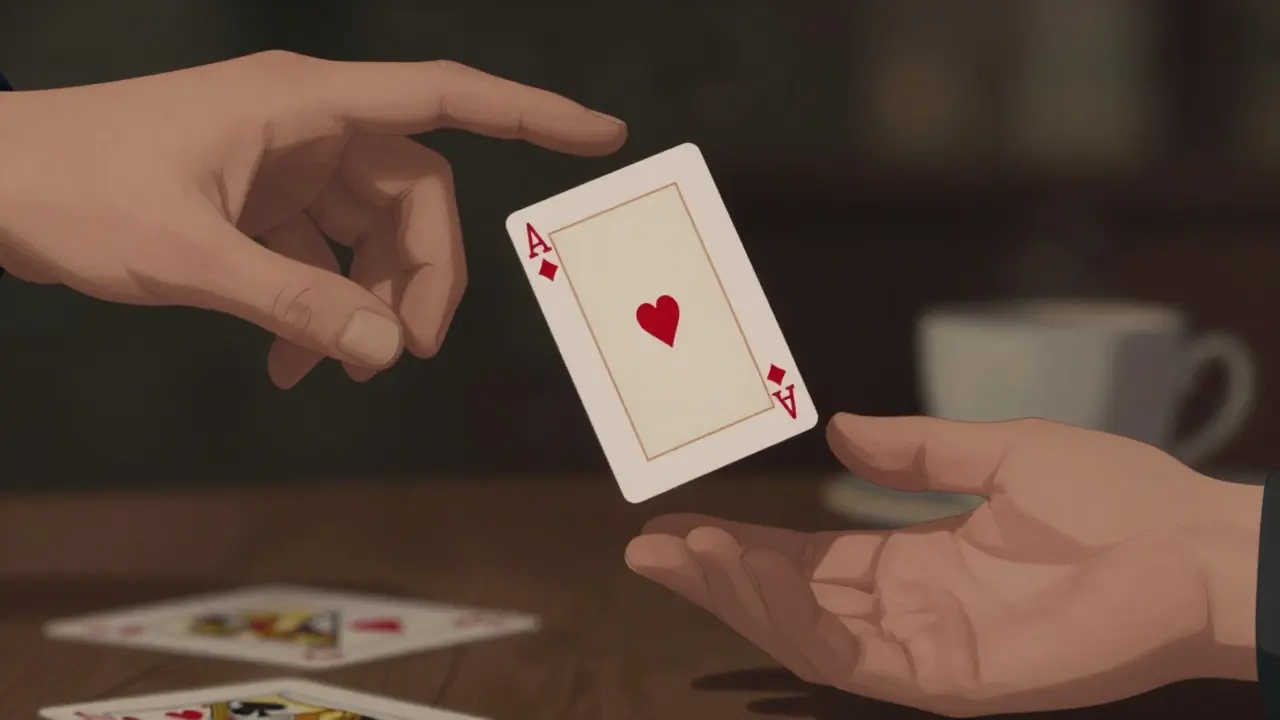
2. The Floating Card
You need: One playing card.
- Hold the card between your left thumb and index finger, flat and vertical.
- With your right hand, slowly bring your index finger up from below the card and press it gently against the bottom edge.
- Now, lift your right hand slightly while keeping your left hand still. The card will appear to float upward.
- As you lift, subtly rotate your left wrist so the card tilts backward-this hides the contact point.
This illusion looks like the card is levitating. But it’s just physics and misdirection. The key is to keep your left hand steady. Any movement there gives it away. Practice in front of a mirror until your fingers don’t twitch.
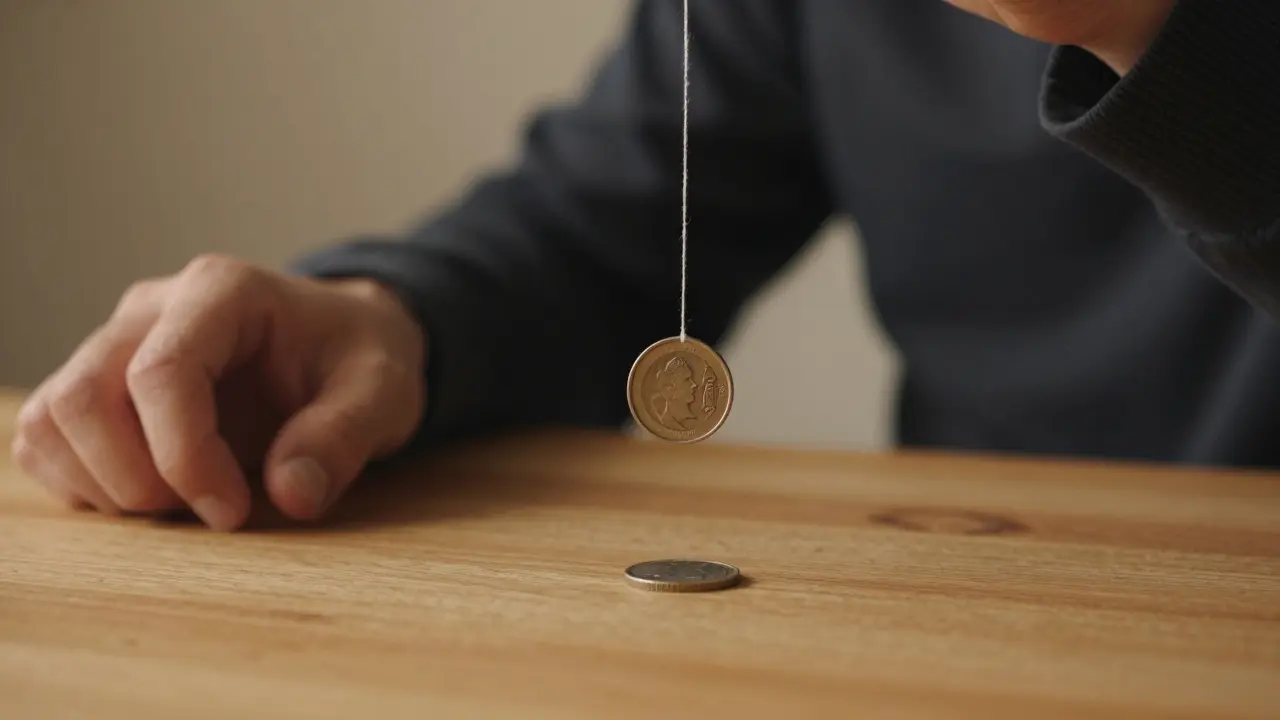
3. The Invisible Thread
You need: A small piece of clear thread (like fishing line) and two coins.
- Tie one end of the thread to the edge of a coin. Tape the other end to your inner wrist, under your sleeve.
- Place the second coin on the table.
- Hold the first coin (with the thread attached) between your thumb and fingers, as if you’re about to drop it.
- Let go-but don’t drop it. Let the thread pull it back up slowly, hidden under your sleeve.
- As the coin disappears upward, gesture with your other hand toward the table coin.
The thread is nearly invisible under normal lighting. The audience sees the coin drop… and then it’s gone. They assume it vanished. But it’s still in your hand-just pulled back up. This trick works best in dim light or when you’re standing close to someone.
Why These Tricks Work (And How to Make Them Better)
Each of these tricks fails if you rush. Magic isn’t about speed-it’s about control. The most common mistake beginners make? Talking too much while performing.
When you speak during a trick, your brain focuses on what you’re saying. Your hands get sloppy. The audience notices. Instead, stay quiet. Let your hands do the talking.
Another tip: Practice in front of a mirror. Watch your eyes. If you glance at your hand while doing the move, you’re giving it away. Look at the person’s face-even if your hand is doing all the work.
Also, don’t perform the same trick twice in a row. People remember patterns. Even if they don’t know how you did it, they’ll suspect something’s off. Switch tricks. Use different objects. Change your setup.
What to Avoid
Here are three habits that ruin magic, even if your technique is perfect:
- Showing off your hands too much. Don’t wave them around. Keep them close to your body. Magic happens in small spaces.
- Using gimmicks. Don’t buy tricks with hidden magnets or double-sided cards. They’re easy to spot. Real hand magic uses ordinary objects.
- Expecting amazement. If you say, “Watch this!” before you start, people tense up. They’re looking for the trick. Instead, act casual. Say, “Hey, watch this coin,” like you’re just showing something cool.
How to Practice Like a Pro
You don’t need hours a day. Five minutes, twice a day, is enough.
Try this routine:
- Day 1: Practice the vanishing coin 10 times. Focus only on hiding the coin in your palm.
- Day 2: Do it again, but now add the distraction with your other hand.
- Day 3: Try it while talking to someone on the phone. If you can do it without pausing your conversation, you’ve got it.
After a week, you’ll notice your hands feel more natural. That’s because you’re rewiring your muscle memory. Your brain learns the move before your conscious mind catches up.
When to Perform
Don’t wait for a party. Start small.
- At the coffee shop, while waiting in line.
- During a car ride with a friend.
- At the dinner table after dessert.
People are more relaxed in casual settings. They’re not expecting magic. That’s when it hits hardest.
And remember: Magic isn’t about being perfect. It’s about being surprising. Even if you mess up, keep going. Laugh it off. “Whoops, I guess I’m not ready yet.” That’s more human than any flawless trick.
Next Steps
Once you’ve mastered these three, move on to:
- Card controls-making a card appear at the top of the deck without shuffling.
- The French drop-a classic coin vanish used by pros.
- Thumb palm-hiding a coin under your thumb without closing your hand.
There are thousands of resources-books, YouTube videos, local magic clubs. But none of them matter if you don’t start with your hands.
Magic isn’t a performance. It’s a conversation between your hands and someone else’s mind. And you already have everything you need to begin.
Can you do magic with your hands without any props?
Yes. Some of the most powerful hand magic uses nothing but your fingers. For example, you can make a finger appear to bend backward by subtly rotating your wrist and hiding the joint with your other hand. Or you can make a finger seem to disappear by using shadow and angle. These tricks rely entirely on body positioning and misdirection. No coins, cards, or threads needed.
How long does it take to get good at hand magic?
You can learn to perform three solid tricks in under a week with 10 minutes of daily practice. But becoming truly smooth takes months. Most magicians spend years refining their timing. The key isn’t speed-it’s consistency. Practice the same trick every day for 30 days, and you’ll notice a huge difference. People won’t see the difference in your skill-they’ll just feel like you’re doing something impossible.
Is sleight of hand the same as magic?
Sleight of hand is a technique used in magic, but not all magic uses it. Magic includes illusions with mirrors, lighting, and large props. Sleight of hand is the art of manipulating objects with your hands in a way that looks impossible. It’s the foundation of close-up magic-what you see at a dinner table or in a bar. If you’re learning hand magic, you’re learning sleight of hand.
Do I need to buy special tools or kits?
No. The best hand magic uses things you already have: coins, playing cards, keys, pens, or even a napkin. Many professional magicians avoid gimmicks because they’re predictable. Real skill comes from using ordinary objects in extraordinary ways. If you’re just starting, avoid magic kits. They teach you how to use a tool, not how to think like a magician.
Why do some people see through magic tricks so easily?
People who notice tricks quickly are often observant or have seen the trick before. Sometimes they’re just looking for how it’s done instead of enjoying the moment. The best way to prevent this is to keep your performance natural. Don’t make it feel like a show. Be relaxed. Talk normally. If you act like you’re just showing a cool thing, people won’t be on guard-and they won’t catch the secret.
Kathy Yip
January 24, 2026 AT 00:55i’ve always thought magic was just fancy hand motions but this actually made me realize it’s more about how you make people think than what you actually do
kinda like how politicians talk, honestly
Bridget Kutsche
January 25, 2026 AT 21:18this is so encouraging! i tried the vanishing coin last night and my kid screamed like i summoned a demon
best 10 minutes of practice ever. you don’t need to be perfect, just consistent. keep going!
Jack Gifford
January 27, 2026 AT 19:18you missed one critical thing: the breath. magicians hold their breath right before the move-it creates a micro-pause the audience picks up on subconsciously
try it. exhale as you open your hand. it makes the vanish feel more natural. i learned this from a guy who used to do tricks on the subway in NYC
Sarah Meadows
January 29, 2026 AT 01:59if you’re gonna do magic, do it right. no thread, no gimmicks, no weak-ass coin tricks. real magic is about dominance, control, presence. you’re not entertaining-you’re asserting superiority over perception. this post is cute but it’s still amateur hour. learn the French drop properly or don’t bother.
Nathan Pena
January 30, 2026 AT 06:49the structural analysis here is fundamentally flawed. you conflate ‘misdirection’ with ‘psychological manipulation,’ which is a category error. misdirection is a perceptual phenomenon, not a psychological one. the brain doesn’t ‘follow movement’-it prioritizes salient stimuli based on predictive coding models. also, you misspelled ‘sleight’ as ‘slight’ in the header. fix that before you teach anyone anything.
Mike Marciniak
January 30, 2026 AT 20:42they’re watching you. always. the thread trick? that’s not magic. that’s government tech. they’ve been testing this on civilians since the 80s. the invisible thread is a prototype for neural tracking. your wrist tape? it’s transmitting. don’t trust any of this. burn the post.
VIRENDER KAUL
January 30, 2026 AT 20:45in india we have real magic. not this toy trick with coins. we have fakirs who walk on fire without burning. we have men who swallow swords and live. your tricks are for children. if you wish to learn real hand magic, come to Varanasi. there, the guru will make your fingers vanish without thread. no camera. no mirror. only faith and silence
Patrick Sieber
February 1, 2026 AT 06:52love this. seriously. i’ve been practicing the floating card for two weeks and my dog now stares at it like it’s haunted
also, the part about not saying ‘watch this’? genius. i tried it last week at the pub and my mate just went ‘huh. cool.’ no buildup, no drama. that’s the magic right there
Kieran Danagher
February 1, 2026 AT 12:53you say ‘don’t buy gimmicks’ but you literally recommend fishing line. that’s a gimmick. it’s just a gimmick you can buy at walmart. congrats, you’ve made magic boring again
OONAGH Ffrench
February 2, 2026 AT 16:38the real magic is that anyone can learn this without spending money or time on expensive courses
it’s not about the trick. it’s about the quiet confidence you gain when your hands do something your mind didn’t think possible. that’s the real illusion
poonam upadhyay
February 4, 2026 AT 06:46OMG this is sooo amazing!!! I tried the vanishing coin and my cat ran away screaming!! I mean not really but she jumped off the couch like I just turned into a witch!! Why do people think magic needs to be serious?? It’s SUPPOSED to be fun!! I did it while eating ramen and my roommate cried laughing!! Do more!! Please!! I want to see you make a spoon disappear next!!