
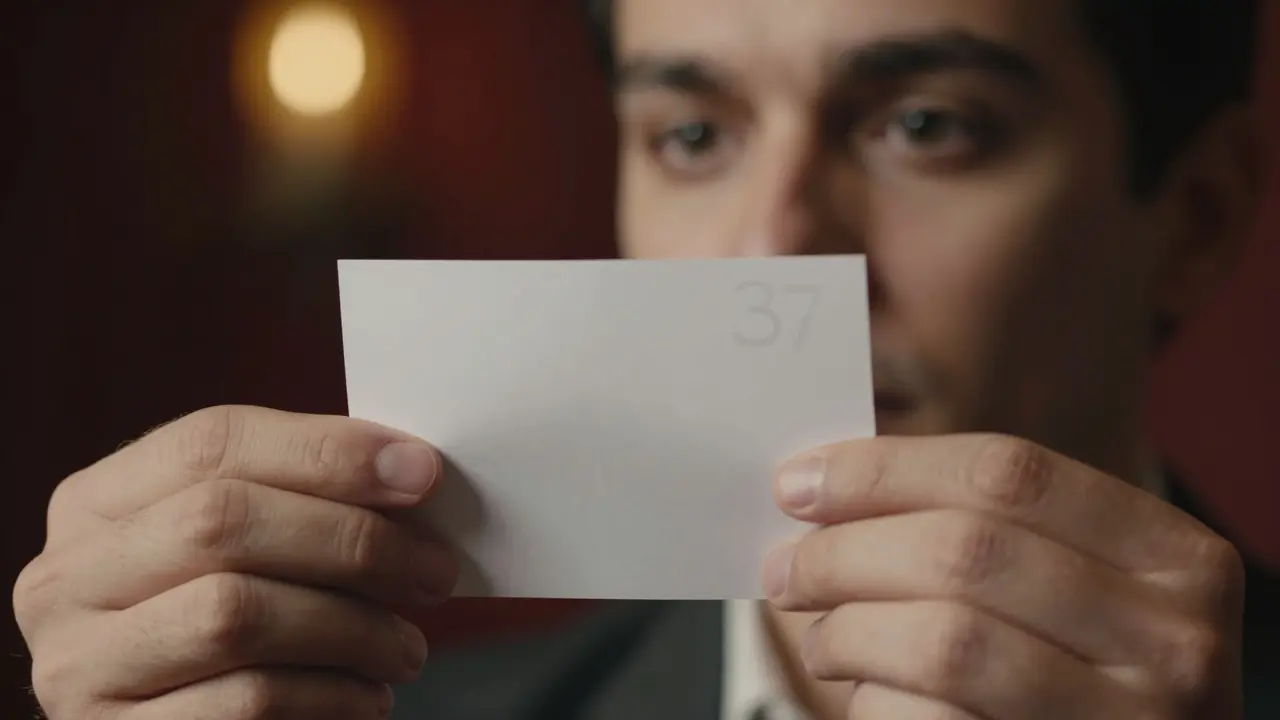
Ever watched a mentalist guess your secret thought-like the name of your first pet or the number you picked-and wondered how they did it? One of the most common, yet rarely talked about, methods behind those moments is peeking. It’s not magic. It’s not mind reading. It’s simple, careful observation-and it works better than you think.
What Exactly Is Peeking in Mentalism?
Peeking in mentalism means secretly looking at something you’re not supposed to see. That could be a written word, a selected card, a number on a slip of paper, or even a facial expression. Unlike sleight of hand, which relies on fast fingers, peeking is about timing, angles, and distraction. It’s the quiet trick that doesn’t need a flourish-just a well-placed glance.Most people assume mentalists have superhuman memory or psychic powers. In reality, many rely on a basic, almost invisible move: letting their eyes flicker toward the information they need-without anyone noticing.
How Peeking Works in Real Performances
Imagine a mentalist asks you to write down a number between 1 and 50 on a small card. You fold it, hand it over, and they immediately say, “You picked 37.” How? You didn’t say it aloud. No one else saw it. But they did.Here’s how peeking makes that possible:
- You hand them the folded card. As you do, your fingers might slightly open the fold.
- The mentalist, holding the card in their palm, subtly shifts their grip so the corner of the paper becomes visible.
- They glance down-just for a split second-while pretending to focus on your eyes or asking a follow-up question.
- They see the number. They memorize it. Then they act surprised, as if they’re reading your mind.
This isn’t magic. It’s psychology. You’re not looking at the card-you’re looking at the person. And that’s exactly where they want your attention.
Common Peeking Methods Used by Mentalists
There’s no single way to peek. Different situations call for different techniques. Here are the most common ones:- Card Corners: When a spectator selects a card from a deck, the mentalist might hold it at a slight angle, letting the corner show the suit and number. A quick glance, done while pretending to shuffle, is enough.
- Slip of Paper Glances: Paper slips are often folded in half or thirds. A small gap at the edge can reveal text. A well-timed blink or head tilt hides the glance.
- Reflections: A watch, a phone screen, a pair of glasses, or even a shiny surface can reflect writing. Mentalists use these as hidden mirrors.
- Palming and Reveal: Sometimes, the mentalist takes the object (like a signed note) and palms it briefly. While their hand is hidden, they peek at it before putting it back into view.
- Assistant Cues: In stage shows, an assistant might subtly signal the chosen item through posture, clothing, or even a change in breathing. The mentalist watches the assistant-not the spectator.
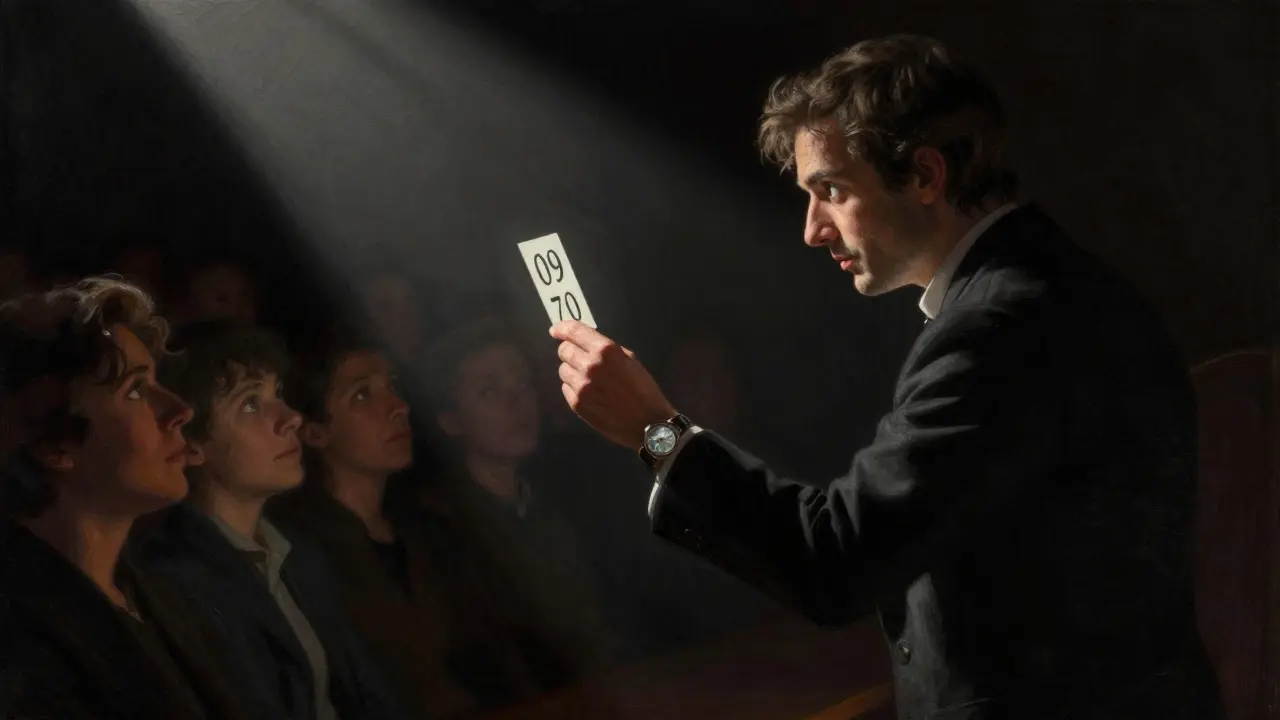
Why Peeking Is So Effective
Peeking works because people don’t expect it. They assume mentalists use complex codes, hidden devices, or supernatural abilities. They don’t think, “Maybe they just looked.”That’s the power of misdirection. The audience is focused on:
- The mentalist’s eyes
- Their voice tone
- The dramatic pause
- The emotional reaction
Not the hand holding the paper. Not the angle of the card. Not the millisecond when the eyes dropped.
Studies in cognitive psychology show that humans are terrible at noticing small, unexpected changes-especially when their attention is pulled elsewhere. This is called inattentional blindness. Mentalists exploit this flaw in human perception every day.
Peeking vs. Other Mentalism Techniques
It’s easy to confuse peeking with other methods. Here’s how it’s different:| Technique | How It Works | Requires Physical Access? | Can Be Detected? |
|---|---|---|---|
| Peeking | Visually seeing hidden information | Yes | Yes-if someone watches your eyes closely |
| Forcing | Guiding someone to pick a specific item | Yes | Low-if done subtly |
| Cold Reading | Making general statements that seem personal | No | Medium-depends on audience’s gullibility |
| Hot Reading | Getting info ahead of time (e.g., from a spy) | No | High-if the source is exposed |
| Psychological Suggestion | Influencing thoughts through language | No | Very low |
Peeking stands out because it’s direct. It doesn’t rely on tricking the mind-it relies on tricking the eyes. And it’s one of the few techniques that doesn’t require prior setup or inside help.

How to Spot Peeking (If You’re Trying to Catch It)
If you’re skeptical and want to know if someone’s peeking, watch for these signs:- Eye movement patterns: Do they glance down right after you hand them something? Do their pupils dilate slightly when they look away?
- Hand positioning: Are they holding objects in a way that naturally exposes a corner or edge?
- Timing: Do they seem to “remember” the information instantly? Real mind reading takes time. Peeking is instant.
- Repetition: If they ask you to repeat the number or word, they might be confirming what they saw.
Peeking isn’t perfect. A sharp observer can catch it. That’s why professional mentalists combine it with other techniques-like forcing or suggestion-to cover their tracks.
Why Peeking Isn’t Considered Cheating
Some people think peeking is dishonest. But in mentalism, it’s not. It’s part of the craft.Unlike stage magicians who rely on props and hidden mechanisms, mentalists sell the illusion of thought reading. Peeking is just a tool-like a camera lens or a microphone. It doesn’t make the performer a fraud. It makes them skilled.
Think of it this way: if a photographer uses a telephoto lens to capture a distant subject, are they cheating? No. They’re using a tool to enhance perception. Peeking is the same.
The goal isn’t to prove you can read minds. It’s to make someone believe, for a moment, that they might be wrong about what’s possible.
Peeking in Everyday Life
You’ve probably peeked without realizing it. Maybe you saw a text on a phone screen while walking past someone. Or caught a glimpse of a password when someone typed it. These aren’t tricks-they’re human behaviors.Mentalists just turn that natural tendency into a performance. They don’t steal secrets. They reveal them in a way that feels like magic.
And that’s the real power of peeking: it reminds us how easily we overlook the obvious. We’re so busy looking for the impossible that we miss what’s right in front of us.
Is peeking in mentalism illegal?
No, peeking is not illegal. It’s a performance technique used in entertainment. As long as no theft, fraud, or privacy violation occurs, it’s considered a legitimate part of mentalism. Mentalists never access private information without consent-they create the illusion of knowing it.
Can you learn to peek effectively?
Yes. Peeking is a skill, not a gift. Start by practicing with a friend: have them write something small on paper, fold it, and hand it to you. Practice glancing at the corner while keeping your eyes on theirs. Use distractions like asking questions or shifting your posture. With repetition, you’ll learn to peek without moving your head or eyes noticeably.
Do all mentalists use peeking?
No. Many top mentalists avoid peeking entirely. They rely on psychological techniques, cold reading, and suggestion. But peeking is common among beginners and in close-up settings where physical access is easy. It’s one tool among many.
Is peeking the same as cheating in card games?
Yes, in a card game like poker, peeking at someone’s hand is cheating. But in mentalism, it’s performance. The difference is intent. In magic, the audience knows they’re being fooled. In gambling, the goal is to win unfairly. Mentalism is theater. Card games are contests.
Can peeking be done without touching anything?
Yes. Reflections on glass, phone screens, or even polished surfaces can reveal information. A mentalist might stand near a mirror or use a spectator’s sunglasses as a reflective tool. Some use digital devices with hidden cameras, but these are rare and considered unethical by most professionals.
Raji viji
December 24, 2025 AT 20:14Peeking? Bro, that's just basic misdirection 101. I've seen guys in Delhi markets pull the same shit with playing cards-glance at the corner while pretending to shuffle, then act like a goddamn oracle. No psychic powers, just shitty eyesight and great timing. People think magic's about wonder? Nah, it's about making you forget you're being watched.
Rajashree Iyer
December 26, 2025 AT 02:40Ohhh... this is the quiet violence of perception, isn't it? We are all so hungry for meaning that we hand over our secrets to strangers who simply... look. The mind doesn't read minds-it begs to be fooled. And peeking? It's not a trick. It's a mirror held up to our own arrogance. We think we're private. We're not. We're just bad at noticing the eyes.
Parth Haz
December 26, 2025 AT 08:38While the article provides a clear and thoughtful breakdown of peeking as a technique, I'd like to emphasize that mentalism, at its core, is about ethical performance. The distinction between entertainment and deception is critical. Unlike fraud or espionage, mentalists operate within a consensual framework-the audience willingly suspends disbelief. This is not manipulation; it's collaborative storytelling.
Moreover, the psychological principles involved-like inattentional blindness-are well-documented in cognitive science. Mentalists aren't exploiting loopholes; they're demonstrating how human attention works. That’s not cheating. That’s applied psychology.
Vishal Bharadwaj
December 26, 2025 AT 22:37lol so peeking is 'not cheating' in mentalism but in poker it is? bro what a joke. if you're looking at something you're not supposed to see, it's cheating. period. you're just calling it 'performance' so you feel better about it. also, 'reflection off glasses'? that's so 2003. real mentalists use digital camaras now, just sayin'. and no, i'm not a conspiracy theorist, i've seen it. also, the table is wrong-forcing isn't low detectable, it's fucking obvious if you know what to look for. stop pretending this is science.
anoushka singh
December 27, 2025 AT 17:00Wait so you're telling me I peeked at my roommate's phone last week and didn't even realize it? That's wild. I thought I was just being nosy. So now I'm basically a mentalist? 😅 Also, can we talk about how I always catch people glancing at my screen? Like, why do you think I'm not looking? I'm always looking. Just sayin'.
Jitendra Singh
December 28, 2025 AT 15:49I think what's beautiful here is how this reveals something deeper about trust. We give people access to our thoughts-written, spoken, implied-and they use that access not to betray us, but to create wonder. Peeking isn't about stealing secrets. It's about turning a moment of vulnerability into something shared. The real magic isn't in the glance-it's in the gasp that follows.
Madhuri Pujari
December 28, 2025 AT 20:24Oh my GOD. You actually wrote a 1000-word essay on 'peeking' like it's some profound philosophical insight? It's literally just looking at shit you're not supposed to see. You call it 'psychology'? It's called being sneaky. And you think people don't notice? My grandma catches people peeking at her bingo cards with her reading glasses on. Also, 'reflection off a phone'? That's not mentalism, that's a fucking security flaw. And you call this 'art'? Please. If you need to peek to make someone believe you're psychic, you're not a mentalist-you're a bad liar with a PowerPoint.
Sandeepan Gupta
December 29, 2025 AT 18:31Great breakdown. One thing to add: if you're practicing peeking, start slow. Don't try to do it during a live performance right away. Use a friend, a folded note, and a mirror. Record yourself. Watch how much your head moves. Most beginners tilt their chin or blink too hard. The goal isn't to see the number-it's to make it look like you didn't look at all. Also, practice misdirection with voice tone. Ask a question just as you glance. It distracts the brain more than any hand motion. And remember-peeking is a tool, not a crutch. Master the psychology first, then add the glance.