
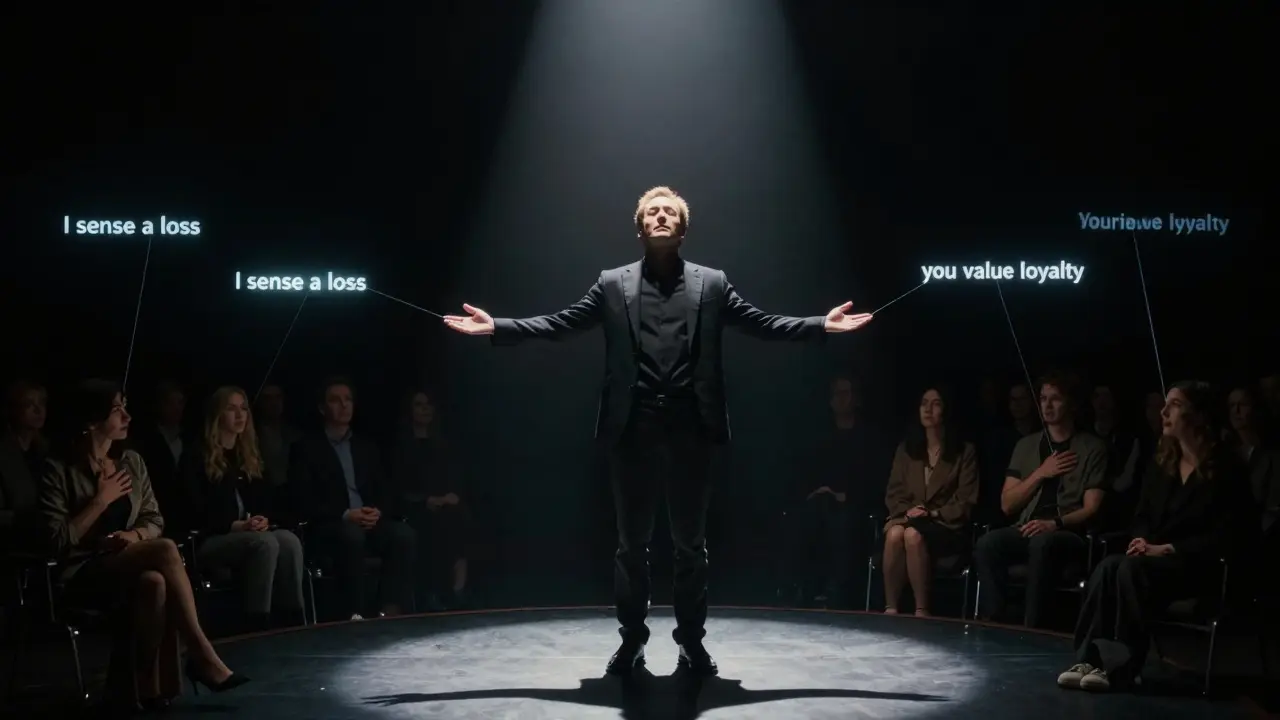
Have you ever watched a mentalist guess your exact thoughts - the name of your first pet, the number you picked in your head, the song stuck in your ear - and wondered how they did it? It doesn’t involve ESP. It doesn’t require magic powers. It’s not even about reading minds. It’s about cold reading - a set of psychological techniques used to make people believe the mentalist knows things they couldn’t possibly know. And if you’ve ever been fooled by one, you’re not alone. Millions have been. Here’s how it actually works.
What Cold Reading Really Is
Cold reading is not magic. It’s not supernatural. It’s a mix of observation, pattern recognition, and clever wording. A mentalist walks into a room with zero information about you. They don’t know your name, your history, or your secrets. But within seconds, they start saying things like: “I’m sensing someone close to you who passed away… a man, maybe your grandfather?” You freeze. That’s exactly right. How? Because they didn’t read your mind. They used a script designed to catch you off guard.
Think of it like fishing. You cast a wide net - vague, emotionally charged statements - and wait for someone to bite. When you react, they adjust. They don’t guess correctly every time. They just need one hit to make you believe they’re psychic.
The Four Core Techniques
Every mentalist who cold reads uses the same four tools. They’re simple. They’re old. And they work every time.
1. The Barnum Statement
This is the most powerful trick in the book. A Barnum statement is a vague, general description that sounds personal but applies to almost everyone. Examples:
- “You’re a deep thinker, but sometimes you hold back because you fear being judged.”
- “You’ve had moments in life where you doubted yourself, even when others believed in you.”
- “You value loyalty, but you’ve been let down by someone you trusted.”
These aren’t just random phrases. They’re pulled from psychology research. A 1948 study by Bertram Forer showed that 85% of students rated a generic personality description as highly accurate - even though everyone got the exact same description. Mentalists use this. They know people will twist vague statements to fit their own lives.
2. Shooting in the Dark
This is where the mentalist throws out a dozen possibilities at once. They say: “I’m getting a J… maybe James? Jacob? John? Or maybe it’s a place - Jacksonville? Jersey?” Then they watch your face. If you blink, lean forward, or say “Wait, that’s my dad’s name,” they’ve got their answer. You just gave them the data. They didn’t guess. They listened.
It’s like playing 20 Questions backwards. Instead of you answering, they ask broad questions and let you do the work. Your reaction becomes their confirmation.
3. The Hot Reading Setup
Wait - isn’t cold reading supposed to be done with no prior info? It is. But many mentalists combine cold reading with hot reading - secretly gathering info beforehand. How? Easy.
- They talk to ushers, volunteers, or staff before the show.
- They watch social media posts from audience members who RSVP’d.
- They use subtle questions like, “Have you been through a big change this year?” - and note who hesitates.
Then, when they say, “I see your sister’s wedding… it was in June, right?” - you think they read your mind. But they Googled your Facebook wedding album. This isn’t cold reading anymore. It’s espionage. And it’s more common than you think.
4. The Forer Effect + Emotional Anchoring
It’s not enough to say something vague. You have to make it feel personal. That’s where emotional anchoring comes in.
A mentalist will say: “I feel a deep sadness… someone you loved… they died suddenly. It was unexpected, wasn’t it?” You think of your uncle who passed in a car crash. You nod. Tears form. They don’t need to be right. They just need to hit one emotional nerve.
Then they pivot: “But you’ve moved on. You’re stronger now.” You feel comforted. You trust them. And now, when they say, “I see a red car… maybe your first one?” - you’re primed to believe them.

Body Language Tells
Most people don’t realize how much they give away without speaking. Mentalists are trained to read micro-expressions: a twitch of the eyebrow, a pause before answering, the way someone shifts in their seat.
For example:
- If you say “I don’t know” but your eyes dart to the left - you’re lying or hiding something.
- If you smile nervously when asked about family - there’s tension there.
- If you lean in when they mention “money” or “travel” - you care about those things.
These aren’t mind-reading. They’re behavioral cues. Psychologists have studied them for decades. Mentalists just use them better.
Why It Feels So Real
Why does cold reading feel like magic? Because your brain is wired to find patterns - even when none exist. This is called apophenia. When someone says something that vaguely matches your life, your brain fills in the blanks. It ignores the 9 wrong guesses. It remembers the 1 that hit.
It’s like hearing your name in a crowd of noise. You don’t question how you heard it. You just believe it was meant for you.
And the mentalist? They’re not lying. They’re not cheating. They’re just exploiting how your mind works.

Can You Learn to Cold Read?
Yes. And if you do, you’ll never look at a “psychic” the same way again.
Start by practicing on friends. Say things like: “I’m sensing you’ve been under a lot of pressure lately.” Watch their reaction. If they nod, ask: “Was it work? Family? Something else?” Let them guide you.
Learn to pause. Let silence hang. People hate awkward quiet. They’ll fill it - often with details you didn’t ask for.
Use the Barnum technique. Try: “You’re someone who cares deeply, but you don’t always show it.” See how many people say, “Yeah, that’s me.”
Once you understand how it works, you can’t be fooled. And that’s the real power.
Why Mentalists Don’t Want You to Know This
Because once you know how cold reading works, the illusion breaks. And they lose their magic.
That’s why they never explain it. They never admit it. They call it “intuition” or “spiritual connection.” But it’s not. It’s psychology. It’s communication. It’s performance.
The best mentalists aren’t psychics. They’re storytellers. And the audience? They’re the ones who do the real work - filling in the gaps, believing the story, and handing over their trust.
Bhagyashri Zokarkar
February 19, 2026 AT 08:01Madhuri Pujari
February 19, 2026 AT 14:26Rakesh Dorwal
February 20, 2026 AT 20:11NIKHIL TRIPATHI
February 22, 2026 AT 19:50Shivani Vaidya
February 23, 2026 AT 12:36Sandeepan Gupta
February 24, 2026 AT 18:55Tarun nahata
February 25, 2026 AT 14:06Amit Umarani
February 27, 2026 AT 01:09Noel Dhiraj
February 27, 2026 AT 20:04vidhi patel
March 1, 2026 AT 03:55Priti Yadav
March 2, 2026 AT 07:46Ajit Kumar
March 3, 2026 AT 09:33Diwakar Pandey
March 4, 2026 AT 06:14