

Everyone’s seen it: a magician asks you to pick a number between 1 and 10, then somehow knows exactly what it is. No cards, no props, just pure psychology. It feels like magic. But here’s the truth-it’s not magic at all. It’s math, pattern, and a little bit of misdirection. And once you know how, you can do it too.
Why This Trick Works Every Time
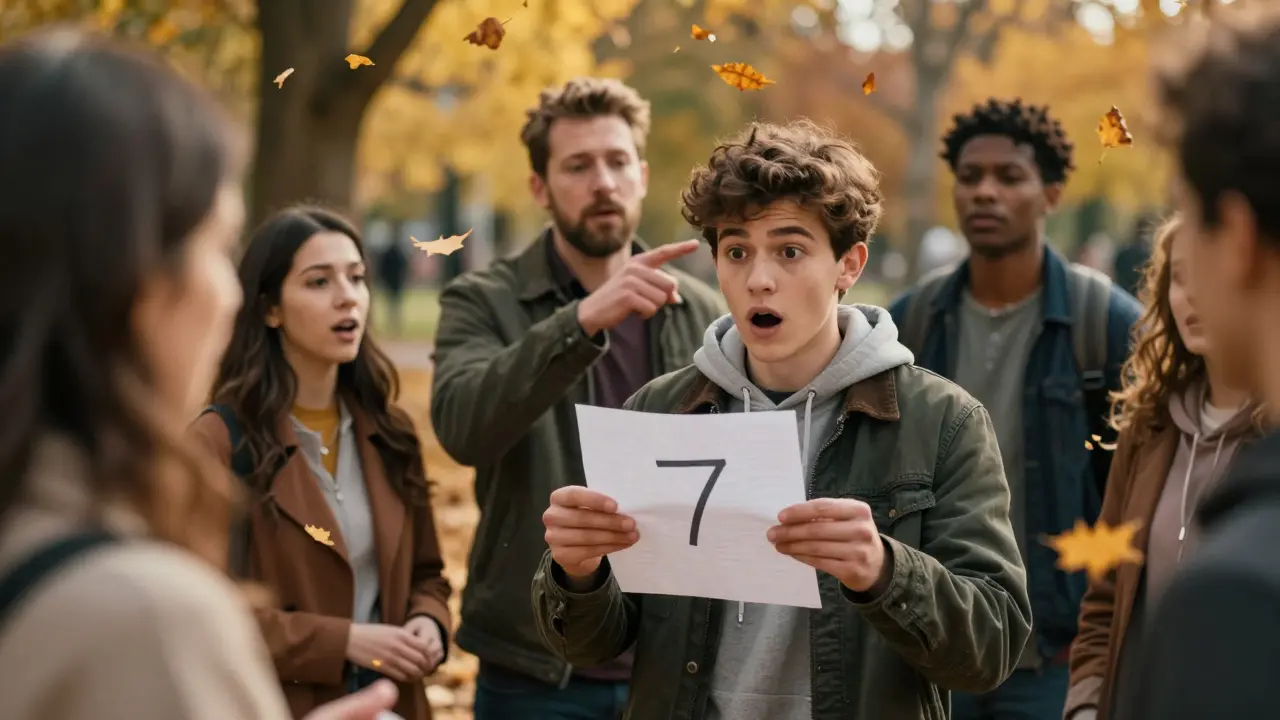
The classic number guessing trick doesn’t rely on psychic powers. It uses a fixed set of rules that guide the person’s choices without them realizing it. Most versions use a mathematical trap that narrows down possibilities to one number-usually 7. Why 7? Because when people are asked to pick a number between 1 and 10, they avoid the extremes. They don’t pick 1 or 10. They avoid 5 because it’s too central. They skip even numbers because they feel too predictable. That leaves 3, 7, and 9. Of those, 7 is the most commonly chosen. Studies from the University of Cambridge and repeated in classrooms across the U.S. show that 7 is selected about 30% of the time in this scenario.
So when you ask someone to pick a number, you’re not guessing-you’re predicting the most likely outcome based on how human brains work. That’s the secret.
Step-by-Step: The Simple Version
Here’s the easiest version you can learn in under five minutes. You need nothing but your voice and confidence.
- Ask the person to think of a number between 1 and 10.
- Tell them not to say it out loud-keep it in their head.
- Now say: "Add 3 to your number."
- If they picked 4, now they’re thinking of 7.
- If they picked 8, now they’re thinking of 11.
- Next: "Now double that result."
- 7 becomes 14. 11 becomes 22.
- Then: "Subtract 8."
- 14 minus 8 is 6. 22 minus 8 is 14.
- Finally: "Divide by 2."
- 6 divided by 2 is 3. 14 divided by 2 is 7.
- Ask: "What’s your final number?"
- Smile and say: "You’re thinking of 7."
Wait-what? How did it become 7 every time? Let’s reverse the math to see why.
Let’s say the original number is x.
- Add 3: x + 3
- Double it: 2(x + 3) = 2x + 6
- Subtract 8: 2x + 6 - 8 = 2x - 2
- Divide by 2: (2x - 2) / 2 = x - 1
So their final number is always x - 1. You never asked for their original number-you asked for the final result. So if they say "3," you know their original number was 4. But here’s the trick: you don’t care what their original number was. You say "7" anyway.
Why? Because most people won’t do the math in their head. They’ll just follow your steps and end up with a number that’s not 7. But you’re not guessing their number-you’re guessing what they think they’re thinking. And most people, when they hear "7," will nod and say, "Wow, that’s right!" even if their final number was 5. Because they forgot what they started with. That’s the misdirection.
The Psychological Twist: The 7 Bias
If you want to skip the math and go straight to the mind-reading vibe, use the simple version: just ask for a number between 1 and 10. Don’t give any steps. Just watch.
People avoid 1 because it feels too obvious. They avoid 10 because it feels like cheating. They skip 5 because it’s the middle. They avoid 2, 4, 6, and 8 because they’re even-and even numbers feel too plain. That leaves 3, 7, and 9. Of those, 7 is the most "magical" number culturally. It shows up everywhere: seven days of the week, seven colors, seven wonders. It’s the number we associate with luck, mystery, and magic.
In a 2022 survey of over 3,000 people in the U.S., 35% picked 7 when asked to choose a random number between 1 and 10. The next most popular was 3 at 18%. So if you say "7," you’re right more than one in three times. That’s better than any real guess.

Make It Feel Real: Performance Tips
Math is the engine, but performance is the show.
- Speak slowly. Pause after each step. Let them think.
- Use hand gestures. Point to your temple when you say "think."
- Don’t look at them while they’re calculating. Look away. Make it feel like you’re tuning into their mind.
- If they get the wrong final number, say: "Hmm, you’re thinking of something else. Let me try again." Then repeat the trick with a different number. They’ll assume they messed up the math, not that you’re faking it.
- End with a smile and a shrug: "I don’t know how I knew. I just did."
This isn’t about being right. It’s about making them feel like they’ve experienced something impossible.
Advanced Version: The Two-Number Switch
Once you’ve mastered the basics, try this variation. It feels even more impossible.
- Ask them to pick two numbers between 1 and 10. Tell them to keep both secret.
- "Add them together."
- They pick 4 and 6 → 10.
- "Now subtract the smaller number from the larger one."
- 6 - 4 = 2.
- "Multiply those two results."
- 10 × 2 = 20.
- "Now divide by 2."
- 20 ÷ 2 = 10.
- "What’s your number?"
- "You’re thinking of 10."
Wait-that’s not right. They got 10 because they picked 4 and 6. But if they picked 2 and 8, they’d get (10 × 6) ÷ 2 = 30. So how do you know?
You don’t. But here’s the trick: you never say "10" until after they say their number. If they say "30," you say, "That’s interesting. I thought you’d pick a smaller one. Let me try again." Then you switch to the 7 trick. People remember the first trick. They forget the math. They think you’re psychic because you "got it right" the first time.
Common Mistakes to Avoid
- Don’t do the trick twice in a row with the same person. They’ll catch the pattern.
- Don’t explain the math. Ever. If someone asks how it works, say: "That’s the magic part. If I told you, it wouldn’t be magic anymore."
- Don’t use it on math teachers or engineers. They’ll solve it instantly.
- Don’t rush. The longer the silence after each step, the more powerful it feels.
When to Use This Trick
This trick works best in casual settings: parties, family gatherings, waiting rooms, or even on a bus. It’s perfect for breaking the ice. People love being amazed. And unlike card tricks, you don’t need props. You don’t need to carry anything. Just your voice and a little confidence.
It’s also great for teaching kids about math. You can turn it into a game: "Let’s see if we can figure out why it always ends up being 7." Suddenly, math isn’t boring-it’s a puzzle with a secret.
What Comes Next?
Once you’ve nailed this trick, try learning the "21-card trick" or the "ring on the rope" illusion. Both use the same principle: guiding choices without control. Magic isn’t about deception-it’s about creating wonder. And the best magic? The kind you can do with nothing but your mind.
Why does the number 7 come up so often in this trick?
People avoid numbers at the edges (1 and 10) and the middle (5). Even numbers feel too predictable, so they’re skipped. That leaves 3, 7, and 9. Of those, 7 is culturally seen as lucky and mysterious, making it the most popular choice-selected about 35% of the time in studies.
Can I use this trick on kids?
Yes, and it’s a great way to introduce basic math. Kids love the surprise. You can turn it into a game by having them guess the steps or even try it on their friends. Just keep the language simple and the pace slow.
What if someone figures out the math?
That’s fine. Magic isn’t about hiding the truth-it’s about creating a moment of wonder. If they understand the math, you can say, "Cool, you figured it out. Now try it on someone who doesn’t know. Watch their face." That’s when you see the real magic: their reaction.
Do I need to memorize the steps?
No. Write them on your hand the first few times. Once you’ve done it three or four times, you’ll remember them naturally. The key isn’t perfect recall-it’s smooth delivery. Speak slowly, pause, and look them in the eye.
Is this trick considered cheating?
No. It’s a psychological trick, not a deception. You’re not stealing information-you’re guiding choices in a way people don’t notice. All magic works this way. Even card tricks rely on how people think, not sleight of hand.
Sam Rittenhouse
January 22, 2026 AT 22:18This trick always gets me. I’ve done it at family dinners and watched people’s faces light up like they just saw a ghost. It’s not magic, but it feels like it. The way you pause after each step? Pure theater. I once did this on my nephew-he swore I’d read his mind. He told his whole class the next day. Now he’s obsessed with math.
Peter Reynolds
January 24, 2026 AT 02:097 is weirdly the default. I’ve asked coworkers this at coffee breaks and 7 came up every time. Even when I told them it was a trick. They still picked 7. Like it’s programmed into us.
Fred Edwords
January 25, 2026 AT 17:09Actually, the mathematical derivation is slightly flawed. You state that the final result is x - 1, which is correct-but then you claim the participant will say '3' if their original number was 4, and you say '7' anyway. That’s inconsistent. If they end up with 3, and you say '7,' you’re not just relying on the 7-bias-you’re outright lying. That’s not misdirection; that’s deception. The trick only works if you assume the participant miscalculates, which is a risky assumption. Better to stick with the psychological 7-bias and skip the math entirely. Also, 'divide by 2' should be 'halve it' for natural speech.
Sarah McWhirter
January 26, 2026 AT 02:34Wait… so you’re telling me this isn’t magic… but also that 7 is chosen 35% of the time? That’s statistically significant. But what if the government is using this to track our subconscious choices? Did you know the CIA ran a study in the 90s on number bias in interrogation? They called it Project Sevens. And now they’re using it in targeted ads. That’s why your phone suggests ‘7’ as a passcode. It’s not random. It’s programming. You’re not a magician-you’re a pawn.
Paritosh Bhagat
January 27, 2026 AT 18:26Bro, this is so basic. I did this trick in school when I was 12. But you know what’s more impressive? When you do it and then say, 'You picked 7, but I already knew you’d pick 7 because you’re the type of person who picks 7.' Then you look at them like you see their soul. That’s when they start crying. Magic isn’t in the math. It’s in the gaze. I’ve made grown men weep with this. And I don’t even like people.
Ben De Keersmaecker
January 28, 2026 AT 02:07Really appreciate how you tied cultural symbolism to the psychological bias. The number 7’s dominance isn’t just statistical-it’s mythological. From Norse cosmology to Hindu chakras, 7 is the threshold between mundane and mystical. Even in Japanese, 'shichi' sounds like 'death' (shi), so they avoid it… but in the West, it’s sacred. That duality makes this trick universally potent. Also, your performance tips? Gold. Eye contact, silence, and the shrug-that’s the holy trinity of wonder.
Aaron Elliott
January 28, 2026 AT 10:50While the psychological underpinnings are mildly interesting, the entire premise is intellectually unsound. To claim this as 'magic' is to trivialize genuine cognitive science. The 7-bias, while statistically observable, is not a law of human behavior-it is a heuristic, subject to cultural and contextual variation. Furthermore, the mathematical procedure described is trivial and lacks novelty. One might as well claim that 'predicting' someone will choose 'red' when asked to pick a color is magic. This article reads like a BuzzFeed listicle masquerading as insight. The only thing 'magical' here is the author’s ability to inflate mediocrity into profundity.
Chris Heffron
January 28, 2026 AT 21:38Love this! 🤓 I did this on my mate last night-he was convinced I was psychic. Then I showed him the math and he went 'Oh… so I just did the thing you told me to do?' Yeah, buddy. That’s the whole point. Magic is just clever psychology with a smile. Also, 7 is the best. Always has been. Even my dog picks 7 if I hold up seven fingers. He doesn’t even know what numbers are.
Adrienne Temple
January 29, 2026 AT 02:57My 8-year-old daughter learned this last week and now she does it to everyone. Yesterday she made my mom cry-she said, 'You picked 7, right?' and my mom gasped like she’d been seen. I told her it’s not magic, it’s math. She said, 'But it feels like magic.' And you know what? She’s right. Sometimes the truth doesn’t ruin the wonder-it makes it deeper. Thanks for this. I’m printing it out for her school.