
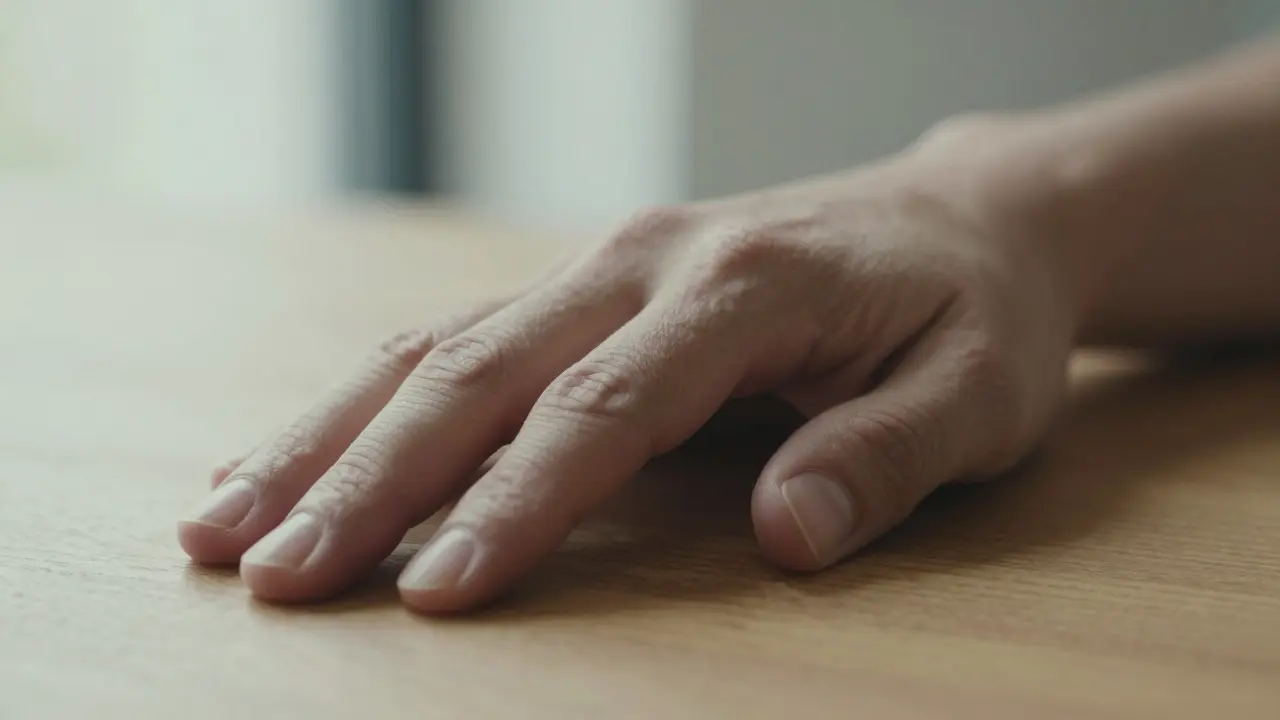
Everyone’s seen it. Someone makes a casual gesture with their hand, and suddenly the middle finger starts wiggling like it’s got a mind of its own. No one’s sure how it happened. You laugh, you stare, you try to copy it-and fail. It’s not magic. It’s not a glitch. It’s a simple, old-school hand trick that looks impossible until you know how it’s done.
What You’re Really Seeing
The middle finger wiggle isn’t about strength. It’s not about flexibility. It’s about isolation. Most people can’t move just one finger without tugging on the others because our fingers share tendons and nerves. The trick works by tricking your brain into thinking the middle finger is moving alone-when really, you’re using hidden movements in your ring finger and palm to make it look that way.
This isn’t some new TikTok trend. It’s been around since the 1950s, passed down in carnival sideshows and bar tricks. Magicians like Dai Vernon and Slydini used variations of it to create moments of disbelief. The goal? Make someone say, ‘Wait, how did you do that?’ without ever revealing the secret.
Step-by-Step: How to Do the Middle Finger Wiggle
Follow these steps slowly. Don’t rush. Your hand needs to learn this like a muscle memory.
- Start with your hand flat on a table, palm down. Fingers relaxed.
- Place your thumb gently on the base of your ring finger-just enough to hold it in place. Don’t press hard.
- Now, slowly lift your middle finger straight up. Keep your index and ring fingers flat on the table.
- Here’s the key: as your middle finger lifts, let your ring finger roll slightly inward, toward your palm. It’s a tiny roll-less than a millimeter. Your thumb is holding it back, so it doesn’t lift.
- When you lower the middle finger, let your ring finger roll back out. This creates the illusion that the middle finger is wiggling on its own.
It feels weird at first. Your ring finger wants to move with the middle one. That’s normal. Practice this motion five times a day for three days. You’ll feel it click.
Why It Looks So Real
Our brains are wired to see movement as a whole. When your ring finger rolls inward, it pulls the skin and tendons under the middle finger just enough to make it twitch upward. To an observer, it looks like the middle finger is lifting independently. Add a slight pause at the top, and it looks like the finger is hesitating-like it’s alive.
Try this: do the trick slowly in front of a mirror. Watch how the skin around your ring finger creases. That’s the secret. The movement is so small, it’s invisible to the naked eye. But your brain fills in the gap and assumes the middle finger moved on its own.

Common Mistakes
- Pressing too hard with your thumb. You don’t need force-you need control.
- Lifting the ring finger instead of rolling it. That’s what ruins the illusion.
- Doing it too fast. Speed hides the mechanics, but it also hides the magic. Slow is smoother.
- Trying to do it with your hand in the air. Always start on a flat surface. Stability matters.
How to Make It Look Like Real Magic
Once you can do the trick, the real art is in the presentation.
- Start with a casual hand gesture. Say something like, ‘I used to be able to do this weird thing with my fingers.’ Then pause. Let them watch.
- Do the wiggle once. Then say, ‘Nope, I can’t do it anymore.’
- After a beat, do it again-slowly, like you’re surprised it worked.
- Don’t explain. Don’t smile. Just look confused. That’s what makes people lean in.
People don’t care about the mechanics. They care about the mystery. The moment they think you’re not in control, they start trying to figure it out. That’s when the trick sticks.

Practice Drills
Want to master this? Try these drills:
- The Mirror Drill: Do the wiggle in front of a mirror for 5 minutes a day. Watch your ring finger. Learn its movement.
- The Blindfold Drill: Do it with your eyes closed. Your hands will learn the motion better than your brain.
- The Audience Drill: Practice on someone who doesn’t know the trick. Watch their face. That’s your goal.
After a week, you’ll be able to do it without thinking. And that’s when it becomes magic.
Why This Trick Matters
It’s not just about wiggling a finger. It’s about understanding how perception works. Magicians don’t fool you with speed. They fool you with timing, distraction, and misdirection. This trick teaches you how small movements can create big illusions.
If you can make someone believe their eyes are lying, you’ve already started thinking like a magician. And that’s more valuable than any trick.
Can anyone learn the middle finger wiggle?
Yes. It doesn’t require special flexibility or dexterity. It’s about muscle control, not strength. Most people can learn it in under a week with daily 5-minute practice. The biggest barrier is impatience.
Why does my ring finger move when I try to wiggle my middle finger?
Because your fingers are connected by shared tendons. The middle finger’s tendon runs close to the ring finger’s. When you lift the middle finger, it naturally pulls the ring finger. The trick works by using that connection-controlling it so it looks like the middle finger moved alone.
Is this trick used in real magic shows?
Yes. It’s often used as a subtle opener-something that makes the audience laugh and lean in. Magicians like David Blaine and Derren Brown have used variations of this to break the ice before bigger illusions. It’s not flashy, but it’s effective because it feels personal.
Can I do this with my other fingers?
You can try, but it’s much harder. The middle finger is the longest, so it has the most leverage. The ring finger and pinky are harder to isolate because they’re more tightly connected. The middle finger wiggle is the easiest and most convincing version.
What if I can’t get it right after a week?
Then you’re practicing wrong. Try this: do the motion without your thumb. Just lift your middle finger and let your ring finger move naturally. Then, when you feel the connection, slowly reintroduce the thumb as a gentle anchor. Most people give up too soon. It’s not hard-it’s just unfamiliar.
mark nine
February 26, 2026 AT 13:13Tony Smith
February 27, 2026 AT 23:14Rakesh Kumar
March 1, 2026 AT 15:51Bill Castanier
March 1, 2026 AT 19:25Ronnie Kaye
March 3, 2026 AT 18:19Priyank Panchal
March 4, 2026 AT 05:57Ian Maggs
March 4, 2026 AT 07:13Michael Gradwell
March 4, 2026 AT 16:43Flannery Smail
March 6, 2026 AT 01:00Emmanuel Sadi
March 7, 2026 AT 10:15