
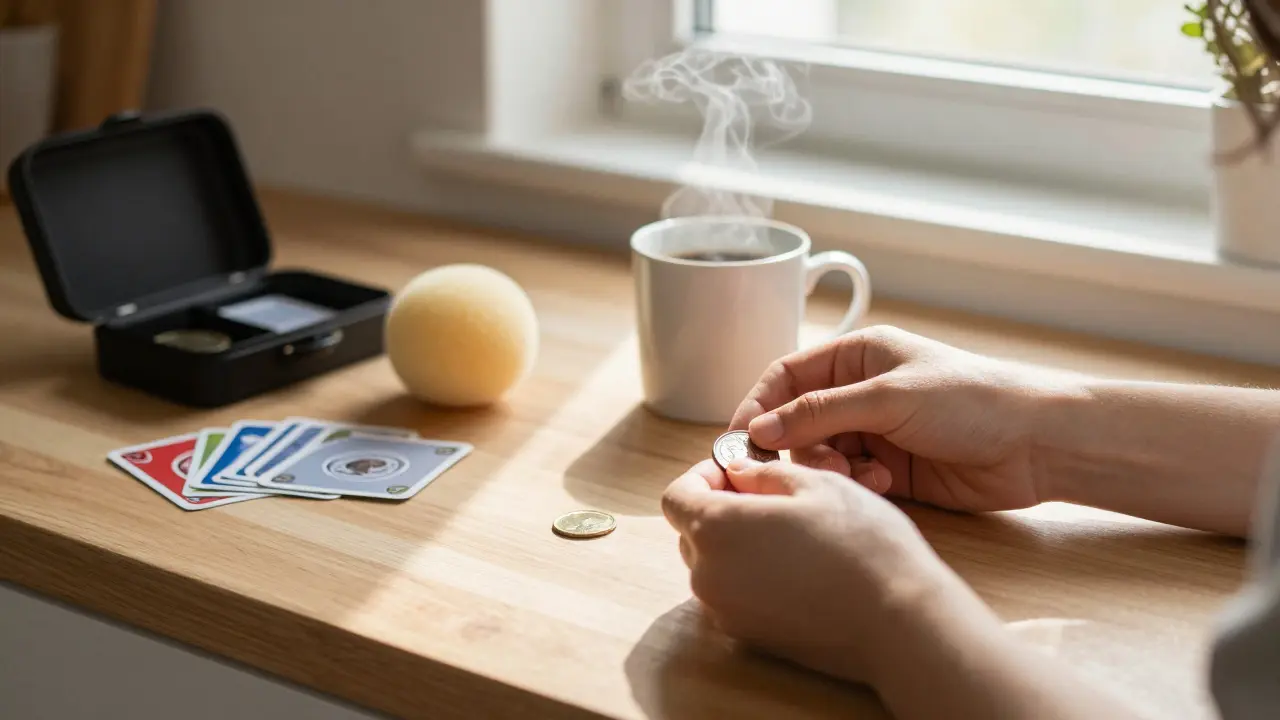
What if the magic you’ve been searching for isn’t hidden in some distant land or locked inside a secret book-but right in your hands, waiting for you to flip a card or make a coin disappear?
Most people think magic means grand stage illusions, smoke, mirrors, and levitating assistants. But real magic? It’s quieter. It’s the moment your kid gasps when you make a pencil vanish between your fingers. It’s the way your friend smiles after you guess their card without looking. It’s not about the trick. It’s about the connection.
And you don’t need a fortune to find it. You just need a basic magic trick kit-something you can buy for under $20, keep on your nightstand, and pull out when the world feels heavy.
Magic isn’t about grand gestures-it’s about small moments
Think about the last time you felt truly amazed. Was it watching a fireworks show? Or was it when your toddler laughed because you made a napkin turn into a bird? The best magic happens in ordinary spaces: the kitchen, the car, the couch after a long day.
Studies in positive psychology show that people who experience small, unexpected moments of wonder report higher levels of daily joy. Magic trick kits don’t just teach you how to fool people-they train your brain to notice the small things you usually overlook. A coin spinning on a table. A card flipping in slow motion. The pause before the reveal.
When you practice magic, you start seeing the world differently. You notice how light hits a glass of water. You hear the rhythm of someone’s breath when they’re waiting for the next move. You become more present. And presence? That’s the real spell.
What’s in a good magic trick kit for beginners?
Not all magic kits are created equal. Some are plastic junk that breaks after one use. Others feel like they were designed by someone who’s never actually performed a trick.
A good beginner kit includes:
- 5-7 core props: coins, cards, a sponge ball, a rubber band, and a gimmicked coin or card
- A clear instruction guide with photos, not just text
- No complex electronics or batteries
- Props that feel solid in your hand-not flimsy plastic
Brands like Magic Studio a trusted brand since 1987 that produces beginner-friendly magic kits with durable props and clear video instructions or Ellusionist a modern magic brand known for high-quality materials and tutorials designed for real people, not just performers offer kits that actually work. You don’t need to spend $100. A $15 kit from either will last years.
What you’re buying isn’t just props. You’re buying time. Time to focus. Time to play. Time to be the person who makes someone else feel wonder.
Start with one trick-then make it yours
Don’t try to learn ten tricks at once. Pick one. Just one. The classic Three-Card Monte is flashy but confusing for beginners. The Coin Through Table is too reliant on gimmicks. The best first trick? The Vanishing Coin.
Here’s how to do it with a standard quarter:
- Hold the coin between your thumb and first two fingers, palm down.
- Curl your fingers slightly, hiding the coin in your palm.
- Bring your other hand up as if you’re about to grab it-but instead, let the coin drop into your hidden palm.
- Open your first hand-empty.
- Close your fingers around the coin in your other hand, then slowly open it-still empty.
That’s it. No sleight-of-hand. No misdirection. Just timing and a little misdirection with your eyes.
Now make it yours. Do it while making coffee. Do it before bedtime. Do it while waiting for your kid to finish brushing their teeth. Every time you do it, you’re not just practicing a trick. You’re reminding yourself: I can create wonder.

Why magic works better than meditation for some people
People try meditation to feel calm. They try journaling to feel clear. But if you’ve ever sat down with a notebook and just stared at the page, you know how hard it can be to quiet your mind.
Magic gives you a different kind of focus. It doesn’t ask you to empty your thoughts-it gives your hands something to do. Your mind latches onto the movement. The rhythm. The sequence. You’re not trying to stop thinking. You’re just thinking about something else entirely.
It’s why so many therapists now recommend magic trick kits for clients with anxiety. The act of learning and performing a simple trick gives your brain a reset button. You’re not escaping reality-you’re stepping into a tiny, safe world where you’re in control.
And control? That’s what we’re all secretly looking for when we feel lost.
Make magic part of your daily rhythm
Don’t wait for Sunday afternoon to try magic. Don’t wait for someone to ask you to perform.
Here’s how to weave it into your routine:
- Do your first trick while waiting for your coffee to brew.
- Use a rubber band trick to break the silence at dinner with friends.
- Teach your kid one trick on a rainy Tuesday.
- Practice in front of the mirror before bed-not to perfect it, but to remind yourself you’re still capable of surprise.
One woman in Asheville told me she does the Card to Pocket trick every morning before her Zoom meetings. "It reminds me I’m not just a worker," she said. "I’m someone who can make magic happen. Even on bad days. Especially on bad days."

What magic doesn’t do-and what it really does
Magic won’t fix your job. It won’t heal your heartbreak. It won’t make your bills disappear.
But it will remind you that you still have hands. That you still have curiosity. That you still have the power to make someone else feel something real.
It’s not about becoming a magician. It’s about becoming the kind of person who notices magic-even when no one else does.
And that? That’s the kind of magic that lasts.
Do I need to be good at magic to find magic in my life?
No. You don’t need to be good. You just need to try. The magic isn’t in the perfect performance-it’s in the willingness to show up, even if you fumble the coin or drop the card. Every time you try, you’re choosing wonder over routine.
What’s the cheapest magic kit that actually works?
Look for the "Beginner Magic Set" by Magic Studio-it costs about $15, includes five solid props, and comes with a printed guide and QR code to video tutorials. Avoid kits under $10-they’re usually plastic and break easily. You want something you can hold and trust.
Can kids benefit from magic trick kits too?
Absolutely. Magic builds confidence, fine motor skills, and patience. Kids as young as five can learn simple tricks like the disappearing coin or the jumping rubber band. More than that, they learn how to hold attention, read reactions, and feel proud of something they created.
How long does it take to learn one trick?
With a good kit, you can learn the basics of one trick in 15 minutes. But to make it feel natural? That takes practice. Try doing it three times a day for a week. Not to get it perfect-just to get comfortable. That’s when the magic starts to feel like part of you.
Is magic just for entertainment, or can it help with mental health?
It’s both. Magic is used in therapy for anxiety, depression, and PTSD because it gives the brain a new focus. It’s active mindfulness. You’re not just sitting still-you’re doing something with your hands, eyes, and timing. Many therapists now give clients a small magic kit as part of their self-care toolkit.
Next steps: Your first move
Here’s what to do right now:
- Go to Amazon or a local toy store and buy a beginner magic kit under $20.
- Open it tonight-don’t wait.
- Find the Vanishing Coin trick. Practice it once.
- Do it tomorrow morning while you wait for your coffee.
- Notice how you feel after.
You don’t need to believe in magic to find it. You just need to try it once. And then again. And again.
The world already has enough noise. Be the person who brings a little quiet wonder.
Rohit Sen
December 22, 2025 AT 03:20Vimal Kumar
December 23, 2025 AT 19:46Amit Umarani
December 25, 2025 AT 01:00Noel Dhiraj
December 26, 2025 AT 18:53vidhi patel
December 27, 2025 AT 17:15Priti Yadav
December 27, 2025 AT 19:07Ajit Kumar
December 28, 2025 AT 22:24Diwakar Pandey
December 28, 2025 AT 23:36Geet Ramchandani
December 29, 2025 AT 08:52Pooja Kalra
December 29, 2025 AT 12:40