
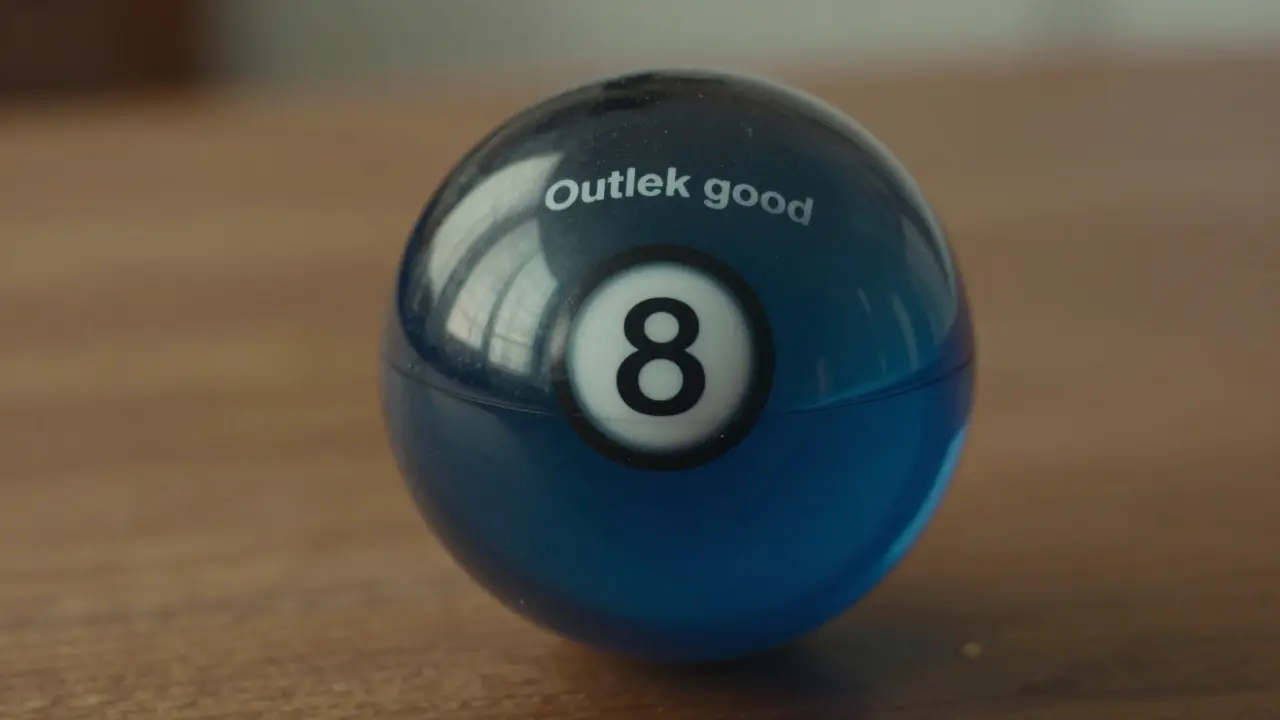
Ever shaken a magic 8 ball and wondered what’s really inside? It’s not magic. It’s physics, psychology, and a little bit of fun. The magic 8 ball isn’t a mystical oracle-it’s a simple toy with 20 pre-printed answers floating in dark blue liquid. When you turn it over, gravity pulls a triangular die to the bottom, and one answer lines up with the window. That’s it. No spirits. No AI. Just a plastic ball with answers written decades ago.
The 20 Answers Inside a Magic 8 Ball
There are exactly 20 answers. They’re split into three groups: positive, negative, and non-committal. You’ll find these on every standard magic 8 ball made since the 1950s. Here’s the full list:
- Yes
- It is certain
- It is decidedly so
- Without a doubt
- You may rely on it
- As I see it, yes
- Most likely
- Outlook good
- Signs point to yes
- Reply hazy, try again
- Ask again later
- Better not tell you now
- Cannot predict now
- Concentrate and ask again
- Don’t count on it
- My reply is no
- My sources say no
- Outlook not so good
- Very doubtful
That’s 10 positive answers, 5 negative, and 5 vague. The design isn’t random-it’s meant to keep you guessing. The vague answers appear nearly half the time, which is why people keep shaking the ball. It’s not about getting answers. It’s about the pause before the answer appears.
How the Magic 8 Ball Actually Works
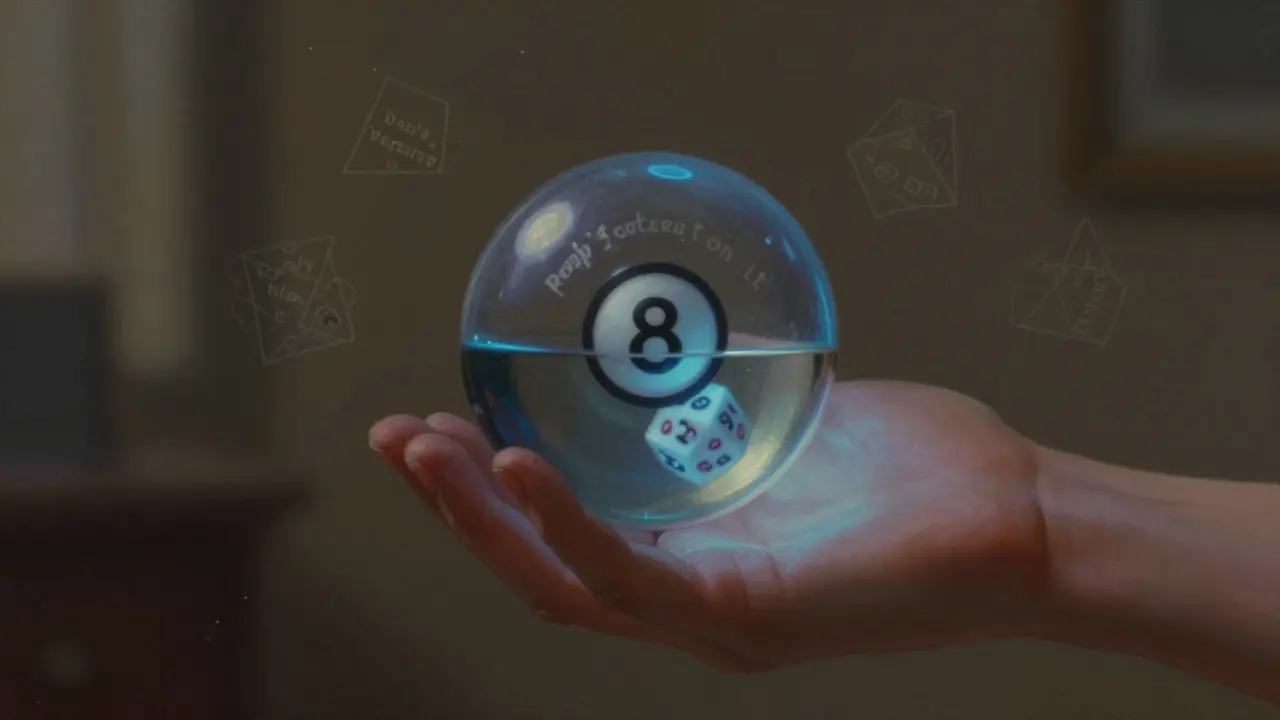
Inside the ball is a hollow, 20-sided die (an icosahedron). Each face has one of the 20 answers printed in raised letters. The die floats in a mixture of alcohol and dark blue dye. When you turn the ball upside down, gravity pulls the die to the bottom window. One face lines up with the transparent circle, and the answer becomes visible.
There’s no randomness in the answer selection-just physics. But because the die bounces and spins as it settles, you can’t predict which answer will show up. That’s what makes it feel like magic. The liquid slows the die’s movement, giving you time to hold your breath before seeing the result.
Early versions from the 1940s used a different mechanism, but the modern design-patented in 1950 by Albert C. Carter and later bought by Mattel-has stayed the same for over 70 years. You can still buy one today that works exactly like the one your grandparent used.
Why People Keep Using It
People don’t use the magic 8 ball to make life decisions. They use it to cope with uncertainty. A 2023 study from the University of North Carolina found that when people faced tough choices-like whether to quit a job or end a relationship-they were more likely to turn to the magic 8 ball when they felt emotionally stuck. The ball doesn’t give answers. It gives permission to feel okay with not knowing.
Think about it: if you ask, “Should I move to another city?” and the ball says, “Outlook good,” you don’t suddenly pack your bags. But you might feel a little lighter. The answer becomes a mirror. You’re not waiting for the ball to tell you what to do-you’re waiting to see what you already believe.
That’s why the vague answers matter so much. “Reply hazy, try again” doesn’t mean you should shake it again. It means you’re not ready to hear the answer. The ball reflects your hesitation. It’s a psychological tool disguised as a toy.
Can You Trust the Magic 8 Ball?
No. But you don’t need to. It’s not designed to be accurate. It’s designed to be engaging. The answers are intentionally ambiguous enough to feel personal. “My sources say no” sounds like it’s quoting someone wise. “Signs point to yes” feels like fate whispering. These phrases are crafted to trigger meaning, not deliver truth.
There’s no data behind the answers. No algorithm. No fortune-teller. Just 20 phrases printed on plastic. If you use it to decide whether to invest in stocks or propose to someone, you’re not being silly-you’re using a tool to access your own intuition. The ball doesn’t predict the future. It helps you quiet the noise so you can hear yourself.
How to Use It Right
There’s no wrong way to use a magic 8 ball. But if you want to get the most out of it, try this:
- Ask a clear yes-or-no question. Avoid “What should I do?” Try “Should I apply for that job?”
- Hold the ball with both hands. Shake it gently. Don’t spin it wildly.
- Wait. Don’t rush the answer. Let the die settle.
- Read the answer out loud. Say it slowly.
- Pause. Ask yourself: “Does this feel true? Or does it feel like what I hoped for?”
The magic isn’t in the answer. It’s in the silence after you read it. That’s when you learn what you really think.
What’s Different About Modern Versions?
You can buy digital magic 8 balls now-apps, smart devices, even Alexa skills. They use random number generators to pick answers. But they miss the point. The physical ball has weight. It has texture. You feel the liquid shift. You hear the rattle. You watch the answer rise slowly, like a secret surfacing.
There’s a reason the original plastic ball still sells millions every year. It’s not the answers. It’s the ritual. The way you cup it in your hands. The way you hold your breath. The way you smile when it says “Yes,” even if you knew it would.
Where to Get a Real Magic 8 Ball
Look for the original Mattel version. It’s the only one that still uses the classic 20-answer set and the same dark blue liquid. You’ll find it in toy stores, online retailers, and even some bookshops. Avoid knockoffs that use fewer answers or different colors. The magic isn’t in the branding-it’s in the design that’s lasted 75 years.
If you’re buying one as a gift, don’t overthink it. The best ones come with no instructions. Let the person discover the answers on their own.
Is the Magic 8 Ball Still Relevant Today?
In a world of AI chatbots and predictive algorithms, the magic 8 ball feels ancient. But that’s why it works. While algorithms try to predict your next move, the magic 8 ball doesn’t care. It doesn’t track your history. It doesn’t know your name. It just gives you a random answer-and leaves you to make sense of it.
It’s a quiet rebellion against overthinking. In a time when every decision is analyzed, ranked, and optimized, the magic 8 ball says: Sometimes, you just need to shake it and see what comes up.
It’s not about believing in magic. It’s about remembering that not everything needs to be figured out.
Can the magic 8 ball predict the future?
No. The magic 8 ball doesn’t predict anything. It’s a mechanical toy with 20 fixed answers printed on a floating die. The answer you get is determined by physics-not fate, fortune, or AI. People use it to explore their own feelings, not to see what’s coming.
Are all magic 8 balls the same?
Most are. The original Mattel version uses the classic 20 answers in dark blue liquid. Some knockoffs change the number of answers, use different colors, or add digital features. But only the classic version has the same weight, sound, and feel that made it iconic. If you want the real experience, stick with the original.
Why are there so many vague answers?
The vague answers-like "Reply hazy, try again" or "Better not tell you now"-make up nearly half of the responses. They’re designed to keep you thinking. If every answer was clear yes or no, people would stop using it after a few shakes. The ambiguity invites reflection, not action.
Can you use the magic 8 ball for serious decisions?
You can, but it’s not meant for that. Using it to decide on medical choices, finances, or legal matters is risky. But many people use it to break mental blocks. If you’re stuck and the ball says "Yes," it might help you take the leap you were already considering. The value isn’t in the answer-it’s in the courage to act after you see it.
Is the magic 8 ball still made today?
Yes. Mattel still produces the original magic 8 ball. It hasn’t changed since the 1950s. You can buy it in stores like Target, Walmart, and Amazon. There are also themed versions-like the "Magic 8 Ball Crystal" or "Magic 8 Ball with LED lights"-but only the classic version has the original 20 answers and liquid-filled design.
What to Do Next
Grab a magic 8 ball. Not because you need answers. But because you need a moment. Shake it. Look at the answer. Let it sit. Then ask yourself: Did that answer surprise me? Or did it just echo what I already felt?
That’s the real magic.
Gabby Love
January 2, 2026 AT 18:30The magic 8 ball is such a simple thing, but it’s weirdly comforting. You don’t need to overthink it-just shake, wait, read. No algorithms, no data mining, just a little plastic mystery. I keep one on my desk.
selma souza
January 4, 2026 AT 05:01There is no such thing as "magic" in a magic 8 ball. It is a deterministic mechanical device with a fixed set of responses. The author’s romanticization of the object is scientifically inaccurate and emotionally manipulative. The liquid is not "dark blue dye"-it is a mixture of isopropyl alcohol and carbon black pigment. Precision matters.
Jen Kay
January 4, 2026 AT 15:09So you’re telling me the real magic isn’t in the answer… it’s in the pause? That’s actually kind of beautiful. Also, I’m now weirdly tempted to buy one just to sit quietly with it for five minutes. Thanks for that.
Frank Piccolo
January 5, 2026 AT 00:40Look, I get it. It’s a toy. But people treat this like some ancient oracle from Atlantis. It’s a plastic ball with 20 phrases printed on a die. We’ve got quantum computers and neural nets, and we’re still shaking this thing like it’s a sacred relic? Pathetic.
Addison Smart
January 6, 2026 AT 14:23What’s fascinating isn’t the mechanism-it’s the cultural persistence. Across generations, across continents, people use this object not for answers, but for ritual. It’s a shared human behavior: we create symbols to hold space for uncertainty. In Japan, they use omikuji. In the West, we shake a ball. Both are attempts to quiet the noise inside. The magic 8 ball isn’t outdated-it’s timeless.
Lissa Veldhuis
January 8, 2026 AT 08:25I asked my 8 ball if I should break up with my boyfriend and it said "My sources say no" and I just screamed into my pillow for 20 minutes because I KNEW THAT WAS THE TRUTH I WAS AVOIDING and now I’m crying again but also kind of relieved???
Michael Jones
January 8, 2026 AT 09:20It’s not about believing the ball it’s about believing yourself after you read the answer
the pause is the whole thing
the ball just gives you permission to feel what you already feel
you don’t need a crystal or a tarot deck or an AI chatbot
you just need a quiet moment and a plastic sphere filled with blue liquid
Barbara & Greg
January 8, 2026 AT 16:25While I appreciate the anthropological lens applied here, the author’s tone is dangerously sentimental. The magic 8 ball does not "reflect hesitation"-it is a passive object. To ascribe psychological agency to a piece of molded plastic is not insight-it is projection masquerading as wisdom. Furthermore, the claim that it "gives permission to feel okay with not knowing" is a dangerous anthropomorphization that undermines genuine emotional processing. One does not heal by shaking a toy.
allison berroteran
January 10, 2026 AT 15:12I’ve kept my original 1987 Mattel 8 ball since I was 12. I never used it to make decisions. I used it when I was lonely. When I didn’t know how to say how I felt, I’d ask it "Do I matter?" and it always said "Yes" or "Outlook good" or sometimes "Reply hazy"-and I’d just sit there, holding it, and feel a little less alone. It didn’t answer my question. It just gave me a moment to sit with it. I still have it. I still shake it sometimes. I don’t need it to be magic. I just need it to be there.
Michael Thomas
January 11, 2026 AT 09:38Only Americans would turn a $5 toy into a self-help movement. In Germany we have actual philosophers. In Japan, we have Zen monks. We don’t need a plastic ball to tell us to think. This is pathetic.
David Smith
January 12, 2026 AT 10:28OK but what if the 8 ball is actually a portal to another dimension and the answers are written by sentient ghosts who live in the alcohol? I’m not saying I believe it-I’m just saying I’ve seen things. Last week it said "Very doubtful" and then my Wi-Fi died for 47 minutes. Coincidence? I think not.
James Boggs
January 14, 2026 AT 01:14Thank you for this thoughtful breakdown. The ritual aspect is what makes it enduring. It’s not about prediction-it’s about presence. A simple, tangible pause in a digital world. Well done.