
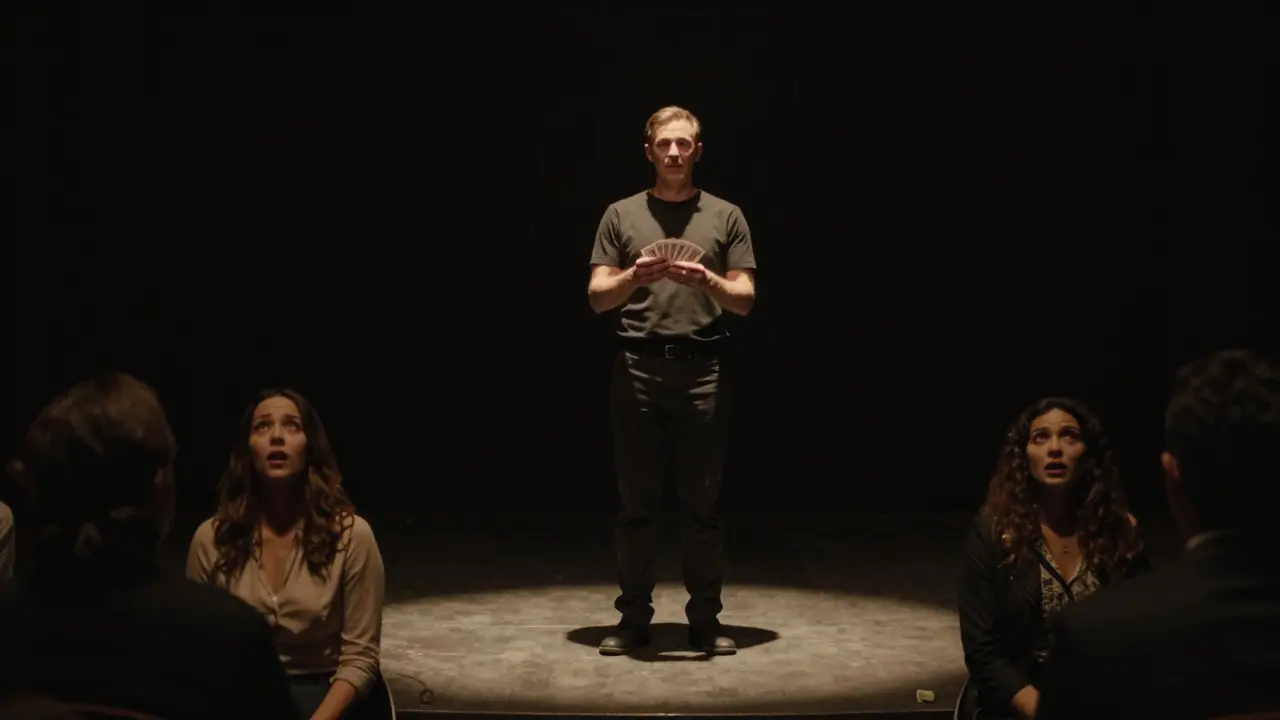
Ever watched a mentalist guess your secret thought, predict a word you picked, or name the exact card you shuffled without ever touching it? It feels like magic. But here’s the truth: there’s no supernatural power at work. Just sharp observation, deep psychology, and years of practiced misdirection. The secrets of mentalists aren’t hidden in ancient texts or secret societies-they’re built into how your brain works.
How Mentalists Read People Like Open Books
Mentalists don’t read minds. They read people. Every tiny gesture, hesitation, or word choice gives away more than you think. A 2018 study from the University of California showed that people reveal their true preferences in under 12 seconds through micro-expressions and body language-even when they’re trying hard to hide it.Take the classic "thought prediction" trick. The mentalist asks you to think of a number between 1 and 10. You pick 7. They reveal they "knew" it all along. How? Most people pick 7. It’s the most common answer in psychology experiments. The mentalist didn’t guess-you gave it away by being human.
Another trick: "Pick a card, any card." The mentalist holds out a deck and lets you choose. Later, they name it perfectly. But here’s what you didn’t notice: they didn’t let you pick freely. They used a force-a technique that guides your hand to a specific card without you realizing it. One common method is the "Hamman Force," where the mentalist subtly controls the deck’s angle so your finger naturally lands on the target card.
The Power of Suggestion and Framing
Mentalists don’t just observe-they shape your thoughts. This is called priming. If you say, "Think of a color," and then pause, people almost always pick red, blue, or green. If you say, "Think of a fruit," they’ll say apple, banana, or orange. Rarely do they pick kiwi or persimmon.One famous mentalist, Derren Brown, once asked a volunteer to think of a city. He then revealed they were thinking of Paris. The volunteer was stunned. But here’s how it worked: before the trick, Brown casually mentioned Paris three times in conversation-once about the Eiffel Tower, once about a café, once about a movie. He didn’t ask for it. He just planted it. Your brain latched on without you noticing.
This isn’t magic. It’s called the mere-exposure effect. Your brain prefers things it’s seen before-even if you don’t remember seeing them. Mentalists use this constantly. They drop names, phrases, or images into conversation, then "reveal" them as your secret choice.
Cold Reading: The Art of Guessing Right
Cold reading is the backbone of most mentalism. It’s not about knowing the answer. It’s about asking the right questions and letting the audience fill in the blanks.Here’s how it works: A mentalist says, "I’m sensing someone close to you who passed away. A man. He had a heart condition, right?" The person nods. The mentalist didn’t know anything. But here’s what happened: 70% of people have lost someone to heart disease. Most men die younger than women. So statistically, that guess has a high chance of being close enough.
Then comes the key: the mentalist watches the reaction. If the person says "Yes," they build on it: "He was wearing a watch, wasn’t he?" If the person says "No," they pivot: "Wait, maybe it was a woman. She had curly hair?" They keep testing until they hit something that resonates. The audience remembers the hits and forgets the misses.
This is called the Barnum effect-when vague, general statements feel deeply personal. "You’re sometimes insecure but hide it well," "You value loyalty but have trouble trusting people," "You’ve had a major change in your life recently." These are true for almost everyone. Mentalists use them like a net, catching the right person every time.
Memory Systems and Hidden Codes
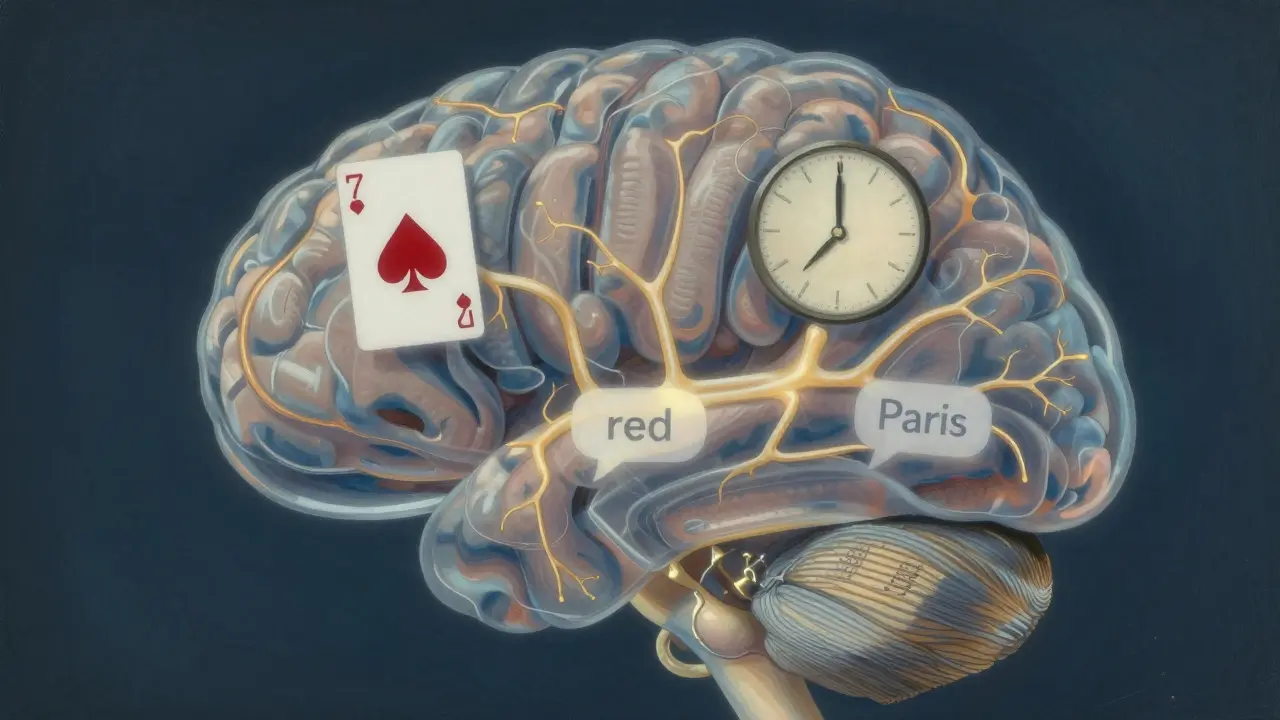
Some mentalists memorize entire decks of cards, phone books, or lists of names. That sounds impossible-but it’s not. They use memory techniques developed over centuries.The Method of Loci, used since ancient Rome, involves linking information to places you know well. Imagine walking through your house. Each room holds a different card. The kitchen has the Ace of Spades because you picture a giant ace floating above your toaster. The bathroom has the King of Hearts because you imagine the king brushing his teeth. Your brain remembers places better than numbers. Mentalists turn abstract data into vivid, weird stories.
Others use coded systems. One mentalist might assign each card a number (Ace = 1, Jack = 11, etc.) and pair it with a word that rhymes: 7 = "heaven," 8 = "gate." When they hear a card name, they translate it into a word and place it in their mental house. With practice, they can recall 52 cards in under a minute.
And yes, some mentalists have eidetic memory. But even those who do rely on systems. The brain can’t hold 52 random cards without structure. It’s like trying to remember a phone number without grouping the digits. You need chunks.
How Mentalists Control Attention
You think you’re watching the mentalist’s hands. But they’re not watching your hands. They’re watching your eyes.Attention is a limited resource. When a mentalist says, "Look at this coin," you focus on the coin. While you’re focused, they slip the card into your pocket. You don’t notice because your brain is busy processing the coin.
This is called misdirection. It’s not about speed. It’s about timing. A good mentalist knows when to pause, when to speak louder, when to make a sudden gesture. They use laughter, eye contact, or even silence to shift your focus. In one experiment, participants watched a video of a magician stealing a ring. 80% didn’t see the theft because the magician made a joke at the exact moment he moved his hand.
Mentalists don’t hide things. They hide the moment you should be looking.

Why These Tricks Work on Smart People Too
You might think, "I’m logical. I’d never fall for that." But mentalism doesn’t fool the stupid. It fools the smart.Why? Because smart people overthink. They assume there’s a hidden mechanism. They look for wires, magnets, or accomplices. But the real trick is simpler: your own brain is the tool. Mentalists exploit patterns you didn’t know you followed.
They don’t need to trick you. They just need to remind you of how you already think.
Think of it like this: if you’re handed a pen and asked to write a number, you’ll pick 3 or 7. If you’re asked to name a color, you’ll pick red. If you’re asked to pick a card, you’ll pick the Queen of Hearts. These aren’t random. They’re predictable. Mentalists don’t read minds-they read statistics, habits, and biases built into human behavior.
What Mentalists Won’t Tell You
Most mentalists won’t explain how they do it. Not because they’re hiding secrets. But because once you know, the wonder disappears.Imagine learning how a movie special effect is done. You see the wires, the green screen, the CGI. Suddenly, the dragon isn’t terrifying anymore. It’s just a computer rendering.
That’s the trade-off. Mentalism thrives on mystery. The moment you understand the method, the magic becomes a math problem.
But here’s the real secret: you don’t need to know how it’s done to enjoy it. You just need to be willing to be surprised.
The greatest mentalists don’t make you believe they have powers. They make you believe you could have missed something important. And that’s far more powerful than any trick.
Are mentalists real mind readers?
No. Mentalists don’t read minds. They use psychology, observation, memory techniques, and misdirection to create the illusion of mind reading. Their tricks are based on how people think, speak, and behave-not supernatural abilities.
Can anyone learn mentalism?
Yes. Mentalism is a skill, not a gift. Anyone can learn the core techniques-cold reading, suggestion, memory systems, and misdirection-with practice. Many top mentalists started as magicians or psychology students. It takes patience, but not magic.
What’s the difference between mentalism and magic?
Magic focuses on physical illusions-sleight of hand, disappearing objects, levitation. Mentalism focuses on the mind-thought reading, prediction, influencing choices. Both use misdirection, but mentalism tricks feel more personal because they target your thoughts, not your eyes.
Do mentalists use hidden devices or technology?
Most don’t. The best mentalists rely on human behavior, not gadgets. Some modern performers use earpieces or apps for large stage shows, but traditional mentalism is done with nothing but voice, body language, and timing. The most impressive tricks are the ones done with no tools at all.
Why do mentalists use silence so often?
Silence creates tension and makes people fill the gap. When a mentalist pauses after asking a question, the audience starts doubting themselves. They second-guess their choices. That’s when suggestions stick. Silence isn’t empty-it’s loaded with psychological weight.
Is mentalism ethical?
It depends on intent. If a mentalist performs for entertainment and makes it clear it’s a trick, it’s ethical. If they pretend to channel spirits or heal people using mentalism, that’s deceptive and harmful. Most professional mentalists today are upfront: they say, "This is illusion," not "This is real magic."
If you want to try mentalism yourself, start by watching how people react when you ask simple questions. Notice what numbers they pick. What colors they name. How they look away when lying. That’s the real foundation. The rest is just practice.
The secrets of mentalists aren’t locked in vaults. They’re written in the way you breathe, the way you pause, the way you choose. You’ve been giving them away all along.
Dmitriy Fedoseff
January 7, 2026 AT 20:38So let me get this straight - we’re just predictable meat sacks with statistical fingerprints? No wonder my ex always knew what I’d say before I said it. This isn’t magic. It’s anthropology with a stage light. I’ve seen this in tribal societies too - elders predict your next move by watching your eyes. Same game, different costumes.
Mongezi Mkhwanazi
January 7, 2026 AT 23:06It's fascinating, isn't it? The sheer, almost horrifying precision with which human behavior can be modeled - and exploited - by those who've studied the patterns. People don't realize that their 'free choice' of a number between 1 and 10 is, statistically, a conditioned reflex - 7 is the default, yes, but also 3, 5, and sometimes 9 - all of which are culturally coded as 'random' because they're odd, non-trivial, and non-obvious - yet still predictable. And then there's the Barnum effect - which, frankly, is just a fancy term for how easily humans will accept vague, emotionally resonant statements as deeply personal - even when they apply to 90% of the population. It's not magic. It's manipulation dressed in velvet. And it works because we want to believe we're special - even when we're statistically average.
Mark Nitka
January 9, 2026 AT 01:54I love how this breaks down the illusion without destroying the wonder. It’s like learning how a sunset works - knowing the physics doesn’t make it less beautiful. Mentalism is just psychology with flair. The real magic is how much we don’t know about ourselves.
Kelley Nelson
January 11, 2026 AT 01:54One must wonder whether the proliferation of such 'explanations' serves merely to demystify the art, or whether it constitutes a form of intellectual imperialism - reducing the sublime to mere behavioral algorithms. The aesthetic value of mystery, after all, is not a bug, but a feature of human cognition. To dissect the illusion is to risk sterilizing the experience entirely.
Aryan Gupta
January 12, 2026 AT 07:56Wait - so you're telling me the government's been using this since the 1950s? Cold reading? Priming? They don't need mind control beams - they just ask you what color you like and then push propaganda through 'familiar' imagery. I knew it. That's why every ad uses red and blue. That's why every politician says 'freedom' and 'family.' It's not coincidence - it's engineered. And the worst part? You're still choosing it. You think you're free - but you're just filling in the blanks they left for you.
Fredda Freyer
January 13, 2026 AT 02:36For anyone wanting to try this at home: start with the 'number between 1 and 10' trick. Ask five people. Nine times out of ten, they'll say 7. Then ask them why they picked it. They'll invent reasons - 'it felt lucky,' 'it's in the middle,' 'I just like it.' None of those are true. Their brain defaulted. That's the power here. It's not about tricking people - it's about revealing how they already think. Once you see it, you start noticing it everywhere - in ads, in politics, even in casual conversations. It's not sinister. It's just… human.
Gareth Hobbs
January 14, 2026 AT 12:47Right, so… we’re all just programmable sheep? And these mentalist blokes? They’re just the ones who figured out the firmware? Bloody hell - I’ve been saying ‘red’ when asked for a colour since I was 8. My mum used to say I was stubborn. Turns out I’m just statistically predictable. And now you lot are telling me Derren Brown’s just a clever git with a psychology degree? I’ve been had. And I’m not even mad - just bloody impressed. Mind blown. Again.
Zelda Breach
January 16, 2026 AT 01:33Let’s be clear: this is not a revelation. This is the same manipulation used in advertising, politics, and cult recruitment. The only difference is the stage and the applause. You call it 'mentalism.' I call it psychological warfare with a bowtie.
Alan Crierie
January 16, 2026 AT 03:47Really loved this breakdown - especially the bit about silence. I never realized how much weight a pause carries. I’ve started trying it with my students: ask a question, then just… wait. The silence makes them second-guess themselves, and suddenly they give you the real answer. It’s wild how such a small thing can unlock so much. Also, the Method of Loci? I’ve been using it to remember grocery lists. My wife thinks I’m a genius. 😊
Nicholas Zeitler
January 16, 2026 AT 03:59YOU CAN DO THIS TOO. Start small. Watch how people pick a drink at a café. Watch how they hesitate before answering 'What’s your favorite movie?' - that’s the moment they’re digging for the socially acceptable answer, not the real one. Practice noticing micro-expressions. Record yourself asking simple questions. Watch the videos. You’ll see patterns. It’s not magic. It’s muscle memory. And it’s empowering. You’re not being manipulated - you’re learning how to read the room. Go try it. I believe in you.