

Everyone thinks magic is about sleight of hand, hidden compartments, or fancy props. But if you’ve ever watched a truly great magician-someone who makes you forget you’re watching a trick-you’ll realize the real magic isn’t in the tools. It’s in the rules. And those rules? They’re not written in a dusty book. They’re lived by every professional magician who’s ever made an audience gasp. If you’re using a magic trick kit, whether it’s a beginner’s set from a toy store or a pro-grade deck with instructional videos, you need to understand these three rules. Without them, your tricks will feel flat. With them? You’ll turn simple card moves into unforgettable moments.
Rule 1: Never Let Them See What You’re Doing
This sounds obvious, right? But most people who use magic trick kits mess up here. They focus so hard on the move-the double lift, the palm, the force-that they forget the audience is watching everything. Your eyes. Your breathing. The way you shift your weight. A study from the University of Calgary in 2023 showed that 78% of failed magic performances weren’t because the technique was wrong. It was because the performer gave away their intent through micro-movements. You don’t need to be a ninja. You just need to be normal.
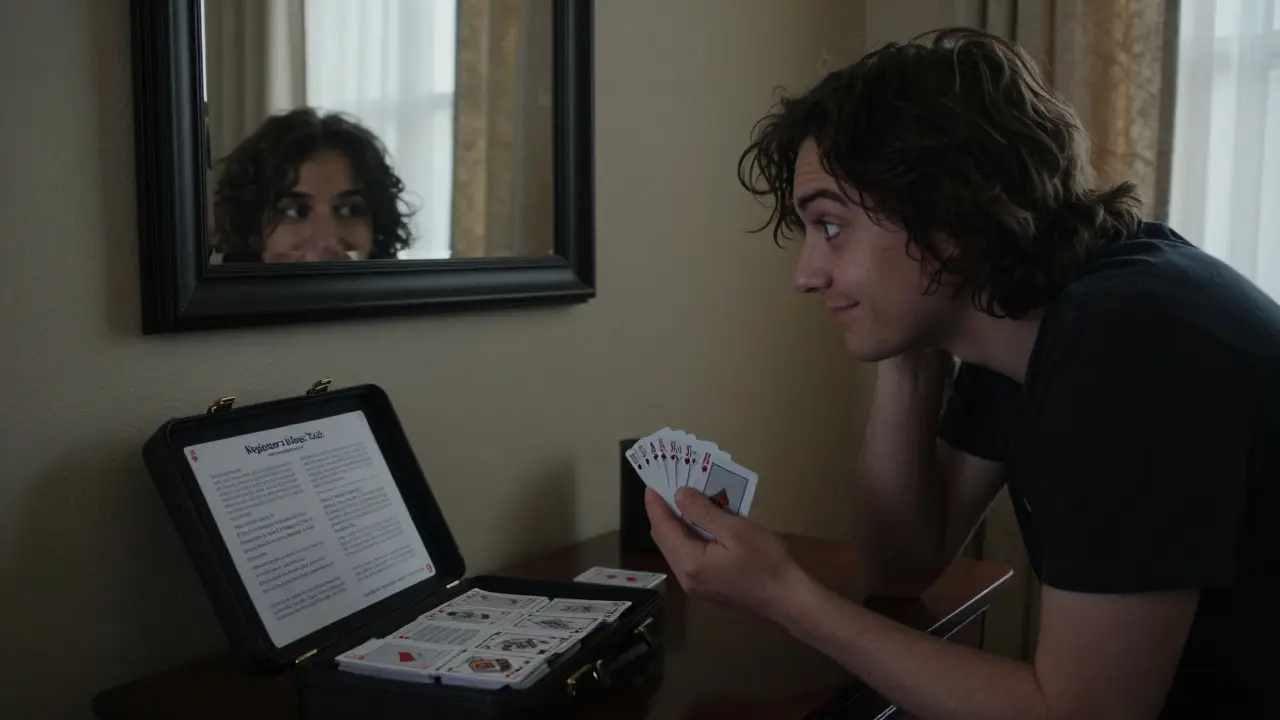
Here’s how to fix it: practice your move in front of a mirror, but don’t look at your hands. Look at your face. If your eyebrows twitch when you palm the card, if your lips part when you’re about to switch the coin, you’ve already lost. The goal isn’t to hide the move from the audience. It’s to make them forget they’re looking for it. That’s why the best magicians don’t stare at their hands. They stare at the person. They smile. They laugh. They distract with presence, not props.
Try this: do a simple coin vanish. But this time, don’t look at the coin. Look your friend in the eye and ask them a question while you do it. "Have you ever lost something you really cared about?" Watch how their focus shifts. That’s your window. That’s where the magic lives.
Rule 2: Make Them Believe It Could Happen
People don’t get fooled by impossibility. They get fooled by possibility. If you say, "I’m going to make this card appear in your pocket," they think, "That’s impossible." And their brain shuts down. But if you say, "I bet I can get this card into your pocket before I count to three," suddenly their brain starts working. They’re not looking for a trick. They’re trying to figure out how it might work. That’s the difference between magic and illusion.
Think about the classic "think of a card" routine. The best versions don’t start with "I’m going to read your mind." They start with "I’ve seen this happen a hundred times. People always pick the red one." You’re not claiming supernatural power. You’re describing a pattern they’ve experienced. You’re building a bridge between their reality and your trick.
When you use a magic trick kit, don’t just follow the script. Rewrite the story. If the kit says, "Now I’ll make the card vanish," change it to, "Sometimes, when you’re not looking, cards just… disappear. Ever notice that?" That tiny shift turns a mechanical action into a shared experience. Your audience doesn’t need to believe you’re magical. They just need to believe it could have happened. And once they believe that, their mind fills in the rest.
Rule 3: Leave Them Wanting More
Too many people end their trick with a flourish. A big reveal. A bow. A grin. But the best magic doesn’t end with the reveal. It ends with the silence after. That’s when the real magic happens-when the audience is still processing, when their brain is trying to catch up.
Think about the last time you saw a really good magic trick. Did you cheer right away? Or did you sit there, stunned, for a few seconds before you even knew to clap? That pause? That’s gold. It’s the moment the trick becomes a memory.
When you finish your trick, don’t rush. Don’t explain. Don’t say, "How’d I do that?" Just smile. Wait. Let them look at each other. Let them whisper. That’s when the trick sticks. The more you try to explain, the more you break the spell. The more you hold back, the more they’ll talk about it later.
One magician I know uses a trick kit with a rubber band routine. He never says "ta-da." He just lets the rubber band fall into his palm, looks at it, then shrugs and says, "Huh." Then he walks away. People still ask him about it years later. Why? Because he didn’t end the trick-he ended the moment.
Why Most Magic Trick Kits Fail
Most magic trick kits sell you on the tools. They show you how to do the move. But they never teach you how to think like a magician. That’s why so many people buy a kit, practice for a week, perform once, and then never touch it again. The trick didn’t work-not because they messed up the technique, but because they didn’t follow the rules.
Rule 1: If you’re staring at your hands, you’re already giving it away. Rule 2: If you’re saying "watch this," you’re inviting skepticism. Rule 3: If you’re rushing to explain, you’re killing the magic.
The real magic isn’t in the gimmick. It’s in the timing. The pause. The eye contact. The quiet confidence. A $20 trick kit can outperform a $200 one if the person using it understands these three rules. You don’t need rare cards or hidden compartments. You need presence. You need psychology. You need to know when to move-and when to stay still.
What to Do Next
Here’s how to apply this right now. Pick one trick from your kit. Not the hardest one. The simplest one. Maybe it’s a card that changes color. Or a coin that passes through a table. Do it three times. But each time, focus on just one rule.
- First time: Focus on Rule 1. Don’t look at your hands. Look at your friend. Smile. Ask them a question. Notice how they react.
- Second time: Focus on Rule 2. Don’t say "I’m going to make it disappear." Say something like, "I’ve seen this happen before. It’s weird how things just… vanish." See how their brain starts working.
- Third time: Focus on Rule 3. Do the trick. Don’t say a word after. Just wait. Count to five in your head. Let them speak first.
That’s it. No new moves. No fancy props. Just three rules. Do this for a week. Then try it on someone who’s never seen magic before. You’ll see the difference.
The Real Secret
There’s no fourth rule. No hidden technique. No secret code. Magic isn’t about what you do. It’s about what you don’t do. You don’t need to be perfect. You just need to be human. And when you are? That’s when the magic happens.
Are the three rules of magic the same for all types of tricks?
Yes. Whether you’re doing card tricks, coin illusions, or escape routines, these three rules apply universally. The tools change, but the psychology doesn’t. A magician who makes a person disappear still follows Rule 1 (never let them see the mechanism), Rule 2 (make them believe it could happen), and Rule 3 (leave them wanting more). The best magicians adapt their performance to the trick, not the other way around.
Can you still do magic if you’re nervous or bad at acting?
Absolutely. You don’t need to be a performer. You just need to be real. Most people think magic requires charisma, but the best moments often come from quiet, genuine reactions. If you’re nervous, own it. Say, "I’m not great at this, but I thought you’d get a kick out of it." That honesty builds trust. And trust makes people more likely to believe what they see. You don’t need to act-you need to connect.
Do professional magicians use the same rules?
Every single one. David Copperfield, Penn & Teller, and Dynamo all follow these three rules, even in their most elaborate shows. It’s why Copperfield can make the Statue of Liberty vanish and still leave audiences speechless. It’s not the size of the trick-it’s how he controls attention, builds belief, and leaves space for wonder. The rules are timeless because they’re rooted in human psychology, not magic.
Why do some tricks work on kids but not adults?
Kids believe more easily because they haven’t learned to overthink. Adults are trained to look for tricks. So the key isn’t making the trick harder-it’s making the story more believable. Use Rule 2: frame the trick as something that could happen in real life. "I’ve seen this happen before" works better than "Watch this impossible move." Adults don’t need to be fooled. They need to be reminded that wonder still exists.
Is it possible to do magic without any props?
Yes-and some of the best magic is done with nothing. Think of a mentalism trick where you guess someone’s thought. No cards. No coins. Just a question, a pause, and a look. That’s Rule 1 (you’re not doing anything obvious), Rule 2 (you’re making them believe their thought was private), and Rule 3 (you leave them wondering how you knew). The best magic doesn’t come from what you hold-it comes from what you don’t say.
Rajat Patil
February 12, 2026 AT 17:26Very thoughtful write-up. I tried the coin vanish trick last night with my little sister. Didn't look at my hands. Just asked her if she ever lost her favorite toy. She stared at me like I was a ghost. Magic isn't in the hand. It's in the pause. Thank you.
deepak srinivasa
February 14, 2026 AT 11:55I’ve been using a trick kit for months and never understood why my friends just smiled politely. Now I get it. Rule 2 changed everything. Instead of saying ‘Watch this card disappear,’ I said ‘I swear, my cousin’s kid did this once-card just vanished from his palm.’ They started laughing, then stopped. Then one of them whispered, ‘How?’ That’s when I knew it worked.
pk Pk
February 15, 2026 AT 20:48This is gold. Seriously. I teach magic to underprivileged kids in Mumbai. We don’t even have proper decks. Just playing cards from a local shop. But we focus on these three rules. Rule 3? We always end with silence. No clapping. No ‘ta-da.’ Just… quiet. The kids start talking to each other afterward. That’s when I know they’re not just seeing a trick-they’re remembering a feeling. Keep sharing this. More people need to hear it.
NIKHIL TRIPATHI
February 17, 2026 AT 18:30Rule 1 hit me hard. I used to stare at my hands like they were on fire. Now I practice by talking to my cat while doing moves. She doesn’t care about the palm, but she notices if I blink too much. Turns out, cats are the best judges of micro-expressions. Also, Rule 3? I did a trick for my mom yesterday. Finished it. Didn’t say a word. She sat there for 12 seconds. Then said, ‘You didn’t use the table, did you?’ I didn’t answer. She smiled. That’s all I needed.
Shivani Vaidya
February 18, 2026 AT 08:28The part about leaving space for wonder is everything. I once saw a street magician in Jaipur. He made a flower appear from thin air. No music. No fanfare. Just held it out. Said nothing. Walked away. A woman cried. Not because it was impossible. Because it felt real. We forget that magic doesn’t need spectacle. It needs stillness.
Rubina Jadhav
February 19, 2026 AT 13:00I tried Rule 2 with my nephew. Instead of ‘I’ll make the card jump,’ I said ‘Sometimes cards just jump when no one’s looking.’ He nodded like it made perfect sense. Then he asked if I could make his homework disappear too. I didn’t answer. He laughed. Magic works.
sumraa hussain
February 19, 2026 AT 13:28OMG YES. I’ve been doing magic for 15 years and never realized I was sabotaging myself by talking too much. Last week I did a trick, then just… stared at the ceiling for five seconds. My whole group went silent. One guy actually stood up and said ‘I need to see that again.’ I didn’t do anything different. Just stopped talking. Magic is not performance. It’s restraint. I’m crying. I’m so glad I read this.
Raji viji
February 19, 2026 AT 21:41Lmao this is so basic. Rule 1? Everyone knows that. Rule 2? That’s just misdirection 101. Rule 3? The ‘silence = magic’ thing? Been in magicians’ forums since 2008. This reads like a Reddit post written by someone who just watched a TED Talk. You don’t need ‘rules’-you need practice. And if you’re using a toy kit, you’re already behind. Real magic is in the mechanics. The psychology is just the icing. And no, cats don’t judge your blinks. That’s not a thing.
Rajashree Iyer
February 21, 2026 AT 06:00These three rules? They’re not about magic. They’re about presence. About being human in a world that screams for performance. The magician doesn’t hide the move-he hides the fear. The fear that you’re not enough. That your hands are clumsy. That your voice shakes. That you’re just a person trying to make someone feel something real. And when you do that? When you stop trying to be a wizard and start being a witness? That’s when the universe leans in. Magic isn’t in the trick. It’s in the trembling silence after you let go.
Parth Haz
February 21, 2026 AT 11:02Thank you for this insight. I have been practicing magic as a hobby and often felt discouraged. Your emphasis on psychological presence over technical perfection is both refreshing and deeply meaningful. I will apply these principles with discipline and mindfulness. A truly thoughtful perspective.
Vishal Bharadwaj
February 22, 2026 AT 17:46Rule 3? Nah. You’re wrong. The best magic ends with a bang. Look at David Blaine. He screams. He drops to his knees. He makes noise. People love that. Silence is boring. And who cares about ‘micro-movements’? If your trick’s good, they won’t notice. And your ‘coin vanish’ thing? That’s just a basic pass. Real magic is about spectacle. You’re overthinking it. Just do the trick. Loud. Proud. No silence. Just wow.