

Ask any professional magician-someone who’s performed for crowds, on TV, or in small theaters-and they’ll tell you the same thing: the number one rule of magic isn’t about sleight of hand, misdirection, or even the trick itself. It’s about the audience’s belief.
You can buy the best magic trick kit on the market. You can practice for hours until your fingers ache. You can memorize every move, every pause, every word. But if the person watching doesn’t believe something impossible just happened, then you didn’t succeed. Magic isn’t about fooling the eyes. It’s about creating a moment where the mind lets go of logic, even for just a few seconds.
Think about the classic coin vanish. You’ve seen it a hundred times. A magician holds a coin between thumb and fingers, closes their hand, opens it-and the coin is gone. The trick? It’s not the palm. It’s the pause. The eye contact. The way the magician smiles like they’re sharing a secret. That’s when the audience stops thinking about how it’s done and starts wondering if they really saw it. That’s the rule in action.
Most beginners think magic is about hiding the method. That’s wrong. The real skill is in making the method irrelevant. You don’t need to be perfect. You don’t need flawless technique. You just need to make the viewer want to believe.
Why the Method Doesn’t Matter as Much as You Think
There are hundreds of YouTube videos that expose how classic tricks work. The pass, the double lift, the force, the gaffed deck-everything is out there. And yet, people still gasp when they see those same tricks performed live. Why? Because knowing how it’s done doesn’t stop you from feeling the wonder.
It’s the same with movies. You know CGI is used to make dragons fly or buildings explode. But when you’re in the theater, surrounded by sound and light, you still lean forward. You still feel the tension. Magic works the same way. The brain doesn’t need to be fooled-it needs to be invited to suspend disbelief.
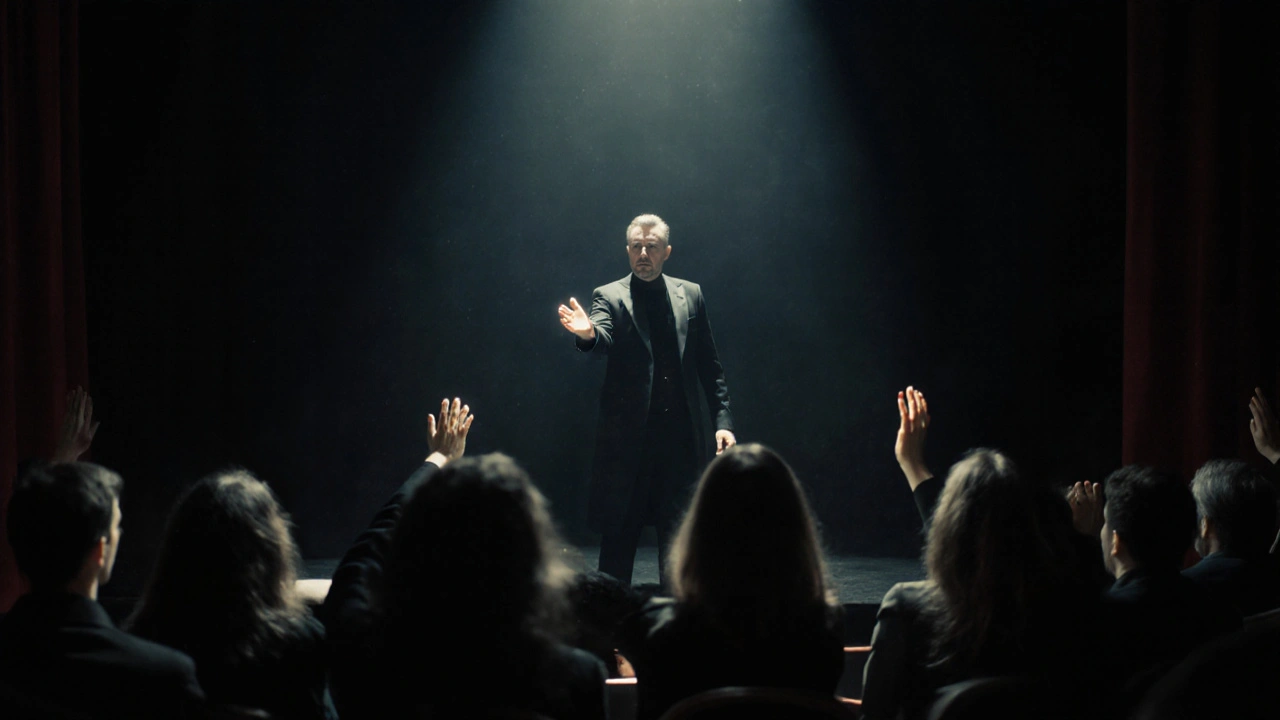
That’s why the best magicians don’t hide their hands. They draw your attention exactly where they want it. They use storytelling, timing, and emotion to create a mental space where the impossible feels real. A well-timed joke. A pause just long enough to make you hold your breath. A glance that feels personal. These aren’t tricks. They’re psychological tools.
What Magic Trick Kits Don’t Teach You
Most magic trick kits sold online focus on the gimmicks. A hollow ball. A double-sided card. A gimmicked coin. They come with instructions that say: "Do this, then this, then say this." But they never say: "Make them feel something."
That’s the gap. The kits give you the tools, but they don’t teach you how to use them as a magician-not just a performer. You can do the move perfectly and still get a polite clap. Or you can fumble the catch, stumble over your words, and leave the audience wide-eyed and whispering to each other. The difference isn’t the trick. It’s the connection.
Take the classic "three cup shuffle." The method is simple: move the cups around, hide the ball under one. But the best versions? The magician leans in, asks the audience member to pick a cup with their eyes closed, and then says, "I bet you’re the kind of person who picks the one that’s not there." That’s not magic. That’s psychology. And it’s what turns a routine into a memory.
The Real Secret: People Remember How You Made Them Feel
Think about the last time someone did something impressive-maybe a musician played a song flawlessly, or a chef plated a dish that looked like art. What do you remember? Not the technical details. You remember how it made you feel. Excited? Awestruck? Calm? Amused?
Magicians know this better than anyone. A trick that makes someone laugh is remembered longer than one that makes them scratch their head. A trick that makes a child giggle is more powerful than one that impresses a skeptic. The goal isn’t to prove you’re smart. It’s to prove that wonder still exists.
That’s why the best magic happens in living rooms, not on stages. It’s not about the size of the crowd. It’s about the intimacy of the moment. When you’re close enough to see their eyes widen, when you hear the quiet inhale before the gasp-that’s when you know you’ve broken the rule of logic, not the rule of magic.
How to Apply the Rule in Your Own Practice
So how do you start living by the number one rule? Here’s how to make belief your priority:
- Start with emotion, not technique. Before you learn a new trick, ask: "What feeling do I want to create?" Surprise? Delight? Mystery? Let that guide your performance.
- Practice in front of real people. Don’t just rehearse in front of a mirror. Try it on a friend, a sibling, a coworker. Watch their face. Do they smile? Lean in? Ask how you did it? That’s your feedback.
- Remove the script. Memorize the moves, but not the lines. Let your words flow naturally. Forced dialogue breaks the spell.
- Don’t explain. If someone says, "How did you do that?" smile and say, "I don’t know. How did you see it?" Let them keep the mystery.
- Use silence. The longest pause in magic isn’t empty-it’s full. Let the moment breathe. Don’t rush to the next move.
These aren’t tips for better tricks. They’re habits for better magic.
Why This Rule Works for Everyone
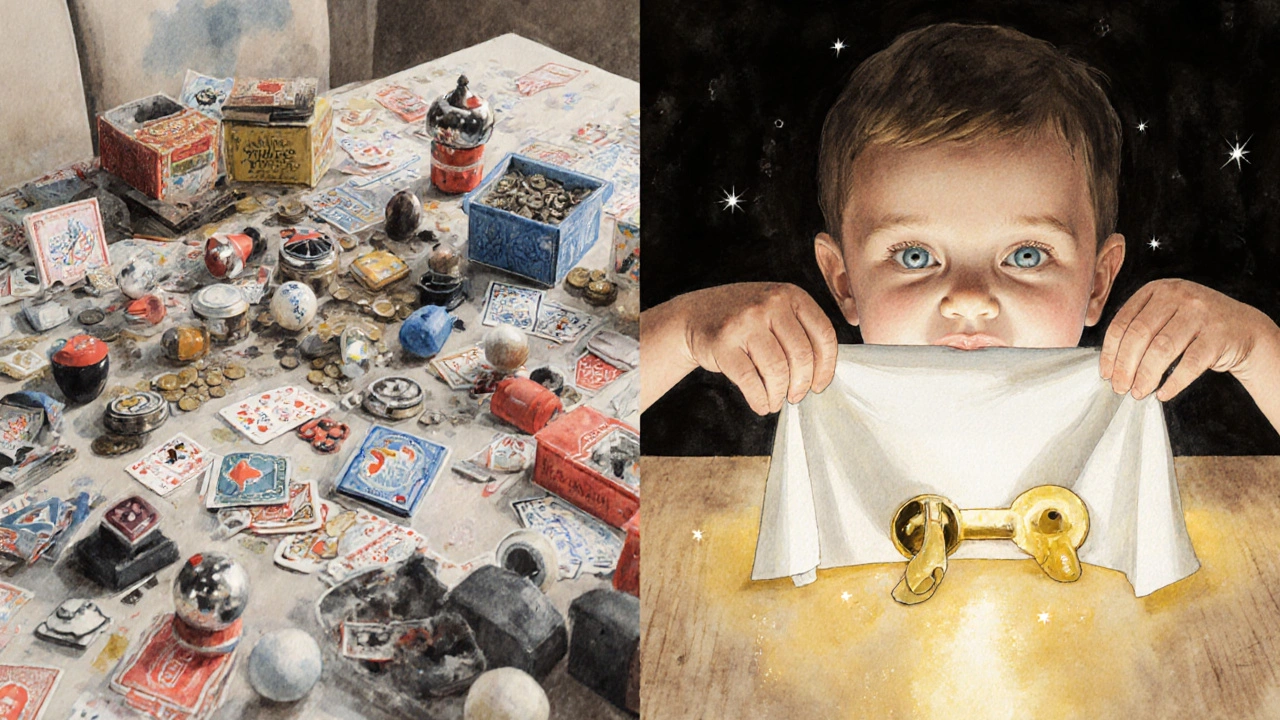
You don’t need to be a professional to use this rule. Parents use it when they make a toy disappear under a napkin and watch their toddler scream with joy. Teachers use it when they pull a surprise fact out of nowhere and see a student’s eyes light up. Even friends use it when they "guess" the card you picked-and you swear you didn’t tell them.
That’s the power of belief. It’s not exclusive to magicians. It’s the foundation of storytelling, teaching, persuasion, and connection. Magic, at its core, is about making people feel like they’ve witnessed something rare. Something human.
The next time you pull out a magic trick kit, don’t think about the gimmick. Think about the moment. The breath before the reveal. The look in their eyes. That’s not just magic. That’s the only rule that matters.
Is the number one rule of magic the same for all types of magic?
Yes. Whether it’s close-up magic with cards, stage illusions with big props, or mentalism where the magician reads minds, the core rule stays the same: the audience’s belief is what makes it magic. The tools change, but the goal doesn’t. A card trick that makes someone laugh works because they believe it couldn’t have happened. A levitation that leaves a crowd silent works because they believe they just saw physics break. The method is just the vehicle-the belief is the destination.
Can you still do magic if you’re bad at sleight of hand?
Absolutely. Many of the most memorable magic moments come from simple props and strong presentation. Think of the "floating bill" trick-it uses a rubber band and a dollar. No fancy moves. Just timing, confidence, and a little misdirection. The best magicians often use tricks that look easy because they focus on making the audience feel something, not showing off skill. If your hands aren’t perfect, use storytelling, humor, or emotion to carry the moment.
Why do some people still try to figure out the trick even after seeing it?
Because humans are wired to solve puzzles. If a trick feels too easy, or if the magician rushes through it, the brain stays in analysis mode. But if the performance feels personal, emotional, or mysterious, the brain switches from "how?" to "wow." That’s why the best magicians avoid robotic delivery. They don’t want you to solve the trick-they want you to forget you ever tried.
Do professional magicians ever reveal their secrets?
Most never do-not because they’re secretive, but because the secret isn’t the point. The magic is in the experience. A magician might show you how a trick works to a fellow performer, but never to an audience. That’s because revealing the method kills the belief. Once you know how it’s done, you can’t unsee it. And without belief, there’s no magic.
Can children learn the number one rule of magic?
Children understand it better than most adults. They don’t overthink. They don’t analyze. They feel. That’s why kids often react more strongly to simple tricks than adults do. A child doesn’t care if the coin vanished through a hidden flap-they care that it disappeared. Teaching kids magic isn’t about teaching them moves. It’s about teaching them to share wonder. And that’s the purest form of magic there is.
What Comes Next After You Learn the Rule
Once you start focusing on belief instead of technique, magic stops being a performance and becomes a conversation. You’ll notice how people react differently to the same trick depending on your tone, your energy, even the lighting in the room. You’ll start to see magic everywhere-in jokes, in stories, in the way someone pauses before saying something surprising.
You’ll also realize that the best magic kits aren’t the ones with the most gadgets. They’re the ones that give you room to breathe, to experiment, to find your own voice. The trick isn’t in the box. It’s in you.
So go ahead. Pull out that kit. Try a trick. But this time, don’t worry about doing it perfectly. Worry about making someone believe.
ANAND BHUSHAN
November 30, 2025 AT 13:22It's not about the hand movements. It's about the silence after the reveal. That's when it hits you.
Indi s
November 30, 2025 AT 15:36I tried this with my niece last weekend. I made her coin disappear using just a napkin. She screamed like she saw a ghost. I didn't even know the trick. Just smiled and waited. That's all it took.
Rohit Sen
December 1, 2025 AT 01:38Belief? Please. It's all misdirection. You're just selling a placebo effect wrapped in poetry. Real magic is in the engineering, not the emotion.
Vimal Kumar
December 1, 2025 AT 22:59Man, this hit me right. I used to think magic was about flawless moves. Then I saw my cousin do a card trick with shaky hands and a bad accent. Everyone was laughing and leaning in. He didn't know how to palm a card, but he made you feel like you were part of something secret.
Amit Umarani
December 2, 2025 AT 19:17You wrote "they don't need to be fooled-it needs to be invited to suspend disbelief." That's grammatically incorrect. "It" doesn't refer to anything clear. Should be "the audience needs to be invited." Also, "suspension of disbelief" is one term, not two separate phrases. Fix your writing.
Noel Dhiraj
December 4, 2025 AT 05:11Stop focusing on tricks and start focusing on people. That's the real takeaway. I tried magic on my coworkers during coffee breaks. No gimmicks. Just a smile and a pause. People started asking me to do it again. Not because it was clever. Because it felt like a gift.
vidhi patel
December 5, 2025 AT 05:29While the sentiment expressed herein is not without merit, the linguistic structure of the article exhibits a troubling lack of syntactic rigor. The repeated use of rhetorical fragments, improper capitalization of proper nouns, and inconsistent punctuation renders the entire exposition academically indefensible. Magic may be an art, but communication must still adhere to grammatical norms.
Priti Yadav
December 5, 2025 AT 12:01Wait. So you're telling me the government doesn't control magic? That the whole thing is just about belief? That's what they want you to think. They use magic to manipulate public perception. The coin vanishes because they don't want you to see the real truth. Look at the CIA's old psychic program. They were using magic to control minds. This article is a cover.
Ajit Kumar
December 6, 2025 AT 23:25It is not merely the audience’s belief that constitutes the number one rule of magic; rather, it is the deliberate orchestration of cognitive dissonance through the strategic deployment of temporal pacing, nonverbal communication, and emotionally resonant narrative framing that enables the suspension of rational skepticism. The performer must become a conduit for wonder, not a technician of illusion. To reduce this complex psychological phenomenon to the simplistic notion of "belief" is to misunderstand the entire ontological foundation of performative art. One must consider the phenomenological experience of the observer, the intersubjective construction of reality, and the epistemological boundaries of perception. This is not magic. This is philosophy dressed in a tuxedo.
Diwakar Pandey
December 8, 2025 AT 05:13I read this after watching my nephew try to do a card trick for his little sister. He messed up the shuffle, dropped the card, and said "uhhh" three times. She just stared at him with her mouth open. Then she giggled and said, "You did it on purpose!" He didn't fix it. He didn't explain. He just smiled. And she believed it. That's the moment right there. Not the trick. The look in her eyes.
Geet Ramchandani
December 9, 2025 AT 07:07This entire piece is just a glorified self-help blog disguised as magic advice. You're not teaching magic. You're selling emotional validation under the guise of "wonder." People don't care about belief-they care about being impressed. If your trick doesn't have a solid method, it's not magic, it's a party trick with a therapy session attached. And don't get me started on "don't explain." That's just laziness. If you can't defend your craft, you don't deserve to perform it.
Pooja Kalra
December 11, 2025 AT 02:20Belief is the illusion of meaning. Magic is merely a mirror reflecting the human need to assign significance to the arbitrary. The audience does not believe-they project. The magician does not create wonder-he merely provides the canvas. And yet, we call this art. How quaint. The real magic is in realizing that none of it was ever real to begin with.
Sumit SM
December 11, 2025 AT 08:17Man, I just tried this on my buddy at the bar. I made his beer "disappear" by sliding it behind the napkin holder-no sleight, no gimmick. He just stared, then said, "Wait, how?" I didn't answer. Just smiled. He looked around like he lost something important. That’s the moment. That’s the thing. That’s magic. Not the move. Not the hand. The pause. The silence after the gasp. That’s the real trick. I’m gonna do this every time now. I’m hooked.
Jen Deschambeault
December 12, 2025 AT 00:58I work with kids in after-school programs. We do simple magic every Friday. One girl, 8 years old, kept asking how I did it. I told her, "I don't know. How did you see it?" She looked at me like I was crazy. Then she said, "I think you used magic." And she never asked again. She just believed. That’s the whole thing right there.
Kayla Ellsworth
December 13, 2025 AT 03:38So let me get this straight. You're saying the reason people still gasp at the same tricks, even after watching YouTube explanations, is because... they're gullible? That's not belief. That's just poor critical thinking. And you're encouraging it. Brilliant. Let's all stop learning science and start believing in napkin vanishes. Truly, the pinnacle of human progress.