

Have you ever watched a magician make a car disappear or read your mind from across the room and wondered-is this real, or is it all just clever trickery? The answer isn’t as simple as yes or no. Magic tricks aren’t real in the supernatural sense, but they’re also not fake in the way you might think. They’re real illusions-carefully designed, practiced, and performed to fool your brain. And if you’ve ever bought a magic trick kit off the shelf, you’ve already stepped into the world of how these illusions are built.
What Magic Tricks Actually Are
Magic tricks are not magic. They don’t bend the laws of physics. They don’t summon spirits or move objects with thought. Instead, they exploit how your brain works. Your eyes see something, your brain fills in the gaps, and magicians use that gap to create something that feels impossible. Take the classic coin vanish. You see the magician hold a coin, close their fist, open it-and it’s gone. It doesn’t teleport. It’s palmed. Hidden in the hand. Your brain didn’t miss the move because you weren’t paying attention. You missed it because the magician guided your attention away, then back, at just the right moment. That’s not magic. That’s psychology. Most professional magicians spend years learning sleight of hand, misdirection, timing, and audience management. They don’t rely on gadgets alone. Even the most high-tech illusions-like levitating a person or making a building vanish-use mirrors, angles, hidden supports, and lighting. Everything has a physical explanation. The magic is in how well it’s hidden.Why Magic Trick Kits Exist
Magic trick kits became popular because they make illusion accessible. You don’t need to be a professional to experience the thrill of making something disappear. A typical magic trick kit includes a deck of cards, a small box with a hidden compartment, a rope that seems to cut and rejoin, and a few gimmicked props. These aren’t just toys. They’re teaching tools. Companies like Tannen’s, Penguin Magic, and Ellis Magic sell kits designed for beginners. A $25 kit might include a trick where a signed card appears in a sealed envelope. The envelope isn’t sealed at all-it’s folded cleverly. The card? It was switched during the performance. The kit doesn’t lie. It tells you how it’s done. You learn the mechanics. You practice the moves. And then, when you perform it for a friend, you feel like you’ve done something impossible. But here’s the twist: the trick works because you believe it’s real. Even when you know how it’s done, watching someone else perform it still feels magical. That’s the power of performance.How Your Brain Gets Fooled
Your brain is a pattern-recognition machine. It’s constantly predicting what’s going to happen next. Magicians use that to their advantage. They set up expectations, then break them in ways you can’t see coming. For example, the Ambitious Card trick is a staple in magic. A spectator picks a card, puts it back in the deck, and the magician makes it rise to the top. It seems impossible. But here’s the truth: the card was never lost. The magician controlled its position using a simple technique called the double lift. They lift two cards as if they’re one, sneak the chosen card underneath, and then reveal it as if it magically moved. You didn’t see the switch because your brain assumed the top card was the one being handled. Studies from the University of Cambridge show that people miss events even when they’re looking directly at them. In one experiment, participants watching a magic performance failed to notice a coin drop from the magician’s hand-even though it was in plain sight. Their attention was pulled elsewhere. That’s not a flaw in your vision. It’s how human perception works.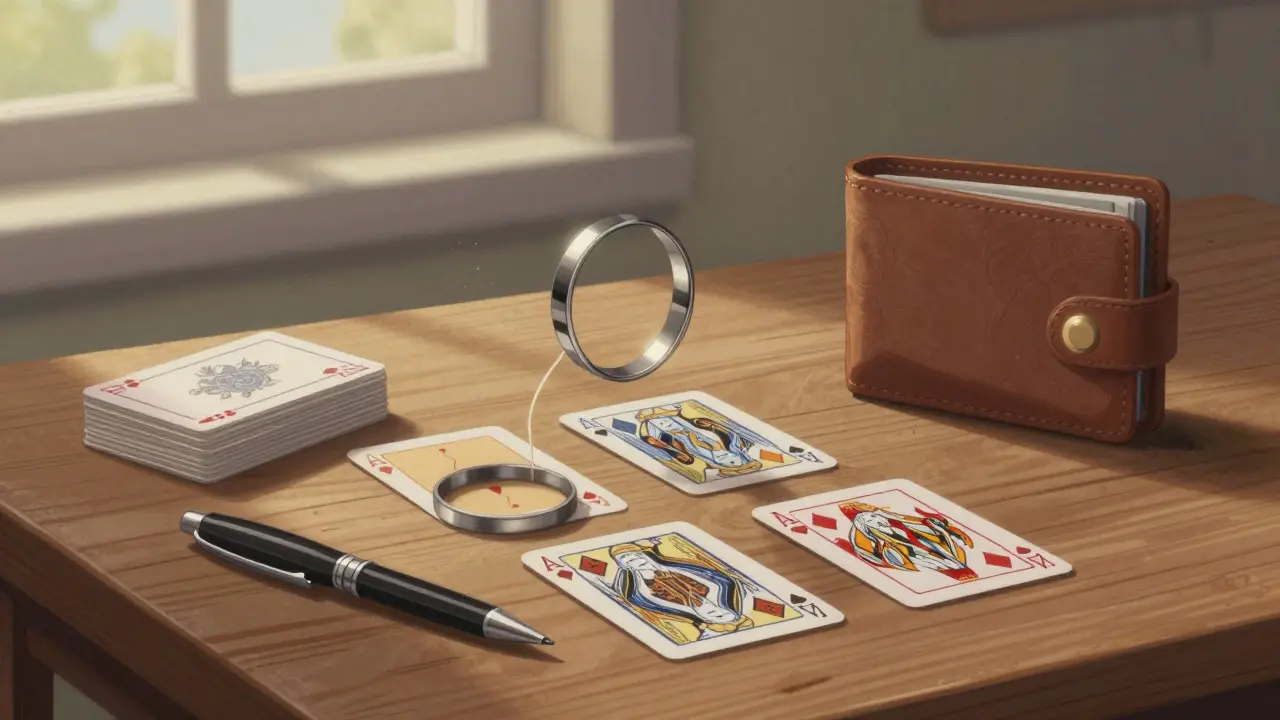
The Difference Between Real Magic and Fake Magic
People often think magic is either real (supernatural) or fake (a scam). But that’s the wrong binary. There’s a third option: illusion. A fake magic trick is one where the performer pretends to have supernatural powers and charges people for it. That’s fraud. Real magic tricks are honest illusions. The magician never claims to have powers. They say, “Watch closely,” or “I can’t explain it.” They invite you to be fooled. That’s why the best magicians are respected-they’re artists, not deceivers. Look at David Copperfield. He made the Statue of Liberty disappear. Did he teleport it? No. He used a giant screen, a carefully timed blackout, and a rotating platform. The audience saw the illusion. They didn’t see the mechanics. And that’s the point. Magic trick kits teach you this distinction. You learn that the illusion is real-even if the method isn’t. The emotional impact? That’s real too.What You Can Learn from a Magic Trick Kit
Buying a magic trick kit isn’t just about impressing your friends. It’s about learning attention, control, and communication. When you practice a trick, you learn:- How to control where someone looks
- How timing affects perception
- How small movements can be invisible
- How confidence makes deception believable

Common Magic Tricks and How They Really Work
Here are three tricks you’ll find in most magic trick kits-and the truth behind them:- Card to Wallet: A spectator picks a card. The magician shuffles the deck, then reaches into their wallet and pulls out the exact card. The wallet has a hidden double layer. The card was placed there before the trick. The shuffle is a distraction.
- Pen Through Hand: A pen appears to go through the magician’s hand. The pen is split into two pieces. One half is hidden in the sleeve. The magician lines them up just right, and your brain fills in the gap.
- Floating Ring: A metal ring appears to float on a string. The ring is attached to a thin, nearly invisible thread. The string is held by a hidden clip under the table. The magician’s hand movement hides the tension.
Why People Still Believe in Real Magic
Even today, with smartphones and YouTube tutorials, people still believe magic is real. Why? Because magic taps into something deeper than logic. It gives us wonder. It reminds us that not everything can be explained. In a world full of algorithms and data, magic offers mystery. That’s why magicians like Penn & Teller are so powerful. They expose how tricks are done-and still make you gasp. They prove that knowing the secret doesn’t kill the magic. It deepens it. The same goes for magic trick kits. When you learn how a trick works, you don’t lose the feeling. You gain respect for the craft.Final Thoughts
Magic tricks are not real in the supernatural sense. But they’re not fake either. They’re real illusions-crafted with precision, rooted in science, and delivered with artistry. A magic trick kit doesn’t sell you magic. It sells you the tools to understand how magic works. And once you understand it, you’ll never look at a card trick the same way again. The next time someone says, “How did they do that?”-you’ll know. It wasn’t magic. It was skill. And that’s even more impressive.Are magic tricks real or just tricks?
Magic tricks aren’t real in the supernatural sense-they don’t break the laws of physics. But they’re not fake either. They’re illusions created using psychology, sleight of hand, and clever props. The effect is real, even if the method isn’t magical.
Can you learn magic from a trick kit?
Yes. Magic trick kits are designed for beginners to learn basic sleight of hand, misdirection, and performance. They include step-by-step instructions and gimmicked props that help you practice real techniques used by professional magicians.
Do magicians ever use real magic?
No. All professional magicians rely on physical methods, psychology, and performance. Anyone claiming to use real magic is either lying or delusional. The best magicians are honest about their craft-they just hide the how.
Why do magic tricks still work even when you know how they’re done?
Because magic isn’t about hiding the method-it’s about controlling attention. Even when you know the trick, your brain still gets tricked by timing, misdirection, and performance. Seeing the secret doesn’t remove the wonder-it makes you appreciate the skill more.
Are magic trick kits worth buying?
If you want to learn how illusion works, yes. Magic trick kits teach you focus, confidence, and communication. They’re not just for kids-they’re for anyone curious about how perception works. Even adults who buy them report feeling more observant and socially confident after practicing.
Noel Dhiraj
February 3, 2026 AT 16:03Amit Umarani
February 3, 2026 AT 18:02vidhi patel
February 3, 2026 AT 19:28Priti Yadav
February 3, 2026 AT 23:02Ajit Kumar
February 5, 2026 AT 22:29Diwakar Pandey
February 6, 2026 AT 03:27Geet Ramchandani
February 8, 2026 AT 01:16Pooja Kalra
February 9, 2026 AT 19:15Sumit SM
February 9, 2026 AT 22:13Bob Buthune
February 11, 2026 AT 02:55Jane San Miguel
February 12, 2026 AT 15:23Kasey Drymalla
February 13, 2026 AT 11:19Noel Dhiraj
February 14, 2026 AT 06:52