
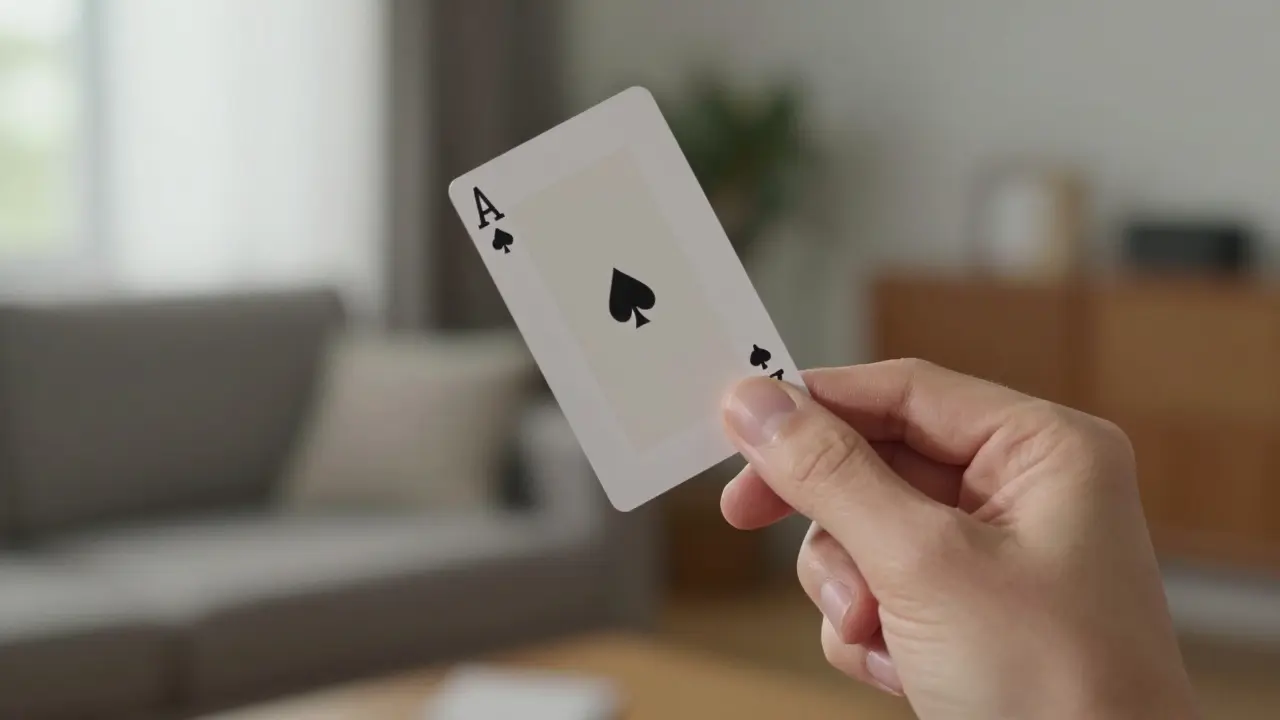
You don’t need a top hat, a assistant, or a stage to make people gasp. Some of the most memorable magic tricks are the ones you can do with just a deck of cards, a coin, and a little confidence. The secret isn’t in expensive gear-it’s in timing, misdirection, and practice. And the best part? You can learn these tricks in under an hour and start impressing people tonight.
The Floating Card Trick
This one looks impossible, but it’s just physics and sleight of hand. Grab any playing card. Hold it between your thumb and index finger, with the long edge facing your palm. Now, slowly bend the card upward using just your fingertips-like you’re trying to make it bow. Keep your wrist relaxed. As you lift, let the card’s natural stiffness catch the air. The card will seem to float upward for a second before falling back down.
Here’s the trick: don’t move your hand fast. Let the card rise slowly. People assume you’re using magnets or strings. You’re not. You’re just using the card’s own shape and a bit of air resistance. Practice this in front of a mirror until the motion looks smooth. Do it once during a conversation, right after someone says, “I don’t believe in magic.” Watch their face.
The Vanishing Coin
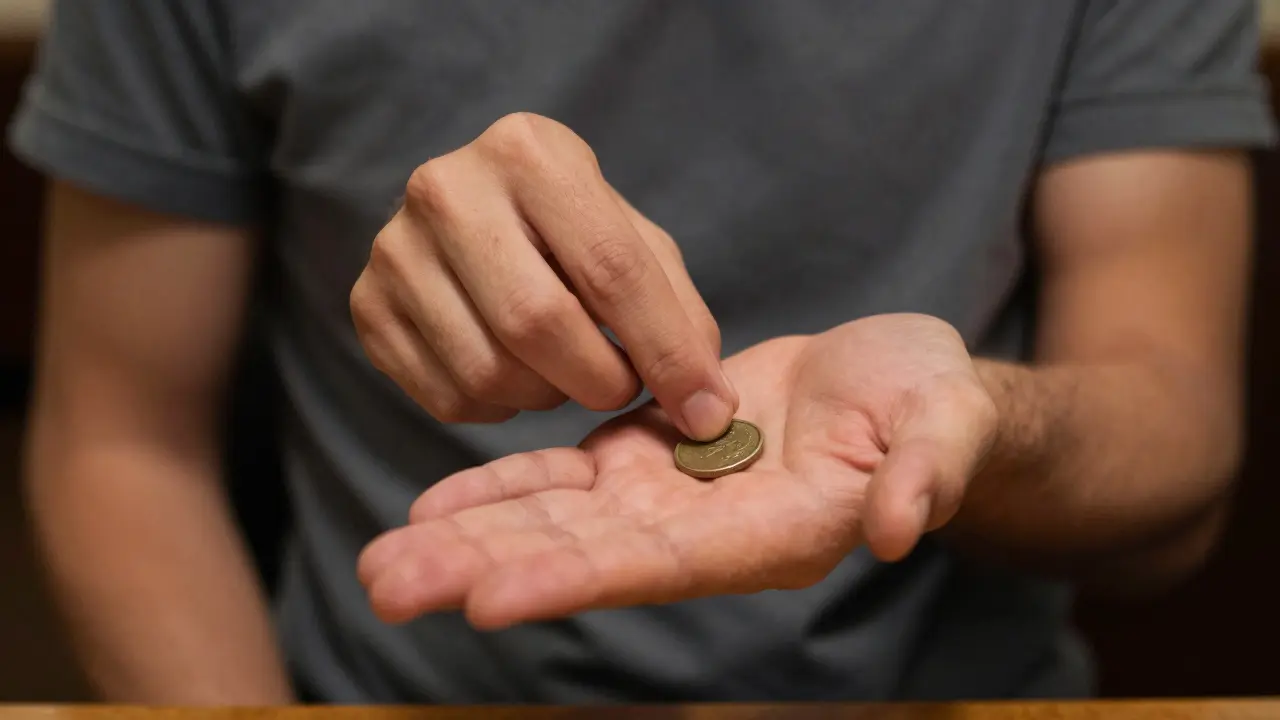
Grab a quarter. Show it to your friend. Place it on the back of your hand, palm up. Now, close your fingers around it like you’re holding it tight. Keep your thumb on top. Here’s the move: as you pretend to squeeze, secretly slide the coin into your palm. Then, slowly open your fingers-just enough so the coin is hidden in your palm, but your hand looks empty. Keep your thumb pressed down on the spot where the coin was. People’s eyes follow your fingers, not your palm.
When you open your hand, the coin is gone. Say, “It’s not magic. It’s just your eyes playing tricks.” Then, reach into your other pocket and pull it out. Their jaw drops. This works best when you do it casually-like you’re just fiddling with a coin during a chat. No big setup. No props. Just your hand and a quarter.
The Mind-Reading Card
Ask a friend to pick a card from a shuffled deck. Tell them to look at it, remember it, and put it back anywhere in the deck. Now, shuffle the deck a little, but not too much. Hold the deck face down. Say, “I’m going to feel the energy of your card.” Then, flip through the cards slowly, stopping when you feel a slight resistance. That’s your card.
Here’s how it really works: before they pick a card, secretly peek at the bottom card. Let’s say it’s the 7 of hearts. When they return their card, you cut the deck so their card ends up right on top. Now, the 7 of hearts is second from the bottom. When you flip through, you’re looking for the card that’s upside down. The bottom card is facing the wrong way because you cut it. When you hit it, you pause. You say, “This one feels different.” Then flip it over-it’s the 7 of hearts. You didn’t read their mind. You just used a simple stack.
The Pen Through Hand
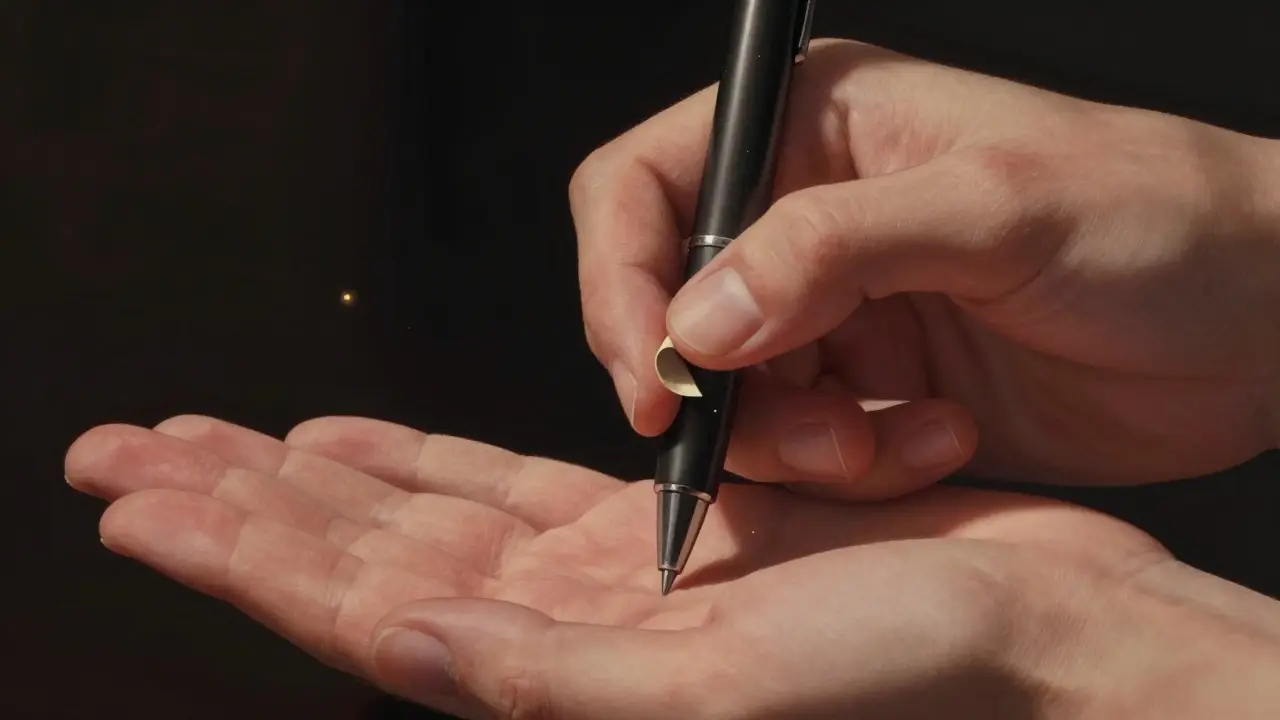
This one looks like you’re stabbing your hand with a pen. Grab a pen and a small piece of paper. Roll the paper into a tight tube, just big enough to fit the pen’s tip. Slide the tube over the pen, near the eraser. Now, hold the pen vertically between your thumb and index finger, with the tube hidden behind your fingers. Place your other hand flat on the table. Press the pen tip against your palm. Say, “Watch closely.” Then, push the pen through your hand-except you’re not pushing it into your skin. You’re pushing it into the paper tube, which is hidden under your fingers.
The trick is in the angle. Keep your hand slightly cupped. The tube hides the gap. When you pull the pen back, the paper stays stuck to your palm for a second, making it look like the pen passed through. Practice this with a pen you don’t care about. If the paper slips, you’ll know before you try it on someone.
Why These Tricks Work
These aren’t flashy illusions. They’re psychological. People expect magic to be loud, big, or complicated. When you do something small, quiet, and unexpected, it hits harder. Your brain doesn’t know how to process it. That’s why the vanishing coin feels more real than a sawing-in-half act.
Also, timing matters. Don’t perform right after someone says, “Show me a trick.” Wait until the conversation slows. Make it feel accidental. Say, “Oh, look at this,” while fiddling with your keys or a napkin. That’s when people let their guard down.
And never explain the trick unless they beg. Even then, say, “I’ll tell you tomorrow.” The mystery sticks with them longer.
What to Avoid
Don’t overdo it. One good trick in a night is better than three rushed ones. If you try to impress everyone at once, you’ll look like you’re trying too hard.
Avoid tricks that need mirrors, gimmicks, or special cards. If you have to carry extra gear, you won’t do it spontaneously. The best magic happens when you’re not prepared. That’s why the coin and the card are perfect-they’re always with you.
And never try to fool magicians. They’ll spot the move. But your friend who thinks magic is just for kids? They’ll remember you for years.
Practice Like a Pro
You don’t need hours. Do 10 minutes a day. Practice in front of a mirror. Watch your hands. Are your fingers tense? Are you looking at the trick instead of the person? That’s your mistake.
Record yourself on your phone. Play it back. If you cringe, fix it. If you smile because it looks smooth, you’re ready.
Try it on your cat first. Then your roommate. Then your cousin at Thanksgiving. Each time, tweak it. Make it yours.
Final Tip: The Power of Silence
The best magicians don’t talk much. They let the trick speak. After you do the vanishing coin, just smile. Don’t say, “How did you do that?” Wait. Let them ask. When they do, say, “I’ll tell you after dessert.” Then change the subject.
That silence? That’s what makes it unforgettable.
Bhagyashri Zokarkar
December 27, 2025 AT 11:37The floating card trick is pure genius. I tried it last night at a party and my cousin thought I was channeling some ancient Indian mystic. No joke, she asked if my grandfather taught me this. I just smiled and said yes. Truth is, I watched a YouTube video an hour ago. Magic is just science with better timing.
Rakesh Dorwal
December 28, 2025 AT 15:00These tricks are fine but let’s be real-why are we wasting time on card games when the real magic is in how the government hides the truth about 5G and mind control? I saw a guy do the vanishing coin on a train in Mumbai and I swear, the coin didn’t vanish-it got teleported to a hidden drone. They’re watching us. Always.
Vishal Gaur
December 29, 2025 AT 13:33Man I tried the pen through hand thing and it looked like i was trying to stab my palm with a highlighter. The paper tube slipped twice and my roommate yelled ‘are you okay?’ I said yes but now she won’t let me hold pens near her. Also why is everyone so serious about this? It’s supposed to be fun not a PhD thesis on misdirection. I did it while eating samosas and my aunt laughed so hard she spilled chai on her sari. Best reaction ever.
Nikhil Gavhane
December 29, 2025 AT 16:48This is exactly the kind of thing I love. Small, quiet, human magic. No flashy lights, no loud music-just a card, a coin, and a moment of wonder. I’ve been practicing the mind-reading card every morning before work. My cat doesn’t care, but my neighbor who always looks stressed? She smiled after I did it. That’s worth more than any applause.
Rajat Patil
December 31, 2025 AT 16:36It is truly remarkable how such simple techniques can create a profound sense of awe. The emphasis on timing and silence is especially thoughtful. One does not need elaborate apparatus to evoke wonder. The human mind, when gently guided, can perceive the extraordinary in the ordinary. I commend the author for this humble yet powerful insight.
deepak srinivasa
January 2, 2026 AT 02:17Wait, so the bottom card trick relies on you peeking at it beforehand? That’s not mind reading, that’s basic deck manipulation. But why does it still feel like magic even when you know how it works? Is it because we want to believe? Or because the performer’s confidence sells it? I think it’s both. The brain chooses to be fooled when it’s happy.
pk Pk
January 2, 2026 AT 15:48You guys are overthinking this. Magic isn’t about secrets-it’s about connection. Do the trick once, then ask the person what they felt. That’s the real magic. I taught my 8-year-old nephew the vanishing coin. He did it at his school talent show. No one knew how he did it. But he told me afterward, ‘Uncle, I saw their eyes light up.’ That’s the goal. Not perfection. Not secrecy. Just joy.
NIKHIL TRIPATHI
January 3, 2026 AT 20:03Love this. I’ve been doing the floating card for months now. My girlfriend thinks I’m a wizard. I haven’t told her it’s just air resistance. She says it’s the only thing that makes me feel ‘present.’ I think she’s right. I used to scroll through my phone all night. Now I practice in the bathroom. Small changes, big impact. Also, the silence thing? Game changer. I used to say ‘ta-da’ after every trick. Now I just blink. Works better.
Shivani Vaidya
January 4, 2026 AT 02:27While the techniques described are indeed elegant, I must note that the term ‘misdirection’ is often misapplied in popular discourse. In classical performance theory, it is not merely about diverting attention, but about orchestrating cognitive expectations. The success of these tricks lies not in sleight, but in the deliberate violation of predictive modeling within the observer’s mind. A fascinating application of cognitive psychology in everyday interaction.
Rubina Jadhav
January 4, 2026 AT 10:03I tried the coin trick on my brother. He didn’t believe me. So I did it again. He still didn’t believe. So I gave him the coin and said ‘you try.’ He couldn’t do it. I just smiled. Sometimes magic is knowing when not to explain.
sumraa hussain
January 5, 2026 AT 11:06Okay but imagine if these tricks were real magic?? Like what if the card really floated?? What if the coin went to another dimension?? What if the pen DID go through your hand?? I’m not saying it’s impossible-what if the government is hiding the truth?? I saw a guy do this in a train station in Delhi and then he vanished too. No one saw him leave. Coincidence? I think not. Someone’s watching. And they’re using these tricks to test us. I’m not crazy. I’m just awake.
Aryan Jain
January 6, 2026 AT 17:28These tricks are just distractions. The real magic is in the fact that no one questions why we’re so easily fooled. Why do we want to believe? Because we’re afraid of the truth-that we’re all just meat puppets in a system designed to keep us entertained while they steal our data, our time, our souls. The coin doesn’t vanish. It gets uploaded. The card doesn’t float. It gets tagged. Wake up.
Nalini Venugopal
January 7, 2026 AT 19:10Just a quick note: ‘your’ is not ‘you’re.’ And ‘it’s’ is not ‘its.’ You wrote ‘it’s not magic. it’s just your eyes.’ That second ‘it’s’ should be ‘its.’ Also, ‘peep’ is not the right word-it’s ‘peek.’ Just saying. I love the content, but grammar matters. Especially when you’re teaching people magic. Words are the first trick.
Pramod Usdadiya
January 9, 2026 AT 06:31My grandfather used to do the vanishing coin while we ate dinner. He’d say, ‘Magic is not in the hand, but in the heart.’ He never explained it. He just smiled. Now I do it for my kids. They don’t ask how. They just laugh. That’s the real tradition. Not the trick. The silence after. The wonder. That’s what we pass on.