
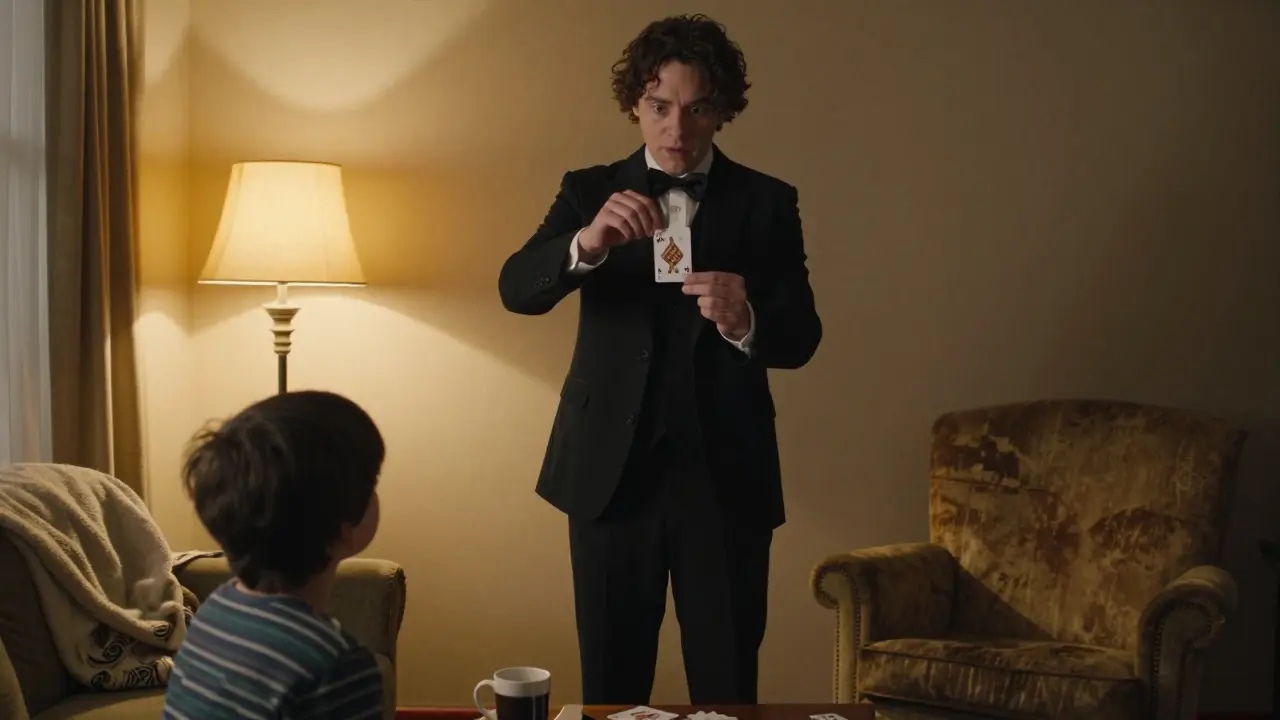
Everyone remembers their first magic trick. Maybe it was a coin that vanished between your fingers, or a card that somehow ended up in your pocket even though you didn’t touch it. But here’s the truth most magicians won’t tell you: magic tricks don’t work because of sleight of hand alone. They work because you made someone feel something.
People Don’t Care About the Method - They Care About the Moment
You can learn every move in the world. You can practice for hours in front of a mirror. But if your audience isn’t leaning forward, holding their breath, or laughing out loud - you didn’t perform magic. You performed a sequence of motions.
Real magic happens when the mind stops trying to figure out how it’s done. That’s not luck. That’s psychology. A 2023 study from the University of London found that audiences remember emotional reactions to magic more vividly than the actual method, even weeks later. The trick itself? Forgotten. The gasp? Forever.
So stop obsessing over perfecting the pass. Start designing moments.
Start With the Story, Not the Move
Think about the best magic you’ve ever seen. Was it the card that flew across the room? Or was it the magician who told you about his grandmother’s lucky deck, how she used to read fortunes in it, and how this one card was the last one she ever touched?
Stories create emotional anchors. They give your trick meaning. Without them, your audience is watching a puzzle. With them, they’re stepping into a memory - even if it’s not theirs.
Try this: Before you perform any trick, write down one sentence that explains why this trick matters. Not how it works. Why it matters.
- "This card was the last one my grandfather ever picked before he passed."
- "This is the same trick that made my little sister believe in magic for the first time."
- "This is how I learned to control my nerves - by making something impossible happen in front of people who doubted me."
Now perform the trick like you’re telling that story. Not like you’re showing off. Like you’re sharing something real.
Control the Pace - Silence Is Your Secret Weapon
Most beginners rush. They talk too fast. They move too quickly. They think speed hides mistakes. It doesn’t. It screams them.
Great magicians don’t just move slowly - they use silence like a tool. After you reveal the card, pause. Let the air fill with disbelief. Don’t say a word. Just look at them. Let the moment sink in.
Here’s what happens in that silence: the brain tries to catch up. It rewinds what it saw. It searches for the flaw. And in that search, it forgets to question the impossible. That’s when magic takes hold.
Practice this: After every reveal, count to three in your head before speaking again. Even if it feels awkward. Even if you think they’re waiting for you to explain. Don’t break it. Let them sit in the wonder.

Make Them Part of the Trick
There’s a reason why people remember the time you made their friend’s phone disappear better than the time you made a coin vanish from your own hand. When someone is involved, they become emotionally invested.
Don’t just ask for a card. Ask them to pick a card and think of a number. Ask them to hold it, look at it, remember it. Make them feel like they’re helping you - even if they’re not.
When you hand someone a card and say, "This is yours now," something shifts. They’re no longer a spectator. They’re a co-conspirator. And co-conspirators don’t look for flaws. They look for magic.
Try this next time: Let the audience choose the card, the number, the object. Don’t just use their input - thank them for it. "Thank you for picking that one. That’s the card that makes this trick work." It’s not true. But it feels true. And that’s what matters.
Don’t Overdo the Flash - Simplicity Wins
There’s a myth that magic needs big props, smoke, mirrors, and dramatic music. It doesn’t. The most powerful magic tricks are the ones you can do with a single coin, a deck of cards, or even a napkin.
David Blaine didn’t become famous because he had the biggest stage. He became famous because he did impossible things in elevators, on sidewalks, and in front of strangers with nothing but his hands.
Simple tricks have fewer places to go wrong. Fewer things to break. Fewer distractions for the audience. And most importantly - they’re harder to explain. When you do something small with big impact, people can’t dismiss it as "just a trick."
Start with one simple trick. Master it. Perform it in front of five different people. Notice how their reactions change. Then refine it. Strip away anything that doesn’t serve the moment.

Read the Room - Adapt or Fail
Not every audience is the same. A group of teenagers won’t react the same way as a room of retirees. A birthday party isn’t a corporate event. A family dinner isn’t a stage show.
Watch their eyes. Watch their body language. If someone’s checking their phone, your trick isn’t landing. If someone’s leaning in with a smile, you’ve got them.
Here’s a quick rule: If you see someone smile before the reveal, you’re doing it right. If they’re frowning or looking confused, adjust. Change your tone. Change your pace. Change the trick.
There’s no such thing as a foolproof trick. But there is such a thing as a foolproof approach: pay attention. Adapt. Stay present.
Practice Until It Feels Natural - Then Keep Practicing
You can’t fake confidence. You can fake a move. But you can’t fake the way someone’s eyes light up when they realize they just witnessed something they can’t explain.
Practice until the moves are automatic. Then practice some more. Do the trick while talking. Do it while distracted. Do it in the dark. Do it with your eyes closed. Do it in front of a mirror, then in front of a pet, then in front of a child.
Children are the best judges of magic. They don’t care about technique. They care about wonder. If a five-year-old gasps, you’ve got it.
Don’t practice to be perfect. Practice to be believable.
It’s Not About the Trick - It’s About the Belief
At the end of the day, magic isn’t about pulling rabbits out of hats. It’s about making people believe, even for a second, that the world isn’t quite what they thought it was.
That’s why the best magicians aren’t the ones with the most tricks. They’re the ones who make you forget you’re watching a performance. They make you feel like you’ve stumbled into something real - something mysterious, something beautiful.
You don’t need to be the next Penn & Teller. You don’t need a stage, a spotlight, or a million followers. You just need to care enough to make someone feel wonder.
So go ahead. Pick one trick. Master it. Tell the story behind it. Pause after the reveal. Let them sit in it. Let them believe.
That’s not magic.
That’s connection.
What’s the most important thing to focus on when performing magic tricks?
The most important thing is creating an emotional moment - not perfecting a move. Audiences remember how they felt, not how you did it. Focus on storytelling, timing, and presence. A simple trick with deep emotion beats a complex trick with no heart.
Do I need expensive props to perform magic well?
No. Some of the most powerful magic is done with everyday objects: a coin, a playing card, a pen, or even a napkin. What matters is how you use them. Simplicity makes magic harder to explain and easier to believe. Start with one trick you can do with nothing but your hands.
How do I keep my audience engaged during a trick?
Engagement comes from involvement. Let your audience choose the card, the number, or the object. Make them feel like they’re part of the magic. Then use pauses, eye contact, and storytelling to hold their attention. Don’t rush. Let the silence do the work.
Why do some magic tricks fail even when the technique is perfect?
Because technique doesn’t create wonder - emotion does. If the audience doesn’t connect with the story, the mood, or the person behind the trick, they’ll see it as a puzzle to solve - not magic to experience. Even flawless sleight of hand falls flat without belief.
How can I improve my magic performance quickly?
Perform the same simple trick for five different people. Watch their reactions. Adjust your tone, pacing, and story each time. Record yourself. Notice where you rush, where you lose eye contact, where you say too much. Refine based on real feedback - not YouTube tutorials.