
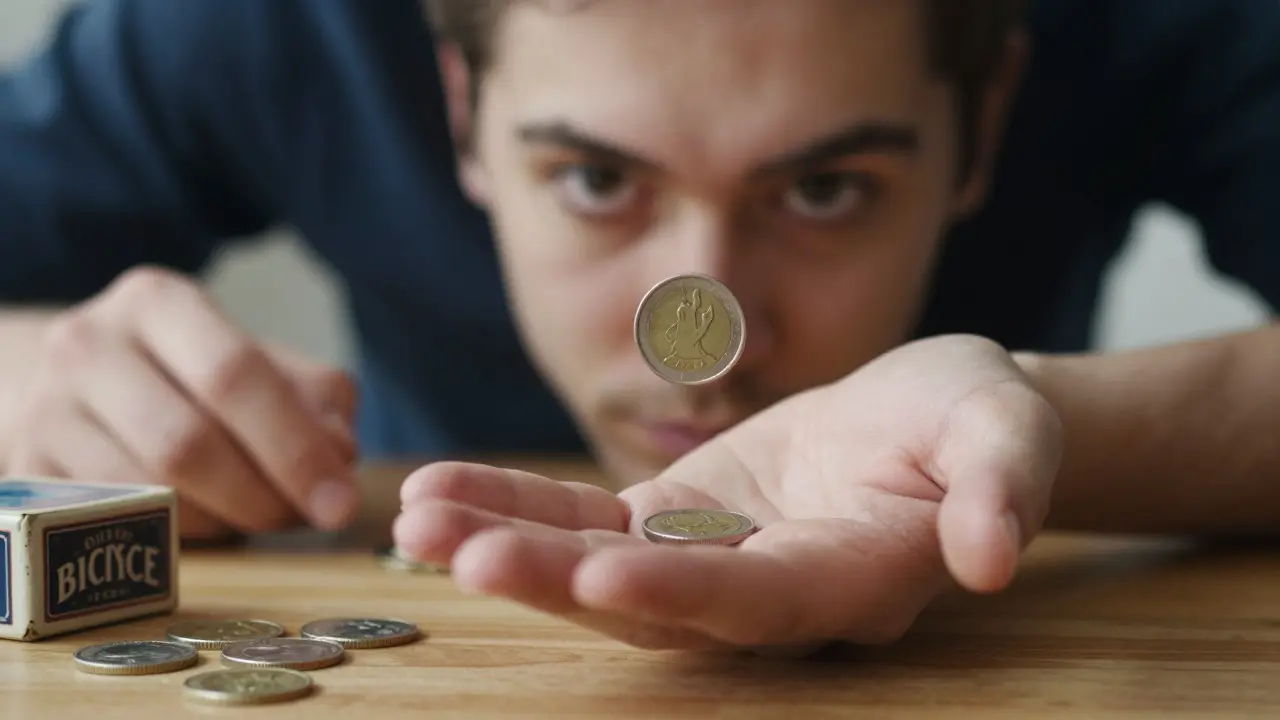
Most people think magic tricks are just for stage shows or birthday parties. But if you’ve ever watched a sleight of hand with a deck of cards and felt that spark of wonder-not just in the audience, but in yourself-you know magic is more than entertainment. It’s a skill. A craft. And for many, it becomes a lifelong hobby that sharpens focus, builds confidence, and connects you to a quiet community of people who value patience over applause.
Why Magic Tricks Are More Than Just Sleight of Hand
Magic isn’t about fooling people. It’s about creating moments of surprise that make someone pause, breathe, and forget their worries-even for a few seconds. The best magicians don’t rely on flashy gadgets or big props. They use timing, misdirection, and psychology. A simple card trick can feel like a conversation, not a performance.
Think about it: when you learn to make a coin vanish between your fingers, you’re not just practicing a motion. You’re training your brain to anticipate how people look, where they focus, and how they react. That’s not just magic. That’s applied psychology.
Studies from the University of London show that people who practice close-up magic regularly report higher levels of attention control and reduced anxiety in social situations. Why? Because magic forces you to be present. You can’t rush a flourish. You can’t fake a pause. And when you mess up, you learn to laugh-and try again.
Where to Start: Three Beginner-Friendly Tricks
You don’t need a $200 kit to begin. In fact, starting with basic props keeps the focus where it belongs: on your hands and your mind.
- The Classic Force: This is how you get someone to pick a specific card without them realizing it’s forced. Practice with a standard deck. Hold the cards in a fan, and use your thumb to subtly guide their choice. It takes 20-30 repetitions before it feels natural. Once you nail it, you’ve unlocked half of all card tricks.
- The French Drop: A coin vanishes from your palm. Sounds impossible? It’s all about finger positioning and eye contact. Place the coin in your palm, close your hand, then open it while secretly letting the coin fall into your other hand. The key? Don’t look at your hand. Look at the person’s face. They’ll follow your gaze, not your fingers.
- The Rising Cards: Place three cards face down on a table. With a flick of your wrist, one rises slightly off the table. It looks like magic. The secret? A tiny bit of wax on the bottom card and a quick lift with your middle finger. No gimmicks. Just technique.
These three tricks take less than an hour to learn from YouTube tutorials-but weeks to master. That’s the point. Magic rewards repetition, not speed.
The Tools You Actually Need
There’s a myth that magic requires expensive gear. It doesn’t. Most pros started with a $5 deck of Bicycle cards and a few coins from their pocket.
Here’s what you really need:
- A standard deck of playing cards (Bicycle or Bee brand-they’re durable and handle well)
- Three or four coins (quarters work best for visibility)
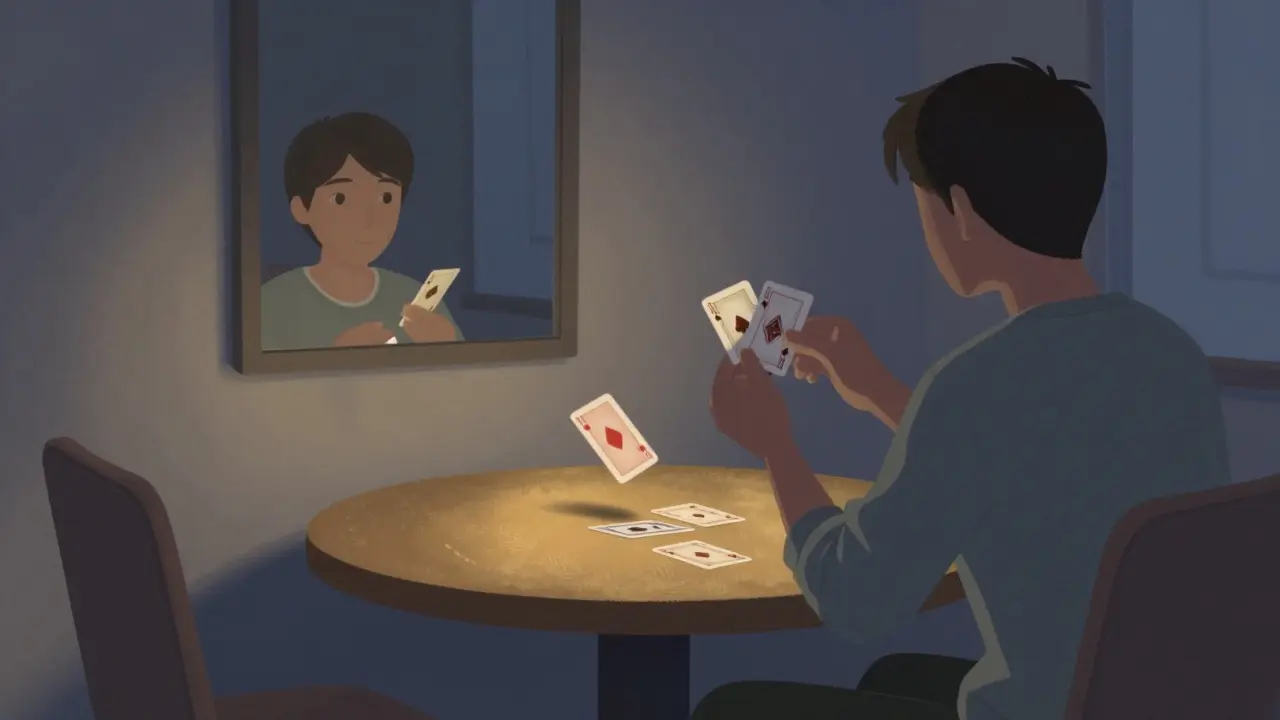
- A mirror (to check your hand positioning)
- A phone or camera (to record yourself and spot mistakes)
Forget gimmicked decks, secret compartments, or electronic devices. Those distract from the real skill: control. The moment you rely on a trick deck, you stop learning how to move your hands with precision.
Practice Like a Pro (Without the Pressure)
Most people quit magic because they think they need to perform in front of others right away. That’s backwards.
Start alone. In your living room. With the door closed. Practice each move for 10 minutes a day. Not 30. Not an hour. Ten. Consistency beats intensity every time.
Track your progress. After a week, you’ll notice your fingers move smoother. After a month, you’ll catch yourself misdirecting people in normal conversations-like when you’re telling a story and pause just a second too long. That’s magic bleeding into your life.
When you’re ready to try it on someone, pick a low-pressure setting. A cousin who’s curious. A coworker during lunch. Not your entire family at Thanksgiving. One person. One trick. No pressure to impress. Just share the moment.
Why This Hobby Sticks
Unlike fitness goals or language learning, magic doesn’t require you to change your body or memorize grammar rules. It’s a skill you build in quiet, private moments. You don’t need a gym membership or a tutor. Just a deck of cards and a willingness to be bad at first.
And here’s the secret most people miss: magic makes you better at being human.
You learn to read micro-expressions. You become more aware of how people process surprise. You get comfortable with silence. You stop rushing to fill space. These aren’t magic skills-they’re life skills.
And when you finally pull off a trick perfectly? The look on someone’s face isn’t just wonder. It’s connection. They didn’t just see a trick. They felt something unexpected. And you gave that to them.

Common Mistakes (And How to Avoid Them)
Here’s what trips up most beginners:
- Trying to learn too many tricks at once → Focus on one until it feels automatic. Then add another.
- Looking at your hands → Your eyes should always be on the person. Your hands do the work. Your eyes sell it.
- Performing too fast → Magic thrives on rhythm. Slow down. Let the silence breathe.
- Over-explaining → Don’t say, “Watch closely.” That makes people suspicious. Just do it.
One of the best pieces of advice I’ve heard: “If you’re not embarrassed by your first few attempts, you’re not trying hard enough.”
Where Magic Takes You
Some people stick with magic as a quiet pastime. Others end up performing at local cafes, nursing homes, or school events. A friend of mine from Bellingham started with a coin trick in his garage. Now he visits children’s hospitals every month. He doesn’t do fireballs or sawing people in half. He makes pencils disappear and reappear in kids’ pockets. Their laughter? That’s the real magic.
There’s no finish line. No championship. No trophy. Just the next trick waiting to be learned. The next moment waiting to be shared.
If you’ve ever been curious-go get a deck of cards. Try one trick. Practice for a week. See what happens.
Do I need to buy a magic kit to start?
No. Most beginners do better starting with a regular deck of cards and a few coins. Magic kits often include gimmicked props that make it harder to learn real technique. Stick with basic items until you’ve mastered the fundamentals.
How long does it take to get good at magic tricks?
You can learn to perform one solid trick in a week with daily 10-minute practice. To feel confident performing in front of others, most people need 2-3 months. Mastery? That takes years. But you don’t need to be a master to give someone a moment of wonder.
Is magic a good hobby for shy people?
Yes. Magic is one of the few hobbies that lets you connect with people without needing to talk much. You perform, they react. You don’t need to be outgoing-you just need to be present. Many introverts find magic gives them a quiet way to express themselves.
Can kids learn magic tricks too?
Absolutely. Kids often pick up sleight of hand faster than adults because they’re less self-conscious. Simple tricks like the classic palm or the vanishing coin are perfect for ages 8 and up. Magic helps build confidence and fine motor skills.
What’s the best way to practice without a mirror or camera?
Use your reflection in a window or a dark TV screen. If you’re alone, just close your eyes and feel the motion. Muscle memory builds through repetition, not just sight. Focus on how your fingers move, not how they look.
Next Steps: What to Do After You Learn Your First Trick
Once you’ve got one trick down, don’t rush to the next. Refine it. Practice it until you can do it without thinking. Then try it on someone you trust. Watch their reaction. Notice how they lean in. How their eyes widen. That’s your feedback loop.
After that, explore resources like the Magic Cafe forums or local magic clubs. In Bellingham, there’s a monthly gathering at the Bookstore Café where magicians of all levels meet to share tricks and stories. You don’t have to perform. Just show up. Listen. Learn.
There’s no rush. No competition. Just the quiet joy of making someone say, ‘How did you do that?’
Frank Piccolo
December 16, 2025 AT 14:36Look, I get it-you wanna feel special because you can make a card disappear. But let’s be real, this isn’t a skill, it’s a parlor trick for people who can’t handle real hobbies like woodworking or fixing cars. You’re not ‘training your brain,’ you’re just wasting time pretending to be a wizard while your rent’s late.
James Boggs
December 16, 2025 AT 20:21Thank you for this thoughtful and meticulously structured exploration of magic as a discipline. The emphasis on mindfulness, consistency, and the psychological underpinnings of performance is both refreshing and deeply valuable. I shall begin practicing the French Drop tomorrow at 7 a.m., precisely.
Addison Smart
December 18, 2025 AT 11:02I’ve spent years traveling across Southeast Asia and Latin America, and let me tell you-magic isn’t just a hobby here, it’s a cultural thread. In Oaxaca, street magicians use coin tricks to teach kids about patience and presence. In Bali, they weave illusions into temple rituals. What you’re describing? It’s not American magic. It’s human magic. The fact that you’re not using gimmicks? That’s the real breakthrough. This isn’t about impressing people-it’s about honoring the silence between their breaths. And honestly? That’s the most revolutionary thing you can do in a world that’s screaming 24/7.
David Smith
December 19, 2025 AT 14:03Oh wow, another one of these ‘magic is therapy’ feel-good essays. You know what’s really therapeutic? Paying your taxes on time or not yelling at your dog for eating your socks. This whole thing reads like a LinkedIn post written by someone who just got a ‘Mindfulness Coach’ certification from a YouTube course. And don’t even get me started on ‘the rising cards’-that’s literally just wax. You call that ‘no gimmicks’? Please. You’re not a magician. You’re a guy with sticky fingers and a blog.
Lissa Veldhuis
December 21, 2025 AT 03:43I’ve seen this exact post before and I’m so tired of it like literally why does everyone think they’re a mystic when they learn to palm a quarter you think you’re Harry Houdini but you’re just a guy who watched a 12-minute YouTube video and now thinks he’s deep like bro you don’t get to call yourself a philosopher because you made a card rise 2 inches and you think people are impressed when really they’re just being polite because you’re their cousin and they don’t want to hurt your feelings
Michael Jones
December 22, 2025 AT 02:11Magic isn’t about tricks it’s about the pause between heartbeats the way a room holds its breath when you open your hand and nothing’s there it’s the moment you realize you’ve been watching your fingers when you should’ve been watching their eyes it’s not about learning moves it’s about learning to listen with your hands and when you do that you stop trying to control the world and start letting wonder happen
allison berroteran
December 23, 2025 AT 09:56I’ve been practicing the classic force for three weeks now and I can’t tell you how much it’s changed the way I interact with people. I used to rush through conversations, always trying to fill silence. Now I notice when someone glances at their phone, or leans back-I adjust. It’s subtle, but it’s real. I tried it on my barista yesterday. She picked the card I wanted without realizing it. She smiled and said, ‘You’re weirdly good at this.’ I didn’t say anything. I just nodded. And for the first time in years, I felt seen. Not because I did something impressive-but because I was quiet enough for someone else to feel something.
Gabby Love
December 24, 2025 AT 04:17Minor grammar note: ‘You can’t fake a pause’ should be ‘You can’t fake a pause.’ You’re missing a period. Otherwise, this is beautifully written. The part about the mirror and recording yourself? Spot on. I used to think I was doing the French Drop right-until I filmed myself. Turned out I was looking at my hand the whole time. Facepalm. Thanks for the reminder.
Jen Kay
December 24, 2025 AT 20:04Oh, so now magic is the new yoga? How quaint. I suppose next you’ll tell us that juggling is ‘emotional regulation’ and that card counting is ‘mindful decision-making.’ I’m not saying it’s bad-but let’s not pretend this is some profound spiritual awakening. It’s a hobby. A fun one. But don’t turn it into a TED Talk about human connection when really, you just like making people go ‘whoa.’
Michael Thomas
December 26, 2025 AT 16:44USA invented the deck. We invented the card. We invented the hustle. You think you’re doing magic? You’re just doing what Americans do best-turning simple things into overhyped self-help nonsense. Go fix a carburetor. That’s real skill.
Abert Canada
December 27, 2025 AT 02:20Man, I learned the French Drop in a back alley in Montreal with a guy who sold me a deck for five bucks and a bottle of rye. He didn’t say a word. Just showed me. Then he walked off. I practiced for three months before I tried it on anyone. My little sister saw it and screamed like I’d conjured a ghost. That’s the moment I knew. Not because I fooled her-but because she forgot to be scared. Magic’s not about tricks. It’s about giving someone back a second they didn’t know they lost.