
Mathematics in Magic: How Numbers Create Mind-Blowing Illusions
When you see someone guess your favorite number or make a card appear out of thin air using only a calculator, you’re not watching magic—you’re watching mathematics in magic, the hidden use of arithmetic, patterns, and logic to create illusions that feel impossible. Also known as mathematical magic, it doesn’t need sleight of hand—just a solid grasp of how numbers behave and how people think. This isn’t algebra class. It’s the secret language behind tricks that make your friends rub their eyes and ask, ‘How did you do that?’
Behind every math magic trick is a carefully designed number trick, a sequence of steps that forces a specific outcome using predictable rules. Think of it like a recipe: add this, subtract that, multiply by your age—except the final result is always the same, no matter what number you start with. Why? Because the math is rigged. The audience thinks they’re choosing freely, but the structure of the calculation locks them into one answer. That’s the power of psychological magic, the art of guiding perception without using physical deception. You don’t need to palm a card. You just need to know that people will always pick 37 when asked for a random number between 1 and 50. And you know how to turn that into a miracle.
These tricks work because human brains hate randomness. We look for patterns—even when there aren’t any. A magician uses that weakness. A simple trick like ‘Think of a number, double it, add 10, divide by 2, subtract your original number’ always gives you 5. It feels like magic because the steps hide the simplicity. No props. No gimmicks. Just math. And that’s why these tricks are perfect for beginners. You can learn them in minutes, perform them anywhere, and still blow people away. The best part? Once you understand the pattern, you can tweak it, build your own, and make it feel personal. That’s how real magicians think—not by memorizing tricks, but by understanding the systems behind them.
Mathematics in magic also ties into how illusions are built. The same principles used in card forces and mentalism—like controlling choices through probability or using memory systems to predict outcomes—are rooted in math. Even the way a deck is ordered or how often a certain card appears in a sequence follows statistical rules. The illusion design, the process of crafting tricks that exploit cognitive blind spots isn’t magic. It’s engineering. And the blueprint? Math.
Below, you’ll find real tricks, real explanations, and real stories from people who turned simple number games into unforgettable moments. No magic wands. No secret compartments. Just numbers, logic, and a little bit of human psychology. Ready to make your next party unforgettable? The math is already working for you—you just need to learn how to use it.
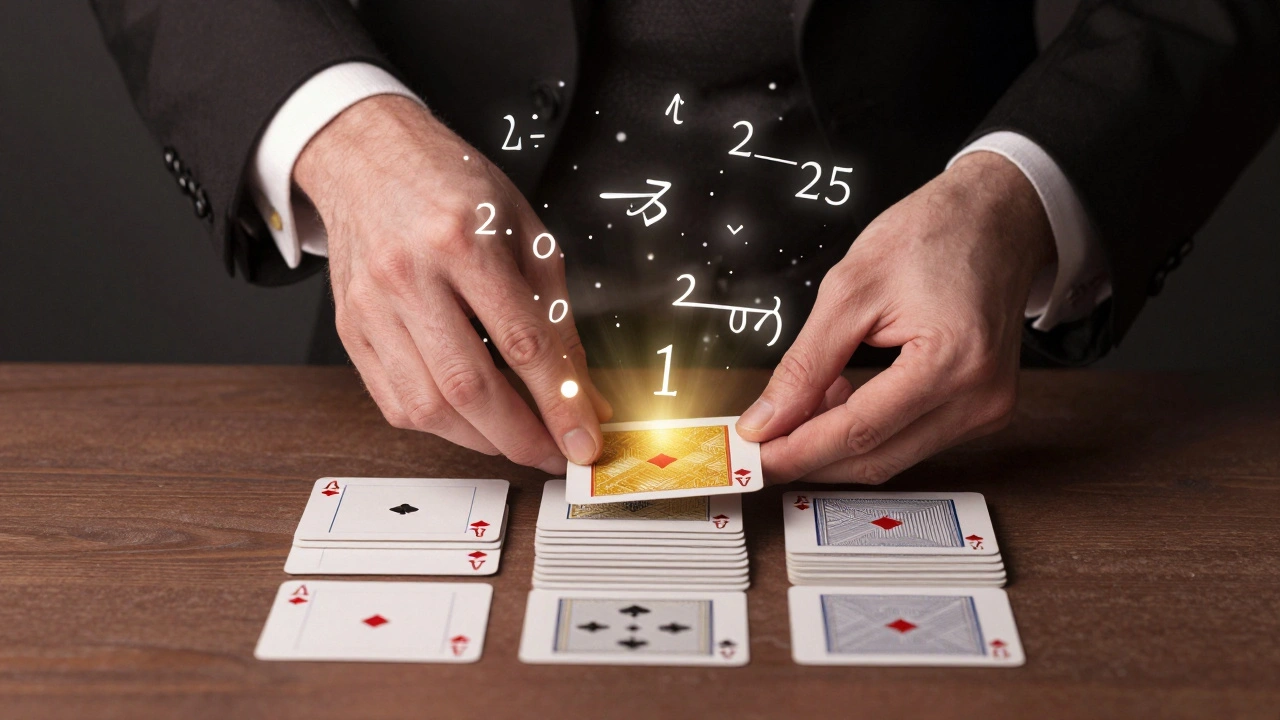
The Mathematics Behind Your Favorite Magic Tricks
- by Conni Mendiburu
- on 4 Dec 2025
Discover how math powers your favorite magic tricks-from card forces and number predictions to geometric illusions. No magic, just numbers.