
Not all magic is the same. If you’ve ever opened a magic trick kit and wondered why some tricks make people gasp while others just feel silly, it’s because there are real differences in how magic works. These aren’t just random tricks-they fall into eight clear types, each with its own rules, tools, and way of fooling the brain. Knowing these types helps you pick the right tricks, understand how they work, and even build your own routine that feels powerful, not random.
1. Sleight of Hand
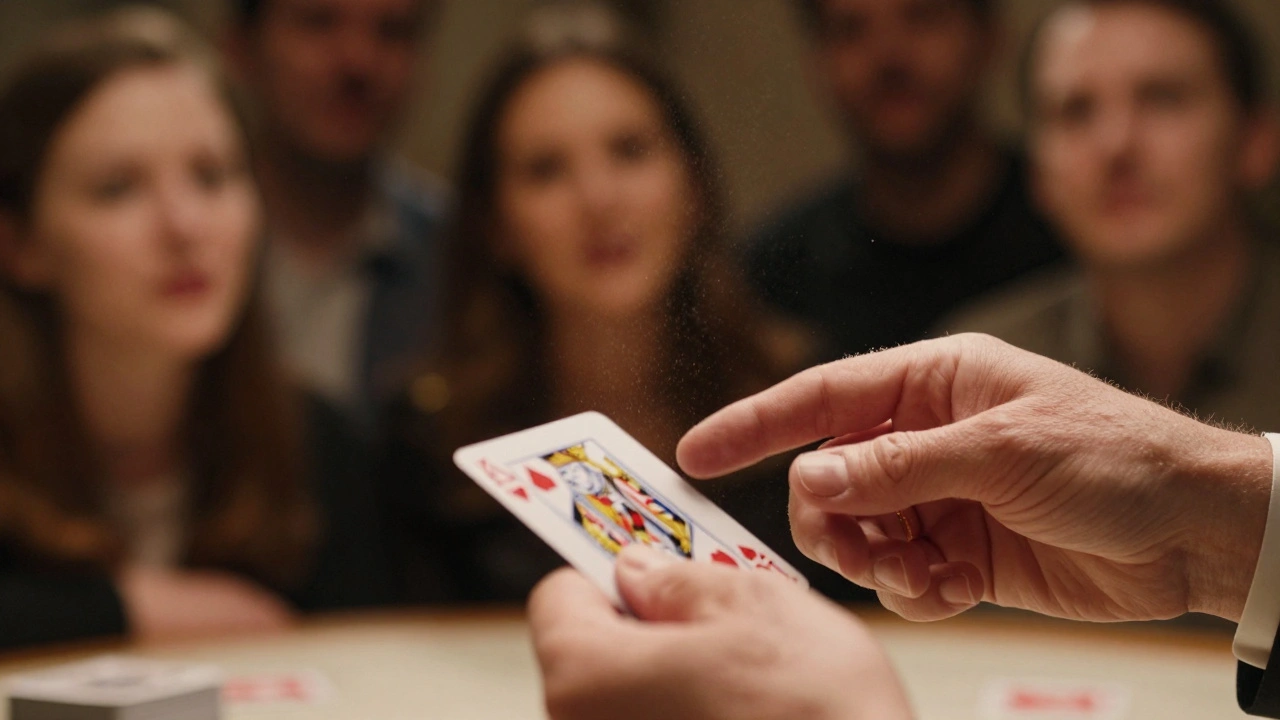
This is the classic kind of magic you see in close-up performances. No tables, no mirrors, no assistants-just the magician’s hands moving faster than your eyes can follow. Think card tricks where a card vanishes from the middle of the deck, or coins that disappear into thin air. The secret? Misdirection and muscle memory. A good sleight of hand artist doesn’t rely on gadgets; they rely on timing and psychology. The sleight of hand is so smooth that your brain fills in the gaps with what it expects to see, not what’s actually happening. This type of magic is the foundation of most magic trick kits. If you’re just starting out, learn the pass, the palm, and the force-they’re the building blocks.
2. Mechanical Magic
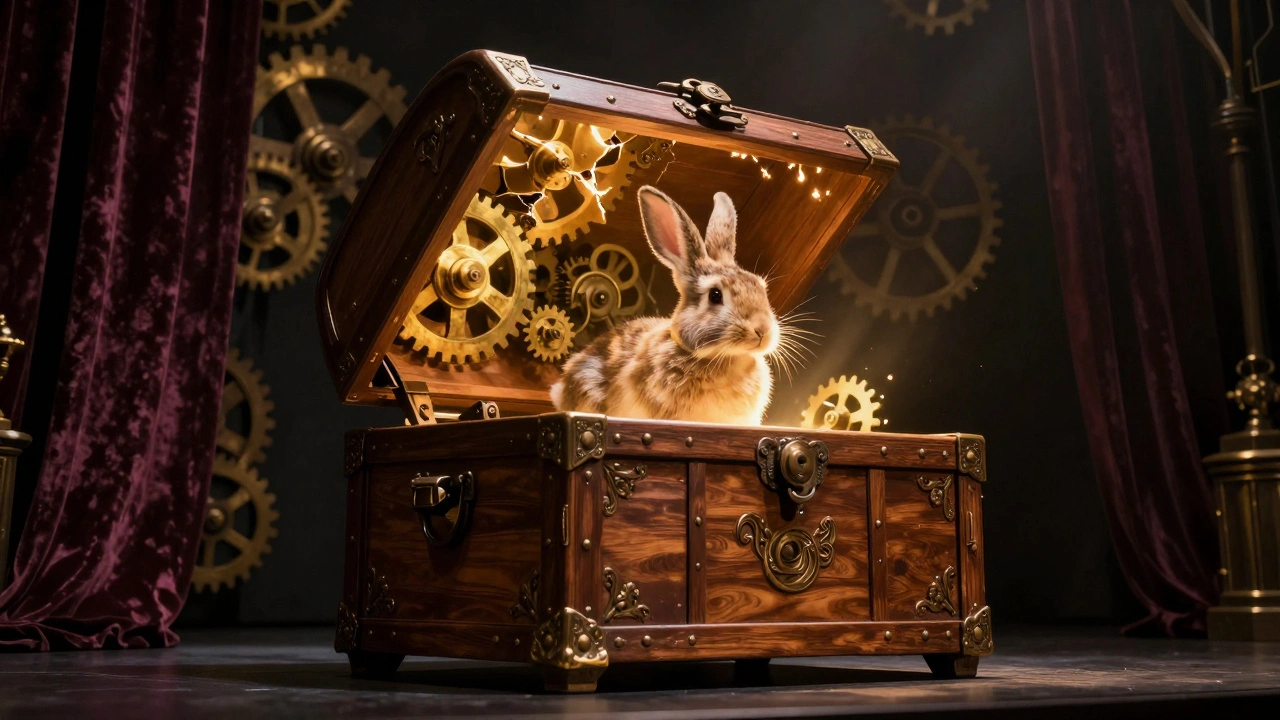
These are tricks built into props. Think of a box that opens to reveal a rabbit, or a pen that turns into a snake. The magic isn’t in your hands-it’s in the engineering. Mechanical magic uses hidden compartments, magnets, springs, and cleverly designed joints. Many beginner magic kits include these because they’re reliable. You don’t need years of practice to make a coin appear from a sealed envelope if the envelope was built to do it. The downside? Once someone figures out the mechanism, the trick is ruined. That’s why pros use these sparingly and always pair them with misdirection.
3. Optical Illusions
This type of magic tricks your eyes, not your brain. It’s all about perspective, lighting, and angles. A classic example is the “disappearing coin” illusion where the coin looks like it vanished, but it was just reflected onto a hidden mirror. Or the famous “levitating woman” trick-you see a woman floating in midair, but the secret is a hidden platform and clever positioning. Optical illusions rely on physics and geometry. You don’t need to be a magician to pull this off-you just need to control what the audience sees. Many stage illusions, like those in David Copperfield’s shows, use this type. It’s less about dexterity and more about setup.
4. Psychological Magic
This is the quiet kind of magic. No flashy moves, no props. Just words, timing, and the way your mind works. Think of tricks where you guess someone’s chosen card-even though they never told you. Or when you make someone believe they chose a number freely, but you already knew it. This is called force or suggestion. It’s based on cognitive biases: people think they’re making choices, but their choices are shaped by subtle cues. A magician might say, “Pick any card,” then pause just long enough for the person to pick the one they’re holding. Psychological magic is powerful because the audience thinks they’re part of the trick. It’s the reason mentalism is so popular. You don’t need a magic kit for this-just confidence and timing.
5. Escape Magic
This is the high-stakes kind. Think Houdini locked in a crate underwater or tied up in ropes. Escape magic isn’t about making things disappear-it’s about getting out of something impossible. It combines physical skill, knowledge of locks and restraints, and nerves of steel. Most escape tricks use hidden tools: spring-loaded locks, flexible knots, or specially designed chains. The audience doesn’t just watch-they feel the tension. That’s why escape acts are so dramatic. You won’t find this in a typical magic trick kit, but if you’re serious about performance, learning basic lock-picking or rope handling adds serious credibility to your act.
6. Production Magic
This is where things appear out of nowhere. A dove flies from an empty hat. A bouquet of flowers grows from a bare hand. A person walks onto a stage from nowhere. Production magic tricks your brain into thinking something didn’t exist before-but it did. The secret? Hidden compartments, assistants, trapdoors, or even quick changes. The key is the timing of the reveal. If you show the empty hat, then produce the dove, your brain assumes the dove wasn’t there. But it was. Always. Production magic works best with large props and controlled environments. It’s common in stage shows and TV specials. If you’re using a magic kit, look for production tricks that use false bottoms or secret pockets-they’re beginner-friendly and still impressive.
7. Transformation Magic
This is magic that changes one thing into another. A silk scarf turns into a rabbit. A card changes color. A person swaps places with their double. Transformation magic relies on substitution. The original object is hidden or removed, and the new one is revealed. The trick isn’t in the change-it’s in the cover-up. A magician might use a duplicate object stored in a sleeve, or a switch performed under a cloth. The most famous example? The “color-changing card.” It looks like the card changes on its own, but it’s two cards taped together with a thin, invisible hinge. Transformation magic is satisfying because it feels like reality is bending. It’s common in children’s magic and is often included in starter kits because it’s visual and easy to perform.
8. Mathematical Magic
This one surprises people because it doesn’t look like magic at all. It’s all about numbers, patterns, and logic. You ask someone to pick a number, do a few calculations, and end up with the same result every time. The trick? The math is designed to always lead to the same answer. For example: pick any number, add 5, multiply by 2, subtract 4, divide by 2, then subtract your original number. You’ll always get 3. The person thinks they’re in control, but the math is rigged. Mathematical magic is subtle, elegant, and hard to detect. It’s perfect for close-up settings and doesn’t need props. Many mentalism routines use this type. It’s also great for teaching kids how math can be fun.

Why Knowing the Types Matters
If you buy a magic trick kit without understanding these types, you’ll just collect a bunch of random tricks. But if you know the categories, you can build a routine that flows. Start with a psychological trick to draw people in. Follow with a sleight of hand card trick to show skill. Then drop a production trick for the big wow. End with a mathematical one to leave them thinking. Each type plays a different role. Mixing them creates depth. You’re not just doing tricks-you’re telling a story.
What to Look for in a Magic Kit
Not all kits are created equal. A good beginner kit includes at least three of these types: sleight of hand, mechanical, and production. Avoid kits that only have optical illusions or gimmicks with no real skill involved. Look for kits that explain the method behind the trick-not just how to do it, but why it works. That’s how you learn, not just perform. Brands like Penguin Magic and Ellis Stanyon offer kits that teach the principles behind each type, not just the moves. If you’re serious, spend a little more. A $40 kit that teaches you five real types will last you years. A $10 kit with ten gimmicks will just sit on a shelf.
Common Mistakes New Magicians Make
Most beginners focus too much on the trick and not enough on the performance. They practice the move, but forget the pause. They show the card, but don’t control the gaze. They use a gimmick, but don’t explain why it matters. Magic isn’t about secrets-it’s about experience. The secret is only half the job. The other half is making the audience feel like they’re part of something mysterious. Don’t rush. Don’t over-explain. Let the magic breathe.
Are these 8 types of magic the only ones that exist?
These eight cover nearly all magic you’ll encounter in modern performance. Some magicians combine them into hybrid tricks-like a psychological escape or a mechanical transformation-but they still fall under one of these categories. There’s no official list, but these are the widely accepted types used by professionals and taught in top magic schools. If a trick doesn’t fit here, it’s likely a variation of one of them.
Which type of magic is easiest for beginners to learn?
Production magic and mechanical magic are the easiest to start with. They rely on props, not years of hand training. A trick where a coin appears from a sealed envelope or a card jumps to the top of the deck doesn’t need perfect finger control. You just need to follow the instructions. Once you’re comfortable with those, move to sleight of hand and psychological magic-they require more practice but feel more powerful.
Can I do magic without buying a kit?
Absolutely. Many of the best magicians started with everyday objects. A deck of cards, a coin, a rubber band, and a napkin are all you need to learn sleight of hand and psychological magic. Free tutorials online teach you how to force a card, palm a coin, or use misdirection with a glass of water. Kits help, but they’re not required. What matters is practice and understanding the principles behind the trick.
Why do some magic tricks work better on kids than adults?
Kids believe more easily. They don’t overthink how it’s done. A transformation trick-like a scarf turning into a rabbit-blows them away because they haven’t learned to look for secrets yet. Adults are trained to spot tricks, so they focus on the method instead of the wonder. That’s why psychological and mathematical magic work better with adults-they’re harder to figure out. For kids, go big and visual. For adults, go subtle and smart.
Is one type of magic more impressive than the others?
Impression isn’t about the type-it’s about the delivery. A poorly done escape trick feels boring. A perfectly timed psychological trick can leave someone speechless. The most memorable magic doesn’t rely on spectacle. It relies on emotion. A simple card trick, done with confidence and silence, can feel more magical than a dragon appearing on stage. Choose the type that fits your personality. If you’re quiet and thoughtful, lean into psychology. If you’re bold and loud, go for production or escape.
Where to Go Next
Now that you know the eight types, pick one and master it. Don’t jump around. Spend a week learning just sleight of hand with a deck of cards. Then move to psychological magic with a coin. Once you’ve got one type down, add another. Build your own set of tricks that reflect your style. Magic isn’t about collecting tricks-it’s about becoming someone who makes people wonder. And that’s something no kit can give you. Only practice can.
Nick Rios
December 4, 2025 AT 07:33This breakdown actually makes a lot of sense. I used to think magic was just about sleight of hand, but now I see how much psychology and misdirection play into it. The part about psychological magic resonated-people really do think they’re choosing freely when they’re being gently guided. It’s kind of beautiful when you think about it.
Jessica McGirt
December 4, 2025 AT 16:47Excellent breakdown. I appreciate how you clarified the distinction between mechanical and production magic-so many people conflate them. Mechanical relies on engineered props; production relies on hidden presence. Also, the note about avoiding gimmick-only kits is spot-on. A $10 kit won’t teach you magic-it’ll teach you how to use a trick.
Donald Sullivan
December 5, 2025 AT 15:17Ugh, another one of these ‘magic is science’ articles. Real magic isn’t about forcing cards or hiding coins. It’s about tapping into the unseen. These eight types? All just distractions. The real power comes from spirit channels and ancient sigils. You think Houdini used a spring lock? Nah. He was talking to the dead.
Tina van Schelt
December 6, 2025 AT 15:42Oh my gosh, this is like someone took the entire universe of magic and turned it into a glittery, well-lit museum exhibit. Sleight of hand? The velvet whisper of deception. Psychological magic? The quiet hum of a mind being gently rearranged. And mathematical magic? That’s the secret poetry of numbers, dressed in a tuxedo and bowing with a smirk. I’m not just impressed-I’m enchanted.
Ronak Khandelwal
December 6, 2025 AT 21:43Wow, this is so beautifully organized 🌟 I love how you framed magic as storytelling-not just tricks. As someone who teaches kids in rural India, I’ve seen how a simple coin vanish can light up a whole room. The key isn’t the trick-it’s the wonder. And wonder? It doesn’t need a kit. Just a heart that believes. Thank you for reminding us that magic is for everyone, not just the fancy stage performers.
Jeff Napier
December 8, 2025 AT 04:09Eight types? That’s what they want you to think. There are actually 13. The government banned the other five because they let people see through reality. Type 9 is called ‘Time-Loop Misdirection’-it makes you forget you ever saw the trick. Type 12? That’s the one where the magician doesn’t exist. You’re the magician. You just don’t know it yet.
Sibusiso Ernest Masilela
December 8, 2025 AT 05:40How quaint. You’ve reduced the ancient art of illusion to a corporate taxonomy like it’s a PowerPoint slide at a corporate retreat. Sleight of hand? Please. Real illusionists don’t ‘palms’ coins-they bend the fabric of perception with will alone. This list is for amateurs who think a rubber band and a mirror make them a magician. Pathetic.
Daniel Kennedy
December 9, 2025 AT 04:11Just wanted to add-don’t underestimate mathematical magic. I used to think it was boring until I tried it on my niece. She was 7. I had her pick a number, do the steps, and boom-she screamed. Not because it was flashy, but because she realized she couldn’t figure it out. That’s when magic becomes real. It’s not about the method-it’s about that moment when someone’s mind goes ‘wait… how?’
Taylor Hayes
December 9, 2025 AT 05:15Love this. One thing I’d add-practice the pause. Most beginners rush through the reveal. Magic needs silence. After the card appears, let the air sit for two seconds. Let them breathe. Let them feel the weight of it. That’s when the magic sticks. Not the trick. The silence after.
Sanjay Mittal
December 9, 2025 AT 16:12Great summary. I’ve been teaching magic to high school students in Delhi for five years. The most common mistake? Trying to copy YouTube videos without understanding the psychology behind them. Once they learn that misdirection is about attention, not speed, everything clicks. Also, mechanical tricks are perfect starters-no finger dexterity needed. Just follow the instructions, then ask why it works.
Mike Zhong
December 10, 2025 AT 01:50These eight types are just a surface layer. The real magic is in the unspoken rules-the ones that say you can’t reveal the method, even to your closest friend. That’s not tradition. That’s control. The magician’s guild doesn’t want you to know that every trick is a lie designed to keep you dependent on them. You think you’re learning magic? You’re being trained to accept illusion as truth.
Jamie Roman
December 11, 2025 AT 07:21I’ve spent years trying to master sleight of hand, and honestly? It’s brutal. My fingers cramp, I drop cards constantly, and I’ve lost count of how many times I’ve accidentally palmed my own phone thinking it was a coin. But then-last week-I did a simple force on my roommate. Just said ‘pick a card’ and waited. He picked the one I wanted. Didn’t move a muscle. He looked at me like I’d cast a spell. That’s when I realized: it’s not about the hand. It’s about the silence between the words. The pause. The breath. The way you look at them. That’s where the real magic lives. I still mess up. I still drop things. But now I know: it’s not about perfection. It’s about presence.