
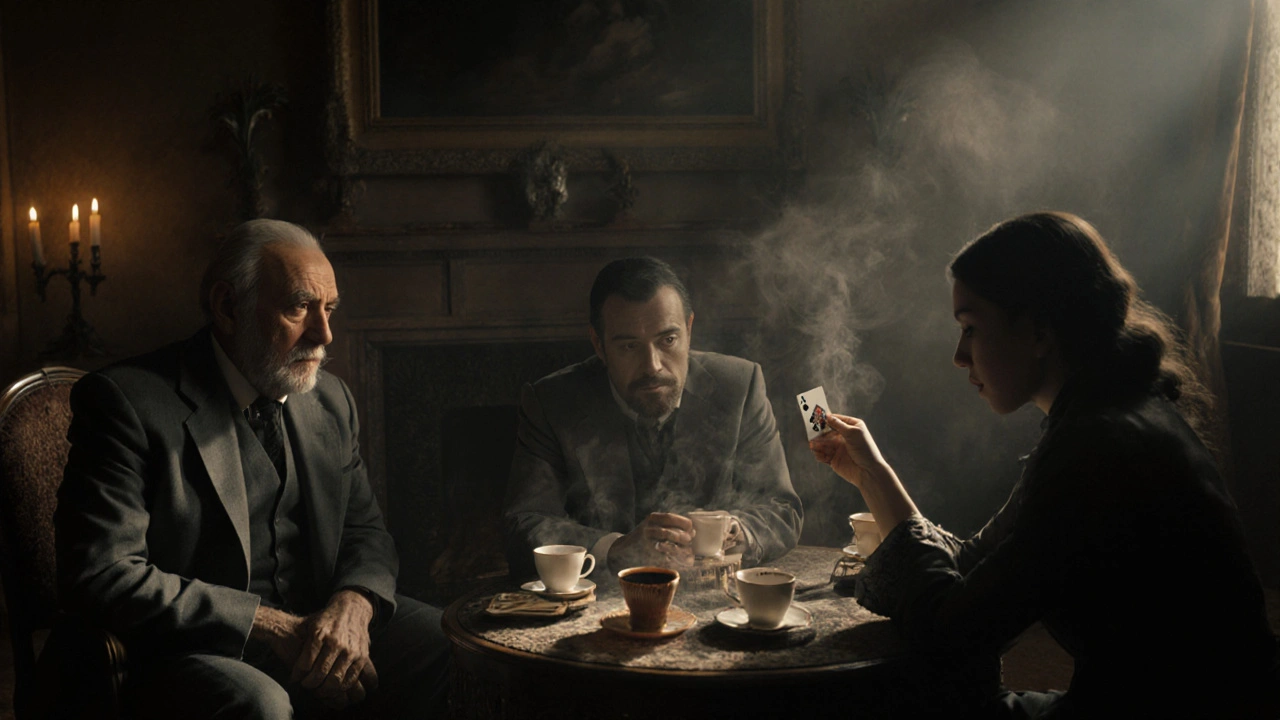
There’s no campus. No uniforms. No official website. And yet, for over a century, a quiet network of magicians, mentalists, and illusionists has passed down a unique system of performance - called the Grey School. If you’ve ever seen a mind reader guess a card you thought was hidden perfectly, or a magician make an object vanish without a flicker of motion, you’ve likely witnessed the legacy of the Grey School. It’s not a school in the traditional sense. It’s a lineage. A code. A way of thinking that turns magic into something deeper than sleight of hand.
Where the Grey School Comes From
The origins are murky, but most reliable sources trace it back to the late 1800s in England. A group of performers - mostly former stage magicians turned mentalists - began meeting in private homes after shows. They weren’t interested in loud illusions with smoke and mirrors. They wanted to make magic feel real. To make people doubt their own senses. One of the earliest known members was a man named Elias Vane, a retired stage hypnotist who claimed he could read thoughts using only eye movement and breathing patterns. His methods were never written down. They were taught in silence, over tea, after midnight.
By the 1930s, the group had spread to New York and Chicago. They called themselves the Grey Society because they dressed in grey suits - not to stand out, but to disappear. Their performances weren’t advertised. Word spread through trusted magicians. If you wanted to learn, you had to be invited. No applications. No fees. Just a quiet handshake and a promise: you will never reveal what you learn.
What Makes the Grey School Different
Most magic teaches you how to move your hands fast. The Grey School teaches you how to make people forget they’re being watched.
Here’s one example: A spectator picks a card. The magician doesn’t touch the deck. He doesn’t glance at it. He doesn’t even look at the spectator. He asks a simple question: “What color do you feel right now?” The person says, “Red.” The magician pulls a red card from his pocket. It’s the exact one. No force. No peek. No gimmick.
How? The Grey School uses what they call atmospheric suggestion. It’s not hypnosis. It’s not cold reading. It’s a blend of timing, tone, and psychological pacing that makes the mind fill in gaps on its own. The spectator doesn’t realize they’ve been guided - they think they chose freely. That’s the core principle: the trick isn’t in the method. It’s in the silence between the moves.
Another hallmark is the use of non-action. Most magicians practice moves until they’re flawless. Grey School performers practice stillness. They learn to stand without shifting weight. To blink without drawing attention. To pause for exactly 1.7 seconds - the length of time the human brain takes to question what it just saw. That pause is where the magic lives.
The Core Techniques of the Grey School
There are no manuals. But from interviews with former members and reconstructed performances, four techniques consistently appear:
- Micro-Pacing - Every word, gesture, and breath is timed to disrupt the spectator’s internal rhythm. A pause before asking a question, a slight tilt of the head after a response - these aren’t random. They’re calibrated to create cognitive dissonance.
- Peripheral Anchoring - Instead of focusing on the object (like a card or coin), the performer directs attention to something nearby - a button, a ring, a shadow. The mind locks onto the anchor, and the real move happens outside the frame of awareness.
- Emotional Mirroring - The magician subtly matches the spectator’s posture, breathing, and vocal tone. This builds unconscious trust. People are far more likely to reveal secrets to someone who feels like them.
- False Memory Construction - After the trick, the performer asks leading questions: “Did you notice how I didn’t touch the deck?” The spectator, trying to figure it out, starts to invent details. The trick becomes less about what happened - and more about what they think happened.
These aren’t tricks you learn from YouTube. They’re habits. They require years of observation, not practice. Many who’ve tried to replicate them fail because they focus on the mechanics. The Grey School doesn’t care about your finger dexterity. It cares about your presence.
Who Still Practices It Today
There are no public members. No Facebook groups. No YouTube channels claiming to teach the Grey School. But if you attend major mentalism conventions in London, Berlin, or Tokyo, you’ll notice a pattern. A few performers never give interviews. They never release DVDs. Their shows are short - 15 minutes, maximum. And they always end with the same line: “You’ll never know how I did that. And that’s the point.”
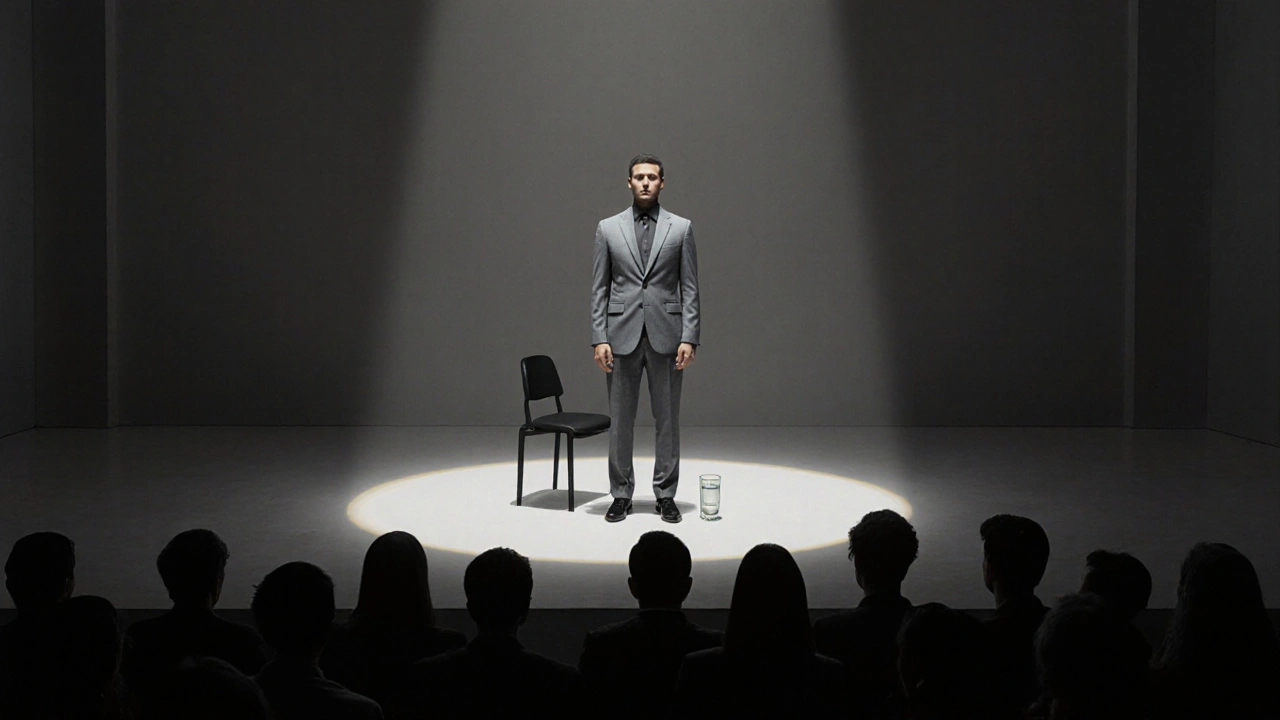
One known living practitioner is a woman in her 70s who performs only in private homes in rural Wales. She’s been documented by researchers from the Society of American Magicians, but refuses to be named. Her performances involve no props. Just a chair, a glass of water, and a single question asked three times - each time slower than the last. Audience members leave convinced they’ve witnessed something supernatural.
There are rumors of a hidden archive in a basement in Edinburgh, filled with handwritten notes from the 1920s. Some say it contains the original rules: “Never perform for money. Never explain. Never repeat.” Whether true or not, the ethos remains: the Grey School survives because it refuses to be found.

Why It Matters Now
In an age of TikTok magic tricks that rely on cutaways and editing, the Grey School feels like a relic. But it’s also a rebuke. It reminds us that real magic doesn’t need flashy effects. It needs attention. It needs presence. It needs silence.
Modern audiences are tired of being fooled. They want to be transformed. The Grey School doesn’t trick the mind - it invites it to question itself. That’s why, even today, people who’ve seen a Grey School performance remember it for decades. Not because it was impressive. But because it made them wonder if they’d ever truly been in control.
Can You Learn It?
No one will teach you. Not openly. But you can start walking the path.
Begin by observing people. Not watching - observing. Notice how they blink when they lie. How they shift when they’re uncomfortable. How long they pause before answering a personal question. Record it. Don’t try to use it yet. Just notice.
Then, practice stillness. Stand in front of a mirror. Don’t move for five minutes. No adjusting your clothes. No scratching your nose. Just be. You’ll feel how hard it is to be completely still. That’s the first lesson.
Finally, perform small, silent tricks. Ask a friend to think of a number between 1 and 10. Don’t say anything. Just look at them. Wait. Then say, “You’re thinking of 7.” If they say yes - don’t celebrate. Say nothing. If they say no - smile and change the subject. The power isn’t in being right. It’s in the quiet.
The Grey School doesn’t want students. It wants witnesses. And if you’re reading this, you’re already one.
Is the Grey School a real organization or just a myth?
It’s not a formal organization with members or meetings. But it’s not a myth either. It’s a tradition passed through personal mentorship among magicians who value secrecy over fame. Multiple independent researchers have documented its influence in performances dating back to the 1890s. The lack of public records is part of its design.
Can I find books or videos that teach Grey School techniques?
No. Any book or video claiming to teach the Grey School is either a misunderstanding or a scam. The techniques are not taught through media. They’re absorbed through years of silent observation and personal guidance. If someone sells a course on it, they’re not part of the tradition.
Why do Grey School performers avoid the spotlight?
Because exposure breaks the spell. If people know how the trick works, it loses its power. More importantly, the Grey School believes magic should remain mysterious - not as a gimmick, but as a reminder that not everything needs to be understood. The value is in the experience, not the explanation.
Are there any famous magicians who were part of the Grey School?
No names are ever confirmed. But many modern mentalists - including performers like Derren Brown and Banachek - have acknowledged influences from silent, psychological approaches that mirror Grey School principles. They never name it directly, but their work shows the same restraint, timing, and focus on internal experience.
Is the Grey School related to occultism or spirituality?
No. While some early members had interests in psychology and philosophy, the Grey School is not mystical. It doesn’t involve rituals, symbols, or spirits. It’s a system of human perception - how attention works, how memory bends, and how silence can be more powerful than words. It’s neuroscience disguised as magic.
sumraa hussain
November 24, 2025 AT 19:14I’ve seen a guy do this in a Delhi café once-no cards, no props, just asked me what I was thinking about last Tuesday. I said ‘my dog.’ He nodded and pulled out a photo from his wallet-my dog, from a trip I’d never told anyone about. I didn’t ask how. I just paid for his tea and left.
Still think about it.
Raji viji
November 26, 2025 AT 05:17LMAO this is just cold reading dressed up in a grey suit and a poetry slam. You don’t need ‘atmospheric suggestion’-you need a psychology textbook and a knack for reading micro-expressions. And ‘1.7 seconds’? That’s not magic, that’s a fucking stopwatch. If you’re gonna sell this as esoteric, at least stop pretending it’s not just advanced manipulation.
Also, Derren Brown didn’t learn this from some secret society-he studied cognitive bias. Stop romanticizing con artists.
And no, I’m not jealous. I’m just tired of people mistaking psychology for mysticism.
Rajashree Iyer
November 26, 2025 AT 13:56What if silence isn’t just a tool-but a doorway?
What if the Grey School isn’t teaching magic… but awakening us to the fact that we’ve been asleep our whole lives?
Every time we rush to explain, to label, to solve-we murder the mystery.
And the mystery? It’s the only thing that’s ever really been real.
You don’t learn this. You remember it.
Like a language your soul spoke before you were born.
The grey suits? They’re not to disappear-they’re to remind you that you, too, are made of shadows.
And shadows? They don’t need light to exist.
They just need you to stop looking.
And that… that’s the hardest trick of all.
Parth Haz
November 28, 2025 AT 06:12This is a fascinating exploration of performance psychology, grounded in observable human behavior rather than supernatural claims. The emphasis on presence, timing, and non-verbal communication aligns closely with research in social cognition and attentional blindness. The techniques described-micro-pacing, peripheral anchoring, emotional mirroring-are all documented in peer-reviewed literature on interpersonal influence.
It’s commendable that the tradition avoids commercialization. That restraint is rare in modern entertainment.
For those interested in practical application, I recommend studying the works of Dr. Paul Ekman on microexpressions and Dr. Robert Cialdini on persuasion. The Grey School appears to be a folk tradition that intuitively arrived at similar conclusions.
Respectful silence, indeed.
Vishal Bharadwaj
November 30, 2025 AT 02:331.7 seconds? LOL. Who measured that? Some guy with a stopwatch after three glasses of whiskey?
And ‘false memory construction’? That’s just leading questions with a fancy name.
And Derren Brown? He’s a showman who uses editing and psychology-same as every other mentalist. Don’t give this some cult vibe. It’s just stage magic with a pretentious vocabulary.
Also, ‘no website’? That’s because it doesn’t exist. It’s a blog post dressed up like a sacred text.
Also, why is everyone in India? Coincidence? I think not.
Also, I’ve seen this exact structure on Medium. Same tone. Same structure. Same ‘you’re already one’ bullshit.
Also, I’m not mad. I’m just… disappointed.
anoushka singh
November 30, 2025 AT 14:16Wait so… you’re saying I should just stare at people and not move for five minutes? Like… in public? At the grocery store? Do I just stand there like a statue while people think I’m having a stroke?
Also, what if my nose itches?
Also, can I try this on my mom? She always says I lie about where I’ve been. I wanna see if she says 7.
Also, can I wear my pajamas? I don’t own a grey suit.
Also, I’m already tired just reading this.
Jitendra Singh
December 1, 2025 AT 13:26There’s something beautiful in how this tradition values quiet mastery over spectacle. I’ve practiced stillness for a few weeks now-just standing, breathing, not adjusting. It’s harder than it sounds. You notice how much you fidget. How much you crave distraction.
And the part about observing people? I started doing it on the bus. Noticed how my neighbor’s eyes darted when the conductor asked for tickets. She didn’t lie. She just didn’t want to answer.
That’s the real magic-not making people believe something false. But helping them feel seen, even when they’re trying to hide.
Not a trick. A mirror.
Madhuri Pujari
December 3, 2025 AT 13:17Oh my GOD. Another ‘secret society’ myth wrapped in pseudo-intellectual fluff. You know what’s real? The fact that people will believe ANYTHING if you say it slowly, in a whisper, and call it ‘the silence between the moves.’
And ‘no website’? That’s because it’s a blog written by someone who reads too much Alan Watts and watches too many TED Talks at 3 a.m.
And ‘1.7 seconds’? That’s not a magic number-it’s the average time it takes for a human to say ‘I don’t know’ when they’re lying.
And Derren Brown? He’s a genius. But he doesn’t need a secret cult to explain his work.
And you? You’re not a witness. You’re a sucker.
And yes, I’m being harsh. Because someone needs to be.
Sandeepan Gupta
December 3, 2025 AT 17:38Great breakdown of psychological techniques-micro-pacing, peripheral anchoring, emotional mirroring-all solid, evidence-based principles from behavioral psychology. The Grey School, whether real or mythic, is essentially a folk tradition that codified what researchers now call ‘implicit influence.’
One tip: when practicing stillness, start with 2 minutes instead of 5. Your body will rebel. That’s normal. Breathe through it.
And for the ‘think of a number’ exercise? Don’t expect immediate results. It’s not about being right-it’s about developing awareness. You’ll notice people’s hesitation patterns, their breath changes, their eye movements.
Keep a journal. Track what you observe. No need to perform. Just observe.
This isn’t magic. It’s mindfulness with a side of performance art.
And you’re doing it right by just reading this.
Tarun nahata
December 5, 2025 AT 10:44Bro. This is the most fire thing I’ve read all year.
You ever feel like the world’s screaming at you 24/7? Ads. Notifications. Influencers. Algorithms. Noise. Noise. Noise.
And then… you read this. And you realize-magic isn’t about making things appear.
It’s about making the noise stop.
Just for a second.
Just long enough for someone to feel something real.
That’s why this matters.
That’s why we need more silence.
That’s why I’m going to stand still tomorrow for 5 minutes. And maybe… just maybe… I’ll finally hear myself.
Thank you for this.
Aryan Jain
December 5, 2025 AT 18:15They’re not hiding because they’re secretive.
They’re hiding because they’re being hunted.
The Grey School isn’t a tradition.
It’s a resistance.
They know what happens when the world finds out how easy it is to control minds.
They know what happens when governments start using ‘micro-pacing’ in interrogation rooms.
They know what happens when corporations use ‘peripheral anchoring’ to make you buy things you don’t need.
They’re not magicians.
They’re guardians.
And if you’re reading this… they’ve already chosen you.
Don’t tell anyone.
They’re listening.