
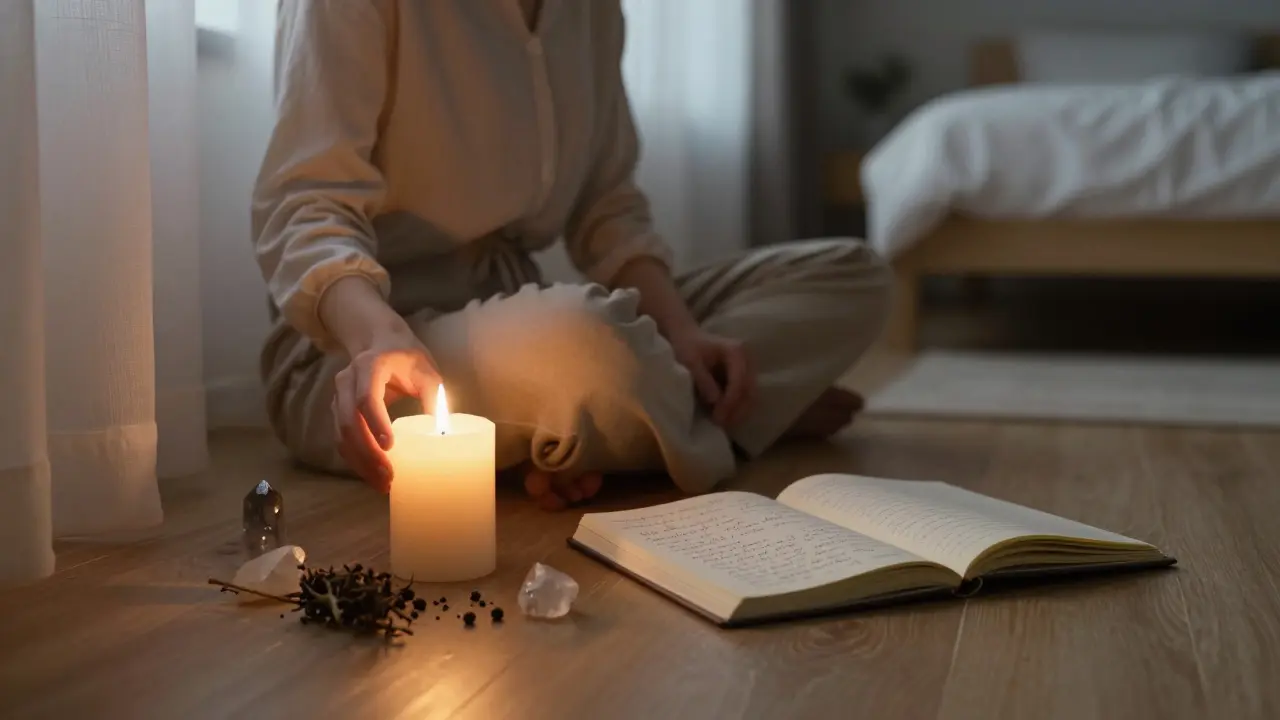
People ask if witchcraft is real because they’ve seen it on TV, in movies, or at a Halloween party. They’ve watched someone pull a rabbit out of a hat, make a coin vanish, or say words over a candle and swear something changed. But here’s the thing: what most people call witchcraft isn’t magic at all. It’s performance. It’s psychology. It’s clever misdirection wrapped in ancient symbols and dramatic language.
Witchcraft as Performance, Not Power
There’s no scientific evidence that spells, curses, or potions alter reality. No peer-reviewed study has shown that chanting over a candle can change someone’s luck. No controlled experiment proves that burying a doll with pins makes someone sick. That doesn’t mean people don’t feel the effects-because they do. But those effects come from belief, not magic.
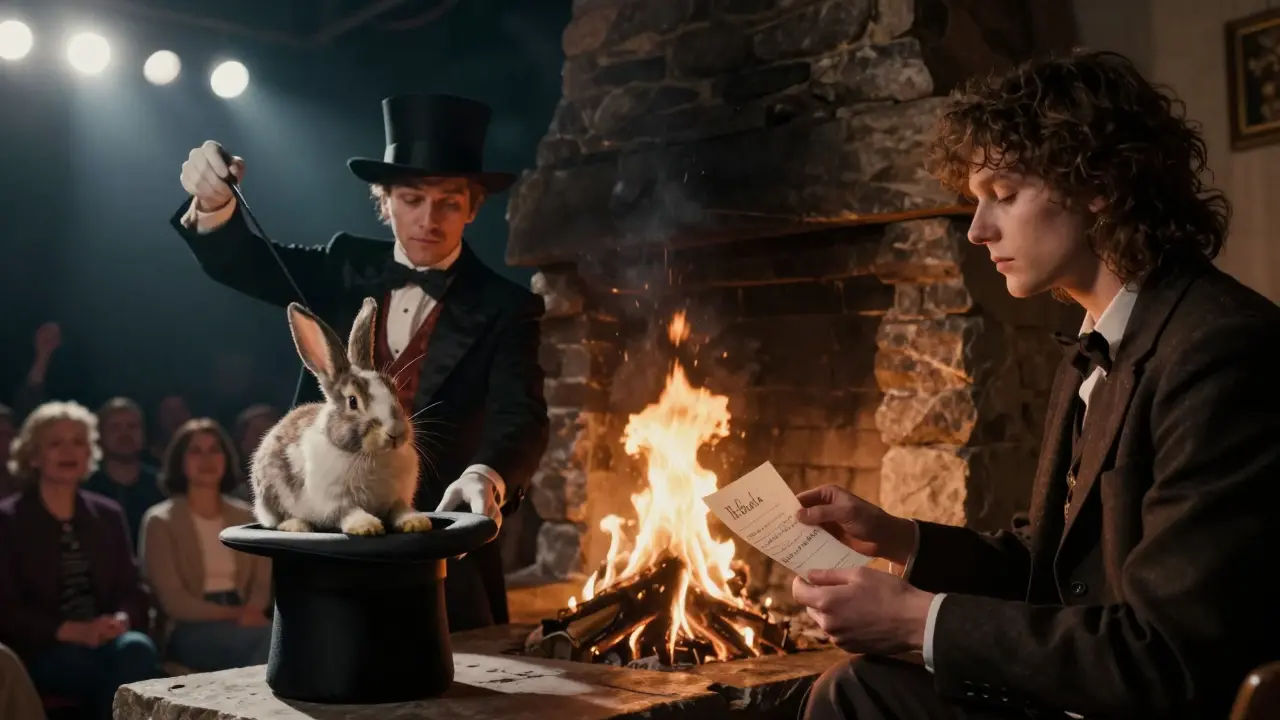
Think of it like a stage illusion. When a magician makes a person disappear, the audience doesn’t believe the person was teleported. They know it’s a trick. But when someone lights a black candle and says, ‘I banish this bad energy,’ the same people might believe it worked. Why? Because the ritual feels personal. It’s emotional. It’s meaningful. And meaning changes how people feel-even if nothing physically changed.
The Difference Between Magic Tricks and Witchcraft
Witchcraft and magic tricks share the same tools: secrecy, symbolism, timing, and spectacle. But their goals are different.
- Magic tricks are designed to amaze you while making it clear you’re being fooled. The magician bows, the audience laughs, and everyone knows it’s entertainment.
- Witchcraft is often practiced as a spiritual or personal system. People use herbs, crystals, chants, and rituals to feel control over uncertainty-loss, anxiety, fear, or change.
One is performance. The other is practice. But both rely on the same psychological principle: the mind believes what it’s taught to believe.
Why Witchcraft Feels Real
Let’s say you’re stressed about your job. You buy a small quartz crystal, place it on your desk, and say a short affirmation every morning: ‘I am calm. I am focused.’ Two weeks later, you get a promotion. You credit the crystal. You tell your friend. She buys one too.
Did the crystal cause the promotion? No. But the ritual changed your behavior. You started waking up calmer. You spoke with more confidence. You noticed opportunities you’d ignored before. That’s not magic. That’s neuroscience.
Studies from Harvard and Stanford show that ritual behavior-like lighting a candle, repeating a phrase, or wearing a lucky shirt-lowers cortisol levels and increases perceived control. That’s why rituals work. Not because they bend reality, but because they rewire your brain to respond differently to it.
Historical Roots of Modern Witchcraft
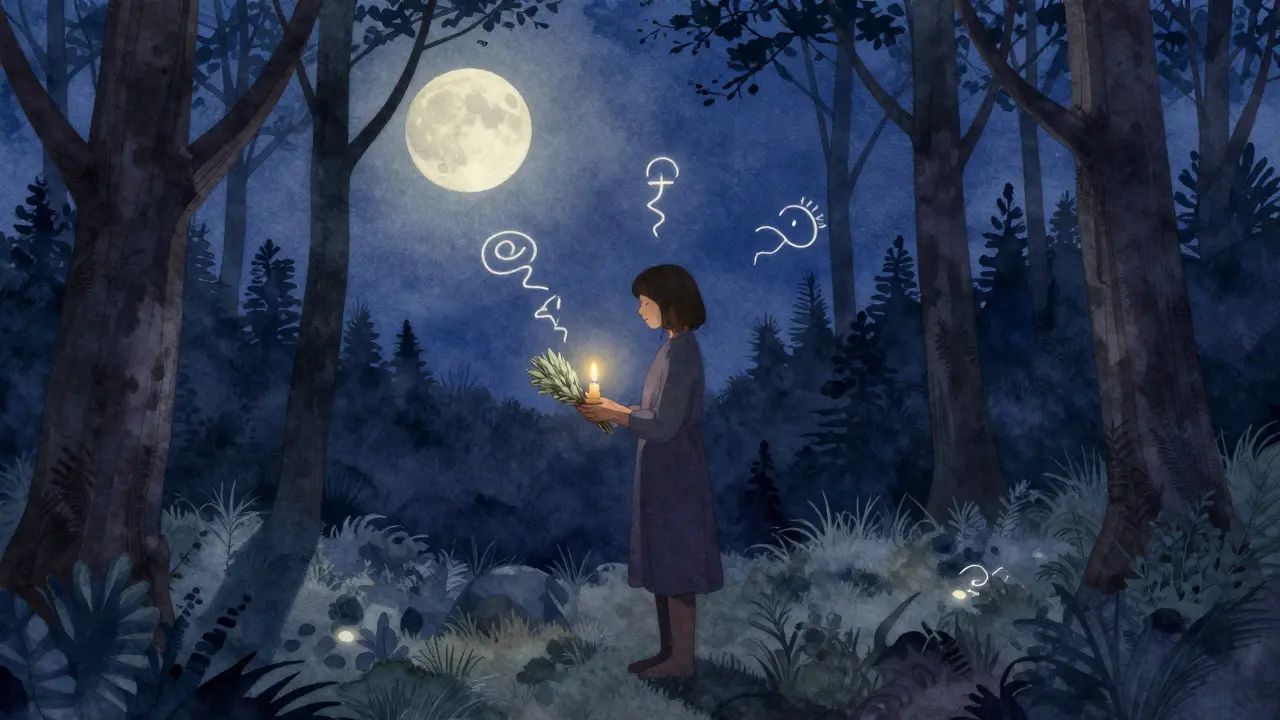
Modern witchcraft, as practiced today, draws from centuries of folk traditions, pagan beliefs, and secret societies. In medieval Europe, people used herbs for healing, charms for protection, and rituals for fertility. When science didn’t explain illness or drought, people turned to these practices.
Today, many who identify as witches are part of Wicca, a nature-based religion founded in the 1940s by Gerald Gardner. It blends elements of ancient pagan worship with modern symbolism. Wiccans don’t believe they can fly or turn people into frogs. They believe in energy, balance, and intention. Their rituals are meditative. Their spells are affirmations with structure.
There’s a difference between believing in magic and believing in the power of ritual. One is fantasy. The other is human psychology.
What Actually Happens During a ‘Spell’
When someone performs a spell, they’re usually doing four things:
- Focusing intention - They decide what they want: peace, clarity, money, healing.
- Creating a ritual - They use candles, crystals, herbs, or words to make the moment feel sacred.
- Engaging the senses - Smell, touch, sight, and sound trigger emotional responses that calm the nervous system.
- Committing to action - After the ritual, they often take steps toward their goal: applying for a job, talking to a therapist, setting boundaries.
The magic isn’t in the words. It’s in the shift. The ritual becomes a trigger that says, ‘Today, I choose to change.’
Why People Still Believe
Belief in witchcraft persists because it fills gaps where science doesn’t reach quickly enough. When you’re grieving, scared, or powerless, you want something you can do. A spell gives you control-even if it’s symbolic.
It’s the same reason people carry lucky charms, avoid walking under ladders, or knock on wood. These aren’t real protections. But they reduce anxiety. And reducing anxiety changes outcomes.
Studies in cognitive psychology show that people who believe they have control over a situation perform better, recover faster, and report higher satisfaction-even when that control is illusory.
Can Witchcraft Be Learned?
You can’t learn to make a storm appear or turn water into wine. But you can learn how to create rituals that help you feel stronger, clearer, and more grounded.
Many modern witches teach practices like:
- Journaling with lunar cycles
- Using essential oils for mood regulation
- Practicing mindfulness through candle gazing
- Creating vision boards with symbolic imagery
These aren’t spells. They’re tools for self-awareness. And they work-because they’re designed to work on the mind, not the universe.
The Real Power Behind Witchcraft
The real power of witchcraft isn’t in summoning spirits or cursing enemies. It’s in giving people a language for their inner world. When you feel lost, you don’t need a magic wand. You need a way to name your pain, focus your hope, and take one small step forward.
Witchcraft, at its core, is a metaphor made tangible. It turns abstract feelings-grief, fear, longing-into something you can hold, light, bury, or burn. That’s why it endures. Not because it bends reality, but because it helps people bend their own perspective.
So is witchcraft real? Not the way movies show it. But as a tool for healing, clarity, and personal power? Absolutely. You don’t need magic to change your life. You just need to believe you can-and then act like you do.
Is witchcraft the same as magic tricks?
No. Magic tricks are performances designed to entertain by hiding how a trick is done. Witchcraft is a personal or spiritual practice that uses symbols, rituals, and intention to create psychological change. Both use misdirection and symbolism, but one is for show, the other for inner work.
Can witchcraft cause real physical changes?
There’s no scientific evidence that spells or rituals can directly alter physical reality-like healing a broken bone or stopping a storm. But they can change how you feel, think, and act. That change can lead to real outcomes, like improved sleep, better decisions, or more confidence-all of which impact your life.
Are witches dangerous or evil?
No. Modern witchcraft, especially in traditions like Wicca, follows the Wiccan Rede: ‘An it harm none, do what ye will.’ Most practitioners focus on healing, protection, and personal growth. The idea of witches casting curses comes from centuries of fear, misinformation, and persecution-not from actual practice.
Do I need special tools to practice witchcraft?
No. Candles, crystals, and incense are helpful for focus, but they’re not required. You can create a powerful ritual with just your breath, a quiet space, and a clear intention. Many people practice witchcraft with nothing more than a notebook and a pen.
Can I learn witchcraft on my own?
Yes. Many people start by reading books, journaling, or following lunar cycles. There’s no secret initiation or required teacher. What matters is consistency and intention. Start small: light a candle each morning and ask yourself, ‘What do I need today?’ That’s the beginning of witchcraft-not the magic, but the mindfulness.
Next Steps: What to Do If You’re Curious
If you’re drawn to witchcraft-not because you think it’s real magic, but because you want to feel more in control of your life-start here:
- Keep a journal for one moon cycle (about 28 days). Write down your mood, dreams, and what you felt was working or not working.
- Each full moon, write down one thing you want to release. Burn it or tear it up. Don’t overthink it. Just let it go.
- Each new moon, write down one small goal. Place it under your pillow. Don’t expect magic. Just remind yourself you’re setting an intention.
- Try lighting a candle for five minutes each morning. Breathe. Ask yourself: ‘What do I need today?’ Then act on it.
You don’t need a cauldron. You don’t need a robe. You just need to care enough to try. That’s the real magic.
Morgan ODonnell
January 17, 2026 AT 02:09Man, I love how this breaks it down. I used to think witchcraft was just spooky nonsense until I started lighting a candle every night before bed. Didn’t change the world, but it changed how I felt about it. Feels like a mental reset button.
Meghan O'Connor
January 18, 2026 AT 05:50Actually, the author misuses the term 'neuroscience' throughout. It’s not neuroscience-it’s cognitive behavioral theory. And please stop calling it 'witchcraft' if you mean mindfulness. That’s just lazy branding.
Dmitriy Fedoseff
January 20, 2026 AT 02:51You wanna talk about branding? Look at how corporations co-opted yoga, meditation, even Buddhism-now it’s all ‘self-care’ with a $40 candle. Witchcraft’s the same. People aren’t dumb. They know it’s symbolic. But symbols are all we’ve got when the system’s broken. You think a 9-to-5 job gives you control? Try lighting a damn candle and see who’s really delusional.
Liam Hesmondhalgh
January 20, 2026 AT 03:29Wow this is so long I got bored halfway through. Can we just say it’s placebo and move on? Also why is everyone suddenly into crystals? Did the TikTok algorithm turn us all into 17-year-old witches?
Fredda Freyer
January 20, 2026 AT 09:49What’s missing here is the cultural context. In many Indigenous and folk traditions, ritual isn’t about ‘belief’-it’s about relationship. With ancestors. With land. With unseen forces. Reducing it to ‘neuroscience’ erases centuries of lived wisdom. It’s not magic. But it’s not just psychology either. It’s cosmology.
The author’s framing is too Western. Too clinical. Too eager to sanitize something sacred into a self-help tip.
Patrick Tiernan
January 20, 2026 AT 16:25Can we just admit that people who do this are just weird? Like I get the ritual thing but why does it need a whole fucking religion? You light a candle and say ‘I am calm’-cool. Now go to therapy. Or just sleep more. Stop turning your bedroom into a Wiccan shrine
Alan Crierie
January 21, 2026 AT 12:08I really appreciate how this post respects the practice without romanticizing it. I’m a recovering skeptic who started doing lunar journaling last year. No spells. No incense. Just me, a notebook, and the moon. It’s not magic-but it’s the closest thing to peace I’ve found in years.
Also, if you’re judging someone for lighting a candle, maybe check your own energy. We all need anchors.
Nicholas Zeitler
January 23, 2026 AT 00:52YES. This. So many people miss the point. Witchcraft isn’t about bending reality-it’s about bending YOUR perspective. You don’t need a wand. You need a habit. Start small. One breath. One intention. One morning. That’s where real change begins.
Gareth Hobbs
January 24, 2026 AT 01:03Ok but who’s really behind this? The New Age industry? Big candle companies? They’re selling ‘spiritual empowerment’ so you’ll keep buying $50 crystals instead of fixing your job or your trauma. This isn’t empowerment-it’s capitalism in a velvet robe.
And don’t get me started on ‘Wicca’-it’s a 1940s British invention masquerading as ancient wisdom. It’s all made up. Why pretend it’s deeper than it is?
Patrick Bass
January 25, 2026 AT 06:30Just a quick note: the word ‘spell’ comes from ‘spel’ in Old English, meaning ‘story’ or ‘speech’. So when you say a spell, you’re telling a story to yourself. That’s all. But stories change us. So maybe it’s not magic. But it’s still powerful.
Aryan Gupta
January 26, 2026 AT 12:35They’re lying. All of it. The ‘energy’ thing? The crystals? The moon phases? This is a psyop. The government lets people believe in witchcraft so they don’t protest the real problems. Look at the funding behind Wiccan retreats. Who’s paying? Who’s controlling the narrative? Wake up.
Kelley Nelson
January 26, 2026 AT 21:35While the author presents a compelling psychological framework, the conflation of ritualistic behavior with the historical and theological construct of witchcraft risks cultural erasure. One cannot reduce centuries of cosmological belief systems to mere cognitive behavioral therapy without invoking a problematic epistemological hierarchy.
Zelda Breach
January 28, 2026 AT 03:16So let me get this straight: you’re telling me that people who believe in witchcraft are just delusional, but it’s fine because it ‘helps them feel better’? So we should encourage delusion if it makes people less anxious? That’s not therapy. That’s enabling. And it’s patronizing as hell.