

Most people think magic tricks are about sleight of hand, disappearing rabbits, and cards that change color. But if you’ve ever watched a magician make a coin vanish right in front of your eyes-still not sure how it happened-you’ve experienced something deeper than entertainment. Magic tricks are a live experiment in how your brain works. They don’t just fool you. They expose the blind spots in your attention, memory, and decision-making. And that’s why the best magicians aren’t just performers-they’re neuroscientists with stage lights.
Your Brain Is Always Guessing
When you watch a magic trick, your brain isn’t passively receiving information. It’s constantly predicting what’s coming next. This is called predictive coding. Your mind fills in gaps based on past experiences. A magician doesn’t need to hide the coin perfectly. They just need to make you believe it’s somewhere else. Studies from the University of Durham show that people miss obvious changes in a scene if their attention is directed elsewhere-even when the change is large and slow. That’s misdirection, and it’s not magic. It’s psychology.
Think about the classic “cup and ball” trick. The magician taps the cup, and the ball disappears. You’re watching the cup. But the real move happens when the magician’s hand moves away from the cup. Your brain assumes the ball is still under it because that’s what happened last time. The magician exploits that assumption. You’re not being tricked by speed. You’re being tricked by expectation.
Attention Is a Limited Resource
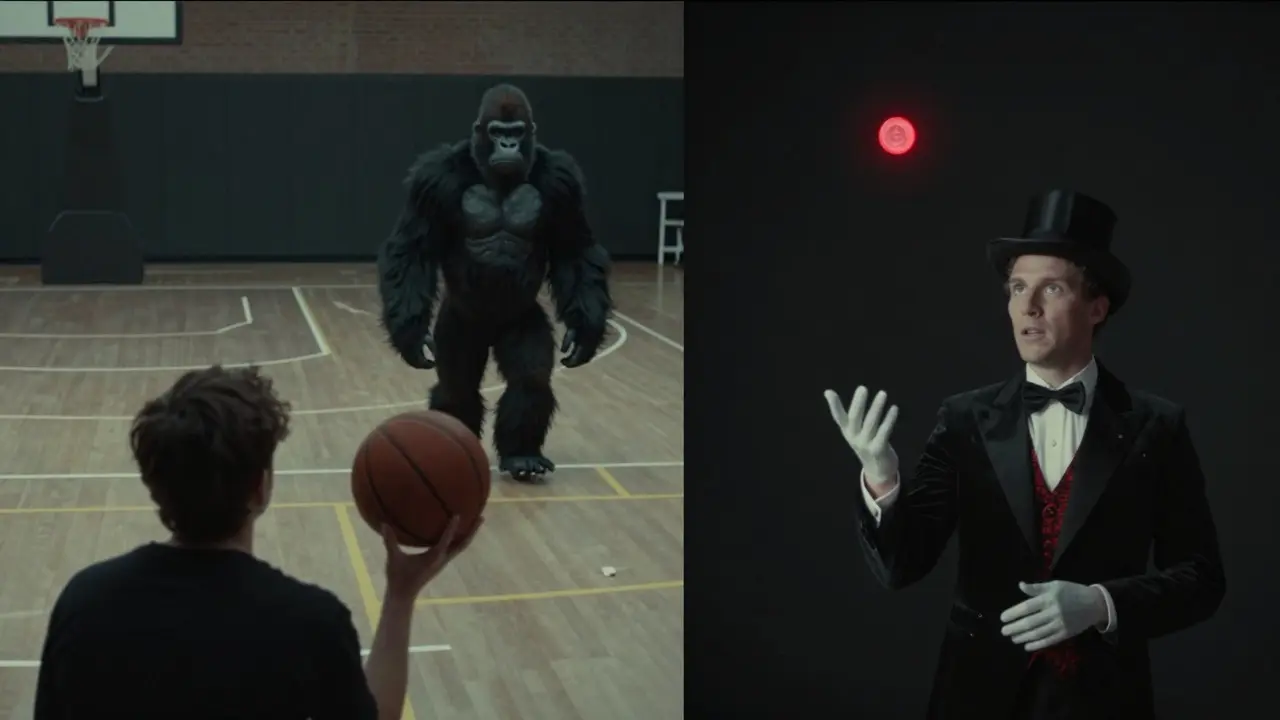
Imagine trying to count how many times a basketball is passed in a video while ignoring the person in a gorilla suit walking through the scene. Most people miss the gorilla. This is the famous “invisible gorilla” experiment from Harvard. Magicians use the same principle. They give you something to focus on-eye contact, a laugh, a sudden gesture-while the real action happens just outside your awareness.
Professional magicians don’t just wave their hands. They time their moves to coincide with natural blinks. Research from the University of California found that people miss 30% of visual changes during a blink. A skilled magician doesn’t wait for you to blink-they make you blink. A raised eyebrow, a sudden pause, a question like “Did you see that?”-all of these trigger micro-blinks and redirect attention. Your brain doesn’t notice the gap. It just assumes the world kept running.
Memory Is Not a Recording
After a trick, people often say, “I swear I saw it.” But what they remember isn’t what happened. Memory is reconstructive. After seeing a card trick where the ace of spades changes to the king of hearts, most viewers will later insist they saw the ace disappear before the king appeared-even if it didn’t. The brain stitches together a story that makes sense, not one that’s accurate.
This is why magicians avoid giving you time to think. If you pause and replay the moment in your head, you might catch the flaw. That’s why the best tricks end with a flourish. The final gesture doesn’t just sell the illusion-it overwrites your memory. You don’t remember the moment the card switched. You remember the moment the magician smiled and revealed the king. That’s the version your brain keeps.
Why This Matters Outside the Theater
Understanding how magic tricks work isn’t just for aspiring magicians. It’s a tool for spotting manipulation in everyday life. Politicians use misdirection when they shift focus from a failing policy to a catchy slogan. Advertisers use false assumptions-you think you’re choosing a product because it’s better, but you’re actually responding to a color, a celebrity, or a sound they played 3 seconds before.
Even in relationships, people use psychological misdirection. “You’re overreacting” is a classic. It doesn’t address your concern. It redirects your attention to your emotional state. That’s a magic trick. And once you recognize the pattern, you start seeing it everywhere.
The Science Behind the Show
There’s a growing field called “magicology”-the study of magic through scientific methods. Researchers at institutions like the University of Auckland and the Max Planck Institute have partnered with magicians to study attention, memory, and decision-making. They’ve used eye-tracking tech to see where people look during a trick. They’ve measured brain activity with EEG to find when people experience “cognitive surprise.”
One experiment showed that when a magician makes a card vanish, the viewer’s brain activity spikes in the prefrontal cortex-the area linked to expectation and error detection. But the spike happens too late to stop the illusion. The brain realizes something’s wrong only after the trick is over. That’s why you feel confused afterward, not during.
These findings aren’t just academic. They’re being used to improve user interfaces, design better warning systems, and even train police officers to notice subtle cues during interrogations. If you can learn to spot when your attention is being pulled, you become harder to deceive.

Learning to See Differently
You don’t need to learn how to pull a rabbit out of a hat to benefit from understanding magic. Try this: the next time someone tells you a story that feels too perfect, pause. Ask yourself: What am I not seeing? Where is my attention being directed? What assumption am I making that might be wrong?
Practice with simple tricks. Watch a YouTube video of a coin vanish. Pause it. Rewind. Watch it again. Focus on the hands, not the face. Notice how the magician’s body language changes the second before the move. You’ll start to see patterns. And once you see the pattern, the trick loses its power-not because you know the secret, but because you understand how your mind was fooled.
This isn’t about becoming a skeptic. It’s about becoming more aware. Magic tricks reveal that your senses aren’t perfect. Your memory isn’t reliable. Your attention is easily guided. And that’s okay. The goal isn’t to distrust everything. It’s to question your own perception-just enough to stay sharp.
Why This Isn’t Just About Tricks
At its core, magic is a mirror. It reflects how easily we accept what we’re told, how quickly we fill in blanks, and how little we question the story we’re given. The best magicians don’t want you to believe in magic. They want you to realize how much of your reality is constructed.
That’s why magic tricks matter beyond the stage. They teach you to slow down. To look twice. To wonder if what you’re seeing is real-or just what someone wanted you to see. In a world full of ads, headlines, and influencers shaping your choices, that skill isn’t just useful. It’s essential.
Can magic tricks really improve critical thinking?
Yes. Learning how magic tricks exploit attention and memory helps you recognize similar patterns in everyday life-like misleading ads, political spin, or even how people manipulate conversations. It trains your brain to pause, question assumptions, and look for what’s missing instead of accepting the surface story.
Do you need to be good at magic to understand how it works?
No. You don’t need to perform tricks to understand them. Watching carefully, rewinding videos, and asking “How did they do that?” is enough. The real skill is noticing where your focus goes and why. That’s something anyone can practice.
Are all magic tricks based on psychology?
Most modern stage magic is. Sleight of hand relies on physics and dexterity, but the illusion itself-why you don’t see the move-depends on how your brain processes information. Even the oldest tricks, like the cups and balls, work because they match how humans expect objects to behave. Psychology is the foundation.
Why do magic tricks feel so real even when you know they’re fake?
Because your brain doesn’t operate on logic-it operates on patterns. Even if you know the card was switched, your brain still expects the magician to reveal the card they pretended to hold. The illusion persists because your perception is built on expectation, not observation. Knowing the secret doesn’t erase the feeling-it just gives you a new lens to see it.
Can children benefit from learning magic tricks?
Absolutely. Teaching kids simple magic tricks helps them develop observation skills, patience, and the ability to read body language. It also encourages them to ask “How?” instead of accepting things at face value. Many educators use magic as a tool to teach scientific thinking and problem-solving.
Adithya M
January 27, 2026 AT 07:39Man, this is wild. I used to think magic was just about dexterity, but now I see it’s all about hacking how your brain processes reality. That bit about micro-blinks? Mind blown. I’ve been watching magicians wrong my whole life-focused on the face, not the hands. Time to rewatch every YouTube trick I’ve ever seen.
Jessica McGirt
January 27, 2026 AT 18:29This is one of the most thoughtful pieces I’ve read in months. The connection between magic and cognitive bias is profound. I’ve started pausing videos mid-trick to analyze hand movements-it’s like training a muscle I didn’t know I had. Thank you for framing this as a tool for awareness, not just entertainment.
Donald Sullivan
January 29, 2026 AT 06:14Yeah right. So magic is neuroscience now? Cool. Next you’ll tell me my cat’s stare is a quantum physics experiment. I’ve seen enough TED Talks to know when someone’s just repackaging common sense with fancy words. Still, the gorilla thing? That’s real. I fell for it hard in college.
Jamie Roman
January 29, 2026 AT 08:54I’ve been teaching high school science for 15 years, and I’ve started doing magic demos in class-not to impress, but to break the illusion that perception equals truth. One kid said, ‘So you’re saying I can’t trust my eyes?’ And I said, ‘No, I’m saying you can trust them more if you know they’re easily fooled.’ We’ve done blind spot tests, misdirection games, even rewound video clips frame by frame. The way their faces light up when they finally catch the sleight? Priceless. This isn’t just about tricks. It’s about teaching kids to question everything-even their own senses. And honestly? That’s the most important skill we can give them in this age of deepfakes and clickbait.
Meredith Howard
January 29, 2026 AT 21:22It is fascinating how the brain constructs narratives to fill gaps in sensory input and how magicians exploit this mechanism with such precision. The concept of reconstructive memory as it relates to the final flourish of a trick is particularly compelling. One wonders whether this phenomenon extends to broader societal narratives and the ways in which authority figures manipulate perception through emotional crescendos. Perhaps we are all subjects in a larger, more insidious performance
Yashwanth Gouravajjula
January 31, 2026 AT 14:04Indian street magicians have been doing this for centuries. No stage lights. Just crowds, chai, and misdirection. Same science. Different context.
Kevin Hagerty
February 1, 2026 AT 03:32Wow. A 10-page essay on how magicians trick people who watch too much YouTube. Groundbreaking. Next you’ll tell me water is wet and gravity exists. I’m sure the magician who made my wallet disappear last night was just using ‘predictive coding.’ Thanks for the laugh, genius.
Janiss McCamish
February 3, 2026 AT 01:11My 8-year-old learned a coin trick last week. Now he asks ‘Where’s the distraction?’ before I even finish telling a story. It’s changed how he listens. He’s not skeptical-he’s curious. That’s the real magic.
Akhil Bellam
February 3, 2026 AT 21:05Oh, so now we’re all supposed to be amateur neuroscientists because someone watched a David Blaine special? How utterly pedestrian. The true artistry lies not in the psychology-oh no, that’s just the crude scaffolding-but in the sublime, almost spiritual mastery of misdirection that only the elite few possess. The masses? They see a trick. The enlightened? They perceive the existential void behind the flourish. And you, dear reader, are still staring at the hand… while the soul of the illusion slips away.