
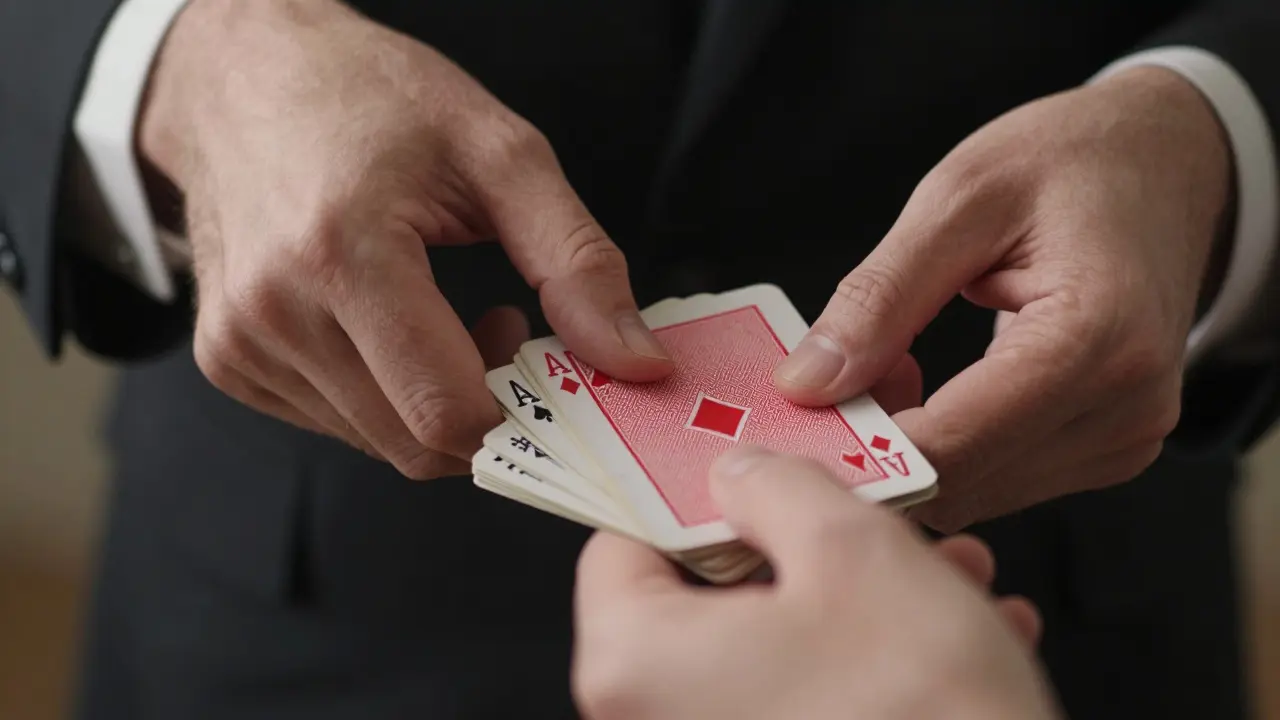
Ever opened a magic trick kit and felt overwhelmed by the instructions? You pull out a deck of cards, a coin, and a few rubber bands-then realize you have no idea where to start. Most beginner kits include eight core tricks. These aren’t just random stunts. They’re the foundation of real magic. Learn these eight, and you’re not just doing tricks-you’re building skills that turn casual audiences into believers.
The Classic Card Force
This is the first trick in nearly every beginner kit. It’s not flashy, but it’s essential. You hand someone a deck, ask them to pick a card, and somehow they always pick the one you wanted. How? It’s not mind reading. It’s control. The trick uses a simple technique called the classic card force. You guide their hand with subtle pressure, or use the Hamman Force where you flip the deck and let them stop you. They think they chose freely. You know exactly which card they picked. Once you master this, you can use it in dozens of other tricks. It’s the backbone of card magic.
The Rising Card
Place a card face down in the middle of the deck. Shuffle. Then-without touching it-the card slowly rises up, inch by inch, until it’s standing upright. It looks impossible. The secret? A thin rubber band wrapped around the deck. You slip it under the chosen card during the shuffle, then use your thumb to lift it slowly. The trick works best with a thin, flexible deck. Most beginner kits include a pre-cut rubber band for this. Practice the timing. Too fast, and it looks fake. Too slow, and people lose interest. Get it right, and even experienced magicians will ask how you did it.
The Coin Vanish
Hold a coin between your thumb and fingers. Close your hand. Open it. The coin is gone. No sleight of hand? No mirror? Just your hands. This trick relies on misdirection and a move called the palming. You secretly hold the coin in your palm while pretending to close your fingers around it. Your other hand draws attention-maybe you wave it, or say something funny. People look there, not at your closed hand. The key? Practice the grip. If your fingers twitch or your palm looks tense, the trick fails. Try it in front of a mirror. Watch your hands. If you see any tension, you’re doing it wrong.
The Pen Through Hand
Take a regular pen. Place it on your palm. Cover it with your other hand. Then, with a quick twist, the pen appears to pass through your skin. It’s not real. It’s a clever angle. The pen has a small hinge or split near the middle. You hold the top half in one hand, the bottom half in the other. When you bring your hands together, the two pieces align perfectly. The illusion works because people assume the pen is solid. The trick looks real only if you keep your hands at the right height-eye level or slightly below. Too high, and the gap shows. Too low, and the angle breaks. Most kits include a special pen for this. Don’t use a regular one. It won’t work.

The Floating Ring
Slide a metal ring onto a string. Hold both ends. Let go. The ring floats in midair. It doesn’t fall. It just hangs. The secret? A tiny knot tied in the string. You tie it so the ring slips over it, but the knot catches under the ring’s inner edge. When you pull the string tight, the ring locks in place. You can move your hands, tilt your body, and it still looks like magic. The trick only works with the right ring size and string thickness. Most beginner kits include a ring that’s 1.2 inches wide and a 0.5mm nylon cord. Use anything else, and it won’t hold. Practice the tension. Too loose, and the ring drops. Too tight, and it won’t float.
The Color-Changing Cards
You show a red card. You wave your hand over it. It turns blue. Then green. Then back to red. It’s not a trick with multiple cards. It’s one card with a special coating. The card is printed with thermochromic ink. When you rub it with your thumb, the heat changes the color. Most kits include three cards with different color patterns. The trick looks amazing because it happens fast and without obvious movement. But timing matters. Rub too hard, and the color fades unevenly. Rub too slow, and people notice your hand. The best way? Hold the card at a slight angle and brush your thumb across it in one smooth motion. No pause. No hesitation.
The Disappearing Water
You pour water from a glass into a napkin. The water vanishes. The napkin stays dry. You squeeze it-no water comes out. How? The napkin isn’t normal. It’s treated with a polymer called sodium polyacrylate. This stuff absorbs 300 times its weight in water. It’s the same material used in baby diapers. The trick works because people expect the water to soak through. Instead, it turns into a gel inside the fabric. You need the right napkin. Most kits include one pre-treated. Don’t try to use a regular kitchen towel. It won’t work. And don’t overfill the glass. One ounce of water is enough. More than that, and the gel bulges out, ruining the illusion.

The Mind-Reading Number
You ask someone to pick a number between 1 and 10. You write it down without looking. You show the paper. It’s their number. No peeking. No electronics. Just a simple math trick. You ask them to think of a number, then add 5, then multiply by 2, then subtract 4, then divide by 2, then subtract their original number. The answer is always 3. You write down “3” before they even pick a number. They think you read their mind. The trick works because the math always cancels out. The real magic? Your confidence. Say it like you’re psychic. Pause before revealing the paper. Let them doubt. Then show them. It’s not the math-it’s the performance that sells it.
Why These Eight Matter
These aren’t just tricks. They’re building blocks. The card force teaches control. The coin vanish teaches misdirection. The floating ring teaches physics. The disappearing water teaches materials science. Each one trains a different skill. Once you master them, you can combine them. Do the rising card, then the color-changing cards, then the mind-reading number. Suddenly, you’re not just doing tricks-you’re telling a story. And that’s what turns spectators into fans.
What to Avoid
Don’t rush. Most beginners try to learn all eight in one night. It doesn’t work. Magic is repetition. Do the coin vanish 50 times. Then 50 more. Do it in front of a mirror. Do it while watching TV. Do it while talking to someone. Muscle memory beats theory every time.
Don’t use gimmicks you don’t understand. If your kit includes a “magic box” with no explanation, skip it. You’ll forget how it works. Stick to the eight. They’re proven. They’re reliable. They’re the reason people still talk about magic after 200 years.
Practice Like a Pro
Record yourself. Not for YouTube. Just for you. Watch the video. Where do you hesitate? Where do your eyes dart? That’s where the trick breaks. Fix those spots. Then practice again. Magic isn’t about the trick. It’s about the moment before the reveal. That’s where the real work happens.
Can I do these tricks with any magic kit?
Not all kits include the exact tools. The floating ring needs a specific ring size and nylon cord. The disappearing water needs a polymer-treated napkin. The color-changing cards require thermochromic ink. Stick to beginner kits labeled "8 classic tricks"-they’ll have the right components. Avoid cheap kits with no instructions or vague descriptions.
How long does it take to learn all eight?
With 15 minutes a day, you can get comfortable with all eight in about three weeks. The coin vanish and card force take the longest-most people need 10-15 practice sessions before they feel confident. Don’t aim for perfection. Aim for consistency. If you can do them smoothly three times in a row, you’re ready to perform.
Are these tricks suitable for kids?
Yes, but with supervision. The disappearing water trick uses a chemical polymer-safe in small amounts, but not for toddlers. The pen-through-hand trick has sharp edges. Kids under 10 should stick to the rising card and mind-reading number. Both are safe, visual, and easy to master. Many schools use these eight as part of STEM magic programs because they teach focus, patience, and observation.
Do I need to buy a magic kit to learn these?
You can fake some of them. You can use a regular pen for the pen-through-hand trick, but it won’t work well. You can use a regular napkin for the disappearing water-but it won’t absorb the water. The magic is in the tools. A good beginner kit costs under $25. It includes everything you need, pre-tested and ready to go. Buying the tools separately will cost more and take longer. Save time. Buy the kit.
What’s the next step after learning these eight?
Start combining them. Do the rising card, then the color-changing cards, then the mind-reading number. Add a bit of storytelling: "I used to think magic was about secrets. Then I learned it’s about wonder." Practice in front of friends. Record your performance. Watch it. Then do it again. The best magicians aren’t the ones with the most tricks. They’re the ones who make you forget you’re watching a trick at all.