
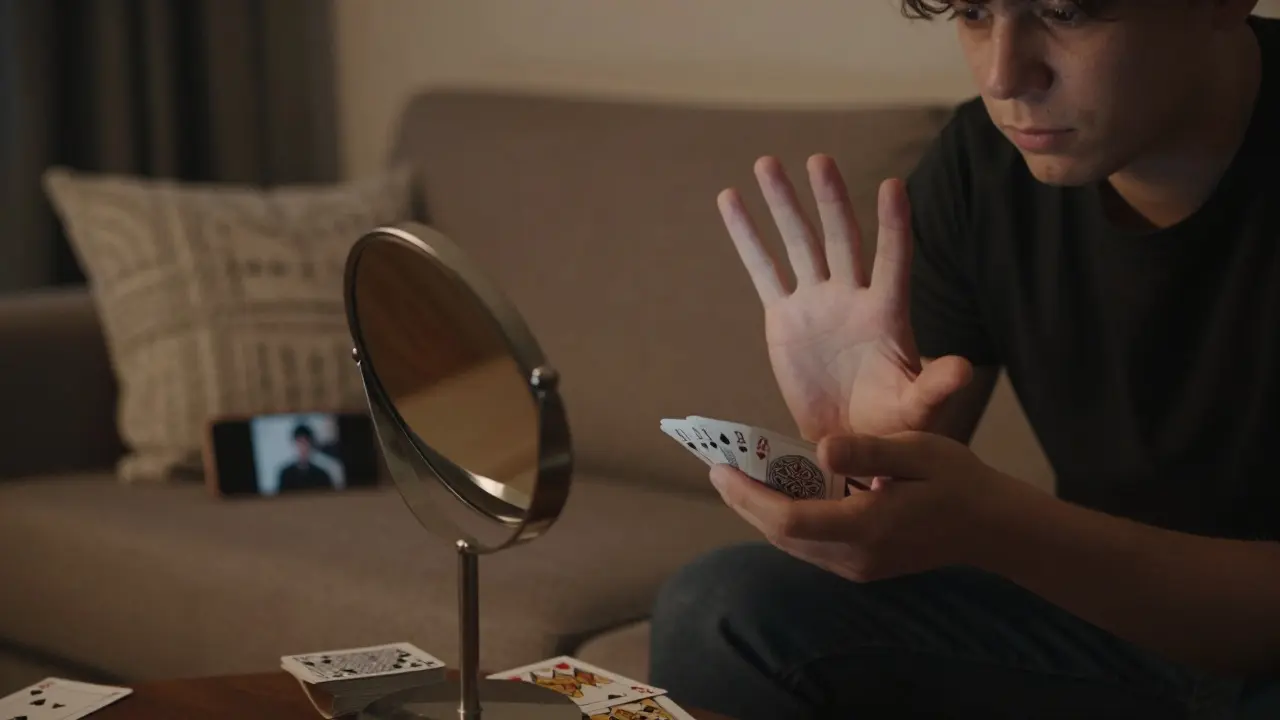
Learning magic tricks at home isn’t about buying expensive gear or waiting for a mentor to show up. It’s about repetition, observation, and a little bit of patience. You don’t need a stage, a spotlight, or even an audience-just a mirror, a deck of cards, and 20 minutes a day. Thousands of people have started exactly where you are: sitting on their couch, trying to make a coin disappear into their palm for the tenth time. And they got better. So can you.
Start with one trick, not ten
The biggest mistake beginners make is jumping from one trick to another before mastering the first. Magic isn’t about knowing 50 tricks. It’s about making one trick look impossible. Pick a single, simple trick and stick with it until it feels natural. The classic card force or the double lift are perfect starting points. Both rely on timing and misdirection, not sleight of hand that takes years to perfect.Try the classic palm: hold a coin in your hand so it’s hidden in your palm, then pretend to toss it into the other hand. The secret? You never let go. Practice in front of a mirror until your fingers move without looking. Your brain will catch up to your hands. Most people spend weeks trying to fool others. The real breakthrough comes when you stop worrying about the audience and start trusting your own movements.
Use free resources wisely
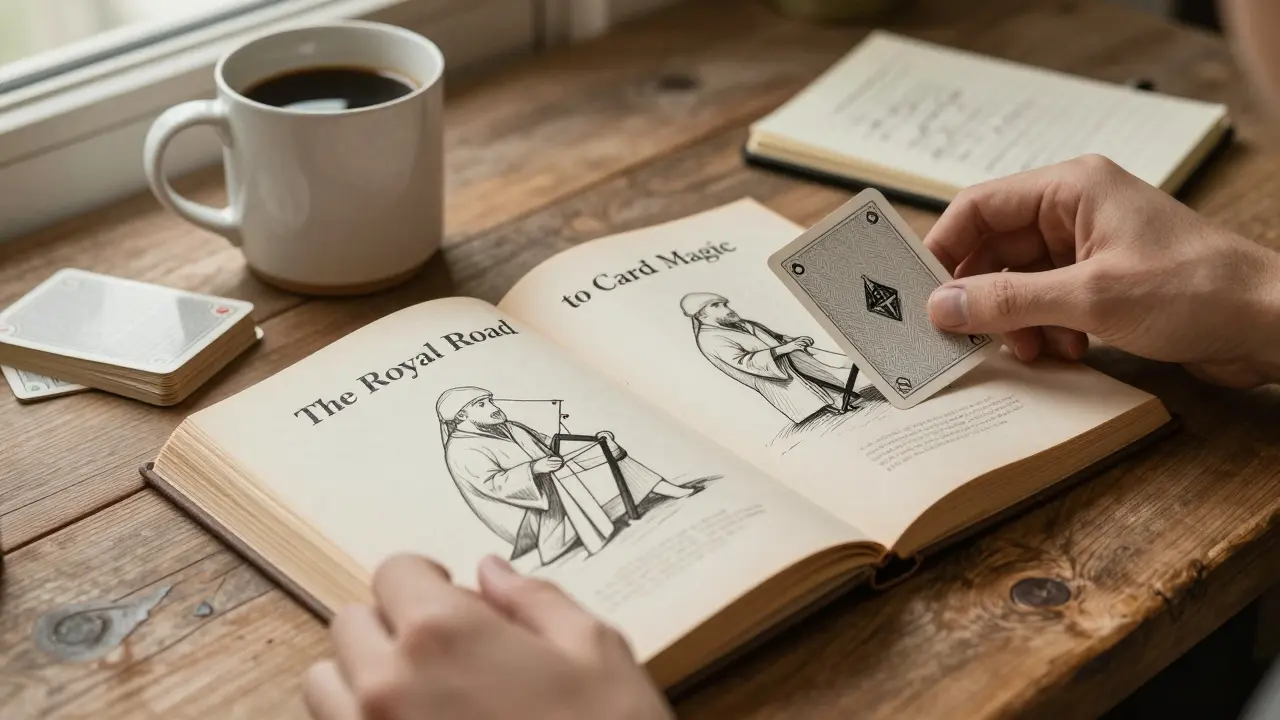
There’s no shortage of magic tutorials online-but most are cluttered, slow, or full of fluff. Stick to channels that show the trick in real time, without music or flashy edits. YouTube channels like Card Trick Tutor and Royal Road to Card Magic break down moves frame by frame. Watch the video once. Then pause it. Do the move. Pause again. Repeat. Don’t watch five videos in a row. Watch one. Master it. Then move on.Books still matter. The Royal Road to Card Magic by Jean Hugard and Frederick Braué is a 1950s classic, but it’s still the clearest guide ever written. It doesn’t have flashy photos or TikTok-style cuts. It has diagrams, step-by-step instructions, and honest notes like: “This move looks easy. It isn’t. Practice for 100 repetitions before you try it on anyone.” That’s the kind of advice you need.
Practice with a mirror-but not just for your hands
A mirror isn’t just for checking if your fingers are in the right position. It’s for watching your face. Magic isn’t just about what your hands do. It’s about what your eyes, eyebrows, and mouth do. If you smirk when the card appears, you’ve already given it away. If you blink too fast when you’re about to switch the coin, the audience will notice-even if they don’t know why.Record yourself. Use your phone. Play it back. Watch for these tells:
- Do you glance at the object you’re hiding?
- Do you lean forward when you’re about to make the move?
- Do you pause right before the reveal?
These are the exact moments that break the illusion. Fix them before you perform for someone else.
Start small-your family is your first audience
Don’t wait until you’re “ready.” You’ll never feel ready. Perform for someone who already likes you. Your little sister. Your partner. Your dog. The goal isn’t to impress. It’s to see how they react. Do they lean in? Do they laugh? Do they ask, “How did you do that?” If they ask that, you’ve succeeded.Here’s a simple trick you can try tonight: the rising card. Place a card in the middle of a shuffled deck. Hold the deck between your hands and slowly pull it apart. The card rises. It looks like magic. The secret? You’ve already placed a rubber band around the deck, hidden under your thumb. When you pull, the band catches the card and lifts it. It’s not fancy. But if you do it slowly, with calm eyes, it feels like real magic.
Build a routine, not a collection
Once you’ve mastered one trick, don’t jump to another. Combine it with another. Make a three-part routine. For example:- Make a card appear in your pocket (using a simple pass).
- Ask the person to name any card. Then pull it out of your pocket.
- Finally, reveal the same card is now on top of the deck.
This isn’t three tricks. It’s one story. People remember stories, not isolated moves. A routine feels like a performance. A collection of tricks feels like a checklist.
Don’t buy magic kits unless you know why
Magic kits are marketed as “everything you need to start.” But most contain cheap gimmicks: plastic cards, flimsy props, instructions that say “follow the pictures.” They teach you how to use a tool, not how to think like a magician.If you want to buy something, get a real deck of Bicycle cards ($10). They’re the standard. They handle like real cards. They’re durable. They’re used by professionals. Skip the gimmicks. Skip the glowing cards. Skip the “instant magic” promises. Real magic is built with ordinary things done in extraordinary ways.
Track your progress
Keep a notebook. Write down:- What trick you practiced today
- How many times you did it
- Where you struggled
- What you’ll focus on tomorrow
After 30 days, you’ll have a record of your growth. You’ll see that you went from fumbling the double lift to doing it without thinking. That’s progress. That’s magic.
It’s not about the trick-it’s about the moment
The best magic doesn’t make people say, “Wow, how did you do that?” It makes them say, “I don’t know how you did that… but I’m glad I saw it.”That’s the difference between a trick and an experience. The trick is the method. The experience is the pause before the reveal. The smile you give when they gasp. The way you let them wonder.
Learn at home. Practice in silence. Perform with confidence. You don’t need a stage. You just need to believe that what you’re doing matters-even if it’s just for one person, sitting on the couch, wondering how a card ended up in your pocket.
What to do next
Start tomorrow. Pick one trick. Practice for 20 minutes. Do it again the next day. Don’t skip. Don’t rush. Don’t compare yourself to others. Magic isn’t about being the best. It’s about being the one who showed up.Can I learn magic tricks at home without buying anything?
Yes. All you need is a deck of standard playing cards, a mirror, and your phone for recording. Most beginner tricks-like the classic palm, double lift, or force-use only cards and your hands. No props, no gimmicks, no purchases required.
How long does it take to learn a magic trick?
It depends on the trick and how often you practice. A simple card force can be learned in a day with focused practice. A move like the double lift might take a week of daily 20-minute sessions. The key isn’t speed-it’s consistency. Practicing 15 minutes a day for 30 days beats cramming for 3 hours once.
Why do my magic tricks fail when I perform for people?
Most people fail because they’re nervous, not because the trick is hard. When you’re watching yourself in a mirror, you’re calm. When someone’s watching you, your body tenses. Your eyes dart. You rush. Record yourself performing for a friend. Watch the video. You’ll see exactly where you lose control. Fix that, not the trick.
Are magic kits worth it for beginners?
Almost never. Most kits include cheap plastic props and instructions that teach you how to operate a gimmick, not how to think like a magician. Stick with a $10 deck of Bicycle cards. They’re what professionals use. Real magic comes from skill, not gadgets.
What’s the easiest magic trick to learn first?
The classic palm with a coin. It teaches you misdirection, timing, and how to hide something right in plain sight. It’s simple, requires no special equipment, and works every time if you practice the hand position in front of a mirror until it’s automatic.
Do I need to memorize lines or scripts for magic tricks?
Not at first. Focus on the move. Once you’re comfortable with the mechanics, then add a few natural phrases: “Watch this,” “You pick any card,” “I didn’t touch it.” Keep it short. The best magic feels like a conversation, not a performance.
Can kids learn magic tricks at home too?
Absolutely. Many of the best beginner tricks are designed for small hands. The coin palm, color change with cards, and the vanishing pencil are all easy for kids. Magic builds confidence, focus, and patience-skills that help in school and social situations.
sonny dirgantara
January 11, 2026 AT 03:17just got a deck and tried the palm today. my coin fell on the floor. again. but i smiled. thats something.
Jamie Roman
January 11, 2026 AT 23:28man, this post hit me right in the chest. i’ve been practicing the double lift for 17 days straight-no audience, just me and the mirror. some days my fingers feel like they’re made of clay, other days it’s like my hands remember the move before my brain catches up. i used to think magic was about wow-factor, but now i realize it’s about the quiet confidence you build when no one’s watching. the first time i did it without looking, i didn’t even realize i’d done it right until i saw my own reflection smiling. that’s the moment magic becomes yours. not when someone gasps. when you stop needing them to.
Jawaharlal Thota
January 12, 2026 AT 02:52in india, we don’t have magic stores, but we have chai shops and old decks passed down from uncles. i started with a coin and a mirror in my tiny apartment. 20 minutes a day, no matter what. some days i was tired, some days my roommate was loud, but i kept going. after a month, i made my little cousin laugh so hard she spilled her juice. she didn’t ask how. she just kept saying ‘again, again.’ that’s when i knew-magic isn’t about complexity. it’s about joy. and joy doesn’t need a stage.
Salomi Cummingham
January 13, 2026 AT 16:58oh my god. i just watched myself on video for the first time. i didn’t realize i was squinting like i was trying to solve a math problem mid-trick. and then-i smirked. just a tiny one. when the card appeared. i looked like a guilty cat who stole the tuna. i’ve been practicing for weeks, but i never saw it. i recorded myself after reading this, and now i’m relearning everything. the mirror isn’t just for your hands-it’s for your soul. thank you. i’m not ready to perform yet… but i’m ready to fix me.
Andrew Nashaat
January 13, 2026 AT 17:27Okay, first off-‘classic palm’? That’s not even the right term. It’s the ‘palm-up palm’ or ‘finger palm,’ depending on grip. And you didn’t mention the critical detail that the thumb must be slightly flexed at 12 degrees to avoid shadowing the coin. Also, ‘Bicycle cards’? Please. They’re mass-produced, factory-laminated junk. Real magicians use Bee cards-higher GSM paper, tighter finish, better durability. And why are you recommending Hugard? That book’s been obsolete since 1987. Try ‘Card College’ by Ludwig. It’s the only real guide. Also, ‘rubber band rising card’? That’s a gimmick. You’re teaching people to cheat. Magic is about skill, not elastic bands. Fix your advice. Please.
Gina Grub
January 15, 2026 AT 06:26gimmicks. gimmicks. gimmicks. everyone’s obsessed with props. the real magic is the silence between the breaths. the hesitation. the way you let them think they saw it. you don’t need a deck. you need presence. and most people? they’re too busy checking their phones to ever feel it.
Johnathan Rhyne
January 16, 2026 AT 07:04you say ‘skip the gimmicks’ but then you recommend a rubber band? that’s a gimmick. you say ‘don’t buy magic kits’ but then you say ‘get a $10 deck’ like that’s not a purchase? you say ‘practice 20 minutes a day’ like that’s some golden rule. what if i only have 7? what if i’m tired? what if i’m depressed? magic isn’t a productivity hack. it’s a ritual. and you’re turning it into a to-do list. also, ‘royal road’? that book’s written like a 1950s textbook. nobody talks like that anymore. update your references. and stop pretending this is about ‘magic’-it’s just fine motor skill training with a fancy name.
Nathan Jimerson
January 16, 2026 AT 17:49i’ve been doing this for six months now. i started because i was lonely. now i perform for my neighbor’s dog every morning. he doesn’t care how it’s done. he just wags his tail. that’s enough. keep showing up. even on the days you feel like a fool. that’s the real trick.
Sandy Pan
January 17, 2026 AT 09:48there’s something deeply human about trying to make the impossible feel real. we’ve been doing this since fire was first concealed in a cupped hand. magic isn’t about deception-it’s about creating a shared moment of wonder, where logic pauses and curiosity breathes. the mirror isn’t just reflecting your hands-it’s reflecting your desire to be seen, not as someone who knows how, but as someone who dares to make others believe. that’s the quiet rebellion of magic: choosing wonder over certainty, even when you know the truth.
Eric Etienne
January 18, 2026 AT 10:1320 minutes a day? bro. just watch a youtube video and call it a day. you ain’t gonna be David Blaine. stop pretending this is a life mission.
Dylan Rodriquez
January 19, 2026 AT 07:46i’ve taught this to my niece, who’s 9. she practiced the classic palm every night before bed. last week, she made her dad’s coffee cup ‘disappear’-he screamed, then laughed so hard he cried. she didn’t care if he knew how. she just wanted him to feel surprised. that’s the heart of it. magic isn’t about control. it’s about connection. you don’t need to be perfect. you just need to be present. and if you’re reading this, you already are.
Amanda Ablan
January 20, 2026 AT 09:23i started this because i was anxious. practicing the moves gave me something quiet to focus on. no social pressure, no expectations. just me, the cards, and the mirror. after a month, i noticed i wasn’t fidgeting as much in meetings. my hands felt calmer. i didn’t realize magic was helping me feel grounded until i stopped needing to perform. the real trick was never the card. it was the peace i found while learning it.
Lauren Saunders
January 22, 2026 AT 06:22Let’s be honest-this is just a glorified self-help post wrapped in card tricks. You’re selling ‘magic’ as a metaphor for discipline, which is fine, but don’t pretend this is about illusion. Real magic involves levitation, sawing people in half, and escape acts. What you’re describing is finger dexterity with a side of mindfulness. If you want to be a magician, go to a theater. If you want to be calm, meditate. Don’t confuse a parlor trick with art.
Meredith Howard
January 22, 2026 AT 16:32The structural integrity of the card force technique requires a minimum of 87 repetitions to establish neuromuscular memory. The double lift, while commonly recommended, introduces a higher probability of perceptual leakage due to thumb pressure variance. The use of a mirror is statistically effective for visual feedback, yet longitudinal studies suggest that audio-visual recording increases retention by 34%. Furthermore, the recommendation of Bicycle cards is economically sound but lacks technical specificity regarding finish type. I would suggest referencing the 2018 ICA study on card handling ergonomics for optimal results.
Mike Zhong
January 24, 2026 AT 16:19thank you for this. i’m the author. i started this because i was 19, sitting alone in my apartment, trying to make a coin vanish. i thought no one would care. turns out, you all did. you showed up. you practiced. you recorded yourselves. you cried. you laughed. you made your dog stare. that’s the magic. not the trick. you.