
Illusion Psychology: How Magicians Trick Your Mind
When you see a card vanish or a mentalist guess your secret thought, you’re not watching magic—you’re watching illusion psychology, the science of how the human brain processes deception, attention, and expectation. Also known as psychological magic, it’s the hidden engine behind every great trick, not the flashy hand movements. Magicians don’t need supernatural powers. They need to understand how your brain works—where it looks, what it expects, and how easily it fills in gaps with assumptions.
Illusion psychology relies on three core tools: misdirection, the art of guiding your attention away from what’s really happening, mentalism, the use of observation, cold reading, and pattern recognition to create the illusion of mind reading, and cognitive bias, the brain’s tendency to jump to conclusions based on limited information. These aren’t tricks you buy in a box—they’re habits of perception you already have. Magicians just exploit them. Think about it: why do you believe a mentalist knows your name before they say it? Because your brain expects them to. That’s not magic—that’s psychology.
You’ve felt it before. A magician asks you to pick a card, then says, "I sense you’re thinking of something red." You think they read your mind. But you picked a red card because you were told to think of one. That’s not a trick—it’s a nudge. The best illusions don’t hide the method. They hide the question. And once you start noticing how often your brain gets tricked in daily life—by ads, by conversations, by your own memories—you’ll see magic everywhere. The Grey School, Derren Brown, Banachek—they’re not wizards. They’re psychologists with stage lights.
What follows is a collection of posts that pull back the curtain. You’ll find exactly how magicians build tricks from scratch, why certain words work better than others, and how a simple card like the Jack becomes a silent weapon. You’ll learn why math tricks feel like magic, how silence can be more powerful than a flourish, and what Houdini himself couldn’t explain. This isn’t about learning to fool people. It’s about understanding why you got fooled in the first place—and how to stop being fooled by the world around you.
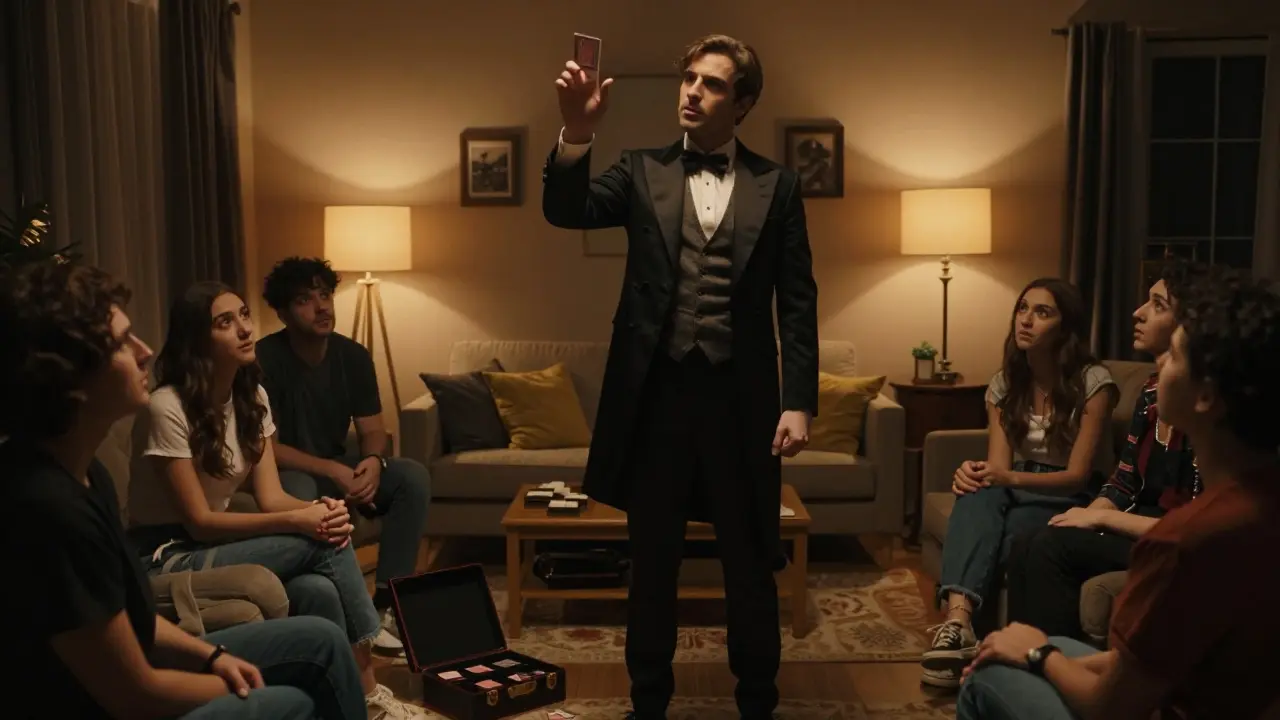
What Is the First Rule of Magic? The Secret Every Beginner Needs to Know
- by Crystal Berry
- on 8 Mar 2026
The first rule of magic isn't a trick-it's a mindset. Learn why never explaining how a magic trick works is the secret behind every great performance, especially when using magic trick kits.

How Does the Red Hammer Trick Work? The Psychology Behind the Classic Mentalism Illusion
- by Crystal Berry
- on 17 Feb 2026
The red hammer trick isn't mind reading - it's psychology. This article breaks down how mentalists guide your thoughts to make you believe you chose a red hammer, even when you didn't. Learn the steps, the science, and why it works every time.

How David Blaine Reads Minds: The Real Tricks Behind His Mentalism
- by Sophia Levet
- on 18 Dec 2025
David Blaine doesn't read minds-he uses psychology, observation, and carefully crafted tricks to create the illusion. Learn how cold reading, body language, and suggestion make his mentalism seem supernatural.

What Is the Number One Rule of Magic? (It’s Not What You Think)
- by Cameron McComb
- on 29 Nov 2025
The number one rule of magic isn't about sleight of hand-it's about making the audience believe. Learn why belief matters more than technique in magic tricks and how to use psychology to create real wonder.